
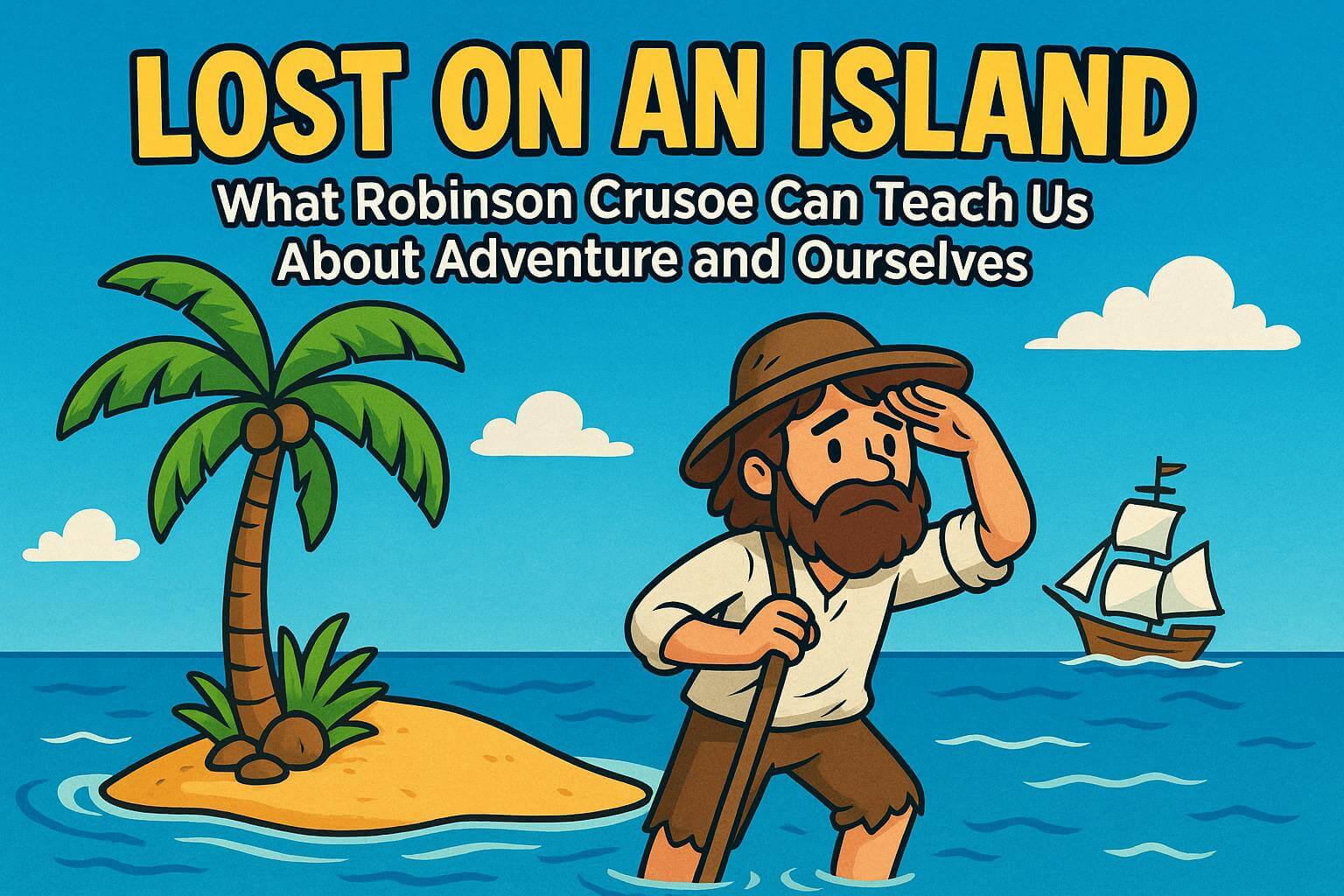
Rethinking Robinson Crusoe: Survival, Faith, Colonialism
Exploring the Classic: “Robinson Crusoe” by Daniel Defoe
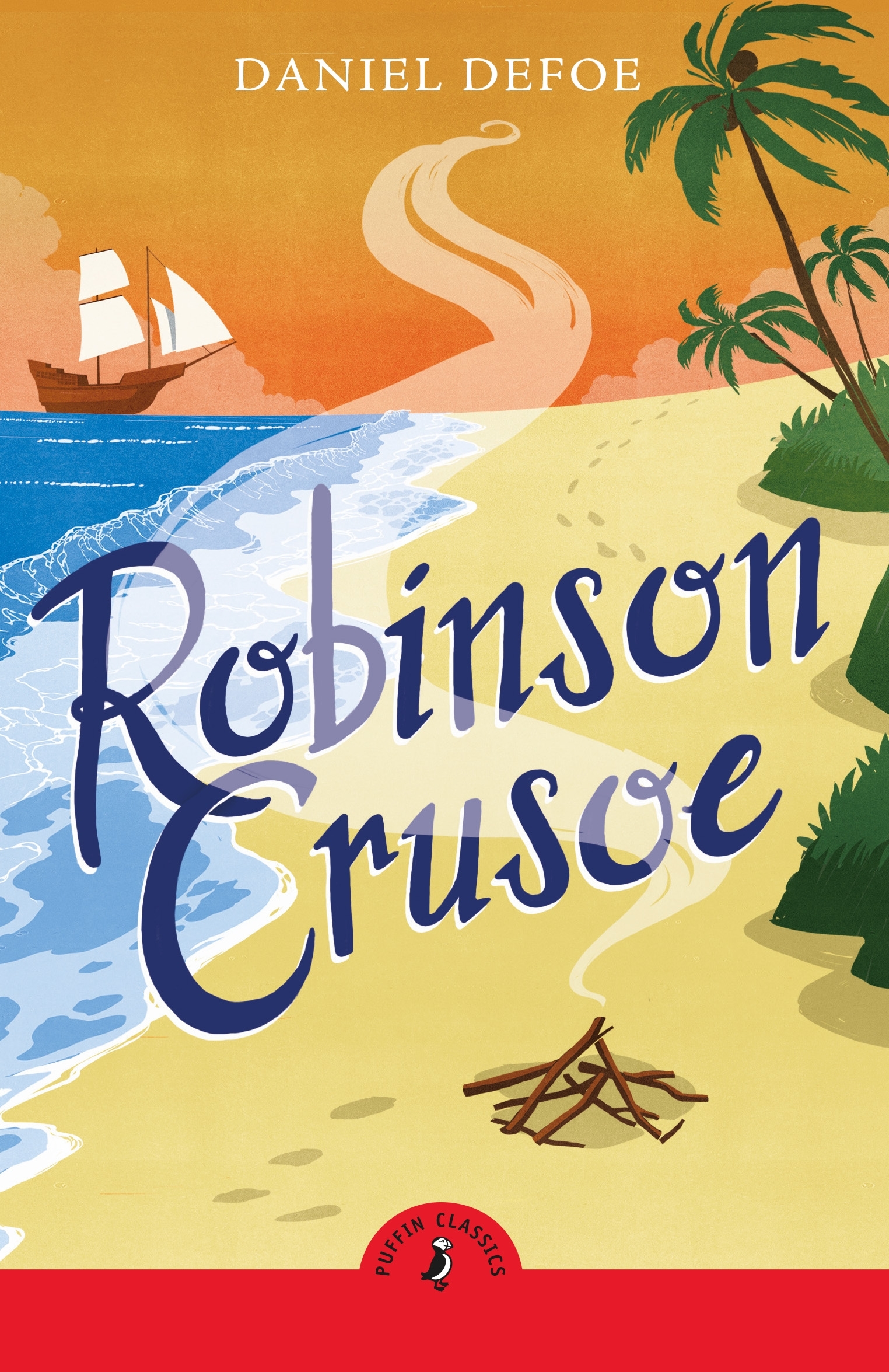
One of the earliest and most influential novels in English literature, *Robinson Crusoe* by Daniel Defoe, published in 1719, continues to capture the imagination of readers even centuries later. This novel stands out not just for its thrilling tale of survival, but also for the way it reflects the beliefs, prejudices, and values of its time.
A Young Man with a Dream
The story follows Robinson Crusoe, a young Englishman who dreams of living a life at sea. Despite his family’s strong disapproval—believing a sailor’s life to be dangerous and reckless—Crusoe is determined to follow his own path. Fuelled by the promise of adventure, trade, and discovery, he sets sail, chasing the unknown.
However, life at sea is not without its risks. After several voyages, Crusoe is caught in a violent storm and ends up shipwrecked. He washes ashore on a deserted island, alone and with no sign of rescue.
The Ultimate Survival Test
Crusoe becomes the sole survivor of his ship’s wreck. Stranded on an island with no human companionship, he must learn to survive on his own. He creates shelter, finds food, and even manages to save and domesticate some animals like goats and chickens that he finds on the island. He also salvages supplies from the wrecked ship, including a Bible.
Reading the Bible becomes a turning point for Crusoe. Through it, he finds spiritual comfort and begins to accept his isolation as a divine test. Over time, he discovers inner peace and a deeper sense of purpose.
The Discovery That Changes Everything
After several years of solitude, Crusoe stumbles upon something terrifying—a human footprint in the sand. It’s clear now that he isn’t alone. Soon he discovers that the island is occasionally visited by cannibal tribes who bring prisoners to the island to execute and eat.
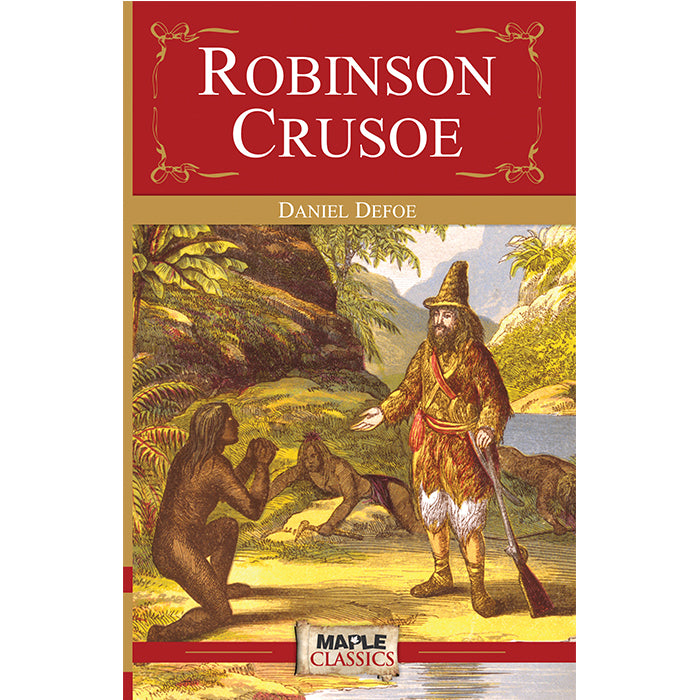
One day, Crusoe witnesses such a group arriving to perform their ritual. During the commotion, one prisoner breaks free and runs. Crusoe takes action: he fires his musket, scares the cannibals away, and saves the man. In gratitude, the man pledges his loyalty to Crusoe and becomes his servant. Crusoe names him “Friday” after the day he was saved.
Slavery, Superiority, and Colonial Mindsets
The relationship Crusoe has with Friday is symbolic of the time. Crusoe, viewing himself as a “civilized” man, believes it is his duty to educate Friday—teaching him English, Christian values through the Bible, and what Crusoe sees as morally “correct” behavior. Friday, in turn, is portrayed as grateful and obedient.
This master-servant dynamic reflects the attitudes of the 18th century, when Europeans often viewed people from other cultures as “savages” to be civilized. Though Crusoe is often presented as a kind and fair slave master, the power imbalance speaks volumes about the colonial mindset and the Eurocentric views of the era.
A Chance Return to Civilization
Eventually, Crusoe and Friday witness the arrival of a European ship. However, it is caught in a mutiny. Crusoe once again steps in to save the day—he helps defeat the mutineers and frees the ship’s loyal captain. As a reward, Crusoe is offered safe passage back to England. In an act of mercy, he allows the defeated mutineers to stay on the island, now well-stocked with food and shelter.
Themes and Legacy
“Robinson Crusoe” explores many important themes:
– Survival and self-reliance: Crusoe’s ability to adapt and thrive in isolation.
– Faith and spirituality: Crusoe’s discovery of peace through religion.
– Colonialism and cultural superiority: The portrayal of Friday and the language of “savagery” used throughout the book.
– Adventure and exploration: The human desire to explore unknown lands and push beyond the familiar.
This novel is more than just a story of a man stranded on an island. It is a window into the past—a glimpse into how people thought about the world, their place in it, and their views of others who were different from them.
Why Read “Robinson Crusoe” Today?
Though written over 300 years ago, “Robinson Crusoe” continues to resonate. As one of the earliest examples of the survival fiction genre, it laid the groundwork for countless adventure stories that came afterward.
Reading Robinson Crusoe not only entertains, but also challenges modern readers to think critically about historical attitudes, morality, and the way literature reflects society.
Whether you’re an adventure lover, a history buff, or just curious about classic novels, *Robinson Crusoe* is definitely worth your time.
Recommendation: Give “Robinson Crusoe” by Daniel Defoe a read. Not only is it a compelling survival story, but it also opens up discussions about culture, colonialism, and personal growth. A timeless tale that continues to spark thought and imagination.






 English
  繁體中文
繁體中文  日本語
日本語  한국어
한국어  ไทย
ไทย  Bahasa Indonesia
  Tiếng Việt
  Français