
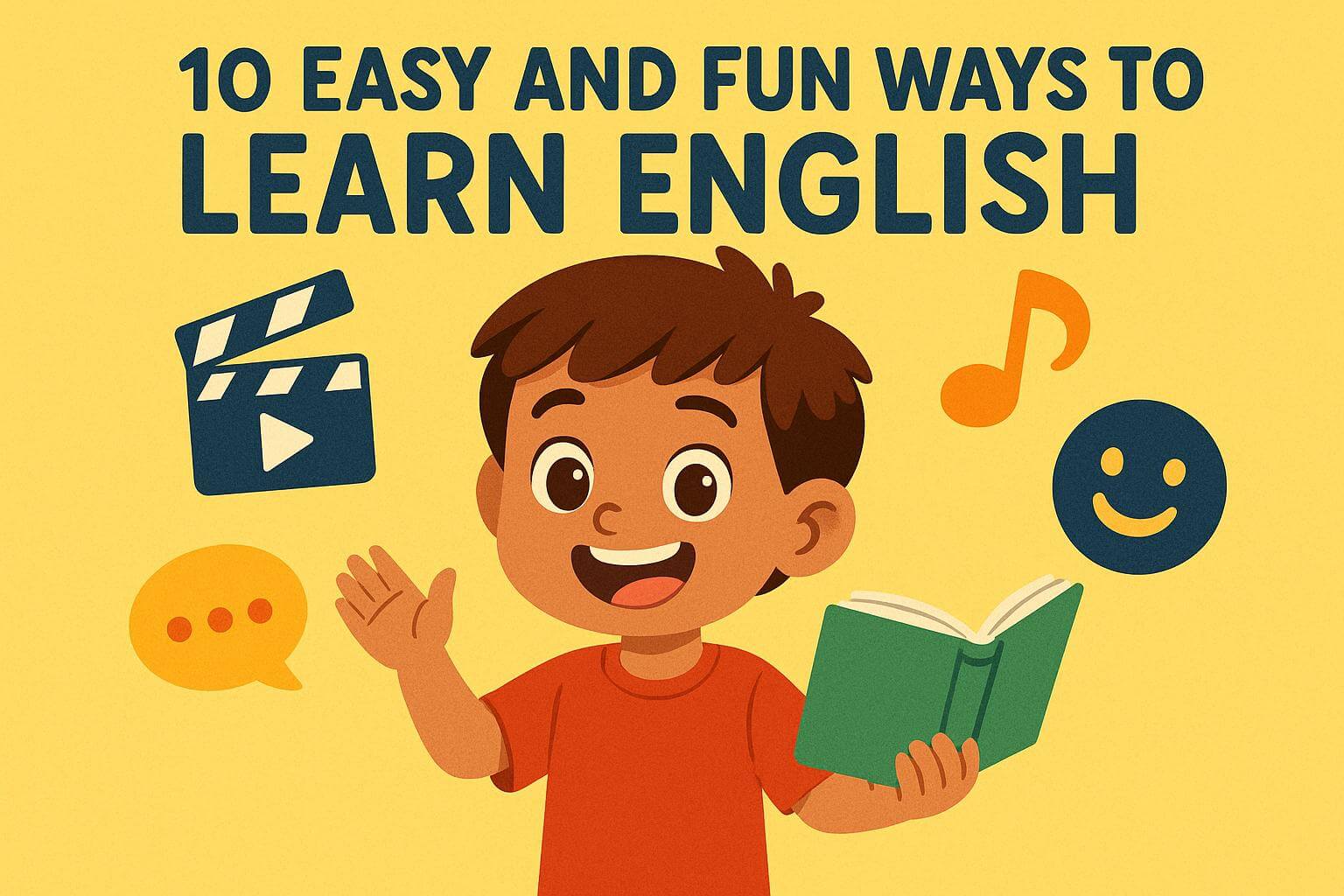
Boost Your English: 10 Fun, Effective Tips
10 Fun and Effective Tips to Improve Your English
Hi there! I’m Tahric, and welcome to the world of English. Whether you’re just starting out or you’ve been learning for a while now, I’m here to help make your English learning journey easier—and more fun! In this blog, I’m sharing 10 tips to help you improve your English in ways that are both practical and enjoyable. Let’s get started!
- Learn Full Phrases, Not Just Words
It’s normal to want to learn the meaning of individual words like “computer,” “apple,” or “box.” But it’s much more useful to learn how words are used in full phrases. For example: “I would like an apple.”
“Do you have a computer?”
“This is a box.”
When you learn phrases like these, you’re also learning grammar naturally—without having to sit through boring grammar lessons. Plus, phrases help you remember words better and speak more fluently.
- Watch TV Shows and Movies
Entertainment is a powerful tool for language learning because it’s fun! Choose shows or movies you enjoy, and try to:
Listen and repeat funny or interesting lines
Watch short 5minute clips if a full movie is too hard
Rewatch your favorite movies to build understanding
Write down new words or expressions and look them up
Some movies I personally watched over and over again as a kid include The Matrix, The Karate Kid, and Shaolin Soccer. Watching them repeatedly helped me remember lots of phrases and vocabulary.
- Use Media: Music, Audiobooks, Podcasts, and News
This tip comes in four parts—because media is such a valuable resource!

3A. Listen to Music
Music is catchy and memorable. Songs help words stick in your brain. You probably know song lyrics in English even if you’re still learning the language! Use that to your advantage.
Sing along
Look up song lyrics online
Try karaoke! Even if the lyrics don’t always make perfect sense, they will help you remember vocabulary and pronunciation.
3B. Audiobooks
Choose audiobooks at your level. Children’s stories and young adult novels are great places to start. You’ll enjoy a good story and learn how words are used in context.
3C. Podcasts
There’s a podcast for every interest—gaming, gardening, cartoons, or even learning English. Find one that matches your interests and listen regularly. It helps with conversational vocabulary and realworld English.
:max_bytes(150000):strip_icc():focal(749x0:751x2)/anchorman-book-tout-082823-135a529e888341e9a7f1b634f66147b0.jpg)
3D. News
If you’re more advanced, CNN or other English language news can challenge you. Be prepared for faster speech and more complex vocabulary. This is best for learners who want to push their limits.
- Repeat What You Hear—Out Loud
Don’t just hear new words—say them. Speaking helps your mouth and tongue learn how to make new sounds. For example:
“Microphone. I have a microphone. I’m holding a microphone. I am talking into the microphone.”
It may feel silly, but it works! Practice makes perfect.

- Record Yourself Speaking
Want to know how you really sound? Record yourself reading or speaking in English. Then listen:
Does it sound how you imagined? Do you notice any mistakes? Where can you improve?
Try again, and compare the two versions. You’ll be amazed at how quickly you can learn when you hear yourself speak.
- Focus on Difficult Sounds
English has sounds that might not exist in your language. That’s okay!
For example, many of my Mandarin speaking students struggle with the “th” sound. They say “three” as “sree” or “tree.” This just means more practice is needed!
Say tricky sounds over and over again:
“Three, three, three…”
“Really, really, really…”
With time and effort, your pronunciation will get better.
- Find a Language Partner
A language partner—friend, teacher, or native speaker—helps you stay accountable and gives you real conversation practice. Practicing with someone can be scary, but it’s one of the best ways to improve.
Don’t worry about making mistakes. Every conversation is a step forward! - Practice Every Day (Even a Little)
It’s better to practice English for 5 minutes every day than for 1 hour only once a week. Daily exposure keeps the language fresh in your mind.
Here are some quick practice ideas:
Watch a short video
Listen to a podcast
Repeat some phrases
Read a few sentences
Every little bit helps! - Be Patient with Yourself
Learning a language is challenging. You won’t feel amazing every day, and sometimes it may feel like you’re not making progress. That’s okay.
Keep going, stay kind to yourself, and remember: progress takes time.
- Have Fun!
Last but not least—enjoy the process. Learning English can actually be fun when you:
Watch shows you love
Listen to catchy music
Speak with interesting people
Celebrate small wins
Most importantly, don’t be afraid to make mistakes. Mistakes are how we learn and grow. 🌟
I hope these tips make your English journey easier and more exciting. Keep learning, keep practicing: you’ve got this!
Happy learning!
—Tahric





 English
  繁體中文
繁體中文  日本語
日本語  한국어
한국어  ไทย
ไทย  Bahasa Indonesia
  Tiếng Việt
  Français