

英文假朋友 False Friends: 15 Word Pairs Chinese Learners Mix Up | 容易搞混的英文單字
A student once told a colleague, “Can you borrow me NT$200?” She knew the word existed. She just had it backwards. This is the 英文假朋友 problem: Chinese uses 借 for both lending and borrowing — the direction is understood from context. English splits that into two separate verbs with opposite meanings. Multiply that pattern across sensory verbs, communication verbs, adjectives, and noun-verb pairs, and you have the core vocabulary challenge for Chinese speakers learning English.
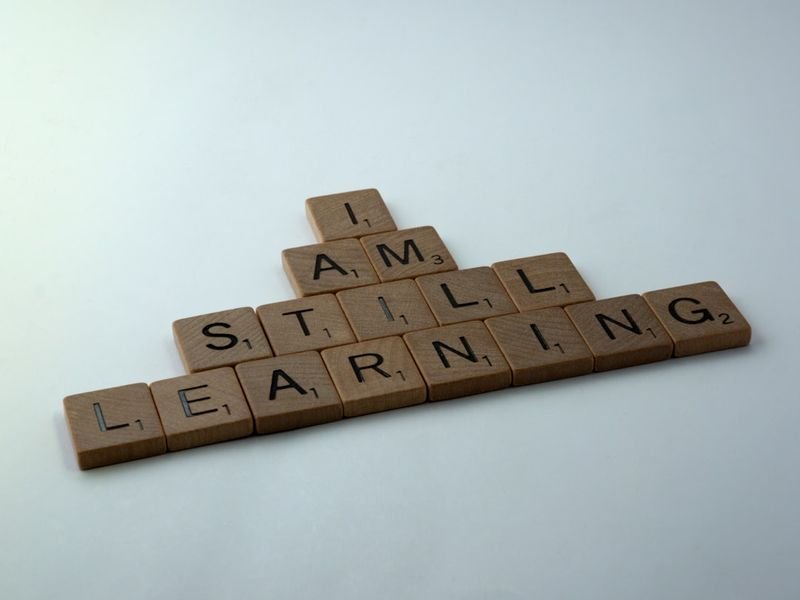
Learning vocabulary as pairs — not individual words — is the key to avoiding false friend errors.
What Are 英文假朋友 (False Friends)? | 什麼是英文假朋友?
The term “false friends” (英文假朋友) traditionally describes words in two different languages that look or sound the same but mean something different — like English “embarrassed” and Spanish “embarazada,” which means pregnant. For Chinese speakers, the false friend problem is more structural than visual. It appears when Chinese has one word that English splits into two, three, or four — each one doing a slightly different job that native English speakers never consciously think about.
The examples below cover 15 word pairs that cause the most confusion in Taiwan English classrooms. Each one has a root cause: either a one-to-many concept mismatch, or a grammatical distinction that Chinese does not mark — like whether a verb needs an object. Once you see the underlying pattern, the pairs start making sense.
Sensory Verbs | 感官動詞:看和聽
中文的「看」對應英文三個完全不同的動詞。The word 看 covers three distinct English verbs, and mixing them up is one of the clearest signals of a non-fluent speaker.
See | 看見 — passive perception. You do not choose to see something; it enters your vision without effort.
“I saw a car accident on my way to work.”
Look | 看 — directed, intentional. You point your eyes at something on purpose.
“Look at the whiteboard — I just wrote the answer.”
Watch | 看 — sustained observation of something that moves or changes over time. Movies, games, and people working get watched, not seen.
“She watches the news every morning before class.”
The same active-vs-passive split applies to 聽: hear is passive — you hear a noise without trying — and listen is active and intentional. You listen to a podcast, a lecture, or a set of instructions. You hear the traffic outside.
Quick test: “I can’t ______ you — can you speak up?” (hear) vs. “Please ______ to the instructions carefully.” (listen)

Even advanced learners mix up see, look, and watch — the distinction is about how much intention is involved.
Say, Tell, Speak, Talk | 說:一個中文字對應四個英文動詞
This is the group that causes the most visible errors in professional settings in Taiwan. All four translate roughly to 說 or 講, but they are not substitutes for one another.
Say focuses on the content of what was spoken. The words themselves are the point.
“She said she’d be late.” (not: she told she’d be late)
Tell always has a person receiving the information. You tell someone. If there is no person in the sentence receiving the news, tell is probably the wrong choice.
“Tell me what happened.”
Berbicara is formal and appears with languages and public-facing contexts.
“Do you speak Mandarin?” / “He’ll speak at the conference.”
Talk is conversational and implies a two-way exchange, not just one person delivering information.
“We talked for hours about the project.”
One bonus pair: ask vs. question. You ask a question. You do not “question someone” in casual conversation — that phrasing carries the weight of an interrogation or a formal challenge.

Say, tell, speak, and talk — each one belongs in a different kind of sentence structure.
For more on how English verbs combine with particles, see this guide to the most common English phrasal verbs.
Lend and Borrow | 借:兩個方向,兩個英文字
Chinese uses 借 for both directions of a loan — whether something leaves your hands or arrives in them, the word stays the same. English marks the direction explicitly, and mixing these up creates confusion fast in real conversations.
Lend | 借出 — you give something to someone temporarily.
“Can you lend me NT$200?” (You want them to hand it to you.)
Borrow | 借入 — you take something from someone temporarily.
“Can I borrow NT$200 from you?” (You are the one taking it.)
The same directional logic applies to bring vs. take. Bring is movement toward the speaker’s location. Take is movement away from it.
“Bring the report to me.” (Come here with it.) / “Take this document to the main office.” (Go there with it.)

Writing contrast sentences — one for lend, one for borrow — is the fastest way to lock in the directional difference.
Confusing Adjective Pairs | 容易混淆的英文形容詞
Some of the trickiest 英文假朋友 are adjectives that share a root but point in completely different directions. These come up in business writing, academic English, and IELTS alike.
Economic vs. Economical | 經濟的 vs. 節省的
Economic describes things related to the economy or to economics as a discipline. Economical means thrifty, or not wasteful of money or resources.
“Taiwan’s economic outlook for 2026 is cautiously positive.”
“The new hybrid model is far more economical on fuel than last year’s version.”
Effective vs. Efficient | 有效的 vs. 效率高的
Both translate to variations of 有效 in Chinese, but they measure different things. Efektif means it achieves the desired result. Efficient means it does so without wasting time or resources. A treatment can be effective but inefficient. A system can be efficient but completely ineffective if it’s solving the wrong problem quickly.
Historic vs. Historical | 具有歷史意義的 vs. 歷史相關的
Historic means significant enough to be remembered in history. Historical simply means related to history or set in the past.
“The signing of the peace agreement was a historic moment.”
“This is a historical novel set during the Japanese occupation of Taiwan.”
Reading English texts in context helps you see exactly which adjective a native speaker chose — and why.
Noun-Verb Pairs | 名詞和動詞的英文假朋友
Two of the most frequently confused English word pairs are also among the most straightforward to fix once you see the pattern.
Advice vs. Advise | 建議
Advice (noun) is what you give or receive. Advise (verb) is the action of giving it. Both translate to 建議, and the spelling difference is just one letter.
“She gave me good advice about the job application.”
“I advise you to read the contract before signing.”
Pronunciation helps: advice rhymes with “rice” (ends in /s/); advise rhymes with “size” (ends in /z/).
Affect vs. Effect | 影響
Native English speakers confuse these too, which tells you how close the line is. In almost every case: affect is the verb, effect is the noun.
“Stress affects sleep quality.”
“The effect of stress on sleep is measurable and consistent.”
Memory shortcut: Affect = Action (both start with A). Effect = End result (both start with E).

Affect and effect confuse even native English speakers. The A = Action, E = End result rule solves it permanently.
Make vs. Do and Raise vs. Rise | 做和升的英文假朋友
Make and do both translate to 做 in Chinese, which leaves learners with no built-in sense of which English word to choose. There are strong patterns, though not a single rule that covers every case.
Make tends to describe creating, producing, or causing something: make a cake, make a decision, make a mistake, make a phone call, make friends, make noise.
Do covers general tasks and activities, especially abstract ones: do homework, do business, do research, do a favor, do the dishes, do your best.
The most common error in Taiwan workplaces: “make business” (wrong) → “do business” (correct). You make a deal; you do business.
For a full look at how make, have, get, and let work as causative verbs in English, see this guide to English causative verbs.
Two more directional pairs that catch Chinese learners:
Raise vs. Rise | 升起
Raise is transitive — you raise something, and an object is required: “The company raised salaries for the first time in three years.”
Rise is intransitive — it happens without a direct object: “The sun rises at 5:40 in summer.” (not: the sun raises)
Lay vs. Lie | 放/躺
Lay requires an object — you lay something somewhere: “Lay the books on the desk.”
Lie describes your own position, with no object: “I need to lie down for twenty minutes.”
The extra twist: lay is also the past tense of lie — “I lay down for a while yesterday” — which is why this pair trips up even native speakers.
To see how these verb forms shift in passive constructions, read this guide to English passive voice.
How to Actually Learn These Pairs | 如何有效記住英文假朋友
Vocabulary flashcards do not fix this kind of mistake, because they teach words in isolation — which is exactly the problem. These three approaches work instead.
Learn them as pairs, not individuals. When you study “borrow,” add “lend” to the same note, one word on each side of the divide. The pair is the unit of learning. A word learned alone is a word that will be confused later.
Write contrast sentences. Take one real scenario and write both versions:
“I lent her NT$1,000 last Tuesday.” / “She borrowed NT$1,000 from me last Tuesday.”
Both describe the same event from opposite directions. Seeing them side-by-side fixes the confusion in a way no definition can.
Know which category the pair belongs to. Nearly every false friend pair in English falls into one of two buckets: (1) Chinese uses one word where English uses two separate words, or (2) Chinese does not mark transitivity — whether a verb needs an object — but English does. Raise/rise, lay/lie, and lend/borrow all fall into category 2. See/look/watch and say/tell/speak/talk fall into category 1. Knowing the type means you can diagnose new pairs when you encounter them, rather than memorizing each one separately.

Writing contrast sentences in a vocabulary notebook is more effective than single-word flashcards for false friend pairs.
Quick Practice Quiz | 快速練習題
Fill in the correct word from each pair:
- I can’t ______ you — there’s too much background noise. (hear / listen)
- She ______ me to arrive fifteen minutes early. (said / told)
- Can you ______ me your dictionary for the exam tomorrow? (lend / borrow)
- The new policy had a significant ______ on our team’s workload. (affect / effect)
- Please ______ your bag on the floor beside your chair. (lay / lie)
Answers: 1. hear | 2. told | 3. lend | 4. effect | 5. lay
Getting all five right means you have already cleared the most common 英文假朋友 errors. The next step is noticing these pairs in real English content — professional emails, news articles, and conversations — where you can see which word a native speaker chose and back-check your instinct against an actual example.
Sumber | 資料來源
- Cambridge Dictionary: See, look at, or watch — Grammar reference distinguishing these three perception verbs.
- Merriam-Webster: Affect vs. Effect — Detailed breakdown of one of the most confused English word pairs.
- BBC Learning English: False Friends (6 Minute Vocabulary) — Audio and transcript on false friends across European languages.






 Bahasa Indonesia
  English
  繁體中文
繁體中文  日本語
日本語  한국어
한국어  ไทย
ไทย  Tiếng Việt
  Français