英文關係子句 | Relative Clauses: 10 Rules Every Taiwan Learner Needs (2026)
Quick Answer / 快速解答: A relative clause (關係子句) is a group of words that begins with a relative…

Quick Answer / 快速解答: A relative clause (關係子句) is a group of words that begins with a relative…
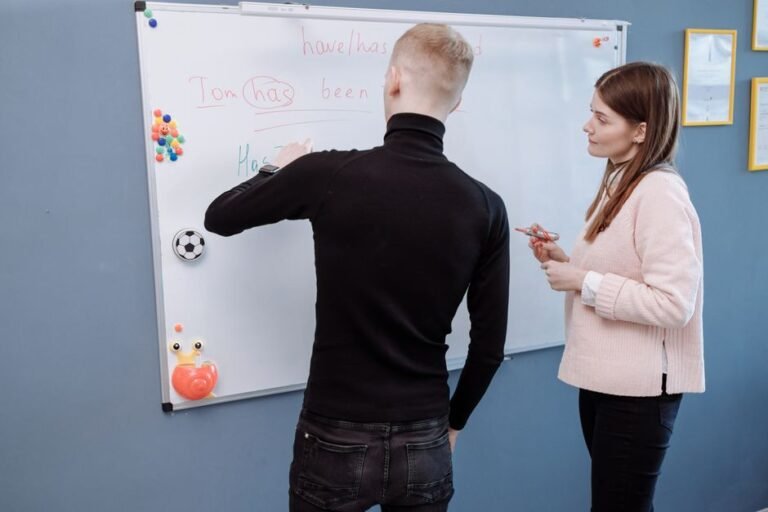
Master the most common English phrasal verbs using the verb-family method. GET, GO, TAKE, PUT, LOOK, and TURN families covered — ideal for Taiwan professionals and TOEIC prep.

English question formation trips up most learners in Taiwan, and the reason is structural. In Mandarin, you signal…

Quick Answer: Shopping English phrases cover four core situations: buying clothes (sizes, fitting rooms, payment), grocery and supermarket…

Quick Answer: Formal English uses complete sentences, professional vocabulary, and no contractions — “I do not agree.” Informal…

Stop memorizing phrasal verbs one by one. Learn the particle logic behind up, out, down, and off — and decode hundreds of common English expressions faster.

Collocations — the word pairs native speakers use automatically — are the hidden engine of natural English. Master the patterns behind verb+noun, adjective+noun, and adverb+adjective pairings to level up your professional and TOEIC English.

Quick Answer: The passive voice in English is formed with be + past participle (e.g., “The report was…

Master academic vocabulary for IELTS and TOEFL using the context-first approach. Learn how the Academic Word List (AWL) works and build active command over 570 essential word families — strategies designed for Taiwan English learners.

Quick Answer: Making complaints in English means expressing dissatisfaction politely while staying solution-focused. Start with a softener (“I’m…
 Bahasa Indonesia
  English
  繁體中文
繁體中文  日本語
日本語  한국어
한국어  ไทย
ไทย  Tiếng Việt
  Français