
數字英文全攻略:基數、序數到大數字唸法 (2026) | Numbers in English
Ask a fluent Taiwanese professional to read “128,000,000” out loud in English and watch them hesitate for three seconds. The problem is not vocabulary. It is that Chinese counts in units of 萬 and 億 (groups of four digits) while English counts in thousand and million (groups of three), and the two systems collide in your head. This guide fixes that for good — cardinal numbers from 1 to 100, how ordinals work, the large-number conversions that trip everyone up, plus fractions, decimals, money, and phone numbers, all with conversion tables and real examples. By the end you will read numbers on sight instead of doing mental math first.

數字英文 is the foundation of everyday conversation, work meetings, and exams — get the rules straight and the memorizing gets easy.
數字英文基礎:基數與序數 (Cardinal vs Ordinal)
Before anything else, separate numbers into two families, because they do completely different jobs. Cardinal numbers answer “how many?” — one, two, three — and you use them to count quantities, give your age, and say prices. Ordinal numbers answer “which position?” — first, second, third — and you use them to rank things, give dates, and name floors.
Here is the difference in one sentence: you have three meetings today (cardinal), and the most important one is first (ordinal). Same number 3, two different words, two different meanings. The most common mistake I hear from Taiwanese students is mixing them — saying “I live on three floor” when it should be “I live on the ketiga floor.” Keep these two families apart in your mind and every rule below falls into place.
1 到 100 怎麼唸:基數英文 (Cardinal Numbers)
The numbers 1 through 12 are unique words with no pattern, so you simply memorize them: one, two, three, four, five, six, seven, eight, nine, ten, eleven, twelve. From 13 onward, a system kicks in and the memorizing stops.

Thirteen through nineteen follow the pattern “digit + teen”: thirteen, fourteen, fifteen, sixteen, seventeen, eighteen, nineteen. The multiples of ten follow “digit + ty”: twenty, thirty, forty (note: no “u”), fifty, sixty, seventy, eighty, ninety. For everything in between, join the two parts with a hyphen — 21 is twenty-one, 47 is forty-seven, 99 is ninety-nine.
There is a trap hiding here that catches Taiwanese speakers more than any other: the -teen versus -ty sound. Fourteen (14) and forty (40), fifteen (15) and fifty (50) differ by a single syllable, and native speakers tell them apart by stress. Fourteen stresses the second half (four-TEEN), while forty stresses the first (FOR-ty). Get the stress wrong when you say a price or a time and the other person hears a number ten times off.
| 數字 | Bahasa inggris | 數字 | Bahasa inggris |
|---|---|---|---|
| 13 | thirteen | 30 | thirty |
| 14 | fourteen | 40 | forty |
| 15 | fifteen | 50 | fifty |
| 21 | twenty-one | 88 | eighty-eight |
| 100 | one hundred | 101 | one hundred and one |
At three digits, British English adds “and” after the hundreds — 101 is “one hundred Dan one” — while American English often drops it to “one hundred one.” Both are correct. Pick one and stay consistent within a sentence instead of switching back and forth.
序數英文:日期與排名 (Ordinal Numbers)
Ordinals are even simpler than cardinals: in most cases you just add -th to the cardinal. Four becomes fourth, six becomes sixth, ten becomes tenth. Only a handful are irregular — first (1st), second (2nd), third (3rd), plus fifth (5th, not “fiveth”) and ninth (9th, drop the “e” from nine). For multiples of ten, change the “y” to “ie” and add th: twenty becomes twentieth, forty becomes fortieth.
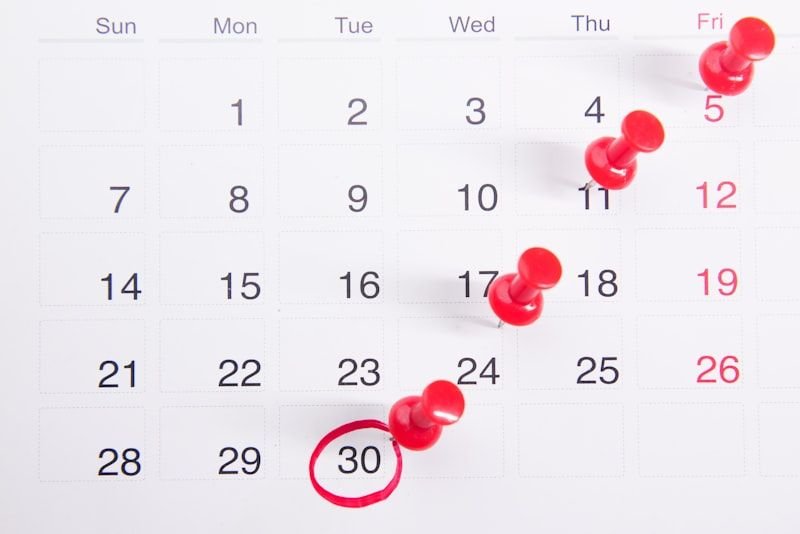
Ordinals show up most often in dates. “June 30” is “the thirtieth of June” in British style and “June thirtieth” in American style. In writing, you can shorten them to 1st, 2nd, 3rd, 4th. Floors, rankings, and centuries all use ordinals too: the ketiga floor, he came in second, the 21st century. To drill dates, days, and months together, see our complete guide to months in English.
大數字英文:千、萬、百萬、億的換算 (Large Numbers)
This is the biggest hurdle in 數字英文 and the exact spot where Taiwanese learners stall. The reason is simple: English changes units every three digits, Chinese changes units every four. The commas in a written number are your guide — 1,000 is thousand, 1,000,000 is million, 1,000,000,000 is billion. Chinese, meanwhile, runs on 萬 (4 zeros), 億 (8 zeros), and 兆 (12 zeros). The two rhythms do not line up, so translating word-for-word guarantees an error.

Two conversions are worth memorizing cold. Chinese 一萬 is not “one ten-thousand” — it is ten thousand. Chinese 一億 is one hundred million (literally a hundred millions). And English “one billion” maps to Chinese 十億, not 億. People who treat billion as 億 end up off by a factor of ten, which matters a lot when the number is a budget or a salary. The table below is the single most useful thing to bookmark in this article:
| tidak | 阿拉伯數字 | Bahasa inggris |
|---|---|---|
| 一千 | 1,000 | one thousand |
| 一萬 | 10,000 | ten thousand |
| 十萬 | 100,000 | one hundred thousand |
| 一百萬 | 1,000,000 | one million |
| 一千萬 | 10,000,000 | ten million |
| 一億 | 100,000,000 | one hundred million |
| 十億 | 1,000,000,000 | one billion |
| 一兆 | 1,000,000,000,000 | one trillion |
When you actually read a long number out loud, one method never fails: mark the commas, then read group by group from the left. Take 2,345,678. The commas split it into three groups, so from the left it becomes “two million, three hundred forty-five thousand, six hundred seventy-eight.” Each time you hit a comma, say that group’s unit (million, thousand) and read the three digits before it normally. One more rule native speakers always follow: thousand, million, and billion stay singular when used as number units — it is “five million dollars,” never “five millions dollars.”
分數與小數點英文 (Fractions & Decimals)
Fractions follow a neat logic: the numerator is a cardinal number and the denominator is an ordinal. So 1/3 is “one third,” 1/4 is “one quarter” or “one fourth,” and 3/4 is “three quarters.” When the numerator is more than one, the denominator takes an “s” — 2/3 is “two thirds,” 5/8 is “five eighths.” Picture a pizza to lock it in: cut it into four slices, take one, and you have eaten one quarter while three quarters remain on the plate.

Decimals work differently from how Chinese handles them. The decimal point is read as “point,” and — this is the key — every digit after the point is read separately, not as a whole number. So 3.14 is “three point one four,” not “three point fourteen,” and 0.5 is “zero point five” or, casually, “point five.” Read the whole-number part normally and the decimal part digit by digit and you will never get it wrong. Percentages are easy: just add “percent” after the number, so 25% is “twenty-five percent.”
金額與價格英文 (Money & Prices)
When you talk about money, the currency comes after the number, and in speech the unit words are usually dropped. The price $25.99 is formally “twenty-five dollars and ninety-nine cents,” but between a cashier and a customer it is almost always just “twenty-five ninety-nine” — the “dollars and cents” in the middle disappears entirely. That shortcut is the single most useful thing to practice before shopping abroad.

Large amounts reuse the three-digit rule from earlier. NT$1,500,000 is “one point five million New Taiwan dollars” or “one and a half million NT dollars.” When discussing salaries, native speakers often say “k” instead of thousand — “sixty k” means 60,000. For Taiwan dollars you can say “NT dollars” or “Taiwan dollars,” and in a conversation here, just saying “NT” gets the point across.
電話號碼、年份與其他數字 (Phone Numbers & Years)
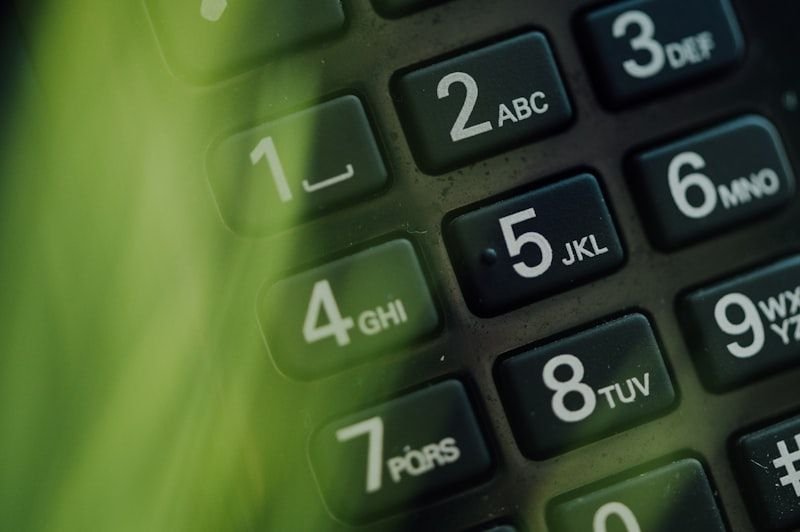
Phone numbers work the opposite way from large numbers: you read them one digit at a time and never convert to thousand or million. The number 0912-345-678 is read “oh nine one two, three four five, six seven eight” — and notice that 0 in a phone number is usually said as the letter “oh,” not “zero.” Two identical digits in a row can be combined with “double,” so 77 becomes “double seven,” which is especially common in British English.
Years have their own habits. 1998 is usually split in half as “nineteen ninety-eight”; 2000 is “the year two thousand”; 2008 is “two thousand and eight”; and 2025 goes back to the split form, “twenty twenty-five.” Temperatures, house numbers, and room numbers are mostly read digit by digit or as plain cardinals. Practicing numbers inside real situations beats drilling a number chart, which is also where English pronunciation practice helps — many number mistakes are actually pronunciation problems, not memory problems.
台灣人最常犯的數字英文錯誤 (Common Mistakes)
After years of teaching this, I find Taiwanese learners’ number mistakes cluster in the same three spots, and all three are easy to fix. The first is confusing -teen and -ty, saying thirteen when they mean thirty — most damaging when reporting quantities and times. The second is translating large numbers straight from Chinese, treating 一億 as billion when it is actually one hundred million, which throws the amount off by ten times. The third is pluralizing the unit, saying “three millions,” when million stays singular as a unit.
Here is the honest truth: when numbers do not flow, the problem is rarely that you forgot a word — it is that the two counting systems were never separated in your head. Instead of drilling 1 to 100 again, turn the English “comma every three digits” rhythm into a reflex. See 1,250,000, group it at the commas in your mind, read it group by group, and it comes out smoothly. Treat numbers as a system to understand rather than a pile of words to memorize, and that is the real shortcut. To build your overall English foundation, read our complete English learning guide for Taiwanese professionals.
常見問題 (FAQ)
Q: What is 一億 in English?
A: 一億 is one hundred million (100,000,000). Many people assume it is billion, but billion is 十億 (1,000,000,000). English has no single word for 億, so you express it as “hundred million.”
Q: How do I tell fourteen and forty apart?
A: By stress. Fourteen (14) stresses the second half (four-TEEN); forty (40) stresses the first (FOR-ty). Put the stress in the right place when saying quantities or times and listeners will not mishear you.
Q: How do you say 3.14?
A: “Three point one four.” The decimal point is read as “point,” and the digits after it are read separately, so never say “three point fourteen.”
Sumber
- Cambridge Dictionary — Numbers Grammar — authoritative grammar reference for cardinal, ordinal, and large numbers.
- BBC Belajar Bahasa Inggris — native-speaker models for number pronunciation and spoken usage.
- Merriam-Webster Dictionary — “billion” — standard definition and usage of billion and other large-number units.
Looking for free ESL worksheets for your classroom? Browse our free worksheet library →
Are you a teacher? Find lesson resources and worksheets at TahricTeaches.com.






 Bahasa Indonesia
  English
  繁體中文
繁體中文  日本語
日本語  한국어
한국어  ไทย
ไทย  Tiếng Việt
  Français