

TOEIC Preparation: A Complete 8-Step Guide (2026) | 多益準備
A TOEIC score of 750 is the unofficial line that a lot of Taiwanese companies draw for management-track hires, and the gap between a 600 and a 750 is worth roughly one salary bracket at many local firms. That single number decides graduations, promotions, and whether your résumé clears the first filter. The good news is that the TOEIC is one of the most learnable English exams on the planet — it is predictable, it repeats itself, and it rewards preparation over natural talent. This guide walks through the whole process, from understanding the test to building a study plan that fits around a full-time job.

What Is the TOEIC Test? (多益測驗是什麼?)
The TOEIC (Test of English for International Communication) measures everyday and workplace English. The version that matters for most people in Taiwan is the Listening and Reading test: a two-hour, 200-question, multiple-choice exam scored from 10 to 990. There is no essay and no speaking in this version, which is exactly why it feels manageable — you are choosing A, B, C, or D the entire time.
The test splits cleanly into two halves. Listening runs 45 minutes and 100 questions across four parts: photographs, question-response, short conversations, and short talks. Reading runs 75 minutes and 100 questions across three parts: incomplete sentences, text completion, and reading comprehension. Each half is scored out of 495, and your total is the sum. Knowing that Part 5 (grammar and vocabulary sentences) and Part 7 (reading passages) together make up the bulk of the Reading section tells you where your study hours should go before you write a single answer.
TOEIC Score Bands and What They Mean (多益分數對照)
A raw number means nothing until you know what doors it opens. Taiwan’s job market treats the TOEIC as a proficiency shorthand, and different employers set very different bars. Here is how the bands typically map to opportunities:
| Score (分數) | Level | What It Unlocks in Taiwan |
|---|---|---|
| 905–990 | Canggih | International roles, foreign-company management, near-native workplace English |
| 785–900 | Working Proficiency | Most airline, tech, and finance graduate programs; management track |
| 550–780 | Limited Working | Many university graduation requirements; entry-level corporate jobs |
| 225–545 | Dasar | Basic communication; below most professional thresholds |
The practical target for most working professionals is the 750–850 window. That range clears nearly every corporate requirement in Taiwan without forcing you into the punishing grind that the last 100 points to 990 demands. Set your goal here first; chase perfection later, if a specific job asks for it.

TOEIC Preparation: 8 Steps to a Higher Score (多益準備 8 步驟)
Effective TOEIC preparation is a sequence, not a pile of random practice. Follow these eight steps in order and you avoid the classic trap of grinding hundreds of questions while your score refuses to move.
- Take a diagnostic test first. Sit one full, timed practice test before you study anything. Your baseline score tells you whether you need 6 weeks or 16, and it splits your weakness between Listening and Reading.
- Learn the format cold. Memorize what each of the seven parts asks. On test day you should never waste a second reading instructions — you already know them.
- Attack your two weakest parts. If Part 2 and Part 7 are dragging you down, 70% of your study time goes there. Do not polish parts you already answer at 90% accuracy.
- Build a core vocabulary list. Roughly 1,000 words carry the workplace themes the TOEIC recycles — contracts, invoices, schedules, personnel, logistics. Learn those before obscure ones.
- Drill in timed blocks. The TOEIC punishes slow readers. Practice each part against the clock from week one so speed becomes a habit, not a panic.
- Review every wrong answer. The point of practice is not the score — it is the error log. Write down why each miss happened: vocabulary, grammar, speed, or a careless slip.
- Simulate the full test. Two weeks out, sit a complete two-hour mock in one go. Stamina is a skill, and the second hour is where scores quietly collapse.
- Rest before test day. Cramming the night before lowers listening accuracy more than one extra study session raises it. Sleep is part of the strategy.
If you only take one idea from this list, make it the error log. The test-takers who improve fastest are not the ones who do the most questions — they are the ones who understand every question they got wrong.
TOEIC Listening Tips (多益聽力技巧)
The Listening section is where Taiwanese test-takers usually gain points fastest, because the audio is standard business English delivered at a steady pace. The single biggest fix is learning to read ahead. In Parts 3 and 4, the questions and answer choices are printed in your book — read them before the audio starts so you know exactly what to listen for. Passive listening while you wait for the question is how easy points slip away.
Accent exposure is the other lever. The TOEIC mixes American, British, Canadian, and Australian voices, and the Australian and British speakers trip up learners who trained only on American media. Spend a few weeks deliberately listening to a range of accents, and consider working through a focused method to improve your English listening so the exam audio feels familiar rather than foreign. Shadowing — repeating audio out loud a half-second behind the speaker — sharpens both your ear and your rhythm.

The short video below breaks down Part 1 photograph questions and the traps the test setters build in — the kind of pattern recognition that turns guesses into confident answers.
TOEIC Reading Tips (多益閱讀技巧)
Reading is where the clock beats people. You get 75 minutes for 100 questions, and Part 7 alone can swallow that whole budget if you read every passage word for word. The winning approach is to read the question first, then scan the passage for the specific detail it asks about. For single-passage questions, the answers usually appear in the same order as the text, so you rarely need to hunt backward.
Part 5 — the incomplete-sentence questions — is your speed bank. Each one should take under 20 seconds, because most test a single grammar point or word choice you can spot instantly once you know the pattern. Banking time on Part 5 gives you the breathing room to handle the double- and triple-passage sets at the end of Part 7. A quick discipline that pays off: if a Part 7 question stumps you for more than 30 seconds, mark your best guess, flag it, and move on. There are no bonus points for the hardest question, and a blank later answer costs the same as a wrong one.

TOEIC Vocabulary: Words You Must Know (多益單字)
The TOEIC lives in a narrow world: offices, travel, shopping, contracts, meetings, and logistics. That focus is a gift, because it means a defined set of words shows up again and again. Learning them in themed clusters beats memorizing an alphabetical list, since the exam presents them in context. Here are a few high-frequency examples grouped the way the test uses them:
| Theme | Words That Repeat |
|---|---|
| Office & HR | applicant, personnel, résumé, deadline, agenda, reimburse |
| Finance | invoice, expense, budget, revenue, refund, quarterly |
| Logistics | shipment, warehouse, inventory, delayed, delivery, supplier |
| Travel | itinerary, boarding, reservation, delayed, luggage, departure |
Do not just memorize single words — the TOEIC loves collocations, the natural word pairs like “meet a deadline,” “submit an application,” and “place an order.” Learning words in these pairs is faster and more test-accurate than drilling them alone. If you want a system for this, our guide on how to learn English collocations the smart way maps directly onto the phrasing the exam rewards.

Building a TOEIC Study Plan (多益讀書計畫)
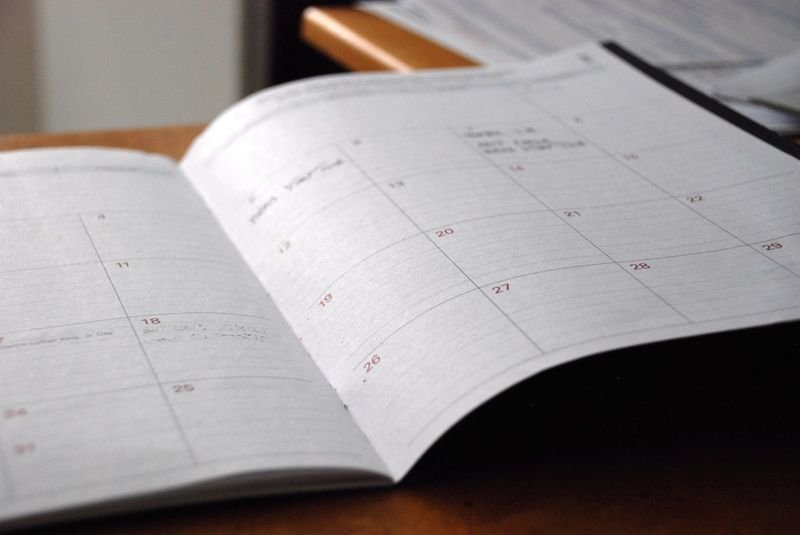
A plan you can actually keep beats an ambitious one you abandon after a week. For a working professional starting around 550 and targeting 750, an eight-week schedule at 45 minutes on weekdays plus one longer weekend session is realistic. The shape matters more than the exact hours — front-load learning, back-load full simulation.
| Week | Focus |
|---|---|
| 1 | Diagnostic test + learn all seven part formats |
| 2–3 | Listening Parts 1–4 drills + 200 core vocabulary words |
| 4–5 | Reading Parts 5–7 drills + 200 more vocabulary words |
| 6 | Target your two weakest parts + review error log |
| 7 | Full timed mock test #1 + full review |
| 8 | Full timed mock test #2, light review, rest |
Track your mock-test scores on a simple chart. Seeing the line climb from 560 to 690 to 740 does more for motivation than any pep talk, and a flat week tells you to change your method before you waste another one.
Common Mistakes Taiwanese Test-Takers Make (常見錯誤)
After years of watching students prepare for this exam, the same avoidable mistakes cost points again and again. The most expensive one is studying English in general instead of studying the TOEIC specifically. Watching Netflix with subtitles is pleasant, but it will not teach you to answer 100 reading questions in 75 minutes. The exam is a skill of its own, and it needs targeted practice.
The second mistake is buying a stack of prep books and finishing none of them. One good practice-test book worked through completely — every question reviewed, every wrong answer understood — beats five books skimmed. The third is skipping the timed full mocks because they feel exhausting. That exhaustion adalah the point; the real test is a two-hour endurance event, and the students who never rehearse the full length are the ones whose Reading scores crater in the final 20 questions. Train the stamina, not just the skills.
TOEIC Practice Resources (多益資源)
You do not need to spend a fortune on a cram school to hit 750. The official ETS practice materials are the gold standard because they mirror the real test’s difficulty and question style exactly — no third-party book gets the tone perfectly right. Pair one official practice book with free daily listening online, and you have a complete kit.
Online platforms and apps are useful for the daily habit, especially for squeezing vocabulary review into your commute on the Taipei MRT. The trick is consistency over intensity: ten minutes every single day beats a three-hour binge every Sunday. Whatever mix of resources you choose, make sure at least two or three of your practice tests come from official sources so your final score prediction is honest. Companies increasingly ask for TOEIC scores alongside an Wawancara kerja berbahasa Inggris, so treat your preparation as part of the same career investment.

Pertanyaan yang Sering Diajukan (常見問題)
How long does it take to prepare for the TOEIC? (多益準備要多久?) For a jump of roughly 150–200 points, plan on eight to twelve weeks of steady daily study. Larger jumps, or starting from a lower base, can take four to six months. Consistency matters far more than total hours crammed into a short window.
What is a good TOEIC score? (多益幾分算高?) In Taiwan, 750 clears most corporate and graduation requirements, 850 marks strong working proficiency, and anything above 900 signals near-native ability. Aim for the score your target job actually asks for rather than an abstract “high” number.
Is the TOEIC hard? (多益很難嗎?) It is more predictable than academic exams like IELTS or TOEFL because it uses standard workplace English and multiple-choice answers. The difficulty is speed and stamina, not obscure language — which is exactly why targeted preparation works so well.
Can I pass the TOEIC without a cram school? (不補習可以嗎?) Yes. A disciplined self-study plan built on official practice tests and daily listening reaches 750+ for most motivated learners. Cram schools mainly sell structure and accountability, both of which you can build yourself with a written schedule.
Your Next 45 Minutes
The score you want is closer than the number on your last practice test suggests — the TOEIC rewards strategy, and strategy is learnable in a way that fluency is not. Do not wait for the “right time” to start. Sit one timed diagnostic test this week, log every wrong answer, and let that single data point build your plan. Eight focused weeks from now, that 750 stops being a wall on your résumé and becomes a line on it. Ready to sharpen the half that moves fastest? Start with our method to improve your English listening and turn the TOEIC audio into your easiest points.
Sumber
- ETS — TOEIC Official Test Information — the test maker’s format, scoring, and score-descriptor documentation.
- TOEIC Taiwan (忠欣公司) — official Taiwan administrator: registration, test dates, and local score reporting.
- E2 TOEIC — Listening Part 1 Tips — video walkthrough of photograph-question strategy.
Looking for free ESL worksheets for your classroom? Browse our free worksheet library →
Are you a teacher? Find lesson resources and worksheets at TahricTeaches.com.






 Bahasa Indonesia
  English
  繁體中文
繁體中文  日本語
日本語  한국어
한국어  ไทย
ไทย  Tiếng Việt
  Français