
Negotiation English: 35 Phrases Taiwan Pros Use to Close Deals (2026) | 談判英文
Most Taiwan professionals lose 8–15% of every cross-border deal in the first five minutes of a negotiation in English — not because their numbers are wrong, but because their negotiation English phrases hand the buyer free ground they never had to ask for. 談判英文不是把中文直接翻譯就好。 The fix is a set of 35 stage-by-stage phrases that signal you know the game, paired with three words you need to stop saying immediately. This guide walks through every stage of a real business negotiation — opening, exploring, counter-proposing, pushing back, conceding, closing — with the exact English you can paste into your next supplier call, salary review, or contract meeting in Taipei.

Closing a deal in English needs more than a firm handshake — it needs the right phrase at the right stage.
Before we get into the phrase bank, watch this 12-minute primer from Derek Callan. He covers the rhythm of a B2B negotiation in English better than most textbooks, and the cadence he models is exactly what your American or European counterpart expects to hear.
Why Negotiation English Feels Different for Taiwan Pros | 為什麼談判英文對台灣人特別難
Taiwanese business culture rewards 客氣 — polite hedging, group consensus, indirect signals. American and European negotiators read those same signals as weakness, indecision, or even a hidden “yes” they can keep pushing on. That mismatch is what costs you margin. A 2024 Harvard Program on Negotiation report on intercultural BATNA confirmed it: negotiators from high-context cultures who soften their English with too many maybes get smaller concessions than those who state numbers flat.
The cure is not to become rude. It is to learn which English phrases sound assertive to a Western ear while still feeling polite to you. Every section below gives you those phrases organized by where you are in the conversation.
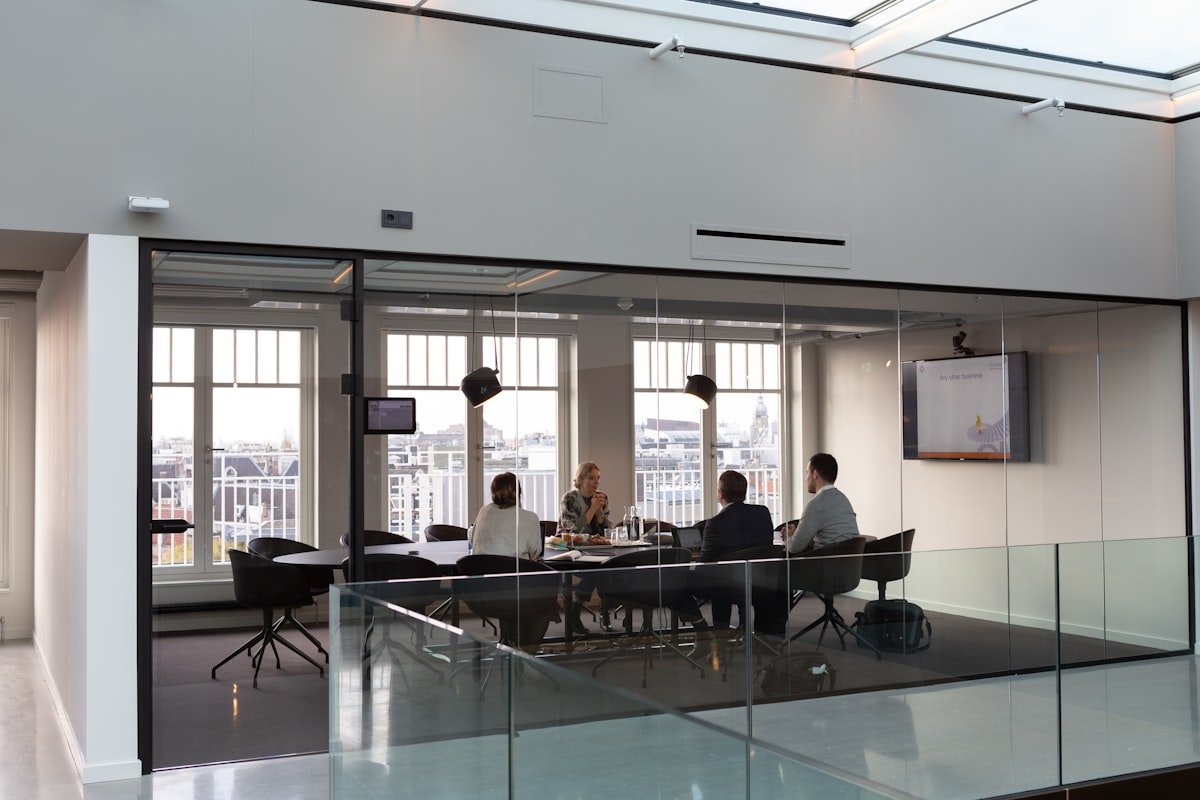
Stage 1 — Opening the Negotiation in English | 階段一:開場 (5 句)
The opening sets the temperature. Skip small talk longer than 90 seconds — American buyers read extended chit-chat as time-wasting. Frame the meeting, name the goal, and move.
- “Thanks for making the time. Before we begin, can we agree on the agenda?” — frames you as the organized party. 讓對方知道你掌握節奏。
- “Our goal today is to finalize the unit price and the delivery window — does that match yours?” — names the deliverables in the first 60 seconds.
- “I’d like to keep this to 45 minutes if possible.” — sets a soft time box and protects your day.
- “Just so we’re aligned, my mandate today covers price and lead time, not payment terms — those go to our finance team.” — pre-removes a topic you don’t want to negotiate cold.
- “Before we go into details, what does a good outcome look like for you?” — pulls the other side’s priorities into the open before yours.
Stage 2 — Stating Your Position Without Hedging | 階段二:表態 (5 句)
This is where most Taiwan pros lose 5% off their margin without realizing it. They state a price, then immediately soften it with “maybe” or “I think.” A good English position statement is short, specific, and stops at the period.
- “Our position is USD 4.80 per unit for an order of 10,000 pieces.” — leads with the number, no apology.
- “That price is based on current copper pricing and a 30-day lead time.” — justifies once, then stops.
- “We’re firm on the unit price, but we have flexibility on delivery.” — tells them where to push so they don’t push everywhere.
- “This offer is good through Friday.” — gives the deal a clock without sounding pushy.
- “I want to be direct so we don’t waste each other’s time — anything below USD 4.50 is not workable for us.” — names the floor before they probe for it. 直接但禮貌。

Stage 3 — Asking the Right Questions | 階段三:探詢對方底線 (5 句)
The negotiator who asks better questions usually wins. The negotiator who waits in silence after asking always wins. Every phrase below should be followed by 3 seconds of silence. Do not fill it.
- “Help me understand — what’s driving that number?” — pulls the other side’s logic into the open.
- “What would you need to see from us to make this work?” — moves them from objecting to problem-solving.
- “If we couldn’t agree on price, what other levers are on the table for you?” — surfaces hidden trade variables (volume, payment terms, exclusivity).
- “Walk me through how you arrived at that figure.” — slows them down and exposes shaky math.
- “What’s your timeline on this — is there a date you’re working back from?” — finds the deadline that gives you power.
Stage 4 — Counter-Proposing in English | 階段四:還價 (5 句)
A counter-offer in English needs three parts: a brief acknowledgment, a clear number, and a reason. Skip any of the three and you sound either rude or weak.
- “I hear you on the volume concern. Our counter is USD 5.10 per unit at 8,000 pieces.”
- “That’s outside what we can do. What I can offer is USD 4.95 with a 45-day lead time.”
- “If you can move to 12,000 units, we can come down to USD 4.65.” — classic conditional, ties their give to yours.
- “Let me propose a different structure: same price, but split shipment across two months.” — changes the variable rather than the number.
- “What if we held the price but extended the contract to 12 months?” — opens trade space when price is locked.

Stage 5 — Pushing Back Politely in English | 階段五:禮貌反駁 (5 句)
Saying no in English without burning the room is its own skill. The trick is to push back on the offer, not the person. Borrow these five and you can disagree all day without anyone getting offended.
- “I appreciate the offer, but it doesn’t reflect the value we’re bringing.”
- “I respect where you’re coming from, but I have to push back on that number.”
- “That’s not going to work for us, and here’s why — our raw materials cost has risen 14% since last quarter.”
- “With respect, I think we’re undervaluing the lead-time advantage on our side.”
- “Let’s set that point aside for now and come back to it once we’ve agreed on the bigger picture.” — parks an issue without conceding.
Stage 6 — Making Concessions Strategically | 階段六:策略性讓步 (5 句)
Never give a concession without naming what you want in return. The classic Taiwan mistake is to say “okay, we can do that” out of politeness — and then watch the other side pocket the gain and ask for one more. Trade, don’t gift.
- “I can do that, but only if we lock in the order this week.”
- “We can come down 3% — provided you cover the inspection costs.”
- “That’s a meaningful concession on our side. What can you offer in return?” — forces a reciprocal move.
- “I’ll need to check with my team, but assuming they agree, we’d want a signed letter of intent by Friday.”
- “This is the last move we can make on price. Are we close to a deal?” — signals the floor without ending the conversation.

Stage 7 — Closing the Deal | 階段七:成交 (5 句)
Closing in English is about being clear that the negotiation is over. Many Taiwan pros stop short of this phrase — they say “okay” and assume the deal is sealed, then re-open it accidentally with one more polite “are you sure?” These five lines lock it in.
- “It sounds like we have a deal. Let me read back the key terms to confirm.”
- “Great — so we’re agreed at USD 4.80 per unit, 10,000 pieces, 30-day lead time, FOB Kaohsiung. Correct?”
- “I’ll send a written summary within 24 hours and we’ll move to contract draft on Monday.”
- “Pleasure doing business with you. I’m looking forward to the partnership.”
- “Let’s shake on it and put it in writing.” — Western closure ritual; signals you treat the spoken agreement as binding.

Three “Kill Words” That Weaken Every Negotiation in English | 三個削弱談判力的禁忌字
The truth is, most Taiwan pros could keep an extra 5–8% on every deal by removing three habits from their English alone. None of them are grammar mistakes — they are confidence leaks.
“Maybe.” A Western buyer hears “maybe USD 5.00” as “definitely cheaper than USD 5.00 if you push.” Replace with “Our number is USD 5.00.”
“I think.” Saying “I think 30 days is reasonable” tells the other side you are unsure. Drop the prefix entirely. “Thirty days is reasonable.”
“A little.” “We could come down a little” is an invitation to ask how much. Name the number or say nothing. “We can come down 2%.”
Read your last negotiation email out loud. Count how often these three words appear in your offers. Anything above zero is leaking margin.
Cultural Bridge — What American Counterparts Expect | 文化橋樑:美國對手期待什麼
その Harvard Program on Negotiation has spent four decades documenting that American negotiators expect their counterpart to name a BATNA — a Best Alternative To a Negotiated Agreement. If you never mention your alternative, they assume you do not have one. That assumption costs you the entire deal.
The English you need is simple: “If we can’t make this work, our fallback is a 6-month run with our current supplier.” You do not need to be loud about it. You just need to put the alternative in the room. Combined with the stage-by-stage phrases above, naming a credible BATNA is the difference between a 4% concession and an 11% one.
For a quick refresher on how to set up the email side of any deal you close in person, our business email English phrases for Taiwan pros guide covers the post-handshake follow-ups. And if your next negotiation is internal — say, a year-end review — pair this with our English templates to ask for a raise.

Your Negotiation English Practice Plan | 本週練習計畫
Reading 35 phrases once changes nothing. What changes everything is rehearsing them out loud until they feel automatic. Here is a 5-day plan you can run alongside your normal workday.
- Day 1. Record yourself saying each of the 35 phrases. Listen back. Note the ones you hedge or rush.
- Day 2. Pair with a colleague. Run a mock supplier call. One of you plays buyer, one plays seller. Use only the Stage 1–3 phrases.
- Day 3. Same mock call, but bring in Stage 4–6. Force yourself to demand a concession in return every time you give one.
- Day 4. Watch the Derek Callan video at the top of this article a second time. Pause after every phrase he uses and check if you have an equivalent in your bank.
- Day 5. Write a one-page negotiation prep sheet for your next real meeting: opening line, position statement, BATNA, walk-away number, and three counter-proposal templates.
The salary review, the supplier renewal, the contract extension — these are all the same conversation in different clothes. The Taiwan pros who keep an extra two months of salary or 6% of their cost of goods every year are not smarter. They just rehearsed the English until it stopped sounding like a translation. Start with phrase number six — name your number, say it firm, then say nothing — and you will feel the room shift on the next deal.
情報源
- Harvard Program on Negotiation — BATNA archive — research-backed framework on Best Alternative To a Negotiated Agreement.
- Preply Business — B2B Business English Negotiation — overview of phrases and tactics for non-native English speakers.
- 關鍵評論網 — 商業談判八階段英文句型 — Taiwan-focused 8-stage negotiation framework with bilingual examples.
- Derek Callan — 62 Useful Phrases For Negotiating (YouTube) — video reference for tone and pacing of B2B English negotiations.
- EnglishClub — 9 Useful Expressions for Business Negotiations — phrase-level reference for opening, conceding, and closing.
Looking for free ESL worksheets for your classroom? Browse our free worksheet library →
Are you a teacher? Find lesson resources and worksheets at TahricTeaches.com.





 日本語
日本語  English
  繁體中文
繁體中文  한국어
한국어  ไทย
ไทย  Bahasa Indonesia
  Tiếng Việt
  Français