

How to Learn English Collocations the Smart Way | 英文搭配詞學習法
本文重點: 這篇文章帶你了解英文搭配詞 (collocations) 的學習方法,適合想提升口說與寫作流暢度的台灣上班族與英文學習者。內容涵蓋搭配詞的運作原理、搭配詞筆記本的建立方式,以及一套實用的每週練習系統,讓你的英文聽起來更自然道地。
You have studied English for years. You know thousands of words. And yet, when you write an email or speak in a meeting, something still sounds slightly off — a native speaker would never quite put it that way. The problem usually is not your vocabulary size. It is that you are storing words one by one, like loose beads, when fluent English actually comes pre-strung in pairs and chunks. Those chunks are called collocations (搭配詞), and learning to collect them is one of the highest-leverage things any intermediate learner can do.
This guide is not a list of phrases to memorize overnight. It is a way of thinking about vocabulary — and a repeatable study system — so that the right word partnerships start arriving in your head automatically. Whether you are preparing for the TOEIC (多益), writing reports at work, or simply tired of sounding like a textbook, the approach below will reshape how you learn.
Why Knowing Single Words Isn’t Enough | 為什麼背單字不夠
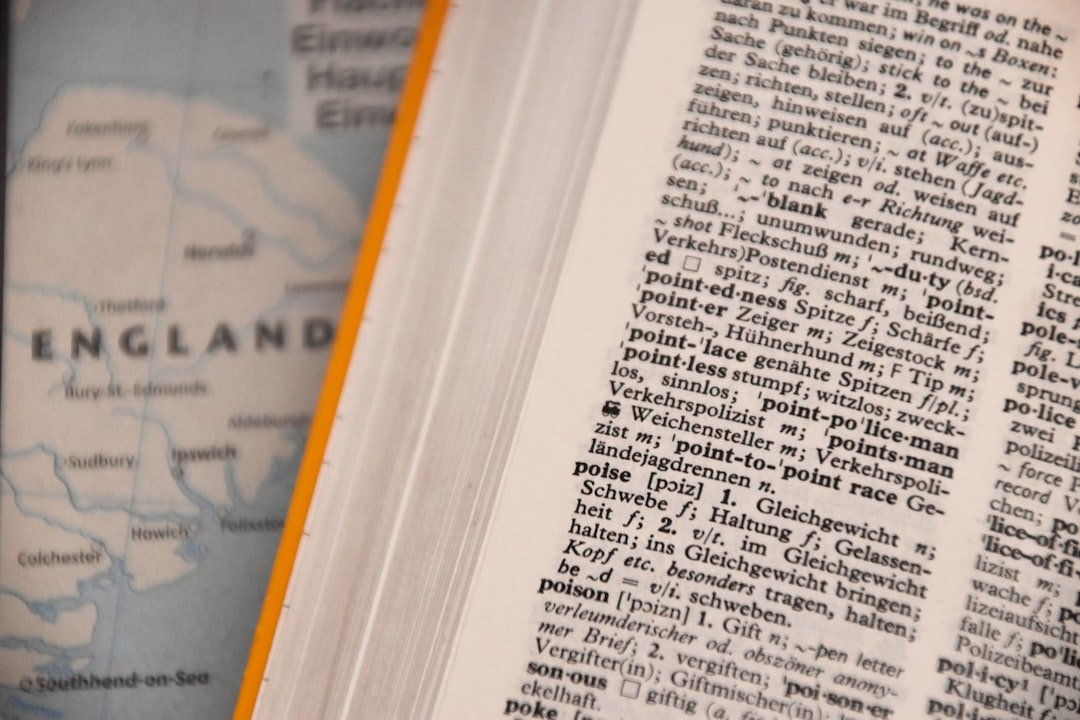
Imagine you want to say that you spent a lot of effort on a project. You know the word “effort.” But do you make an effort, do an effort, or take an effort? Only one is correct: you make an effort. Each of those verbs is grammatically possible, yet a native speaker hears only one as natural. That instinct is collocational knowledge, and it is exactly what years of single-word flashcards fail to build.
English is full of these invisible rules. We say “heavy rain” but not “strong rain.” We “take a photo,” never “make a photo.” We are “deeply concerned” but “highly unlikely.” None of this follows logic you can translate from Chinese — and that is the trap. When you build sentences word by word, you are constantly guessing at combinations that fluent speakers simply remember as single units. The result is English that is grammatically correct but subtly unnatural, the kind that costs you marks on the writing section of an exam or quiet credibility in a business email (商業英文).
The good news: collocations are learnable, and once you start noticing them, you cannot stop. They are everywhere in the input you already consume.
What Collocations Actually Are | 搭配詞到底是什麼
A collocation is simply a pair or group of words that habitually appear together because, over time, that is how the language settled. There is no grammatical law forcing “make a decision” over “do a decision” — it is convention, reinforced by millions of speakers. Linguists describe collocations as the difference between language that is possible and language that is probable.
Strong vs. Weak Collocations | 強搭配與弱搭配
Some words are fussy about their partners. “Rancid” almost only pairs with butter or oil — that is a strong collocation, with very few partners allowed. “Fast,” on the other hand, happily attaches to food, car, runner, train, and dozens more; it is a weak collocation. Knowing which is which tells you where to spend your effort. Strong collocations are worth memorizing as fixed chunks, because guessing them is risky. Weak ones you can largely build by feel.

The Main Patterns | 主要的搭配模式
Most collocations fall into a handful of recognizable grammatical shapes. Once you can name the shape, your brain files new examples faster:
- Verb + noun: make a decision, raise a question, meet a deadline
- Adjective + noun: heavy traffic, strong coffee, a tough call
- Adverb + adjective: deeply grateful, highly effective, fully aware
- Verb + adverb: apologize sincerely, drive carefully, whisper softly
- Noun + noun: a sense of humor, a round of applause, a pang of guilt
You do not need to memorize these category names for a test. Their value is practical: when you meet a new word, asking “what verb usually goes with this noun?” or “what adverb intensifies this adjective?” turns one word into three or four ready-made phrases.
Building a Collocation Notebook | 建立你的搭配詞筆記本
The single most effective habit for collocations is keeping a dedicated notebook — paper or digital, it does not matter — organized not by single words but by partnerships. This is where most learners go wrong: a traditional vocabulary list records “decision = 決定” and stops there. A collocation notebook records the company that word keeps.
Instead of one isolated entry, give each key word its own page and surround it with the partners you encounter. Under “decision,” you might collect: make a decision, reach a decision, postpone a decision, a tough decision, a snap decision, reverse a decision. Now you are not learning a word — you are learning a small network. When you need it later, you reach for the whole cluster, and the natural phrasing comes attached.
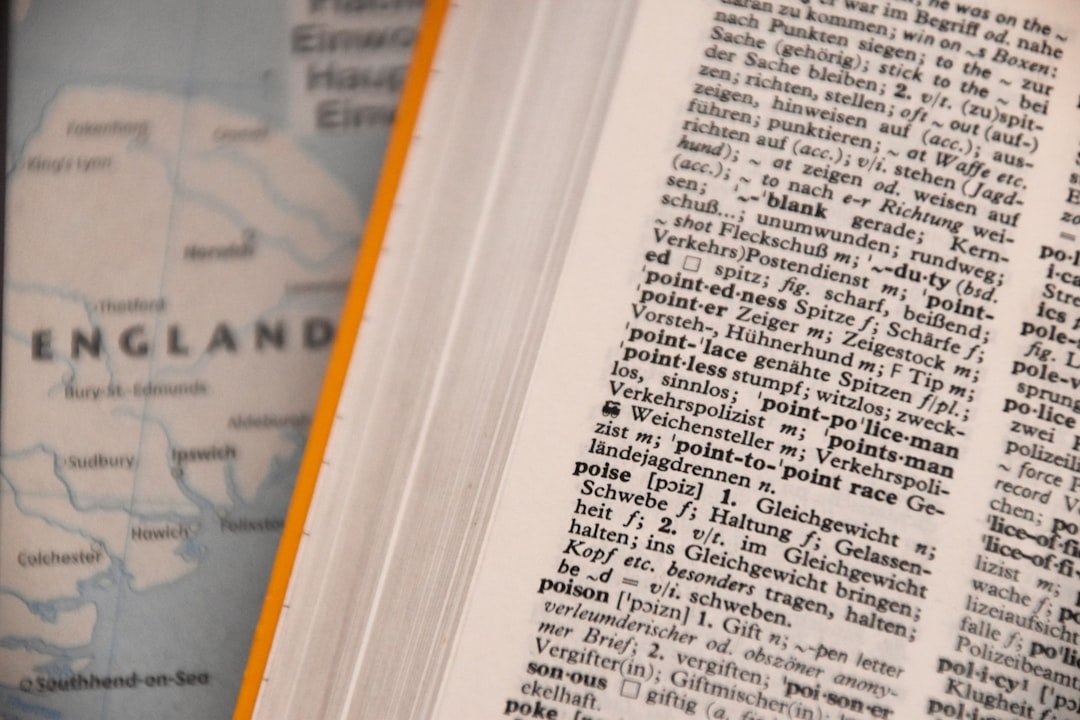
A few principles keep the notebook useful rather than overwhelming. Record collocations in full example sentences, not bare pairs, so you also capture grammar and context. Mark Chinese translations sparingly — only when the meaning is genuinely unclear — because the goal is to think in English chunks, not to translate. And review by covering the partners and trying to reproduce them from the keyword alone. That act of retrieval, not rereading, is what moves a collocation into long-term memory.
Learning Collocations from Real Input | 從真實語料中學習
You cannot invent natural collocations — you can only notice and borrow them. That means your raw material has to be real English produced by fluent speakers: news articles, podcasts, well-edited blogs, TED talks, business emails you receive. Textbook dialogues are fine for grammar, but for collocations you want language in the wild.
The technique is deceptively simple. As you read or listen, hunt specifically for verb-and-noun or adjective-and-noun pairs that you would not have produced yourself. When you catch one — say a journalist writes “the policy sparked outrage” where you might have written “caused outrage” — that small gap between your version and theirs is gold. “Spark outrage” is more vivid and more idiomatic. Write it down. Over weeks, these noticed differences accumulate into a noticeably more native style.

This is also why working with an English tutor (英文家教) can accelerate things: a good teacher catches the collocations you get almost right and supplies the natural alternative on the spot, which is feedback no dictionary can give in real time. But even alone, the noticing habit is the engine. Input without attention does little; input with a collocation radar switched on changes everything.
Tools That Actually Help | 真正有用的工具
A regular dictionary tells you what a word means. A collocation dictionary tells you what a word does — which verbs, adjectives, and prepositions it naturally takes. This is the difference between knowing “argument” and knowing that you can win, lose, settle, provoke, または have an argument. For serious learners, especially those writing for the TOEIC, IELTS (雅思), or professional work, a dedicated collocation reference is the most underrated tool in the kit.
Online, the Cambridge and Oxford learner’s dictionaries both flag common collocations inside their entries, and free corpus tools let you type a word and see the partners it most frequently appears with in real published text. That frequency data is powerful: it tells you not just what is possible, but what is common — so you spend your memory on the combinations you will actually need. A physical collocation dictionary on your desk, meanwhile, invites the kind of browsing that quietly builds intuition.
A Weekly Practice Routine | 每週練習節奏
Knowledge without rehearsal fades, so collocations need a light, sustainable rhythm rather than a cram session. A routine that works for busy professionals looks something like this across an ordinary week. Early in the week, harvest: spend twenty minutes reading something real and pulling five to eight fresh collocations into your notebook. Midweek, activate them — write a few of your own sentences using the new pairs, ideally about your actual work or life so the context sticks. Toward the weekend, review by retrieval, covering the partners and recalling them from the keyword.
The volume matters less than the consistency. Five solid collocations a week is two hundred and sixty a year — and because each one carries its own grammar and context, that is the practical equivalent of a far larger vocabulary gain. The compounding is quiet but real. After a few months you will catch yourself reaching for “meet a deadline” or “raise concerns” without translating, which is exactly the automaticity you are after.
Common Traps for Taiwanese Learners | 台灣學習者常見陷阱
The biggest obstacle is direct translation from Mandarin. Many collocation errors are really Chinese partnerships wearing English clothes — translating each word correctly but keeping the Chinese pairing. The classic example is saying “open the light” (開燈) instead of “turn on the light,” because 開 maps neatly onto “open” in your head. English simply chose a different partner verb, and no amount of grammar study reveals that; only collected collocations do.
A second trap is over-relying on a few safe, all-purpose verbs — “do,” “make,” “have,” “get” — and stretching them over everything. They are useful, but leaning on them flattens your English and produces wrong pairings (“do a mistake” instead of “make a mistake”). The fix is to deliberately learn the precise verb each noun prefers. A third, subtler trap is treating collocations as decoration to add later. They are not polish applied at the end; they are the structure fluent speakers build with from the start, so weave them in from your first draft, whether you are writing an email or an essay.

Frequently Asked Questions | 常見問題
How many collocations should I learn? | 我該學多少搭配詞?
There is no fixed number, and chasing one misses the point. A steady five to eight well-chosen collocations a week, properly reviewed and actually used, will outperform a list of five hundred you skim once. Quality of attention beats quantity every time.
Are collocations tested on the TOEIC and IELTS? | 多益和雅思會考嗎?
Yes, heavily, even when they are not labeled as such. Vocabulary and gap-fill questions on the TOEIC (多益) often hinge on choosing the natural partner word, and IELTS (雅思) writing and speaking bands reward exactly the idiomatic phrasing that strong collocational knowledge produces. Studying collocations is one of the most direct ways to raise both scores.
Should I translate collocations into Chinese? | 要把搭配詞翻成中文嗎?
Only when the meaning is genuinely unclear. The whole goal is to store the English chunk as a single unit and reach for it without translating. Over-translating re-creates the very Mandarin-to-English mapping that causes collocation errors in the first place.
Collocations are where vocabulary stops being a dictionary in your head and starts becoming a language you can actually move in. Start a notebook this week, switch on your noticing radar, and give it a few months of light, consistent attention. The day you write “meet the deadline” without thinking is the day fluent English quietly becomes yours.
Sources | 參考資料
- Wikipedia — Collocation
- ケンブリッジ辞書
- Oxford Learner’s Dictionaries
- British Council — Learn English
- English collocation dictionaries (Amazon)
Looking for free ESL worksheets for your classroom? Browse our free worksheet library →
Are you a teacher? Find lesson resources and worksheets at TahricTeaches.com.





 日本語
日本語  English
  繁體中文
繁體中文  한국어
한국어  ไทย
ไทย  Bahasa Indonesia
  Tiếng Việt
  Français