

Situational English: The Vocabulary You Only Remember When You Actually Need It | 情境英文單字
本文重點:本文探討「情境式英文單字」學習法,適合台灣上班族(台灣上班族)提升英文學習(英文學習)成效。與其死背單字表,不如把旅遊英文、美食英文、科技英文與健康英文放進真實情境中記憶。內容涵蓋機場、餐廳、會議室與診間四大場景,並提供打造個人情境單字群的實用方法,對商業英文與多益準備都有幫助。
You studied the word. You wrote it in a notebook, maybe even highlighted it. Then you stood at an airport counter in Singapore, or in front of a foreign client in a Taipei meeting room, and the word simply vanished. Five minutes later, walking away, it came back to you — useless and too late. Almost every learner in Taiwan knows this frustrating feeling, and it has nothing to do with intelligence or effort. It has to do with how the word was stored in the first place. The truth is that vocabulary you memorize from a flat list and vocabulary you learn inside a real situation are stored in completely different ways — and only one of them shows up when you need it.
This guide is about the second kind: situational English. Instead of treating “travel,” “food,” “technology,” and “health” as four vocabulary categories to be memorized, we’ll treat them as four places you actually stand — a boarding gate, a dinner table, a meeting room, a clinic — and see how the right words attach themselves to those moments and stay there.
Why Word Lists Quietly Fail You | 為什麼背單字表沒有用
A vocabulary list gives you a word and its Chinese translation side by side. It feels productive — you can review fifty words in ten minutes and tick a box. But your brain doesn’t file words by their dictionary meaning; it files them by association. A word learned on a list has only one hook: the translation next to it. A word learned in a situation has dozens of hooks — the sound of the airport announcement, the smell of the restaurant, the stress of the meeting, the face of the person you were talking to.
Memory researchers call this encoding specificity: you recall information best in a context that resembles the one where you learned it. This is exactly why English learned only in a classroom or on a flashcard app often refuses to surface in the real world — the two contexts share almost nothing. For Taiwanese professionals preparing for real conversations (not just 多益 / TOEIC score sheets), the fix is not more lists. It’s learning words already attached to the situations where you’ll use them.
The Boarding Gate: Travel Vocabulary Under Pressure | 登機門前的旅遊英文
Travel is the perfect place to start, because travel English (旅遊英文) is used under mild pressure — you’re tired, you’re carrying bags, and a real person is waiting for your answer. That pressure is exactly why the words stick. Picture yourself checking in: you hear “Would you like an aisle or a window seat?” You need to understand aisle (walkway seat), connecting flight (a second flight after a stop), and layover (the wait between them) not as isolated words but as pieces of one moment.
Then comes security: “Please remove any liquids and electronics.” At immigration: “What’s the purpose of your visit?” — and the answer you reach for, “business” または “tourism,” is now permanently linked to that counter. Notice what’s happening. You’re not memorizing twenty travel nouns. You’re rehearsing a script, and the vocabulary rides along inside it. When you actually reach that gate, the whole cluster fires at once because you stored it as a single lived experience, not as line items.

The Dinner Table: Food Vocabulary That Feels Natural | 餐桌上的美食英文
Food is the friendliest situation of all, and it’s where many learners first feel English become fun rather than stressful. The vocabulary here isn’t really about ingredients — it’s about interaction. When a server asks “"ご注文はお決まりですか?"” または “「ステーキはどのように調理されますか?」”, the words you need are medium-rare, on the side, to share, and the small but crucial “Could I get the check, please?”
Food vocabulary rewards a particular skill: describing. A Taiwanese professional entertaining an overseas client at a Taipei restaurant will get far more mileage from being able to say a dish is savory, rich, 噛み応えのある, or refreshing than from knowing the English name of every item on the menu. These adjectives are portable — they work at a night market, in a boardroom lunch, or when you’re recommending your favorite beef noodle spot. Learn them the way you’d learn them in life: by attaching each one to a specific dish you genuinely love. Xiaolongbao is delicate. Stinky tofu is an acquired taste. Once a word is welded to a flavor you know, you’ll never lose it.
The Meeting Room: Technology Vocabulary at Work | 會議室裡的科技英文
For most working professionals in Taiwan, technology vocabulary is really business vocabulary — it lives in the same room as your career. This is where the stakes feel highest, so it’s worth being precise. The words that trip people up here are rarely the flashy ones like algorithm または cloud. They’re the connective tissue of a meeting: “Can you walk me through this?”, “Let’s circle back to that,” “I’ll follow up by email,” そして “Are we aligned on the deliverables?”
Notice these aren’t tech terms at all — they’re the phrases that carry the tech discussion. This is the heart of business English (商業英文): the vocabulary that keeps a professional conversation moving. When you say your team needs to troubleshoot a bug, roll out an update, or sync with the client, you’re using verbs that describe action, not just naming objects. A private English tutor (英文家教) will often tell you the same thing: clients don’t get promoted for knowing the noun “database” — they get noticed for smoothly saying “Let me loop in the engineering team and get back to you.” Store these as things you do at work, tied to real projects, and they’ll be there in the meeting.

The Clinic: Health Vocabulary When It Really Matters | 診間裡的健康英文
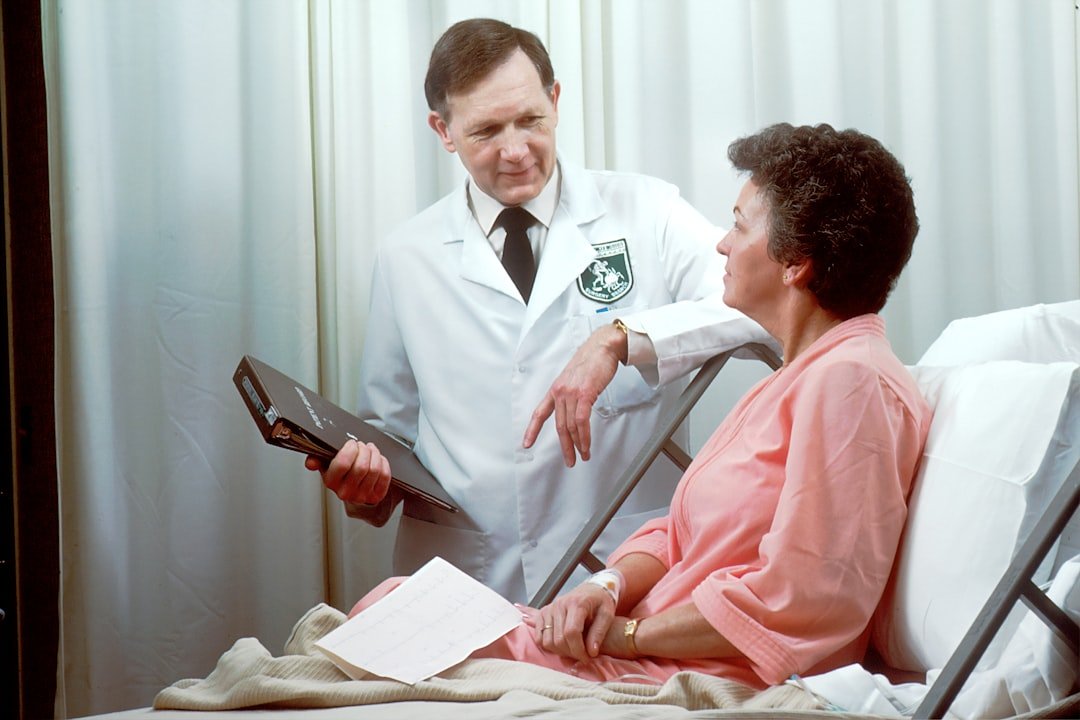
Health vocabulary is the one situation where getting the words right isn’t about sounding polished — it’s about being understood when it counts. If you ever see a doctor abroad, or help a foreign friend or colleague in Taiwan, you’ll want to describe symptoms clearly. The key is that English speakers describe pain with specific, almost physical words: a headache can be throbbing, sharp, or dull; a stomach can feel bloated または queasy; you might be dizzy, fatigued, or short of breath.
You’ll also need the doctor’s side of the conversation: “How long have you had these symptoms?”, “Are you allergic to any medication?”, “Take this twice a day after meals.” Because these exchanges are emotionally charged, they encode deeply — most people who have been sick abroad remember the exact words years later. You don’t have to wait to get sick, though. Rehearse the clinic script once, out loud, imagining the room, and it lodges in the same durable place. Health English is proof of the whole principle of this guide: the more a situation matters to you, the better the words stay.
Building Your Own Situation Clusters | 打造你自己的情境單字群
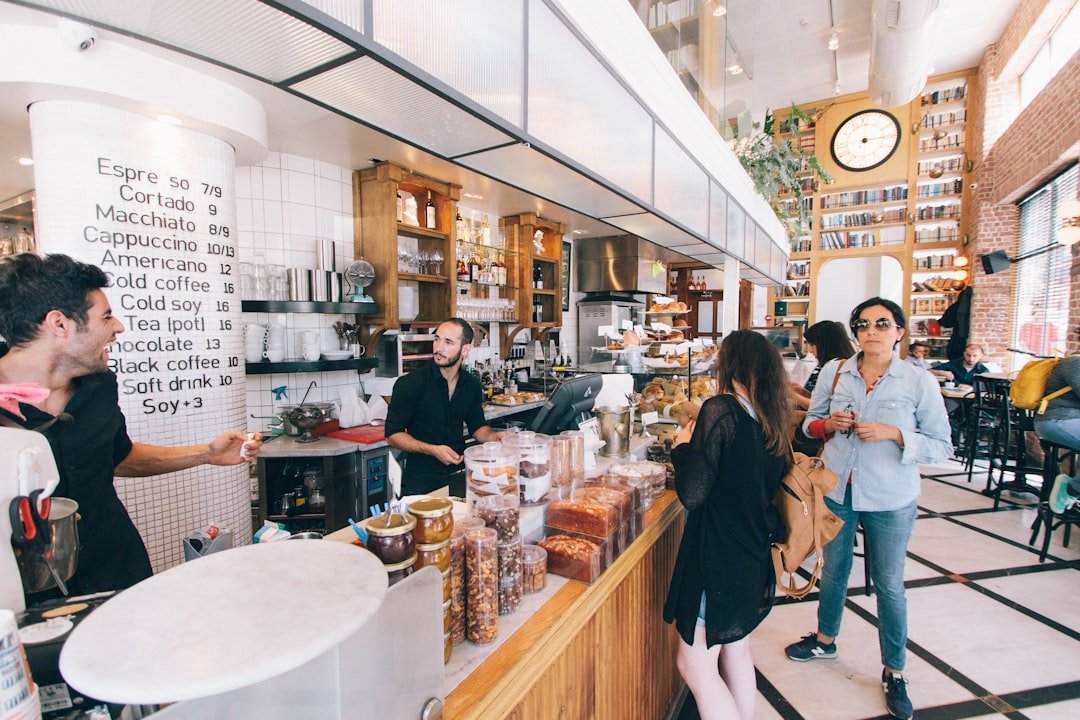
So how do you turn this into a real study habit? The method is simple and it works for any topic, not just the four above. Start by choosing a situation you’ll genuinely find yourself in this month — not “food” in the abstract, but “ordering coffee for the office” or “explaining my project to a new manager.” Specificity is everything. A vague topic gives your brain nothing to hold; a concrete scene gives it a hook for every word.
Next, write the situation as a short script — a mini-dialogue with both sides speaking. Don’t collect words; collect lines you’d actually say. Then read it aloud, because saying a phrase adds a physical, muscular memory that silent reading never will. Finally, use it within a day or two: order that coffee, send that email, or at minimum imagine the scene vividly before you sleep. This is how situational learning beats the flashcard app — you’re not reviewing words, you’re rehearsing yourself in the situations that make up your real English life (生活英文).
Making It Stick for Good | 讓單字真正記住
The reason word lists feel efficient is that they’re easy to study — but studying and remembering are not the same thing. A list is reviewed and forgotten because it never had anywhere to live. A situation is remembered because it hangs on a real moment in your life: a gate you stood at, a meal you shared, a meeting you survived, a doctor you understood. Those moments are the shelves your vocabulary sits on.
For busy Taiwanese professionals, this is also the most time-efficient way to learn. You don’t need an extra hour a day for flashcards. You need to attach English to the situations you’re already moving through — the commute, the lunch, the meeting, the trip. Learn the words where you’ll use them, rehearse them out loud, and use them fast. Do that, and the next time you stand at a counter or a podium, the words won’t vanish. They’ll already be waiting, exactly where you left them.
Sources | 參考資料
- British Council — English learning resources
- Cambridge Dictionary — vocabulary and usage
- Encoding Specificity Principle — Wikipedia
- メリアム・ウェブスター辞典
Looking for structured practice? Browse English vocabulary study tools and topic-based workbooks on Amazon to reinforce the situations that matter most to you.





 日本語
日本語  English
  繁體中文
繁體中文  한국어
한국어  ไทย
ไทย  Bahasa Indonesia
  Tiếng Việt
  Français