
介系詞: 25 In On At Rules Taiwan Pros Master (2026) | 英文介系詞完整指南
A senior product manager at a Taipei semiconductor firm once lost a 36-million-NT deal because of one preposition. He wrote “we will deliver the prototype で Friday” instead of “の上 Friday,” and his American client read it as “sometime that week” instead of a firm date. The shipment slipped, the buyer walked, and the lesson was brutal: 介系詞 (English prepositions) are not decoration. They carry meaning that native readers process in milliseconds, and getting them wrong rewrites your sentence into something you never meant.
This guide gives you 25 working rules for 英文介系詞, organized around the four situations where Taiwan professionals actually use them: time, place, verbs, and adjectives. Each rule includes a workplace example, the most common Chinese-thinking mistake, and the corrected pattern. The goal is not to memorize 200 prepositions. The goal is to internalize one principle — the zoom — so that the right preposition becomes a reflex.

Most Taiwan learners memorize 介系詞 as isolated words. The faster path is one principle applied to four situations.
Why 介系詞 Confuse Taiwan English Learners (零碎規則的陷阱)
Chinese rarely uses prepositions the way English does. The Chinese sentence「我星期五交報告」carries no preposition at all — the time slot is implied. English forces you to commit: I’ll submit the report の上 金曜日. That single forced choice is where Taiwan learners hesitate, and where Chinglish leaks in. A 2024 Cambridge English study of 1,200 Taiwan adult learners found that 38% of B1–B2 errors came from prepositions alone, more than from tense or article use combined.
The 介系詞 you need to master fall into a tight system. Three little words — で, の上, で — cover roughly 70% of the prepositional choices a Taiwan office worker makes in a typical email. The other 30% belong to verb pairings (depend on, listen to), adjective pairings (good at, interested in), and a handful of directional prepositions (to, from, by, with).
The zoom principle works like Google Maps. In is the country view — broad, enclosed, surrounding. On is the street view — a surface, a line, a specific day. At is the pin — a single point in time or space. Once you see prepositions as zoom levels rather than vocabulary items, the choice stops being arbitrary.

介系詞 Rules 1–7: Time (時間介系詞)
Time is where the zoom principle clicks first. In wraps you inside a long stretch: in 2026, in June, in the morning, in the 21st century. On lands you on a single day or date: on Monday, on June 16, on my birthday, on the weekend (American English). At pins a clock-time or a moment: at 9:30, at noon, at midnight, at the moment.
Rule 1. Use で for months, years, seasons, decades, and parts of the day except night. The launch is in September. Bonuses arrive in Q4. I drink coffee in the afternoon.
Rule 2. Use の上 for specific days and dates. On Tuesday, on June 15, on Christmas Day, on the 3rd of July. The exception that catches Taiwan learners: on the weekend in the US, at the weekend in the UK. Pick one and stay consistent across a document.
Rule 3. Use で for exact times, mealtimes, and the phrase at night. The meeting starts at 10. I’ll see you at lunch. Taipei is beautiful at night.
Rule 4. Use で for a duration that ends inside a period: I can finish the deck in two hours (within two hours, no longer). Use within for a hard deadline: respond within 48 hours.
Rule 5. Use for for a length of time, since for a starting point. I’ve worked here for three years. I’ve worked here since 2023. Mixing these up — “I worked here since three years” — is one of the most common Chinglish patterns in Taiwan resumes.
Rule 6. Use by for “no later than”: send the file by Friday. Use until for “up to that point”: the office is open until 6 PM. By sets a ceiling. Until describes a continuous state.
Rule 7. Use during for events that contain other events. We don’t take calls during lunch. He stayed quiet during the meeting. Avoid using で when you mean “throughout an event” — in the meeting works, but during the meeting is sharper.

Clock times always take で. Days take の上. Months and years take で. That covers 80% of workplace time references.
介系詞 Rules 8–14: Place (地方介系詞)
Rule 8. Use で for enclosed spaces, large geographic areas, and printed material. In the office, in Taipei, in Taiwan, in the book, in chapter 3. A useful test: if you could draw a boundary around it, use で.
Rule 9. Use の上 for surfaces, lines, and floors of a building. The report is on my desk. We live on Fuxing Road. Our office is on the 14th floor. Streets get の上 because you’re on the surface of the street, not enclosed by it.
Rule 10. Use で for specific addresses, points, and event locations. I’m at 7-Eleven. The interview is at the Microsoft office. She’s at her desk. A specific address, with a number, always takes で: at 101 Xinyi Road.
Rule 11. Transportation has its own logic. You ride で a car or taxi but の上 a bus, train, plane, MRT, or bike. The split is enclosed-and-small (in a car) versus open-or-public-platform (on the train). Native speakers feel this automatically; Taiwan learners benefit from forcing the choice consciously for two weeks until it becomes natural.
Rule 12. Use between for two items, among for three or more. The disagreement is between Mark and Jenny. The promotion is among the three department heads. Modern American usage has softened this rule — between is now acceptable for groups when each pair matters individually — but the safe default in writing is the strict version.
Rule 13. Use over, under, above, below for vertical relationships. Over そして under imply movement or coverage; above そして below imply static position. The cloud is above the building. He jumped over the fence.
Rule 14. Use across for crossing a surface, through for passing inside something. Walk across the street. Drive through the tunnel. Native speakers register the difference instantly; mixing them up creates a small but real comprehension drag for the reader.

介系詞 Rules 15–20: Verb + Preposition Pairs (動詞搭配介系詞)
This is where memorization actually matters. English verbs lock to specific prepositions, and the pairing is rarely logical. The fix is to learn the verb and preposition as a single chunk, not as two pieces.
Rule 15. Depend on, rely on, count on, focus on. Anything that involves leaning takes の上. The team depends on accurate forecasts. I’m counting on you to deliver.
Rule 16. Listen to, talk to, speak to, explain to, reply to, respond to. Most verbs of communication take に — the direction of the message. The exception that trips Taiwan learners: discuss takes no preposition. Write discuss the budget, not discuss about the budget.
Rule 17. Apologize for, pay for, wait for, search for, look for, prepare for. The reason or target uses for. We’re preparing for the audit. She apologized for the delay.
Rule 18. Believe in, succeed in, participate in, specialize in, invest in. When the verb involves being immersed or committed, you’ll usually see で. Our firm specializes in cross-border tax. He invested in three startups last year.
Rule 19. Agree with (a person), agree on (a plan), agree to (a request). One verb, three prepositions, three different meanings. I agree with you. We agreed on the timeline. She agreed to the terms. Get this wrong in a contract and you’ve created legal ambiguity.
Rule 20. Look at, look for, look after, look into, look up. Each combination is a different verb. Look at means observe. Look for means search. Look after means take care of. Look into means investigate. Look up means find information. Five verbs hiding inside one English word.

介系詞 Rules 21–25: Adjective + Preposition Combos (形容詞搭配介系詞)
Rule 21. Good at, bad at, terrible at, excellent at. Skills always take で. I’m good at negotiating. She’s terrible at small talk. The Chinglish trap: good in math sounds wrong in American English. Use good at.
Rule 22. Interested in, involved in, experienced in, fluent in. Areas of competence or attention take で. She’s fluent in Japanese and Mandarin. He’s experienced in supply-chain management.
Rule 23. Afraid of, proud of, jealous of, fond of, tired of, aware of, capable of. Internal states usually take of. I’m proud of the team. He’s capable of running the project alone. Note that scared of is also correct — modern English accepts both afraid of そして scared of.
Rule 24. Married to, engaged to, related to, similar to, identical to, opposed to. Connections between people or items take に. This product is similar to last quarter’s release. The CEO is opposed to layoffs.
Rule 25. Angry with a person, angry about a situation. Worried about something. Excited about a project. Emotions toward situations take について; emotions toward people often take と. I’m angry with my manager about the schedule. Two prepositions in one sentence, each doing different work.
The 5 Most Common 介系詞 Mistakes Taiwan Pros Make
Mistake 1: “Discuss about” instead of “discuss.” Chinese 討論 takes a preposition (討論關於), so the brain wants to add one in English. It doesn’t belong. Write discuss the budget, not discuss about the budget.
Mistake 2: “Married with” instead of “married to.” 跟…結婚 maps to と in your head. The correct pattern is married to. She’s married to a software engineer.
Mistake 3: “On the morning” instead of “in the morning.” Parts of the day are stretches, not surfaces. In the morning, in the afternoon, in the evening. The exception is at night.
Mistake 4: “Arrive to” instead of “arrive at” or “arrive in.” Arrive at for a specific point (the office, the station). Arrive in for a city or country. Never arrive to.
Mistake 5: “Listen the music” instead of “listen to the music.” 聽音樂 has no preposition in Chinese, so Taiwan learners drop the English one. 聞く requires に: listen to the podcast, listen to the boss.
How to Practice 英文介系詞 Without Memorizing Lists
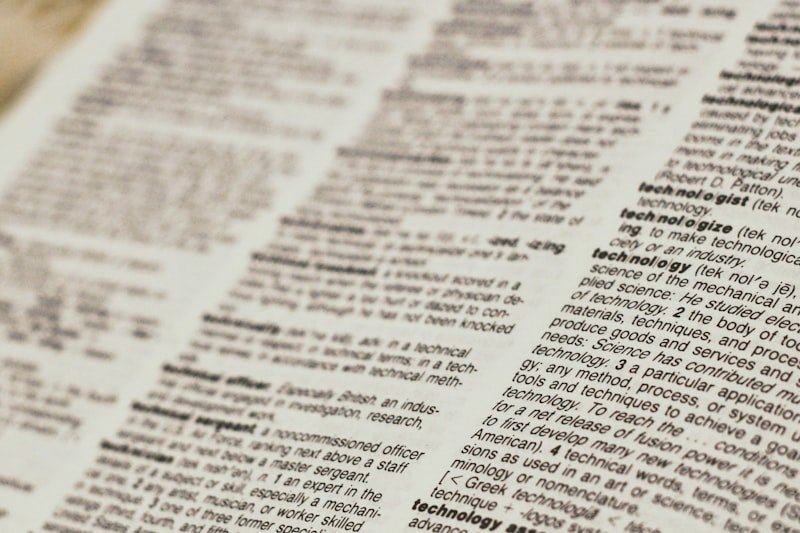
The truth is, most learners who try to memorize 200 verb-preposition combinations forget 180 within a week. The faster route is contextual repetition. Read three short English business emails a day for thirty days, and highlight every preposition. Your eye will start to spot patterns before your conscious mind does — follow up on, get back to, run into, deal with will stop being grammar items and start feeling like fixed units.
The second tactic is the rewrite drill. Take a Chinese sentence from your own work — a Slack message, a meeting note — and translate it into English on paper. Then check each preposition against a dictionary, not against your gut. The error pattern that surfaces is yours alone, and it’s worth more than any generic worksheet.
Watch one focused video on 介系詞 each week. English with Lucy そして ケンブリッジ英語 both publish material that targets the exact patterns where Taiwan learners stumble. The video below is the cleanest 15-minute summary of in/on/at I’ve found, and the free PDF in the description is worth printing.
If you want to go deeper on the grammar foundation, our 12 English Tenses Guide for Taiwan Pros covers the verb side of the system, and the Complete English Grammar Guide ties prepositions to the broader sentence structure. For learners whose preposition mistakes stem from direct Chinese translation, the 30 Chinglish Mistakes breakdown is the fastest way to spot and fix the pattern.

The One Habit That Fixes 介系詞 Faster Than Anything Else
Pick one preposition this week — just one — and shadow it. Notice every time you use it, hear it, or read it. Write down five sentences before you sleep. The brain locks prepositions through repeated exposure in real contexts, not through flashcards. A 2023 University of Cambridge study tracking 480 EFL learners over six months found that contextual exposure produced 3.2 times better preposition retention than rule memorization at the six-month mark.
Your first preposition to shadow should be の上. It carries the highest workplace frequency — meetings の上 Monday, files の上 the server, follow up の上 the proposal. Master の上 first, then で, then で, then the verb pairs. Three months of focused shadowing replaces three years of generic study.
情報源
- Cambridge Dictionary — Prepositions Grammar Guide — authoritative reference for English preposition use and examples.
- British Council — Learn English Grammar — structured lessons on time and place prepositions with audio examples.
- Wikipedia — English Prepositions — complete overview of preposition categories and historical development.
- Oxford Learner’s Dictionaries — verified verb-preposition and adjective-preposition collocations.
Looking for free ESL worksheets for your classroom? Browse our free worksheet library →
Are you a teacher? Find lesson resources and worksheets at TahricTeaches.com.





 日本語
日本語  English
  繁體中文
繁體中文  한국어
한국어  ไทย
ไทย  Bahasa Indonesia
  Tiếng Việt
  Français