
英文簡報用語: 50 English Presentation Phrases Taiwan Pros Master (2026)
Most Taiwanese professionals learn English for reading and writing. Presentations are different. You’re on your feet, under pressure, in real time — and the phrases you use shape how your audience perceives your competence. A confident opening buys you 10 minutes of credibility. A stumbling start takes the whole presentation to recover. This guide gives you exactly the phrases that work, organized by the moment you need them.

Mastering 英文簡報用語 transforms how Taiwan professionals are perceived in international meetings.
How to Open a Presentation in English 【英文簡報開場白】
The first 60 seconds decide whether your audience trusts you. In English, you want to establish three things fast: who you are, what you’ll cover, and why it matters to them. Here are the phrases that accomplish all three.
Greeting and introducing yourself:
- “Good morning everyone. My name is [Name], and I’m the [Title] at [Company].”
- “Thank you for joining me today. I’ll be walking you through [topic].”
- “It’s great to be here with you all. Today I want to share something that’s been a game-changer for our team.”
Stating your purpose:
- “The goal of today’s presentation is to show you how [benefit].”
- “By the end of this session, you’ll have a clear picture of [outcome].”
- “I’m here today to discuss [topic] and what it means for [audience/team/company].”

A confident opening in English sets the tone for your entire presentation.
One thing Taiwanese presenters often skip: the hook. Before your agenda, give them one reason to pay attention — a surprising stat, a quick story, a question that catches them off guard. English-speaking audiences expect this. “Did you know that 70% of business deals in Asia are now conducted in English? That number went from 40% in 2010.” Now they’re listening.
Introducing Your Agenda 【介紹議程結構】
After your hook, lay out the roadmap. This is where English presentation style differs most from Chinese-style presentations. Western audiences want to know where you’re going before you go there.
- “Today’s presentation has three main sections: [A], [B], and [C].”
- “I’ll start with [topic], then move on to [topic], and finish with [topic].”
- “I’ve divided this into four parts. First, [A]. Then we’ll look at [B], [C], and finally [D].”
- “Please hold your questions until the end — I’ll leave 10 minutes for Q&A.”
- “Feel free to stop me at any point if something isn’t clear.”
The rule here: never give more than four agenda items. More than four and your audience starts tracking quantity, not content. Three is ideal. Four is acceptable.

A clear agenda structure helps international audiences follow your 英文簡報 with confidence.
Signposting: Guide Your Audience Through Each Section 【引導聽眾的過渡語】
Signposting is what separates good English presentations from great ones. These are the phrases that tell your audience exactly where they are in your presentation at all times. Without them, you’re driving without road signs.
Moving between sections:
- “Let’s now move on to [the second point / our next topic].”
- “Having covered [A], I’d like to turn your attention to [B].”
- “That brings me to the second part of my presentation.”
- “So far we’ve looked at [A] and [B]. Now let’s focus on [C].”
Referring back and forward:
- “As I mentioned earlier, [point].”
- “I’ll come back to this point later in the presentation.”
- “This connects to what we’ll see in the next section.”
- “You may recall from the beginning that [point]. This is why [point] matters.”
Summarizing a section:
- “So, to summarize what we’ve seen so far…”
- “The key takeaway from this section is [point].”
- “Before we move on, let me recap: [A], [B], and [C].”
If you want to see how a native English speaker uses signposting in a high-stakes setting, our guide on meeting English covers the overlap between presentation language and conference room communication.
Presenting Data and Visuals in English 【呈現數據與圖表】
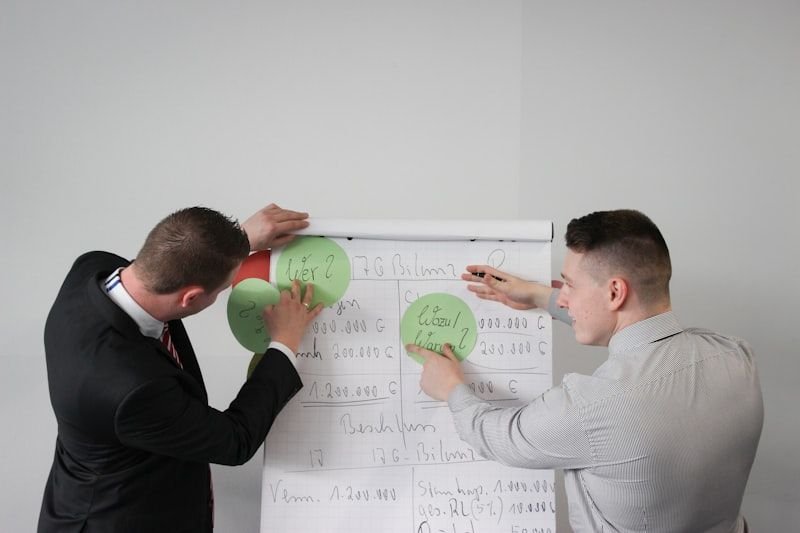
Specific data phrases help Taiwan professionals interpret charts and graphs confidently in English.
Data slides are where many Taiwanese presenters freeze. They can read the numbers, but describing what the numbers mean — in English — requires a different vocabulary. These phrases handle the full spectrum from describing charts to drawing conclusions.
Describing what the data shows:
- “This chart shows the relationship between [X] and [Y].”
- “As you can see from the graph, [observation].”
- “The figures here indicate that [conclusion].”
- “What’s interesting about this data is [insight].”
Describing trends:
- “Sales have increased significantly over the past quarter.”
- “There’s been a sharp decline in [metric] since [time].”
- “The numbers have remained relatively stable at around [figure].”
- “We can see a clear trend here: [trend].”
Making comparisons:
- “Compared to last year, [metric] is up by [X]%.”
- “This is roughly twice the industry average.”
- “The difference between [A] and [B] is particularly striking.”
One specific improvement for Taiwanese presenters: stop saying “This slide shows…” and instead say “Notice that…” or “What this tells us is…” The second approach draws a conclusion; the first just describes a picture.
Handling Questions and Answers in English 【英文 Q&A 問答環節】
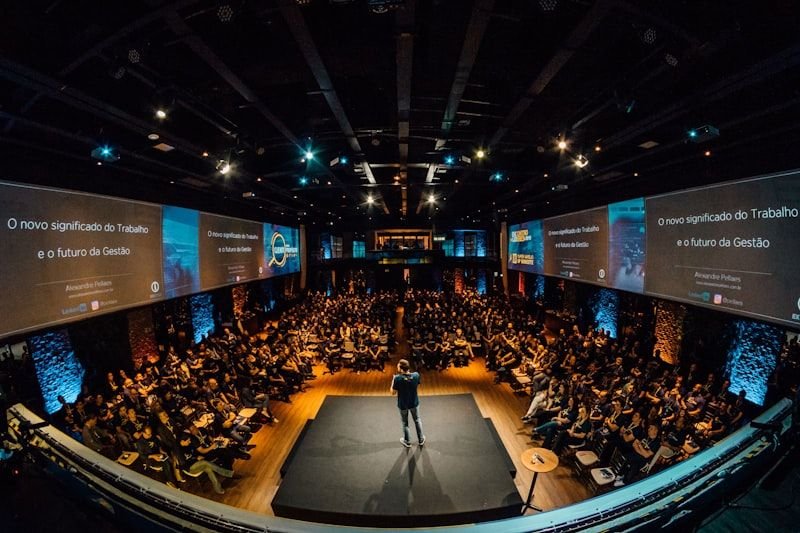
The Q&A section is where 英文簡報 skills are tested — these phrases keep you in control.
The Q&A is the most stressful part of an English presentation for most Taiwanese professionals. The good news: there are only about six types of questions you’ll ever face, and each has a standard phrase set.
Opening the Q&A:
- “I’d now like to open the floor to questions.”
- “Does anyone have any questions or comments?”
- “I’m happy to answer any questions you may have.”
When you need time to think:
- “That’s a great question. Let me think about that for a moment.”
- “Could you repeat the question? I want to make sure I understand correctly.”
- “I appreciate that question. To give you a proper answer, I’d like to clarify a few things.”
When you don’t know the answer:
- “I don’t have that data with me right now, but I’ll follow up with you after the presentation.”
- “That’s outside the scope of today’s presentation, but it’s worth exploring — let’s connect afterwards.”
- “I’d rather give you an accurate answer than a quick one. Can I get back to you on that?”
That last set is critical. In Taiwanese culture, saying “I don’t know” in a presentation can feel like admitting failure. In an English-speaking professional context, it’s the opposite — admitting you don’t have data, and offering to follow up, signals honesty and professionalism.
How to Close a Presentation in English 【英文簡報結尾】
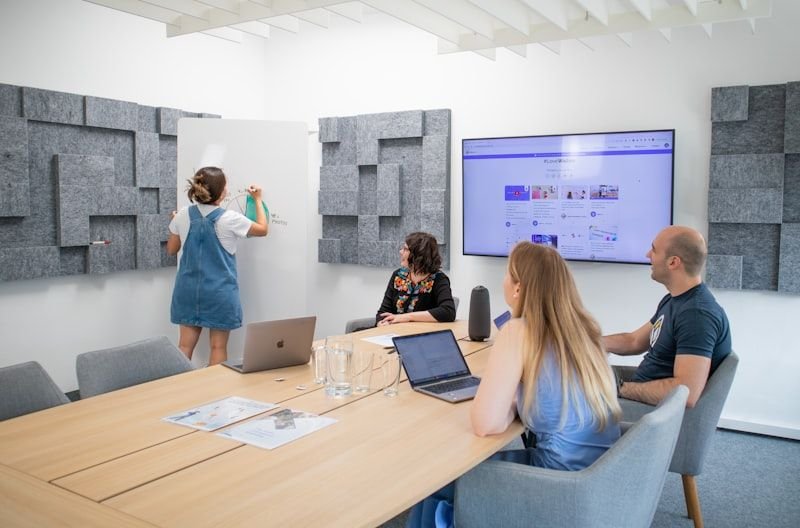
A powerful 英文簡報結尾 leaves a lasting impression and drives clear next steps.
Most presentations die in the closing. The presenter says “That’s all from me, thank you” and the energy collapses. A strong English presentation close does three things: it summarizes the key points, it ends on your strongest idea, and it tells the audience exactly what happens next.
Signaling the close:
- “I’d like to wrap up by…”
- “Before I close, let me leave you with…”
- “In conclusion, the three points I want you to take away today are…”
- “To bring everything together…”
The final statement and call to action:
- “The next step is for each team to [action] by [date].”
- “I’d encourage you to [action] — here’s how to get started.”
- “If there’s one thing I want you to remember from today, it’s this: [core message].”
- “Thank you for your time. I look forward to our continued discussion.”
If you’re giving the presentation as an introduction to a project proposal, check out our guide on English self-introduction phrases — many of the confidence-building techniques apply equally to presentations.
Watch: The 3 Ingredients of an Amazing Presentation
This TEDx talk breaks down exactly what makes English presentations memorable — relevant whether you’re presenting in Taipei or London:
3 Mistakes Taiwanese Professionals Make in English Presentations 【台灣人常犯的英文簡報錯誤】

Understanding common pitfalls helps Taiwan professionals elevate their 英文簡報 performance.
After working with Taiwan professionals on business English for over 15 years, the same three patterns show up again and again.
1. Translating directly from Chinese structure. In Chinese presentations, it’s normal to build to the conclusion. In English professional contexts, the opposite is expected: state your conclusion first, then back it up with evidence. “Our Q3 results exceeded targets by 18%. Here’s why.” Not “Here’s our data… and therefore we exceeded targets.”
2. Overusing “please” and “sorry.” Taiwanese presenters often apologize before every statement: “Sorry, could you look at this slide?” or “Please, let me explain.” In English, this softens your authority when you need it most. Say it directly: “Take a look at this slide” — no apology needed.
3. Reading slides verbatim. Your slides are visual support — not your script. The audience can read. Your job is to add the layer above the text: the insight, the story, the implication. If your slide says “Revenue grew 22%,” your words should say “That 22% growth came entirely from one product line — and that’s both exciting and a risk we need to address.” See our business English email guide for related communication patterns.
The fastest way to improve is to record yourself giving a 2-minute presentation, watch it back with the sound off, and ask: “Would I trust this person in a boardroom?” The body language and pacing tells you a lot.
情報源
- BBC Learning English: English at Work — Business English phrases and professional communication skills for international contexts.
- Cambridge ELT: Teaching Presentation Skills in Business English — Research-backed framework for developing English presentation competence.
- Harvard Business Review: How to Give a Killer Presentation — Chris Anderson’s TED framework on structure, narrative, and delivery.






 日本語
日本語  English
  繁體中文
繁體中文  한국어
한국어  ไทย
ไทย  Bahasa Indonesia
  Tiếng Việt
  Français