

過去式 vs 過去進行式: 8 Rules Taiwan Pros Master (2026)
Roughly one in three grammar mistakes I mark in adult classes in Taipei comes from mixing up two past tenses that look almost identical on paper. A student writes “When I watched TV, my mum called me” and means the opposite of what the sentence actually says. The gap between past simple(過去式)and past continuous(過去進行式)is small in form but big in meaning, and getting it wrong changes who did what to whom. This guide walks through eight rules that fix the confusion for good, with the exact patterns Taiwanese learners get wrong most often.
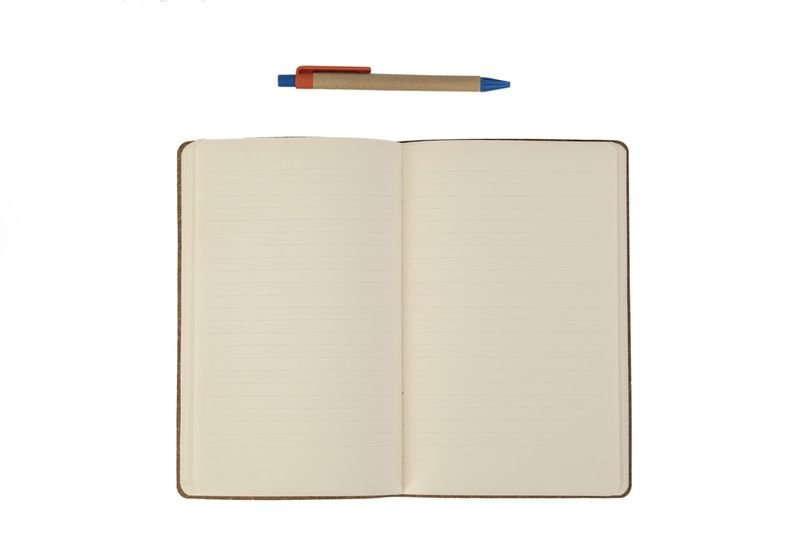
過去式 and 過去進行式 differ by one helper verb — but that one word changes the whole meaning.
Past Simple vs Past Continuous: The One-Sentence Difference(過去式 vs 過去進行式)
Here is the whole distinction in one line: the past simple tells you an action finished; the past continuous tells you an action was in progress. “I read a book last night” means you started and finished it. “I was reading a book last night” means at some point in the evening you were in the middle of reading — you may or may not have finished. English forces you to choose, and Chinese does not, which is exactly why this is hard for Taiwan learners. Mandarin marks completion with 了 or context, but it has no separate “-ing past” the way English does, so the two ideas collapse into one in your head.
The good news: once you can name which action is the short event and which is the background, the tense picks itself. Think of the past continuous as the stage and the past simple as the thing that happens on the stage.

Every good story mixes both: the past continuous paints the scene, the past simple moves the plot.
過去式(Past Simple): How to Form It
The past simple is the tense of finished actions. For regular verbs you add -ed: walk → walked, watch → watched, study → studied. The form does not change for he, she, or it — “she worked,” not “she works-ed.” That single fixed form is one reason the past simple feels easier than the present tense to most learners.
The trap is irregular verbs, which ignore the -ed rule entirely: go → went, eat → ate, buy → bought, see → saw. There are around 200 common irregular verbs in English and no shortcut except learning the high-frequency ones cold. If irregular past forms trip you up, work through our full guide to English irregular verbs(不規則動詞) before you go further — the past simple leans on them constantly.
For negatives and questions you use did, and the main verb drops back to its base form: “I didn’t go” (not “didn’t went”), “Did you see it?” (not “Did you saw it?”). Dropping the -ed after “did” is a rule Taiwanese learners forget under pressure, especially when speaking quickly.
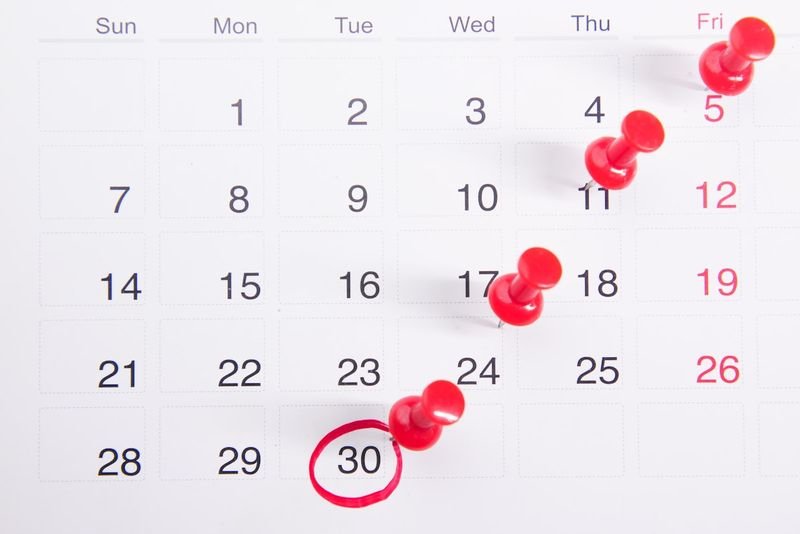
Past simple = a point on the calendar. The action is done and dated.
過去進行式(Past Continuous): How to Form It
The past continuous is built from two pieces: was / were + verb-ing. Use was with I, he, she, and it; use were with you, we, and they. So: “I was working,” “they were waiting,” “she was studying.” The -ing verb is the same present participle you already know from the present continuous, just anchored in the past by was or were.
The meaning is “in the middle of doing something” at a past moment. “At 9 o’clock last night I was studying” does not tell you when you started or stopped — only that 9 o’clock caught you mid-action. This is why the past continuous almost always needs a time anchor or a second event to make sense; on its own it leaves the reader waiting for the rest of the story. If the -ing machinery feels shaky, our breakdown of the present continuous(現在進行式) uses the same was/were logic shifted to now.
One caution: some verbs resist the continuous form. Stative verbs like know, want, 信じる, 、 そして own describe states, not actions, so “I was knowing the answer” is wrong — say “I knew the answer.” When in doubt, if a verb describes a feeling or a mental state rather than a visible activity, keep it in the past simple.
The Golden Rule: Interruptions(打斷)
This is the pattern that shows up in exams, job interviews, and everyday storytelling more than any other, so it earns its own section. When a short action cuts into a longer one, the long background action takes the past continuous and the short interrupting action takes the past simple: “I was cooking dinner when the phone rang.” The cooking was already happening; the ring was the sudden event.

“I was working when the phone rang.” The ring (past simple) interrupts the work (past continuous).
Two little words control this pattern. While usually introduces the longer background action: “While I was walking home, it started to rain.” いつ usually introduces the short event: “It started to rain when I was walking home.” Swap the tenses and the meaning flips — “When I arrived, she was leaving” (she was mid-exit as I got there) versus “When I arrived, she left” (she left after I got there, maybe because of me). That difference has ended more than one awkward misunderstanding in my classroom.
When to Use 過去式(Past Simple): 5 Situations
Reach for the past simple whenever the action is complete and you can, in principle, put a date or time on it. Five common cases cover almost everything:
- A finished action at a specific time: “We moved to Taipei in 2019.”
- A sequence of completed actions: “"彼女 opened the laptop, checked her email, and replied.” Each step is done before the next begins.
- A habit or repeated action in the past: “When I was a child, I walked 毎日学校へ通う。”
- A short, sudden event: “The glass broke.” “He shouted.。」”
- Historical or biographical facts: “Edison 発明した the phonograph in 1877.”
Notice how none of these leave the reader hanging — a past simple sentence is a complete thought on its own. That self-contained quality is your quickest signal that the past simple is the right choice.
When to Use 過去進行式(Past Continuous): 4 Situations
The past continuous sets scenes and describes ongoing activity. Its four main jobs:
- An action in progress at a specific past time: “At midnight, I was still working.。」”
- The background in a story (setting the scene): “The sun was shining and the birds were singing.” Narratives often open this way before the main events kick in.
- Two long actions happening at the same time: “"私 was reading while my brother was playing video games.”
- The interrupted action in the golden-rule pattern above.

過去進行式 answers “what was happening at this exact moment?” — not “what happened and finished?”
Writers lean on the past continuous to build atmosphere because it slows time down. Where the past simple marches from event to event, the past continuous holds a single frozen moment open so the reader can look around inside it.
台灣學生最常犯的錯(Common Mistakes Taiwan Learners Make)
After twenty years of teaching in Taiwan, the same handful of errors come up again and again. Watch for these four:
1. Using the past continuous for a quick finished action. “「昨日私は was buying a new phone” sounds like your purchase dragged on for hours. If the action was quick and complete, use the past simple: “Yesterday I bought a new phone.”
2. Putting a stative verb in the -ing form. “"私 was liking the movie” and “she was having two brothers” are both wrong. Feelings and possessions stay in the past simple: “I liked the movie,” “she had two brothers.”
3. Keeping -ed after “did.” “Did you watched the game?” is the single most common speaking slip I hear. Once did appears, the main verb goes back to base form: “Did you watch the game?”
4. Mixing up which action interrupts which. “When I was falling, I broke my arm” reverses the logic — the fall was the sudden event. Say “When I fell, I broke my arm,” or “I was walking on the ice when I fell.” Ask yourself which action was already in progress, and that one takes the -ing.

Watch: Past Simple and Past Continuous Explained
BBC Learning English breaks down the same rules in six minutes with native audio — a useful way to train your ear for how the two tenses actually sound in fast speech.
Quick Practice(小測驗): Test Yourself
Fill in each blank with the past simple or past continuous. Cover the answers first, then check.
- 1. While she ______ (drive) to work, she ______ (see) an accident.
- 2. I ______ (finish) my report at 6 p.m. and went home.
- 3. What ______ you ______ (do) at 10 o’clock last night?
- 4. The lights ______ (go) out while we ______ (watch) the film.
Answers: 1. was driving / saw 2. finished 3. were … doing 4. went / were watching. If you got the interruption pairs (1 and 4) right, you have already beaten the mistake that costs most learners marks.

The fastest way to lock in 過去式 vs 過去進行式 is to narrate your own day out loud, one interruption at a time.
Frequently Asked Questions(常見問題)
Can I use “when” with the past continuous? Yes. “When” can introduce either tense, but the meaning shifts. “When she called, I was eating” means the eating was already happening. “When she called, I ate” suggests you started eating after the call. Read the whole sentence before deciding.
Is “used to” the same as the past simple? Not quite. “I used to live in Kaohsiung” stresses that it was a past habit that has now stopped. The plain past simple “I lived in Kaohsiung” just states the fact. Both are correct; “used to” adds the “not anymore” flavour.
Why does English need two past tenses when Chinese manages with one? English grammaticalises the difference between a completed event and an ongoing one, while Mandarin leaves it to context and particles like 了. Neither system is better — but if you translate word-for-word from Chinese, you will default to the past simple and lose the “in progress” meaning. Train the past continuous as a separate habit. For the bigger picture of how all twelve tenses fit together, see our complete guide to English tenses(英文時態).
The One Habit That Fixes This for Good
Stop translating and start narrating. Tonight, describe three things that happened to you today, and force each one into the interruption pattern: “I was riding the MRT when I saw an old student.” Do that for a week and the choice between past simple and past continuous stops being a grammar decision and becomes a reflex — which is exactly where every rule in this guide is meant to end up.
情報源
- British Council LearnEnglish — Past simple and past continuous — official grammar reference with form and usage rules.
- Cambridge Dictionary Grammar — Past simple and past continuous — authoritative usage notes and examples.
- BBC Learning English — 6 Minute Grammar: Past simple and past continuous — native-audio lesson on the same rules.


 日本語
日本語  English
  繁體中文
繁體中文  한국어
한국어  ไทย
ไทย  Bahasa Indonesia
  Tiếng Việt
  Français