
Phone English: 30 Phrases for Taiwan Pros (2026) | 電話英文必備指南
The first three seconds of an English phone call decide the next five minutes. If you fumble the greeting, the caller pegs you as nervous and starts speaking faster to “help” — which only makes things worse. 電話英文 (phone English) is the single highest-stakes English skill for Taiwan professionals because there is no body language, no time to translate, and no chance to re-read what was just said. This guide gives you 30 phrases organized by the exact moment you need them, plus the repair lines that save calls when something goes wrong.
You will not need every phrase. You will need the right phrase at the right second. Bookmark this page, keep it open during real calls, and within a month the pauses disappear.

電話英文 (phone English) — the highest-stakes English skill in the Taipei office.
1. The 5-Second Greeting That Sets the Whole Call | 接電話英文:開場黃金五秒
The greeting answers three questions in one breath: which company did I reach, who am I talking to, and what should happen next. Most Taiwan callers stop after “Hello” — that is the mistake. A bare hello forces the caller to ask follow-up questions and burns trust before the conversation starts.
The native pattern is greeting + company + name + offer of help. Memorize one version and use it every time.
- “Good morning, 18K English, this is Sarah speaking. How can I help you?”
- “Hello, Acme Trading, Vincent on the line. What can I do for you today?”
- “Thank you for calling Taipei Logistics. This is Joyce — how may I direct your call?”
One small upgrade matters: say your name slowly. Taiwanese names spoken at full speed land as noise in a Western ear, and the caller will spend the next minute wondering who they reached. Slow your name down by 30%.

接電話英文 (answering phone English) — slow your name down by 30% so it actually lands.
2. Transferring & Putting Callers on Hold | 轉接與請對方稍等
Hold and transfer is where most calls in Taiwan offices break down. The English verb is put through, not “transfer to” — both work, but “put through” sounds far more native and is what the caller expects to hear.
Two rules before you touch any button. Tell the caller what you are about to do. Tell them how long it will take. A silent hold feels three times longer than a hold that was announced.
- “Could you hold for a moment, please? I’ll put you through to the sales team.”
- “One moment please — I’m transferring your call to Mr. Chen now.”
- “I’ll connect you with our support desk. Please stay on the line.”
- “Bear with me for about thirty seconds while I find the right person.”
- “Sorry to keep you waiting. Thank you for holding.”
If the line you want to transfer to is busy, never say “He is busy.” Say “He is on another call right now — may I take a message, or would you prefer to call back?” The first sounds dismissive. The second sounds professional. This is also where the phrases from our business email English guide come in handy — you might offer to follow up by email instead.

轉接電話 (transferring) — ‘put through’ sounds native, ‘transfer to’ sounds like a textbook.
3. Taking & Leaving Messages | 留言與回電
The verb is take a message when you are the receiver. The verb is leave a message when you are the caller. Mixing them up is the single most common Taiwan office mistake on English calls, and it telegraphs uncertainty immediately.
When you take a message, repeat the caller’s name and number back at the end. Western callers expect this confirmation; Taiwanese workflow often skips it, which is how wrong numbers end up on memo pads.
- “I’m afraid she’s in a meeting until three. Would you like to leave a message?”
- “Could I take your name and number? I’ll have her call you back this afternoon.”
- “Let me read that back to you — David Lin, 0912-345-678, regarding the April invoice. Is that correct?”
- “This is Vincent from Acme Trading. Could you ask him to call me back at 02-2345-6789 when he’s free?”
- “No message — I’ll try again tomorrow morning. Thanks for your help.”
One advanced move: when you take a message, ask “Is there anything else I should pass along?” This single sentence saves the second phone call that would otherwise happen ten minutes later.

留言英文 (taking messages) — read the name and number back, every time.
4. When You Don’t Understand: Repair Phrases | 聽不清楚時的救援句型
This is the section every Taiwan ESL guide skips, and it is the one that actually saves calls. “Sorry, what?” is not a repair phrase — it is a confession. Real professionals use targeted requests that tell the caller exactly which part to repeat.
Choose your repair phrase based on what failed. Whole sentence lost? Ask for a full repeat. One word lost? Ask only for that word. Speed too fast? Ask for slowdown without saying “slow.” Every native English speaker uses these — you are not exposing weakness, you are running the call.
- “I’m sorry, I didn’t catch that last part — could you say it again?”
- “Could you spell that for me?”
- “The connection isn’t great on my end. Would you mind repeating the order number?”
- “Just to make sure I have this right — you said the meeting is at 3 PM on Thursday?”
- “Could I ask you to speak a little more slowly? I want to write this down correctly.”
The “connection isn’t great” line is the most useful sentence in this entire article. It blames the line, not your English, and gives you a clean reason to ask for any repeat without losing face. Use it.
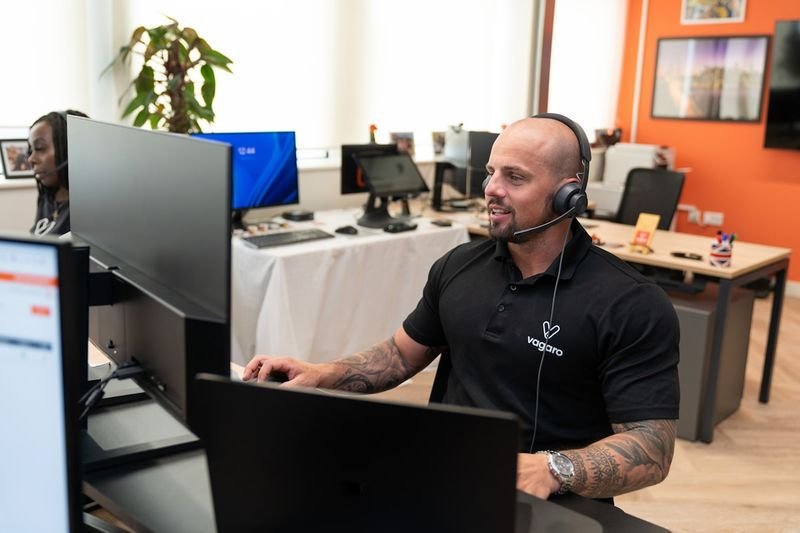
聽不懂的時候 (repair phrases) — blame the line, not your English.
5. Spelling Names & Email Addresses by Phone | 電話拼字
Spelling over the phone is where Chinese names and English ears collide. “C” and “T” sound identical on a bad line. “M” and “N” are almost identical even on a good one. The fix is the NATO phonetic alphabet — Alpha, Bravo, Charlie, Delta — used by every airline, hospital, and bank in the English-speaking world.
You do not need to memorize all 26 letters. Memorize the eight that get confused most: A as in Alpha, B as in Bravo, C as in Charlie, D as in Delta, M as in Mike, N as in November, P as in Papa, T as in Tango. That covers 95% of real spelling failures.
- “My last name is Lin — L for Lima, I for India, N for November.”
- “The email is sales@acme.com — S as in Sierra, A as in Alpha, L-E-S, at acme dot com.”
- “It’s two words: T-A-I, like Taipei, P-E-I.”
- “That’s a capital M, followed by a lowercase r.”
- “The number is one-eight-double-zero, then two-three-four-five.” (Native speakers say “double zero” not “zero zero.”)
For email addresses, always say “at” for @ and “dot” for the period. Never say “underscore” without spelling it out — “u-n-d-e-r-s-c-o-r-e” — because half of Western listeners hear it as “under score” and write two words. The same rule applies to “hyphen” and “dash.” See our English pronunciation guide for the sounds Taiwanese speakers most often blur on the phone.
電話拼字 (spelling names) — NATO alphabet for the eight letters that actually get confused.
6. Closing the Call Professionally | 結束通話的專業說法
Bad closings ruin good calls. “Okay, bye” sounds curt. “Have a nice day” by itself sounds like a script reading. The professional close has three beats: confirm what comes next, thank the caller, sign off.
Pick one phrase from each group and string them together. After a week of real calls it becomes automatic.
- “So I’ll send the quote by Friday — does that work for you?”
- “Thanks again for your time. I’ll be in touch by Tuesday.”
- “Great speaking with you. Have a good rest of your day.”
- “I appreciate your patience. We’ll get this sorted by end of day.”
- “Talk to you soon. Take care.”
One cultural note: in American English, “Take care” is a warm but standard goodbye between colleagues who speak often. In British English it lands slightly differently — more “look after yourself.” Both work. Avoid “See you” without a follow-up unless you actually plan to meet — it sounds incomplete to native ears.
結束電話 (closing) — confirm next step, thank, sign off. Three beats.
7. Voicemail Scripts That Sound Native | 語音留言範本
Voicemail is harder than a live call because there is no chance to course-correct. The good news: a 15-second script, delivered the same way every time, sounds more professional than any improvised message you could leave.
Native voicemail follows a fixed order: who you are, when you called, why you called, what you want them to do, how to reach you, sign off. Skip any beat and the recipient has to call you back just to ask what you wanted.
- “Hi Mark, this is Vincent Chen from Acme Trading calling at 2 PM on Tuesday. I’m following up on the shipping quote from last week. Could you give me a call back at 02-2345-6789 when you get a chance? Thanks, talk soon.”
- “Hello, this is Sarah Lin from 18K English. I’m calling regarding the teacher training session scheduled for next month. Please call me back at your convenience — my number is 0912-345-678. Have a great day.”
Two upgrades that 99% of Taiwan callers skip: say your phone number twice (once in the middle, once at the end), and say each digit individually — “zero-nine-one-two” not “ninety-one-two.” Voicemail recordings are compressed, and a single mis-heard digit means you do not get the callback.

語音留言 (voicemail) — 15 seconds, fixed order, phone number said twice.
8. Phone vs. Video Conferencing: What Actually Changes | 視訊會議 vs 電話英文
Video calls feel like phone calls but follow different rules. The webcam puts your face on display, so listening cues like “uh-huh” and “right” now matter visually, not just verbally. Silence on a phone call signals you are thinking. Silence on a video call with your face on screen signals you are confused.
Three phrases work harder on video than on phone. Use them.
- “You’re on mute — we can’t hear you.” (You will say this twice per meeting. Get comfortable with it.)
- “Sorry, I think you cut out for a second — could you go back to the part about the timeline?”
- “Let me share my screen — give me one moment to find the tab.”
One more piece of video-specific etiquette Taiwan offices often miss: when someone else is presenting their screen, turn your camera on. A grid of black squares makes the presenter feel like they are speaking into a void. This is the same workplace soft-skill territory we cover in our workplace English phrases guide.
9. The 7 Mistakes Taiwan Pros Make on English Calls | 台灣職場常見的 7 個錯誤
After two decades of teaching English in Taipei, the same seven mistakes show up on almost every recorded call. None of them are about grammar. All of them are about phone-specific habits that nobody teaches in textbook English class.
- Starting with “Hello?” only. No name, no company. Sounds like a personal call. Fix: full greeting pattern from Section 1.
- Saying “Wait a moment” instead of “Hold the line.” “Wait a moment” is a translation of 等一下 and sounds like a command. “Hold the line” is the phone-specific phrase.
- “Who are you?” instead of “May I ask who’s calling?” The first is correct English and aggressive on a phone call. The second is the polite formula.
- “I cannot hear you” instead of “You’re breaking up.” The first blames the caller. The second blames the line.
- Speaking too quietly. Phones compress audio. A volume that sounds normal in person sounds whispery on the line. Speak 20% louder than you think you need to.
- Using “Roger that” or “10-4” in business calls. These are military / radio phrases. In a business context they sound like you watched too many American police shows. Use “Got it” or “Understood.”
- Ending with “Bye-bye.” Adults say “Goodbye” or “Take care” or “Talk soon.” “Bye-bye” sounds childish to a Western business ear, even though it feels neutral in Taiwan.
Each of these fixes takes seconds to learn and saves years of small misunderstandings. The phone is the one place where small English choices compound fast.
One last thought: the goal of phone English is not to sound like a native speaker. The goal is to be understood the first time, every time, by anyone on the other end. Specific phrases beat fluent improvisation on every business call. Print this page, keep it next to the phone, and the next international call you take will be your easiest one yet. If you want to keep building this skill set, our interview English guide covers the next-hardest English speaking scenario after the phone call.
Sources | 參考資料
- British Council LearnEnglish — Telephoning — Phone English phrases curated by the British Council teaching team.
- BBC Learning English — English at Work — Workplace English series including telephone scenes and listening practice.
- Cambridge Dictionary — Telephone definitions and example sentences — Reference for native usage of phone vocabulary.
- ICAO — NATO Phonetic Alphabet (Alpha, Bravo, Charlie) — Official source for the spelling alphabet used in aviation and global business.
Looking for free ESL worksheets for your classroom? Browse our free worksheet library →
Are you a teacher? Find lesson resources and worksheets at TahricTeaches.com.






 日本語
日本語  English
  繁體中文
繁體中文  한국어
한국어  ไทย
ไทย  Bahasa Indonesia
  Tiếng Việt
  Français