
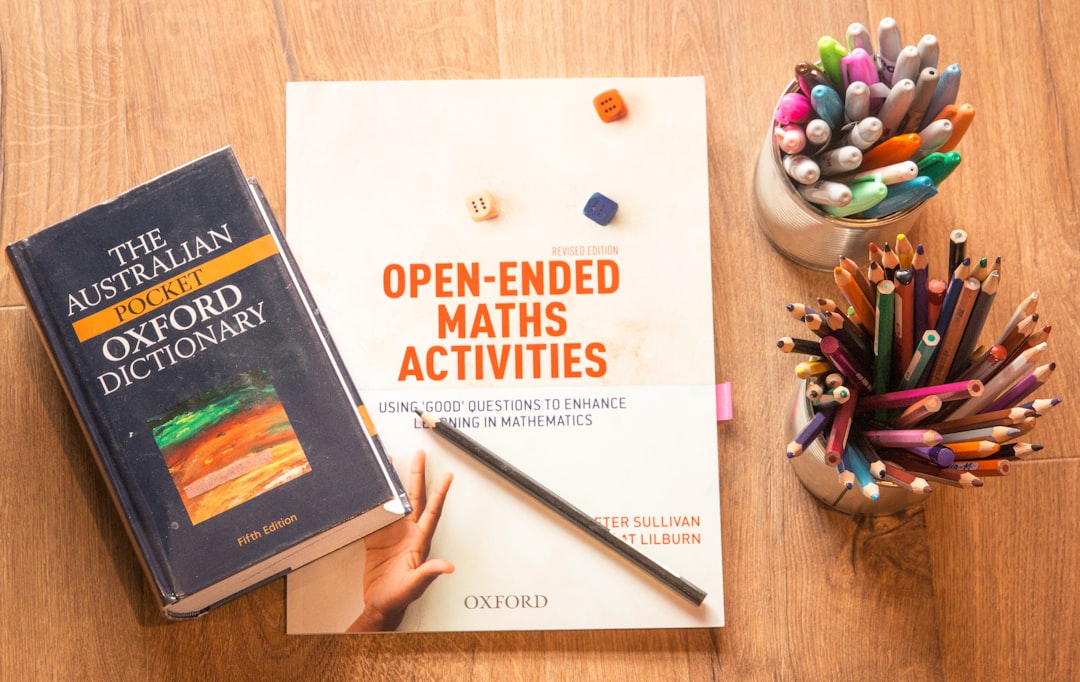
英文文法技巧 (English Grammar Tips) | 10 Common Grammar Mistakes Taiwan Students Make

Learning English grammar can be challenging for Taiwan students, but understanding common mistakes is the first step toward improvement. According to British Council Taiwan, many Taiwanese learners make predictable errors due to differences between Chinese and English grammar structures.
This comprehensive guide will help you identify and correct the 10 most common English grammar mistakes made by Taiwan students, giving you practical tips to improve your English communication skills. Whether you are a beginner or intermediate learner, these insights will accelerate your English learning journey.
Taiwan English learners often struggle with grammar because Chinese and English belong to completely different language families. Chinese is a Sino-Tibetan language with tonal characteristics and simplified grammar structures, while English is an Indo-European language with complex grammatical rules, verb conjugations, and syntactic patterns that do not exist in Chinese.
1. 主詞省略 (Subject Omission)

In Chinese, the subject can often be omitted when the context is clear. However, English requires an explicit subject in every sentence. This is one of the most fundamental differences between the two languages that trips up many Taiwan learners.
Common Mistakes:
❌ “Very tired today.”
✅ “I am very tired today.”
❌ “Don’t know the answer.”
✅ “I don’t know the answer.”
❌ “Hope to see you soon.”
✅ “I hope to see you soon.”
Why This Happens: In Chinese, we can say “今天很累” without mentioning “我” (I) because the context makes it clear. English grammar doesn’t allow this flexibility. Every sentence must have a subject, even if it seems obvious who or what is performing the action.
Practice Tip: Always ask yourself “WHO is doing the action?” before writing or speaking any sentence. If you can’t identify the subject, add one. This simple mental check will eliminate most subject omission errors.
2. 動詞時態混淆 (Verb Tense Confusion)
Chinese doesn’t have verb conjugations like English, making tense usage particularly challenging for Taiwan learners. In Chinese, time is indicated by time markers or context rather than changing the verb form.
Common Mistakes:
❌ “I go to Taipei yesterday.”
✅ “I went to Taipei yesterday.”
❌ “She study English for two years.”
✅ “She has studied English for two years.”
❌ “Tomorrow I will went to school.”
✅ “Tomorrow I will go to school.”
The key is understanding when actions happened and how they relate to the present moment. Past actions use past tense, actions with present relevance use present perfect, and future actions use future tense or present tense with future time markers.
Memory Strategy: Create a timeline in your mind. Past events = past tense, present events = present tense, future events = future tense. For actions that started in the past but continue now, use present perfect (have/has + past participle).
3. 冠詞誤用 (Article Misuse)

Articles (a, an, the) don’t exist in Chinese, so Taiwan students often struggle with when to use them. This is consistently rated as one of the most difficult aspects of English for Chinese speakers to master.
Common Mistakes:
❌ “I gained the weight.”
✅ “I gained weight.”
❌ “She is teacher.”
✅ “She is a teacher.”
❌ “I like the music.” (when talking about music in general)
✅ “I like music.”
Quick Rules: Use “a/an” for general, countable nouns you mention for the first time. Use “the” for specific items both you and the listener know about. Use no article for uncountable nouns in general statements or abstract concepts.
Practice Exercise: Read English news articles and pay attention to article usage. Notice how “the” is used for specific things (the president, the economy) while “a/an” introduces new information (a new study, an important discovery).
4. 建議動詞後的結構 (Suggest + Infinitive Structure)
The verb “suggest” follows different patterns than its Chinese equivalent “建議.” This causes frequent errors because Taiwan students apply Chinese grammar logic to English.
Common Mistakes:
❌ “I suggest you to ask him.”
✅ “I suggest you ask him.” OR “I suggest asking him.”
❌ “The teacher suggests us to study harder.”
✅ “The teacher suggests that we study harder.” OR “The teacher suggests studying harder.”
Remember: suggest + that + subject + base verb OR suggest + gerund (-ing form). Never use “suggest + object + to + infinitive.”
Similar Verbs: Recommend follows the same pattern: “I recommend reading this book” or “I recommend that you read this book” (NOT “I recommend you to read this book”).
5. 可數與不可數名詞 (Countable vs. Uncountable Nouns)

This concept doesn’t exist in Chinese, making it particularly tricky for Taiwan learners. In Chinese, all nouns are treated similarly, but English distinguishes between things you can count individually and things you can’t.
Common Mistakes:
❌ “I need some informations.”
✅ “I need some information.”
❌ “She gave me many advices.”
✅ “She gave me much advice.” OR “She gave me many pieces of advice.”
❌ “I bought two breads.”
✅ “I bought two loaves of bread.” OR “I bought some bread.”
Memory Tips: Uncountable nouns are often abstract concepts (love, happiness, information), substances (water, rice, bread), or activities (homework, research). When in doubt, use “some” for positive statements and “any” for questions and negatives.
Countable vs. Uncountable Indicators: Use “many” and “few” with countable nouns (many books, few students). Use “much” and “little” with uncountable nouns (much water, little time).
6. 禮貌用語過度使用 (Overusing “Kindly”)
によると ブリティッシュ・カウンシル, Taiwan students often overuse “kindly” in formal writing, thinking it makes them sound more polite.
Common Mistakes:
❌ “Could you kindly reply by Tuesday?”
✅ “Could you reply by Tuesday?” OR “Would you be able to reply by Tuesday?”
❌ “Kindly find the attachment.”
✅ “Please find the attachment.” OR “I’ve attached the document.”
“Kindly” sounds overly formal and outdated in modern English. It’s rarely used by native speakers except in very formal business contexts.
Better Alternatives: Use “please” for polite requests, “I would appreciate it if…” for formal politeness, or simply state your request directly. Modern English values clarity over excessive formality.
7. 中式英語句型 (Chinglish Sentence Patterns)

Direct translation from Chinese often creates awkward English sentences that sound unnatural to native speakers. This happens because students apply Chinese sentence structures to English.
Common Chinglish Patterns:
❌ “This thing very difficult.” (這個東西很難)
✅ “This is very difficult.”
❌ “My English not good.” (我的英文不好)
✅ “My English is not good.”
❌ “I very like this book.” (我很喜歡這本書)
✅ “I really like this book.”
English requires linking verbs (is, are, was, were) in many sentences where Chinese doesn’t. Also, English adverbs (really, very, extremely) have specific positions in sentences that differ from Chinese.
Improvement Strategy: Instead of translating from Chinese, think in English. Read English texts extensively to internalize natural sentence patterns. When you catch yourself translating, pause and ask: “How would a native speaker say this?”
8. 介係詞選擇錯誤 (Preposition Errors)
Prepositions don’t translate directly between Chinese and English, leading to frequent mistakes. English has complex preposition systems that often seem arbitrary to Chinese speakers.
Common Mistakes:
❌ “I arrive to the station.”
✅ “I arrive at the station.”
❌ “I’m interesting in music.”
✅ “I’m interested in music.”
❌ “I depend to my parents.”
✅ “I depend on my parents.”
The best way to learn prepositions is through reading and memorizing common phrases. Preposition choice often depends on the specific verb or adjective used.
Learning Strategy: Create phrase cards with common verb + preposition combinations: “interested in,” “good at,” “arrive at,” “depend on.” Practice these as complete units rather than trying to memorize preposition rules.
9. 問句語序錯誤 (Question Word Order)

English questions require specific word order that differs significantly from Chinese question formation. This creates confusion for Taiwan students who apply Chinese question patterns to English.
Common Mistakes:
❌ “You are from where?”
✅ “Where are you from?”
❌ “You can speak English?”
✅ “Can you speak English?”
❌ “What time you wake up?”
✅ “What time do you wake up?”
Question Formula: Question word + auxiliary verb + subject + main verb. Remember that English questions need auxiliary verbs (do, does, did, can, will, etc.) that Chinese questions don’t require.
Practice Method: Transform statements into questions regularly. Take “You speak English” and practice making it “Do you speak English?” This helps internalize the inversion pattern.
10. 形容詞子句結構 (Adjective Clause Structure)
Complex sentences with relative clauses often confuse Taiwan students due to different structures in Chinese. English relative clauses have specific rules that don’t exist in Chinese grammar.
Common Mistakes:
❌ “The book which I bought it yesterday is interesting.”
✅ “The book which I bought yesterday is interesting.”
❌ “The teacher who teaches us she is very kind.”
✅ “The teacher who teaches us is very kind.”
❌ “The place where I live there is very quiet.”
✅ “The place where I live is very quiet.”
Remember: Don’t repeat the subject or object in the relative clause. The relative pronoun (who, which, that, where) replaces the noun in the dependent clause.
Relative Pronoun Guide: Use “who” for people, “which” for things, “that” for both (informal), “where” for places, “when” for times. The relative pronoun serves as both a connector and a noun in the clause.
實用練習技巧 (Practical Practice Tips)

1. 建立語感 (Build Language Intuition)
Read English materials daily to develop natural language patterns. Start with simple news articles from BBC Learning English または Breaking News English. Gradually increase difficulty as your comfort level improves.
2. 寫作練習 (Writing Practice)
Keep an English journal and write about your daily activities using the correct grammar patterns you’ve learned. Focus on one grammar point each week. Start with simple sentences and gradually build complexity.
3. 文法檢查工具 (Grammar Checking Tools)
Use tools like Grammarly or Google Docs grammar checker to identify patterns in your mistakes. Don’t just accept suggestions—understand why the correction is needed.
4. 口說練習 (Speaking Practice)
Record yourself speaking and listen for grammar errors. Focus on one grammar point at a time rather than trying to perfect everything simultaneously. Practice with language exchange partners who can provide immediate feedback.
YouTube學習資源 (YouTube Learning Resources)
Visual learning can significantly improve your grammar understanding. Here’s an excellent video explaining common grammar mistakes for Asian learners:
This video covers many of the same issues Taiwan students face and provides additional examples and explanations with visual demonstrations that make complex grammar concepts easier to understand.
進階學習策略 (Advanced Learning Strategies)
模仿練習 (Imitation Practice)
Find well-written English texts and copy them by hand. This physical process helps internalize correct grammar patterns naturally. Choose texts slightly above your current level for optimal challenge.
錯誤記錄 (Error Tracking)
Keep a detailed grammar mistake notebook. Write down your errors and the corrections, then review weekly. Look for patterns—if you repeatedly make the same mistake, create specific exercises to address that weakness.
語境學習 (Contextual Learning)
Don’t just memorize rules—learn grammar through real examples and situations that make sense to you. Context helps you remember not just the rule, but when and why to apply it.
回饋機制 (Feedback Systems)
Seek regular feedback from teachers, language exchange partners, or native speakers. Immediate correction is more effective than delayed feedback, so practice speaking and writing in real-time situations whenever possible.
台灣學生特別注意事項 (Special Notes for Taiwan Students)
Understanding these common mistakes is the first step toward English fluency. Remember that making errors is a natural and necessary part of the language learning process. Every mistake is a learning opportunity that brings you closer to mastery.
Taiwan students often feel embarrassed about making grammar mistakes, but this perfectionist mindset can actually slow down learning. Native speakers make grammar mistakes too! The key is effective communication, not perfect grammar.
Here are essential strategies for Taiwan learners:
- Practice consistently every day – Even 15 minutes daily is better than 2 hours once a week
- Focus on one grammar point at a time – Don’t try to master everything simultaneously
- Get feedback from teachers or language exchange partners – External input is crucial for improvement
- Read extensively to see grammar in context – Grammar rules make more sense when seen in real usage
- Be patient with yourself – Language learning is a marathon, not a sprint
- Embrace mistakes as learning tools – Each error teaches you something new
- Use English in real situations – Apply what you learn in practical contexts
By systematically addressing these 10 common grammar mistakes, Taiwan students can dramatically improve their English communication skills. Remember, the ultimate goal isn’t grammatical perfection—it’s clear, effective, and confident communication.
Language learning is a journey of continuous improvement. Celebrate small victories, learn from mistakes, and stay motivated. With consistent practice and the strategies outlined in this guide, you’ll see significant improvement in your English grammar within weeks.
For more English learning tips and resources, explore our comprehensive article collection and download our free English worksheets specifically designed for Taiwan learners.
Ready to take your English to the next level? Practice these grammar tips daily, seek feedback regularly, and remember that consistency beats perfection every time. Your English grammar will improve faster than you think!


 日本語
日本語  English
  繁體中文
繁體中文  한국어
한국어  ไทย
ไทย  Bahasa Indonesia
  Tiếng Việt
  Français