
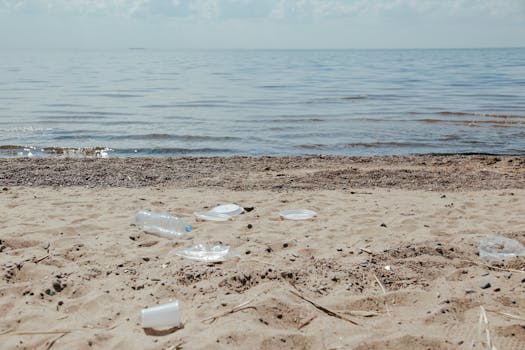
Ocean Plastic Pollution ESL Worksheet – Level F 【海洋塑膠污染進階英語學習單】
This free ESL worksheet is for advanced English learners (around Grade 6 reading level). The topic is ocean plastic pollution — one of the most important environmental problems in the world today. You will read an informational article, then practice your English skills with vocabulary, reading comprehension, and writing activities.
This worksheet is great for self-study at home, classroom use, or exam preparation. All exercises are inside the PDF. Download it below.
- Topic: Ocean Plastic Pollution 海洋塑膠污染
- 수준: Advanced (Level F — approx. Grade 6)
- Skills: Reading, vocabulary, comprehension, critical thinking
- Format: PDF — print or complete digitally
What You Will Practice
Inside the PDF worksheet, you will find:
- Reading passage — A detailed article about ocean plastic pollution written at an advanced level. Learn about microplastics, the food chain, and what governments are doing to help.
- Vocabulary exercises — Match key words to their definitions. Learn words like pollution, environment, microplastics, contamination, 그리고 biodegradable.
- True / False questions — Check your reading comprehension.
- Fill-in-the-blank sentences — Practice using vocabulary words in context.
- 토론 질문 — Think critically about the topic and share your opinion.
어휘 미리보기 詞彙預覽
Here are 5 important words from the worksheet. Study them before you read:
- 오염 — harmful things released into the environment that make it dirty or dangerous
- microplastics — very tiny pieces of plastic smaller than 5mm that come from larger plastic breaking apart
- biodegradable — able to break down naturally in the environment without causing harm
- contamination — the process of making something impure or harmful by adding a dangerous substance
- ecosystem — a system of living things (plants, animals, microorganisms) interacting with each other and their environment
If you want a simpler version of this worksheet, try the Level C Ocean Plastic Worksheet first.
Looking for more Advanced ESL worksheets? Browse the full Advanced worksheet collection →




 한국어
한국어  English
  繁體中文
繁體中文  日本語
日本語  ไทย
ไทย  Bahasa Indonesia
  Tiếng Việt
  Français