Collocations Explained: 5 Types & 30 Examples Taiwan Learners Need (2026) | 英文搭配詞五大類型完整教學
本文重點:本文深入解析英文搭配詞 (English Collocations) 的五大類型,並提供 30 個台灣上班族與多益 (TOEIC) 考生必備的實用範例。掌握搭配詞是英文流利度的關鍵,無論你正在準備商業英文 (Business English) 或想找英文家教 (English tutor) 強化口說,這份指南都能幫你說出更自然、道地的英文。
Have you ever felt that your English sentences are grammatically correct but somehow sound unnatural to native speakers? The secret usually lies in collocations — the way certain words naturally pair together in English. For Taiwanese professionals (台灣上班族) preparing for TOEIC (多益) or working in international companies, learning collocations is the fastest path to sounding fluent rather than translated.
A collocation is a combination of words that English speakers use together so often that any other pairing sounds strange. You "make a decision" — you don’t "do a decision." You have "heavy rain" — not "strong rain." Native speakers never think about these patterns; they simply know them. The good news? You can learn them too, and this 2026 guide will show you exactly how.
What Are Collocations? | 什麼是搭配詞?
A collocation (搭配詞) is a pair or group of words that frequently occur together in English. These combinations are not random — they follow patterns that native speakers internalize over years of exposure. Linguists estimate that fluent English contains tens of thousands of common collocations, and recognizing them is the difference between textbook English and natural English.
Consider the difference between "fast food" and "quick food." Both adjectives mean roughly the same thing, but only one is correct in this context. "Fast food" is a collocation — a fixed pairing that English speakers always use. Saying "quick food" would immediately mark you as a non-native speaker, even though your grammar is perfect.
For Chinese speakers learning English, collocations present a unique challenge because direct translation rarely works. The Mandarin phrase 下大雨 translates literally to "fall big rain," but in English we say "heavy rain" or "pouring rain" — never "big rain." These mismatches between Chinese and English collocation patterns are where most Chinglish errors originate.
Why Collocations Matter for Taiwan Learners | 為什麼搭配詞對台灣學習者重要
If you are studying for TOEIC, IELTS, or working in a Taiwanese company that requires English communication, collocations directly affect your score and your career. The TOEIC Listening and Reading test heavily features collocations in the Part 5 incomplete sentences and Part 7 reading passages. Examiners specifically test whether you can pick the natural word pairing among grammatically valid options.
In the workplace, using correct collocations signals professional competence. When you write "I’d like to schedule a meeting" instead of "I want to make a meeting," your colleagues immediately register you as someone who understands business English (商業英文). This perception affects promotions, client trust, and your confidence in international video calls.
The 5 Main Types of Collocations | 五大搭配詞類型
Linguists classify English collocations into several grammatical categories. Understanding these categories helps you organize your study and notice patterns in the English you read and hear every day. Here are the five most important types every Taiwan learner should master.
Type 1: Adjective + Noun | 形容詞 + 名詞
This is the most common collocation pattern in English. An adjective describes a noun, but only specific adjectives fit with each noun. Examples include "strong coffee" (not powerful coffee), "heavy traffic" (not big traffic), "fast food" (not quick food), "deep sleep" (not heavy sleep), and "bright future" (not light future).
Notice that "strong" pairs with "coffee" but not with "rain." "Heavy" pairs with "rain" and "traffic" but not with "coffee." These are not logical rules — they are conventions you must absorb through repeated exposure.

Type 2: Verb + Noun | 動詞 + 名詞
Verb-noun collocations cause the most confusion for Chinese speakers because Mandarin uses different verbs than English. Common examples include "make a decision" (做決定), "take a photo" (拍照), "do homework" (做作業), "have breakfast" (吃早餐), "give a speech" (演講), "pay attention" (注意), and "catch a cold" (感冒).
The verbs "make" and "do" are particularly tricky. You make decisions, plans, mistakes, and progress. You do homework, exercise, business, and the dishes. Memorizing which verb pairs with which noun is essential for sounding natural in office English.
Type 3: Adverb + Adjective | 副詞 + 形容詞
Adverbs intensify or modify adjectives, but only specific pairings sound natural. Examples include "highly recommended" (not very recommended), "deeply concerned," "fully aware," "perfectly clear," "totally exhausted," and "ridiculously cheap." Using the wrong intensifier — like "very recommended" — instantly marks your English as non-native.
Type 4: Verb + Adverb | 動詞 + 副詞
Verbs combine with adverbs to specify how an action is performed. Strong examples include "wave frantically," "whisper softly," "strongly deny," "apologize sincerely," and "drive recklessly." In business contexts, you will often hear "respond promptly," "deliver consistently," and "communicate clearly" — all collocations worth memorizing for client emails.
Type 5: Noun + Noun | 名詞 + 名詞
English frequently joins two nouns to form a new concept. Examples include "round of applause," "bar of chocolate," "ceasefire agreement," "team meeting," "office building," and "career path." Some of these compound into a single word over time ("software," "homepage"), but they all started as collocations.

Strong vs Weak Collocations | 強搭配 vs 弱搭配
Not all collocations are equally fixed. Linguists distinguish between strong (fixed) collocations and weak (flexible) collocations. Understanding this difference helps you prioritize which combinations to memorize first.
Strong collocations have very few acceptable alternatives. "Auburn hair" is a strong collocation — "auburn" almost exclusively describes hair color. "Idle threat" and "rancid butter" are similarly fixed. Get these right, and you sound highly fluent to native ears.
Weak collocations allow more flexibility. "Big house" works, but so do "large house," "spacious house," and "enormous house." Weak collocations are easier for learners because the word choice matters less. Focus your memorization energy on strong collocations first.
Common Collocation Mistakes Taiwanese Speakers Make | 台灣學習者常見錯誤
After years of teaching English in Taipei, I have noticed certain collocation errors appear again and again. Here are the most common ones to watch for in your own speaking and writing.
- "Open the TV" — Use "turn on the TV" instead. We open boxes, doors, and books; we turn on electronics.
- "Eat medicine" — Use "take medicine." Even though Mandarin says 吃藥, English never uses "eat" for medication.
- "Very delicious" — Use "absolutely delicious" or just "delicious." The word is already a strong adjective and does not need "very."
- "Learn knowledge" — Use "gain knowledge" 또는 "acquire knowledge." You learn skills; you gain knowledge.
- "Play the computer" — Use "use the computer." Only certain things can be played (games, instruments, sports).
- "Heavy rain falls down" — Use "heavy rain" 또는 "it’s raining heavily." The verb already implies downward motion.
- "Make a phone" — Use "make a phone call" 또는 "call someone."
- "Win him" — Use "beat him" 또는 "defeat him." You win games, prizes, and titles; you beat people.
- "Say me the answer" — Use "tell me the answer." The verb "say" does not take an indirect object the same way.
- "Very afraid" — Use "terrified" 또는 "deeply afraid." Native speakers prefer stronger single adjectives over "very + weak adjective."
How to Learn and Remember Collocations | 如何學習與記憶搭配詞
Memorizing collocations is not the same as memorizing vocabulary. You cannot just learn words in isolation and hope to combine them correctly later. The most effective method is to learn words in their natural pairings from the very first time you encounter them.
Keep a Collocation Notebook | 建立搭配詞筆記本
Whenever you learn a new noun, write down three to five verbs and three to five adjectives that commonly pair with it. For example, under "decision" you might note: "make / reach / regret / postpone a decision" and "tough / final / unanimous / bold decision." This structured approach trains your brain to think in chunks rather than single words.
Use a Collocations Dictionary | 使用搭配詞字典
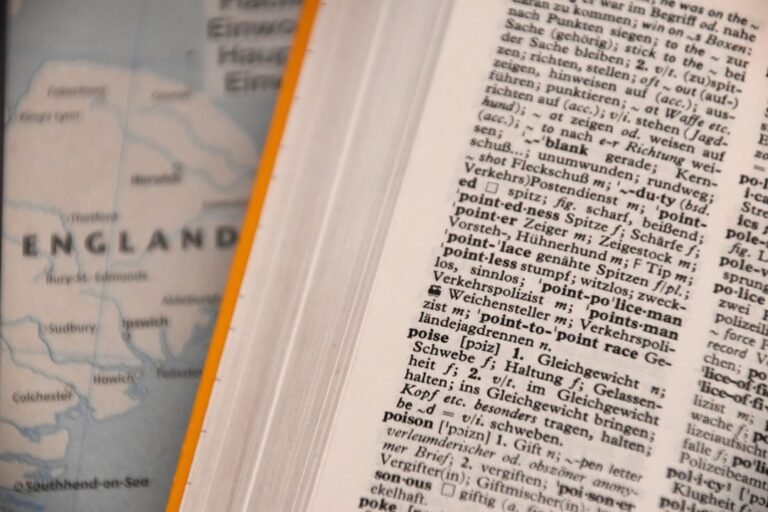
Standard dictionaries do not show enough collocations. Specialized resources like the Oxford Collocations Dictionary or the Macmillan Collocations Dictionary list which words go with which. Online tools like Linggle and Just-the-Word are also free and excellent for checking whether a combination sounds natural to native speakers.
Read Native Content Actively | 主動閱讀英語素材
Newspapers like The New York Times, business magazines like The Economist, and quality podcasts expose you to collocations in context. As you read or listen, highlight or jot down combinations that sound interesting. Review these weekly. Native input is the single most powerful way to absorb collocations naturally.

Collocations Practice for TOEIC and Business English | 多益與商業英文搭配詞練習
For TOEIC takers, mastering high-frequency business collocations directly boosts your Part 5 and Part 6 scores. Here are essential business collocations to memorize for the test and the workplace.
- Reach an agreement — 達成協議
- Meet a deadline — 趕上截止日期
- Hold a meeting — 舉行會議
- Submit a report — 提交報告
- Launch a product — 推出產品
- Close a deal — 完成交易
- Generate revenue — 創造收入
- Conduct research — 進行研究
- Implement a policy — 實施政策
- Resolve an issue — 解決問題
- Sign a contract — 簽訂合約
- Place an order — 下訂單
Notice how each verb-noun pairing is fixed. You do not "make a deadline" — you meet one. You do not "do a meeting" — you hold one. Memorizing these as units prepares you for the multiple-choice format of TOEIC, where distractor answers will use grammatically correct but unnatural verb choices.

Final Tips for Mastering Collocations | 掌握搭配詞的最後建議
Treat collocations as the building blocks of fluent English. Native speakers do not construct sentences word by word — they assemble familiar chunks. The more chunks you have stored in your memory, the faster and more naturally you speak under pressure.
Be patient. You will learn hundreds of collocations over months, not weeks. Focus on the patterns you encounter most often in your work and study, and trust the process. Even highly advanced learners continue picking up new collocations throughout their lives — this is normal, not a sign of weakness.
If you would like personalized coaching, a qualified English tutor (英文家教) in Taipei can pinpoint your specific collocation gaps and design targeted practice. The investment pays off in higher TOEIC scores, stronger business presentations, and the confidence to speak without hesitation in international settings.
Sources | 參考資料
- Oxford Learner’s Dictionaries — Includes the Oxford Collocations Dictionary for advanced learners.
- 영국문화원 — Free English learning resources covering grammar, vocabulary, and collocations.
- 캠브리지 사전 — Trusted source for English definitions and example collocations.
- Macmillan Dictionary — Includes collocation boxes for high-frequency words.
Looking for free ESL worksheets for your classroom? Browse our free worksheet library →
Are you a teacher? Find lesson resources and worksheets at TahricTeaches.com.




 한국어
한국어  English
  繁體中文
繁體中文  日本語
日本語  ไทย
ไทย  Bahasa Indonesia
  Tiếng Việt
  Français