
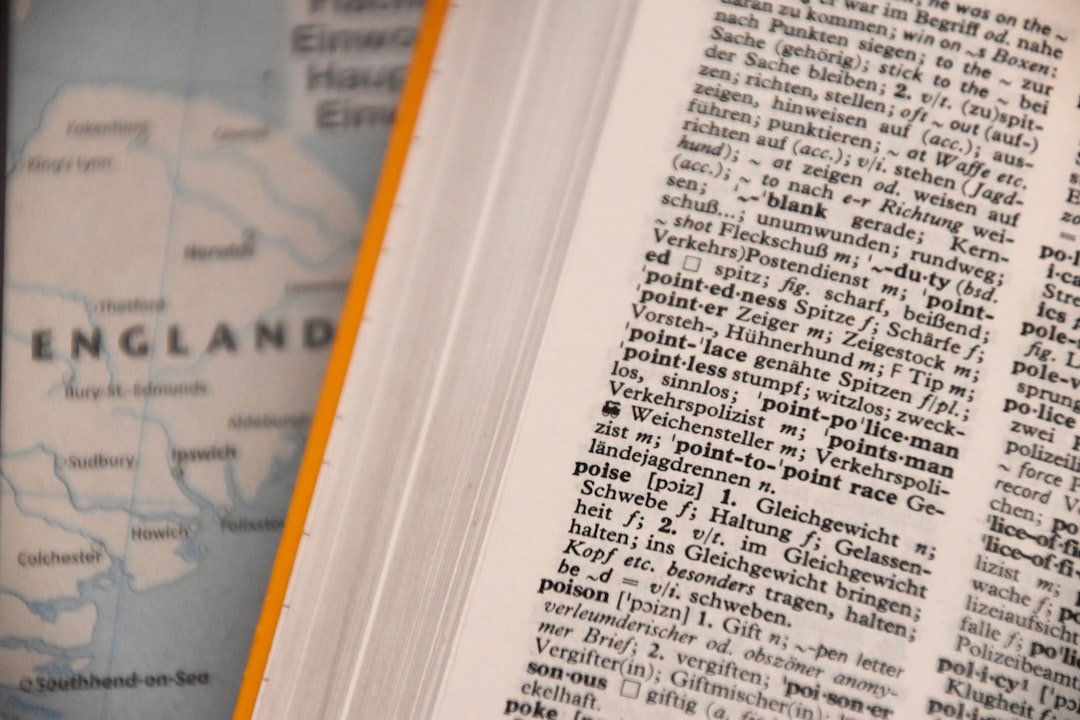
Why ‘Open the Light’ Sounds Wrong: Fixing Collocation Mistakes from Chinese | 英文搭配詞錯誤
本文重點:這篇文章專為台灣上班族與英文學習者,解析「搭配詞」(collocations)錯誤的根本原因——直接從中文翻譯。我們會說明為什麼「open the light」聽起來很怪,並提供 make/do、open/close、strong/heavy 等常見英文搭配詞的修正方法,幫助你的英文寫作與口說(包括多益、商業英文)更自然道地。
Your grammar is fine. Your vocabulary is large. And yet a native speaker reads your email and pauses — something is slightly off. The sentence is technically correct, but no one who grew up speaking English would ever phrase it that way. If this has happened to you, you have run into a collocation problem (搭配詞問題), and for Taiwanese learners it almost always traces back to one habit: silently translating from Chinese before you speak.
This is not a guide about memorizing more word lists. It is about understanding 왜 your brain produces “open the light” instead of “turn on the light,” and how to dismantle that reflex so your English stops sounding like decoded Chinese.
What Collocation Interference Really Means | 什麼是搭配詞干擾
A collocation is simply a pair or group of words that native speakers habitually use together. “Make a decision,” “heavy rain,” “fast food,” “strong coffee” — none of these follow a logical rule you can deduce. They are just the combinations that sound right because everyone uses them. There is no grammatical reason you cannot say “do a decision” or “strong rain.” It is simply not what English does.
Interference (語言干擾) happens when the collocations of your first language quietly override the ones in your second. When a Taiwanese learner wants to say something, the brain often forms the idea in Mandarin first, then swaps each word for its English equivalent. The grammar survives the journey. The word partnerships do not. Chinese pairs 開 (open) with 燈 (light), so the brain produces “open the light” — perfectly logical in Mandarin, completely wrong in English.
This is why collocation errors are so stubborn. They are not knowledge gaps you can patch by studying harder. They are deeply grooved translation habits, and they hide inside sentences that look correct on the surface.
The Translation Trap: When Chinese Logic Meets English | 中文邏輯的陷阱
Let’s look at the specific places where Mandarin and English disagree about which words belong together. Recognizing the pattern is more useful than memorizing any single phrase, because once you see the trap, you start catching yourself in real time.
The Open and Close Family | 開與關的迷思
In Mandarin, 開 and 關 are wonderfully flexible. You 開 the light, 開 the TV, 開 the air conditioner, 開 the car, and 開 a company. English refuses to be this tidy. You turn on a light, turn on the TV, switch on the air conditioner, start a car, and start a company. “Open” is reserved mostly for physical things with a lid, a door, or a cover — you open a window, a box, or a bottle. A Taiwanese learner who says “open the air conditioner” is not making a grammar mistake; they are exporting Chinese collocation logic into English.

Make Versus Do — The Classic Confusion | Make 與 Do 的差別
Mandarin often uses a single verb, 做, where English splits the work between “make” and “do.” Because 做 covers both, learners guess — and frequently guess wrong. You make a decision, a mistake, progress, an effort, and a phone call. You do homework, business, the dishes, research, and a favor. There is a loose tendency — “make” leans toward creating or producing something, “do” leans toward performing an action or task — but the only reliable path is exposure. “Do a decision” and “make your homework” are the fingerprints of a learner translating from 做.
Strong and Heavy Don’t Translate Cleanly | 強與重的搭配
Adjectives are another minefield. English says heavy rain, heavy traffic, and a heavy smoker, but 강한 coffee, a 강한 accent, and a 강한 wind. Mandarin distributes intensity differently (大雨 uses 大 / “big” for rain), so learners reach for “big rain” or “strong rain” instead of “heavy rain.” Each of these is a tiny tell. Individually they are harmless; collectively they signal that the writer is thinking in Chinese and outputting English.

Why Your Brain Defaults to Translation | 大腦為何依賴翻譯
Translation is not laziness — it is efficiency. Your brain already has decades of fluent Mandarin collocations stored as single, effortless units. When you need English fast, the path of least resistance is to retrieve the Mandarin idea and convert it. The problem is that collocations are stored as whole chunks, not as individual words, so when you translate word by word you smash a native chunk apart and reassemble the pieces with English bricks. The result is grammatically standing but structurally foreign.
This matters far beyond casual conversation. In business English (商業英文) and on the TOEIC test (多益), collocation accuracy is one of the clearest dividers between an intermediate and an advanced impression. An email that says “I want to do an appointment” still communicates, but it quietly tells the reader you are operating one translation step behind. “I’d like to make an appointment” tells them you think in English.
Retraining the Instinct: Notice, Record, Reuse | 重新訓練語感
You cannot defeat a chunking problem with a word-by-word solution. The fix is to start storing English the same way you store Mandarin — in chunks. The cycle that works is deceptively simple: notice, record, reuse.

Notice the whole phrase, not the new word. When you read “the company reached a milestone,” your old habit highlights “milestone” and looks it up. Your new habit captures “reach a milestone” as one unit. The verb that travels with the noun is the part you were missing, and it is the part that makes you sound native. Train yourself to ask, “What verb goes with this noun?” rather than “What does this noun mean?”
Record collocations, not single words. A vocabulary notebook full of isolated words rebuilds the exact problem you are trying to escape — it gives you bricks but no blueprints. Instead, write the partnership: “make progress,” “a strong case,” “meet a deadline.” Better still, record a short example sentence so the chunk has a home. A good collocations dictionary (搭配詞字典) is built for exactly this, listing the natural partners of any headword.
Reuse them deliberately. Recognition is not production. You will recognize “heavy traffic” instantly, but under pressure your mouth still produces “big traffic” until you have actively used the correct chunk several times. Pick three or four new collocations a week and force them into your own emails, journal entries, or conversations. This is the step most learners skip, and it is the only one that moves a phrase from passive memory into reflex.
Checking Your Own Writing for Translated Phrases | 檢查中翻英的痕跡
Until the new instinct settles in, you can catch most interference errors with a simple self-edit. After drafting an English email or report, reread it and ask one question of every verb-plus-noun and adjective-plus-noun pair: would a native speaker actually say these two words together? If you are unsure, that uncertainty is the signal. Search the phrase in quotation marks online, or check it against a learner’s dictionary; if it returns almost nothing from native sources, you have probably translated it.

Watch the high-frequency offenders especially closely: the make/do split, the turn-on/open confusion, “say/tell/talk/speak,” and intensity adjectives like strong, heavy, high, and deep. These four families account for a large share of the collocation mistakes Taiwanese professionals make, simply because the corresponding Mandarin verbs and adjectives are so flexible that they invite over-translation.
Building an English-First Instinct | 建立英語直覺
The long-term goal is to stop translating altogether — to form the English idea directly, already chunked. That instinct is built through volume of correct input. Read English written by native speakers in the register you need (business articles if you want better work emails), listen to natural speech, and pay attention to the partnerships rather than just the meaning. Every time you absorb a phrase as a whole, you weaken the translation reflex a little more.
None of this requires a private tutor (英文家教) or an expensive course. It requires shifting one habit: treat English as something you collect in chunks, not something you assemble from translated parts. Do that consistently, and “open the light” quietly disappears from your speech — replaced, almost without effort, by the version a native speaker would actually use. That is the moment collocations stop being a rule you study and become an instinct you own.
Sources & Further Reading | 參考資料
- Wikipedia — Collocation
- 캠브리지 사전 — check natural word partnerships
- Oxford Learner’s Dictionaries
- British Council — English learning resources
- Collocations dictionaries on Amazon
Looking for free ESL worksheets for your classroom? Browse our free worksheet library →
Are you a teacher? Find lesson resources and worksheets at TahricTeaches.com.
Shop on Amazon
English Learning Books on Amazon →
As an Amazon Associate we earn from qualifying purchases.





 한국어
한국어  English
  繁體中文
繁體中文  日本語
日本語  ไทย
ไทย  Bahasa Indonesia
  Tiếng Việt
  Français