
戰爭英文慣用語 | 10 War & Conflict Idioms Every ESL Learner Should Know
The English language has been pulling vocabulary from the battlefield for centuries. At least 70 common English expressions trace directly to military origin, and at least 8 of them appear regularly in business English. That means these expressions are not optional vocabulary — they are part of the system that makes you sound fluent or, if you don’t know them, like you are missing a cultural layer. This guide breaks down 10 essential war idioms with clear Chinese explanations and real-world examples you can start using right away.

什麼是戰爭英文慣用語?[What Are War and Conflict Idioms?]
War idioms are expressions that started in military language but now describe ordinary situations — arguments, difficult jobs, perseverance, and strategic decisions. They don’t refer to real violence. When a colleague says “we’re under fire from the client,” no one is in danger — they mean the client is complaining. That gap between the literal meaning and the actual meaning is exactly what makes idioms difficult for non-native speakers and exactly why they’re worth studying.
The 10 idioms below are ordered from most concrete (you can still see the original military image clearly) to most abstract (the battlefield origin has faded into the background). That structure makes them easier to remember as a set.
1. In the Trenches|在壕溝裡 [Doing Hard, Ground-Level Work]

Trenches were the narrow ditches where WWI soldiers lived and fought for months — exhausting, dangerous, and far from comfortable. When English speakers say someone is “in the trenches,” they mean that person is doing hard, ground-level work, not giving orders from above. Managers who leave the office to work alongside their teams are praised for “getting back in the trenches.”
Meaning / 意思: Actively working on a difficult task at the operational level — doing the work directly, not supervising it.
Example sentences / 例句:
- After five years in management, she went back to being in the trenches as a front-line customer service rep.
- The consultant had no idea how hard the job was — he’d never been in the trenches himself.
- 我們的團隊在戰壕裡奮鬥了三個月,終於推出了新產品。(Our team was in the trenches for three months before the product launch.)
2. War of Words|口舌之戰 [A Heated Verbal Argument]

A “war of words” is a prolonged argument where both sides attack each other with language rather than weapons. You will see this phrase constantly in news headlines when politicians, companies, or public figures argue publicly. It signals something more serious than a brief disagreement — a sustained exchange that neither side is backing down from.
Meaning / 意思: A prolonged and intense argument conducted through words, often publicly.
Example sentences / 例句:
- The two tech companies have been engaged in a war of words over patent rights for two years.
- Their war of words on social media ended up damaging both their reputations.
- 這場口舌之戰讓整個部門的士氣都受到了影響。(This war of words hurt morale across the entire department.)
3. Fight Fire with Fire|以火攻火 [Counter Aggression with the Same Tactics]
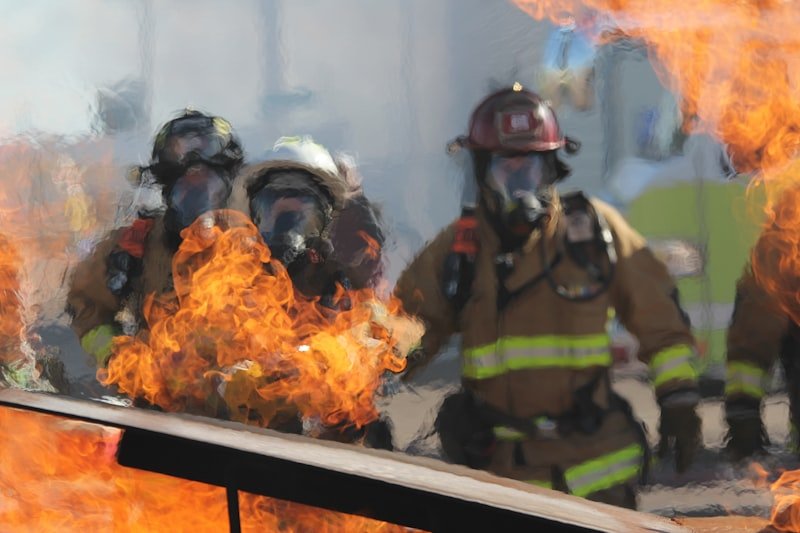
Counterintuitively, fighting fire with fire is a real firefighting technique — controlled burns remove fuel before a wildfire can reach a populated area. In everyday English, the idiom means responding to aggression by using the same aggressive tactics yourself. It works in negotiations, politics, and competitive business contexts — though it tends to escalate situations rather than end them.
Meaning / 意思: Counter an attack or problem using the same methods the other side is using.
Example sentences / 例句:
- When competitors started spreading rumors about us, management decided to fight fire with fire.
- Some negotiators believe you should fight fire with fire in tough deals — match the other side’s pressure with equal pressure.
- 他用以火攻火的策略,用對手的手段還擊。(He fought fire with fire, using the competitor’s own tactics against them.)
4. Call a Truce|宣布停火 [Agree to Stop the Fight]

A truce in military terms is a temporary agreement to stop fighting — not necessarily a final peace, just a pause. In everyday English, “call a truce” means both sides agree to stop a conflict, at least for now. The word “call” here matters: one side proposes it, both sides accept it. You can call a truce in a relationship, a workplace dispute, a neighborhood argument, or a sibling rivalry.
Meaning / 意思: Mutually agree to stop arguing or competing, at least temporarily.
Example sentences / 例句:
- After three months of tension between the two departments, the managers finally called a truce and agreed to split the budget equally.
- Can we call a truce? We’ve been arguing about this for an hour and we’re going in circles.
- 兩個合作夥伴宣布停火,決定暫時擱置爭議,共同面對市場挑戰。(The two partners called a truce and set aside differences to face the market together.)
5. Stick to Your Guns|堅守立場 [Hold Your Position Under Pressure]

“Sticking to your guns” originally meant holding your firing position in battle even when the enemy advanced. Today it describes intellectual and professional stubbornness in the best sense — refusing to change your position just because someone pushes back. It’s a compliment, not a criticism, when used to describe someone who defends a well-reasoned position.
Meaning / 意思: Refuse to change your opinion or decision despite opposition, criticism, or social pressure.
Example sentences / 例句:
- Everyone told her the project was too ambitious, but she stuck to her guns — and it paid off.
- When your boss challenges your data in a meeting, stick to your guns if you have the evidence to back it up.
- 雖然整個委員會反對他的提案,他仍然堅守立場,最終獲得了批准。(Despite the committee’s opposition, he stuck to his guns and the proposal eventually passed.)
6. Under Fire|遭受砲火 [Being Heavily Criticized]
“Under fire” comes from the battlefield — being in a position where bullets or artillery are aimed at you. In modern English, the target is reputation, policy, or accountability rather than anything physical. When a CEO is “under fire,” journalists, investors, or the public are attacking their decisions. When a government minister is “under fire,” multiple critics are pushing back simultaneously.
Meaning / 意思: Being strongly and widely criticized, usually by many people at once.
Example sentences / 例句:
- The company’s CEO came under fire after the data breach exposed customer records.
- The government’s new education policy is under fire from teachers, parents, and opposition lawmakers.
- 這位政治人物因醜聞而遭受各方砲火,最終被迫辭職。(The politician came under fire due to the scandal and was ultimately forced to resign.)
7. Pick Your Battles|選擇你的戰役 [Be Strategic About What You Fight Over]

Military strategists have always known that fighting every possible battle spreads your resources too thin and often means losing the war. The civilian version of this wisdom — “pick your battles” — is one of the most useful idioms in English, especially in workplaces and long-term relationships. The implication is always that you’re choosing to let some things go, not because you don’t care, but because you’re thinking strategically.
Meaning / 意思: Be selective about what you argue over or resist — don’t waste energy on every disagreement.
Example sentences / 例句:
- As a new manager, you need to pick your battles — you can’t push back on every policy you disagree with.
- She’s learned to pick her battles with her teenage son: she holds the line on the things that matter and lets the small stuff go.
- 在職場上要懂得選擇你的戰役,不必為每件小事與人爭論。(At work, pick your battles — not every disagreement is worth fighting.)
8. Win the Battle, Lose the War|贏了戰役,卻輸了整場戰爭 [Short-Term Win, Long-Term Loss]
Military history is full of pyrrhic victories — battles won at such high cost that the winner was left too weak to survive the larger conflict. In everyday English, the idiom describes any situation where a short-term win comes at the cost of a more important long-term goal. It’s a warning against tunnel vision.
Meaning / 意思: Succeed in one small part of a larger contest but fail in the bigger picture because of it.
Example sentences / 例句:
- They won the lawsuit but spent so much on legal fees that they won the battle and lost the war.
- Aggressive negotiation tactics might win you this deal, but if you alienate the client permanently, you’ve won the battle and lost the war.
- 他在這次談判中佔了上風,但因此失去了長期合作的機會——典型的贏了戰役卻輸了整場戰爭。(He won the negotiation but lost the long-term partnership — a classic case of winning the battle but losing the war.)
9. Bite the Bullet|咬緊子彈 [Endure Something Unpleasant Without Complaining]
Before modern anesthesia, field surgeons gave patients a bullet to bite on during painful procedures — it gave them something to focus on and muffled the sounds of their pain. The idiom survived as a way to describe accepting and enduring something unpleasant because there is no way to avoid it. The 캠브리지 사전 labels it informal but high-frequency — it shows up in business, healthcare, and political reporting regularly.
Meaning / 意思: Accept or endure a painful or difficult situation bravely, because there is no other option.
Example sentences / 例句:
- The renovation is going to be expensive, but we need to bite the bullet and get it done before the rainy season starts.
- I hate going to the dentist, but after six months I’m going to have to bite the bullet and make an appointment.
- 公司決定咬緊子彈,宣布裁員,以度過這次財務危機。(The company bit the bullet and announced layoffs to survive the financial crisis.)
10. On the Front Line|在前線 [Dealing with Problems Directly]
The front line in military terms is the forward-most position where soldiers face the enemy with no buffer between them and the threat. In professional and social contexts, it describes workers who interact directly with customers, patients, or problems — no intermediary, no filter. This phrase became especially common in English-language news after 2020, used to describe healthcare workers, teachers, and emergency responders. Merriam-Webster notes that the figurative use of “front line” dates back at least to the 1970s.
Meaning / 意思: In a position that requires dealing directly with challenges, customers, or problems, without a layer of protection or management above.
Example sentences / 例句:
- Customer service teams are on the front line — they hear about product problems before management does.
- Nurses and teachers are regularly on the front line of social problems that go far beyond their job descriptions.
- 第一線員工承受了最大的壓力,但往往得不到足夠的資源支持。(Front-line workers bear the most pressure but often receive the fewest resources.)
這些成語在商業英文中的應用 [War Idioms in Business English]

War and conflict idioms are everywhere in business English because competition is the core mental model that most professional language is built around. A single day of coverage in any major financial publication — the Financial Times, Bloomberg, the Wall Street Journal — will surface at least five of the idioms on this list. The table below summarizes all 10 with Chinese translations and the most common contexts where each one appears:
| Idiom 英文成語 | 中文 Chinese | Best Used In / 常見情境 |
|---|---|---|
| In the trenches | 在壕溝裡 | Work, professional settings |
| War of words | 口舌之戰 | News, politics, social media |
| Fight fire with fire | 以火攻火 | Conflict response, negotiation |
| Call a truce | 宣布停火 | Relationships, team disputes |
| Stick to your guns | 堅守立場 | Meetings, negotiations |
| Under fire | 遭受砲火 | News, business, politics |
| Pick your battles | 選擇你的戰役 | Management, relationships |
| Win the battle, lose the war | 贏了戰役輸了整場戰爭 | Strategy, business decisions |
| 고통을 감수하라 | 咬緊子彈 | Difficult decisions, unpleasant tasks |
| On the front line | 在前線 | Work, healthcare, education |
For more idioms with strong Chinese-English learning angles, see the full guide to sea and water idioms in English. If you’re building up workplace vocabulary, the 25 phrasal verbs for work and the list of English linking words and transitions pair well with this list.
War and conflict idioms are worth the investment precisely because they’re not taught in textbooks. Taiwan’s English education system teaches grammar and vocabulary — but these idioms are the layer on top that separates textbook English from the kind that reads as genuinely fluent. Pick two or three from this list, use them in your next email or meeting, and notice how quickly the vocabulary sticks when it carries a real visual story behind it.
Sources 資料來源
- Cambridge Dictionary: “bite the bullet” — Definition and usage examples, labeled informal but high-frequency.
- Merriam-Webster: “front line” — Etymology and figurative usage history of the phrase.
- The Free Dictionary: War Idioms — Reference index of English war and conflict idioms with usage examples.
- Words Coach: 50 War Idioms — Extended list of military-origin idioms used in modern English.






 한국어
한국어  English
  繁體中文
繁體中文  日本語
日本語  ไทย
ไทย  Bahasa Indonesia
  Tiếng Việt
  Français