Countable & Uncountable Nouns: 8 Rules | 可數不可數名詞 (2026)
Ask a class of Taiwan professionals to translate 「我有很多工作」 and more than half will write “I have many works.” It should be “much work” — work is uncountable, and this single slip shows up in emails, interviews, and IELTS essays every single day. Chinese has no plural marking and no articles, so the countable/uncountable split feels invisible to native Mandarin speakers. Once you see the pattern, though, it locks into place fast. Here are the eight rules that fix the mistakes I see most often.

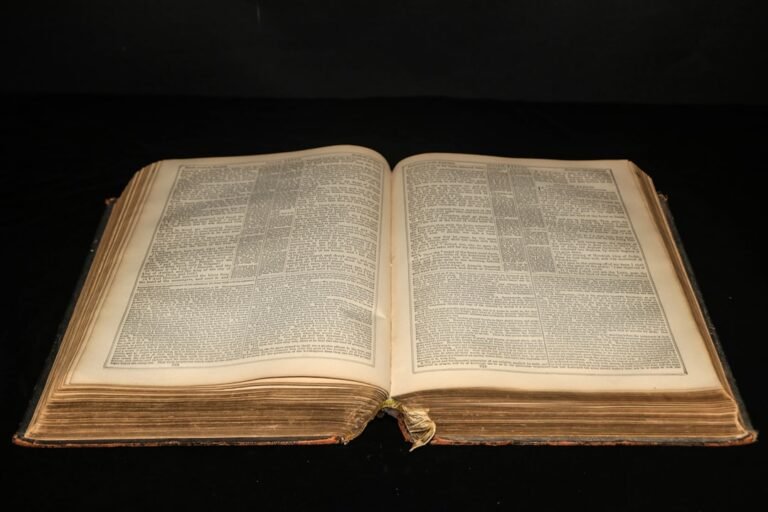
Books are countable — one book, two books. This is the easy half of the rule.
What Are Countable and Uncountable Nouns? (可數與不可數名詞是什麼?)
Countable nouns (可數名詞) are things you can separate and count as individual units: a chair, five students, a hundred emails. They have both a singular and a plural form. Uncountable nouns (不可數名詞) are things treated as a whole mass or an abstract idea: milk, sugar, advice, traffic, money. You measure them, you don’t tally them.
The tricky part for Taiwan learners is that the line doesn’t match Chinese logic. In Mandarin, 一個建議 uses the same measure-word structure as 一個蘋果, so “advice” feels countable. In English it isn’t — you say “a piece of advice,” never “an advice.” The categories below cover almost every uncountable noun you’ll meet: liquids and food (water, coffee, bread, rice), materials (wood, plastic, gold), abstract ideas (information, knowledge, happiness), and activities (work, homework, research).
Rule 1 — Countable Nouns Take Plurals and Numbers (可數名詞加複數)
If a noun is countable, you can put a number in front of it and add -s for the plural: one dog, three dogs. You must also use a 또는 an with a singular countable noun — “I bought a laptop,” never “I bought laptop.” Leaving out the article is one of the fastest ways to sound like a beginner, even when your vocabulary is advanced.
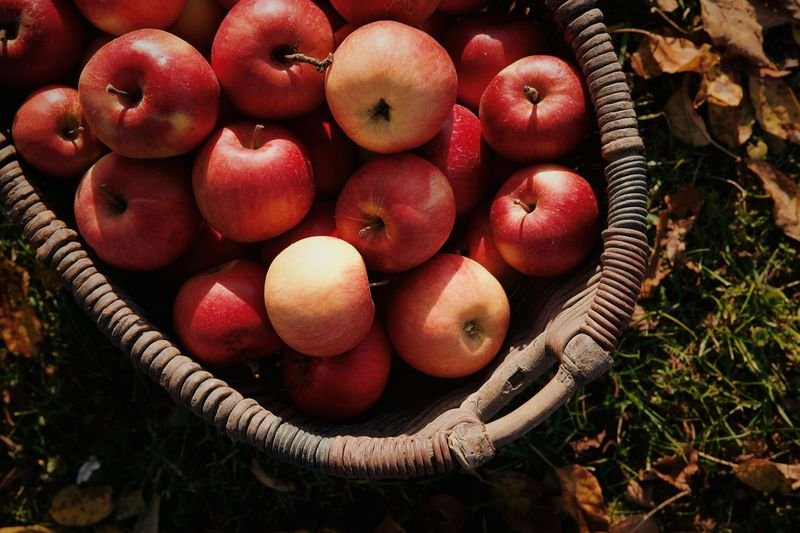
Apples are countable: one apple, a basket of apples, twelve apples.
Quick test: can you say “two ___”? If “two apples,” “two problems,” and “two questions” all sound normal, those nouns are countable and behave predictably.
Rule 2 — Uncountable Nouns Have No Plural (不可數名詞不加複數)
Uncountable nouns stay singular. You never add -s, and you never put a/an or a number directly in front. “I need an information” and “three informations” are both wrong — it’s “some information” or “a piece of information.” The verb stays singular too: “The news ~이다 good,” not “are.”

Water is uncountable — you measure it by the glass, not by the number.
Watch out for a set of nouns that look plural but aren’t: news, physics, mathematics, economics all end in -s yet take a singular verb. “Economics is my major” is correct. This one catches even strong students.
Rule 3 — Much vs. Many: The Mistake I See Most (much 與 many 的差別)
Use many with countable nouns and much with uncountable nouns. “Many emails” but “much traffic.” In everyday positive sentences, native speakers actually prefer “a lot of” for both, saving much mostly for questions and negatives — “I don’t have much time,” “How much does it cost?” That’s why “I have much money” sounds textbook-stiff; “I have a lot of money” sounds natural.

Practising much vs. many is the single highest-value drill for this topic.
| Type (類型) | 단어 | Example |
|---|---|---|
| Countable (可數) | many | 어떻게 many people came? |
| Uncountable (不可數) | much | 어떻게 much water is left? |
| Both (皆可) | a lot of / lots of | A lot of people / a lot of 물 |
Rule 4 — How Much vs. How Many for Questions (數量問句怎麼問)
To ask about quantity, pair the question word with the noun type: 얼마나 for countable, 얼마나 많이 for uncountable. “How many days do we have?” versus “How much time do we have?” The same split decides fewer vs. less — “fewer mistakes” (countable) but “less stress” (uncountable). Supermarkets that write “10 items or less” are technically wrong; it should be “fewer.” Most native speakers break this rule casually, but in writing and exams it still counts against you.
Rule 5 — Some, Any, and A Lot Of (some / any / a lot of 的用法)
Good news: some, any, 그리고 a lot of work with both countable and uncountable nouns, so they’re your safe default when you’re unsure. Use some in positive sentences and offers (“I have some questions,” “Would you like some coffee?”), and any in negatives and questions (“I don’t have any money,” “Is there any milk?”).
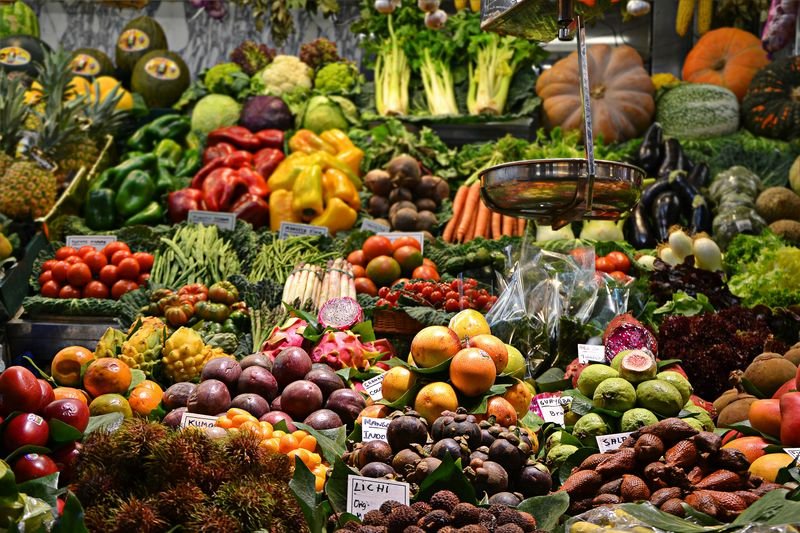
At a market, apples and tomatoes are countable; the flour and oil are not.
| 단어 | Countable | Uncountable |
|---|---|---|
| some / any | some books | some water |
| a lot of | a lot of ideas | 많은 조언 |
| no / none | no chairs | no furniture |
Rule 6 — A Few vs. A Little (a few 與 a little)
These two mean “a small amount,” but they split by noun type. Use a few with countable nouns and a little with uncountable ones: “a few friends,” “a little patience.” Drop the a and the meaning turns slightly negative — “few friends” means almost none, while “a few friends” means some. That tiny article changes the whole tone of a sentence, so it’s worth drilling.
Rule 7 — Nouns That Are Both (可數又不可數的名詞)
Some nouns switch category depending on meaning, and this is where “advanced” learners separate themselves. Coffee is uncountable as a substance (“I drink coffee every day”) but countable when it means a serving (“Two coffees, please”). The same goes for chicken (the meat vs. the animal), paper (material vs. a newspaper or essay), hair (all of it vs. individual strands), and time (“I don’t have time” vs. “I’ve been there three times”).

Coffee is uncountable as a drink, but countable when you order ‘two coffees.’
The rule of thumb: when the noun means the general material or idea, it’s uncountable. When it means a specific type, portion, or instance, it becomes countable.
Rule 8 — How to Count Uncountable Nouns (用單位量詞計量)
You can still count an uncountable noun — you just add a unit first, the way Chinese uses 量詞. Say “a glass of water,” “two cups of coffee,” “a piece of information,” “three slices of bread,” “a bit of advice.” The pattern is [number] + [unit] + of + [uncountable noun]. This mirrors 一杯水 and 一片麵包 almost exactly, which makes it one of the easier rules for Taiwan learners to internalise.

Rice is uncountable — count it as ‘a bowl of rice’ or ‘two kilos of rice.’
| Uncountable Noun | Counting Unit (單位) |
|---|---|
| water / coffee / tea | a glass / cup of… |
| bread / cake / paper | a slice / piece of… |
| advice / information / news | a piece of… |
| rice / sugar / salt | a bowl / spoon / kilo of… |
Common Mistakes Taiwan Learners Make (台灣學生常見錯誤)
Five errors account for the bulk of the corrections in my classes. First, adding -s to uncountable nouns: “informations,” “advices,” “furnitures” — none exist. Second, “many” with uncountable nouns: “many money” should be “much money” or “a lot of money.” Third, dropping the article on singular countable nouns: “I sent email” instead of “I sent an email.” Fourth, treating homework, work, 그리고 research as countable — they’re uncountable, so it’s “a lot of homework,” never “many homeworks.” Fifth, using a plural verb with news 또는 money: “The money is on the table,” not “are.”
Watch: Countable and Uncountable Nouns Explained (影片講解)
This short lesson from BBC Learning English walks through the same countable and uncountable noun rules with spoken examples — useful for training your ear alongside the tables above.
Quick Reference Cheat Sheet (快速對照表)
| 질문 | Countable (可數) | Uncountable (不可數) |
|---|---|---|
| Plural -s? | Yes (books) | No (water) |
| a / an? | Yes (a book) | No (some water) |
| much / many? | many | much |
| how much / how many? | how many | how much |
| a few / a little? | a few | a little |
Pick one rule from this list and hunt for it in your own writing this week — most likely the “much/many” split or the missing article. Fixing a single recurring error does more for how professional your English sounds than memorising a hundred new vocabulary words. For a wider grammar tune-up, work through our guide on a, an, and the next, since articles and countable nouns are tightly linked — and if you want a full study plan, start with our proven methods for learning English.
Sources (資料來源)
- British Council LearnEnglish — grammar reference for countable and uncountable nouns.
- 캠브리지 사전 문법 — official rules on count and non-count nouns.
- BBC 러닝 잉글리시 — video lesson on countable and uncountable nouns.





 한국어
한국어  English
  繁體中文
繁體中文  日本語
日本語  ไทย
ไทย  Bahasa Indonesia
  Tiếng Việt
  Français