Basic English Words: The 100 Most Common Words That Cover Half of Everyday English | 基礎英文單字100個
本文重點:學習英文最有效的方法是先掌握高頻基礎英文單字 (英文家教推薦的入門法)。本文整理英文中最常用的100個單字,這些單字覆蓋日常英文對話與閱讀的50%以上。適合台灣上班族、多益準備考生、商業英文初學者,搭配間隔重複法 (Spaced Repetition) 與情境練習,30天打下扎實英文根基。
When Taiwanese professionals (台灣上班族) start learning English, many rush straight into TOEIC (多益) practice tests or business English (商業英文) phrasebooks — and skip the foundation entirely. The uncomfortable truth is also a freeing one: roughly half of everything you read, hear, and need to say in English uses the same small group of words. Linguists call them high-frequency words, and most beginner-friendly lists simply call them basic English words. Master the right 100, then 500, and the rest of the language stops feeling like an ocean.
This guide breaks down exactly which Basic English Words matter most for adult learners in Taipei, why frequency beats difficulty, and how to memorise them without falling into the common trap of forgetting everything two weeks later.
Why Basic English Words Matter More Than Advanced Vocabulary | 為什麼基礎英文單字比進階單字更重要
There’s a counter-intuitive principle in language statistics called Zipf’s Law. It says that in any natural language, a very small number of words appear extremely often, while most words appear rarely. In English, the top 100 words make up about 50% of all written and spoken material. The top 1,000 cover roughly 80%. The remaining tens of thousands of words divide up the last 20%.
For an adult learner in Taiwan, this is excellent news. You don’t need a 10,000-word vocabulary to function — you need the right 1,000, ordered by how often they actually appear in real conversations and business emails. Skipping these to study niche industry terms is like trying to run before you’ve learned to balance.
The 100 Most Common Basic English Words (Your Core Foundation) | 100個最常用基礎英文單字
Below is a category breakdown of the highest-frequency English words, drawn from corpus research like the Oxford English Corpus and the Brown Corpus. Don’t try to memorise them all in one sitting. Skim the list, recognise which ones you already half-know, and earmark the gaps.
Function Words: The Silent Workhorses | 功能詞
Function words are articles, prepositions, conjunctions, and pronouns. They carry less meaning alone but bind sentences together. You cannot speak English naturally without them.
- Articles: the, a, an
- Pronouns: I, you, he, she, it, we, they, this, that, these, those
- Prepositions: of, in, to, for, with, on, at, by, from, about
- Conjunctions: and, but, or, so, because, if, when
- Auxiliaries: is, are, was, were, do, did, have, has, had, will, would, can, could, should
Essential Verbs | 必學動詞
These are the 25 most useful verbs for beginners. They appear in nearly every sentence you’ll need at the office or in daily life.
- be, have, do, say, go, get, make, know, think, take
- see, come, want, look, use, find, give, tell, work, call
- try, ask, need, feel, become
Common Nouns | 常用名詞
Notice how concrete and ordinary these are. The most useful words in any language describe everyday life, not specialised concepts.
- time, year, day, week, way, thing
- man, woman, child, people, life, world
- hand, eye, place, work, home, school, group, problem, question, fact
Adjectives and Adverbs You Need First | 必學形容詞與副詞
- Adjectives: good, new, first, last, long, great, little, own, other, old, right, big, high, small, large, next, early, young, important, different
- Adverbs: not, very, just, now, only, also, even, well, here, there, more, most, really

How to Actually Learn Basic English Words That Stick | 如何讓基礎英文單字真正記住
The biggest mistake adult learners make is treating vocabulary as something to memorise the way they memorise a phone number. English words live inside grammar, context, and pronunciation — pulled out of context, they slide back out of your brain within two weeks.
1. Use Spaced Repetition (Not Cramming) | 使用間隔重複法
Spaced repetition (間隔重複法) means reviewing a word at increasing intervals — five minutes, an hour, a day, three days, a week — so each successful recall pushes the next review further away. Apps like Anki and Quizlet automate this. Twenty minutes a day of spaced repetition outperforms two hours of cramming, every time.
2. Learn Words in Sentences, Not Lists | 在句子中學單字
The verb “take” alone is almost meaningless — but “take a break”, “take the bus”, “take notes”, and “take care of someone” each teach you a real piece of English. When you save a new basic word, save it with the full sentence you first encountered it in. The grammar pattern sticks alongside the word, and that pattern is what you actually need when speaking.
3. Read Below Your Level | 閱讀程度比你低的內容
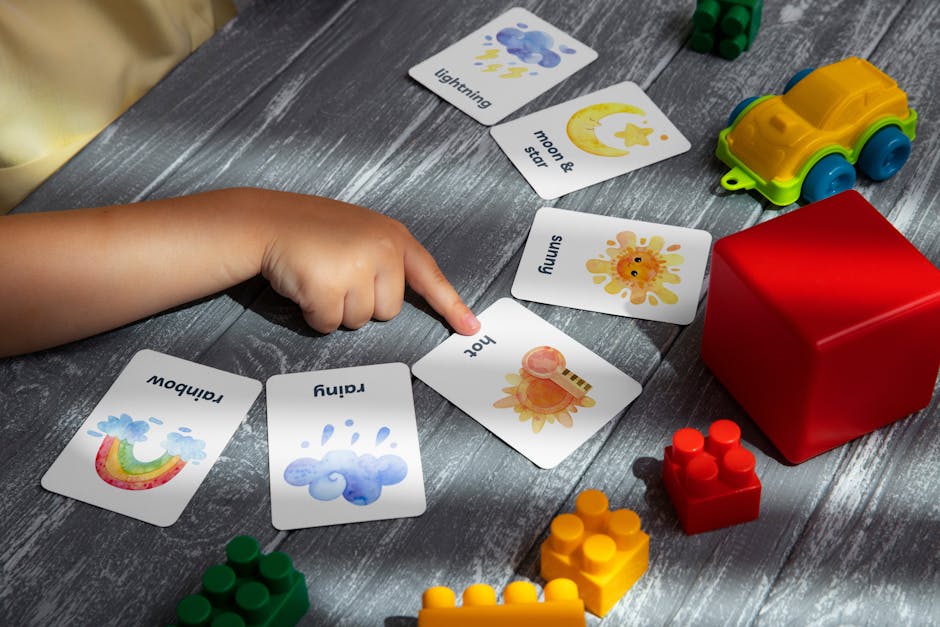
This sounds backwards, but graded readers and children’s storybooks are the secret weapon of fluent adult learners. They expose you to the same basic English words again and again in slightly different contexts, building automatic recognition. Try the Penguin Readers series or short articles from VOA Learning English — both use a deliberately limited vocabulary.
Common Mistakes Taiwanese Learners Make with Basic English Words | 台灣學生常犯的錯誤
Mistake 1: Memorising Without Speaking | 只背不開口
Taiwan’s school system trains students to recognise words in writing and choose the right multiple-choice answer. Recognition is not production. If you’ve never said “I’d like to…” out loud, your mouth will fumble it in a real meeting. Read your vocabulary aloud. Shadow native audio. Talk to yourself while cooking. Production is the muscle, not just the memory.
Mistake 2: Ignoring Pronunciation Until “Later” | 忽略發音
Many learners assume pronunciation comes after vocabulary. The opposite is true. If you learn “thought”, “though”, and “through” with the wrong sounds, you’ll have to unlearn three habits later instead of one. Always look up new basic words on Forvo or Cambridge Dictionary and listen before you say them.
Mistake 3: Translating Word-for-Word from Chinese | 中文逐字翻譯
English and Mandarin have completely different sentence structures and word pairings. “Open the light” sounds natural translated from 開燈, but English speakers say “turn on the light”. Basic English words like “open”, “do”, “make”, and “take” pair with different objects than their Mandarin equivalents. Learn each verb’s typical partners (called collocations) rather than relying on translation.
A 30-Day Plan to Master 500 Basic English Words | 30天掌握500個基礎英文單字
Here is a realistic schedule for an adult learner who can commit 30 minutes a day. By the end of the month you’ll have an active grasp of the 500 most useful English words — enough to handle most basic conversations and a large chunk of business emails.

- Days 1–5 — The Core 100: Drill the 100 highest-frequency words using Anki. Read them in context via a beginner graded reader.
- Days 6–10 — Verbs in Action: Take the 25 essential verbs and learn three common phrases for each (e.g. “get up”, “get along”, “get a job”).
- Days 11–15 — Sentence Patterns: Build 50 simple sentences using your core 100. Record yourself saying them. Compare with native audio.
- Days 16–20 — Add 200 More: Expand to the next 200 high-frequency words. Use the Oxford 3000 list as a guide.
- Days 21–25 — Output Practice: Write a daily 5-sentence journal in English. Force yourself to use words you’ve recently studied.
- Days 26–30 — Conversation: Find a language partner (italki, Tandem, or a Taipei language exchange meetup) and have three 30-minute conversations using only your basic vocabulary.
Free Resources for Learning Basic English Words | 免費學習資源
You don’t need to pay for an expensive cram school (補習班) to build a strong vocabulary foundation. Some of the best resources are completely free.
Word Lists | 單字清單
- Oxford 3000 / 5000: Free curated lists of the most useful English words for learners, organised by CEFR level.
- General Service List (GSL): A classic 2,000-word list still widely used in ESL classrooms.
- New General Service List (NGSL): A modern update based on a 273-million-word corpus.
Apps and Audio | 應用程式與音檔
- อันกิ: Free spaced-repetition flashcard app. Many ready-made vocabulary decks exist.
- Quizlet: Friendlier interface, lots of beginner sets.
- VOA Learning English: Daily news read at slow speed using a controlled 1,500-word vocabulary.
- BBC Learning English: เดอะ 6 Minute English podcast is gold for intermediate beginners.

Bridging from Basic to Intermediate Vocabulary | 從基礎邁向進階單字
Once your core 500 feels automatic — meaning you don’t pause to translate when you read or hear them — you’re ready for the second tier. This is where TOEIC (多益), IELTS, and business English content actually starts to pay off. Without the foundation, those advanced resources just feel like noise. With it, they become the natural next step.
The bridge usually looks like this: keep reading slightly above your level (a process the linguist Stephen Krashen calls comprehensible input), notice which unfamiliar words keep reappearing, and add only those to your study deck. This way every new word you spend energy on is one that real English actually uses, not one chosen by a textbook editor.
You can know thousands of words and still be silent. Or you can know 500 deeply and start speaking tomorrow. Depth beats breadth, every time.

Final Thoughts | 結語
The myth that you need a huge vocabulary to start using English holds back thousands of capable Taipei professionals every year. The reality is the opposite: a deeply known set of 500 basic English words is more powerful than a half-forgotten list of 5,000. Frequency wins. Context wins. Patience wins. Pick your 100, learn them properly, and the rest of the language will start to organise itself around you.
Sources | 參考資料
- Oxford Learner’s Dictionaries
- พจนานุกรมเคมบริดจ์
- VOA Learning English
- บีบีซี เลิร์นนิ่ง อิงลิช
- Anki Flashcards
- Oxford 3000 Vocabulary Books on Amazon
Looking for free ESL worksheets for your classroom? Browse our free worksheet library →
Are you a teacher? Find lesson resources and worksheets at TahricTeaches.com.






 ไทย
ไทย  English
  繁體中文
繁體中文  日本語
日本語  한국어
한국어  Bahasa Indonesia
  Tiếng Việt
  Français