

Make or Do? The Collocation Trap Taiwan Pros Fall Into | make do 動詞搭配詞完整指南
本文重點: 本文深入解析英文搭配詞 (collocations) 中最容易出錯的動詞搭配,特別是 make 與 do 的差別。台灣上班族 (Taiwan professionals) 在學習商業英文 (business English) 與準備多益 (TOEIC) 時,常因中文直譯而選錯動詞。真正掌握動詞搭配詞,能讓你的英文聽起來自然又道地,而不是「翻譯腔」。
You can drill grammar rules for a decade and still sound foreign the instant you open your mouth. The reason is rarely your tenses or your sentence structure — it is collocation, the invisible web of which words English speakers expect to hear together. A native speaker says “make a decision,” never “do a decision.” They “take a shower,” not “do a shower.” Nobody handed them a rule for any of this; the pairings simply sound right. For Taiwanese professionals, this is exactly where translation quietly betrays you.
This guide walks through the verb collocations that ambush even advanced learners in Taiwan — the make-versus-do battlefield, the so-called delexical verbs like have และ take, and a practical method for getting pairings to actually stick. Get these right and your English stops sounding translated. Get them wrong and a fluent CV can still read as awkward in a meeting.

What a Collocation Actually Is | 什麼是搭配詞
A collocation (搭配詞) is a pair or group of words that habitually travel together. “Heavy rain” is a collocation; “strong rain” is not, even though แข็งแกร่ง และ heavy are near-synonyms. “Fast food” works; “quick food” does not. The words are not wrong individually — they are simply not the combination English speakers reach for. Collocation is less about logic and more about convention, which is precisely why it cannot be reasoned out from a dictionary.
Verb collocations are the highest-stakes category for working professionals because verbs carry the action of every sentence you speak at work. The same English verb can pair with dozens of nouns, and swapping in the “logical” verb instead of the conventional one is the single fastest way to mark yourself as a non-native speaker. Consider the families below — each verb claims its own territory of nouns:
- make + a decision, an effort, a mistake, a profit, progress, an appointment
- do + business, homework, the laundry, research, a favour, your best
- have + a meeting, a break, lunch, a conversation, an impact
- take + a break, a risk, responsibility, notes, a guess, a photo
Notice that “have a break” and “take a break” both exist — English tolerates two correct options here. But “do a break” or “make a break” (in the resting sense) sound broken. That narrow margin of acceptability is what makes collocations so hard to self-correct.
Why Chinese Speakers Mistranslate Them | 為什麼中文母語者容易直譯出錯
The root cause is interference (母語干擾). In Mandarin, one verb often covers ground that English splits across several. 做 maps loosely onto both make และ do, so a learner thinking in Chinese has a coin-flip chance of choosing the right English verb. 開 covers turn on, open, start, และ drive — which is exactly how “open the light” (開燈) is born. The grammar of the sentence is flawless; only the collocation is off.
This is why “do a decision,” “do a mistake,” “open the television,” and “say a joke” survive into the speech of otherwise advanced Taiwanese professionals. These errors are invisible from the inside because the Mandarin original is perfectly correct. You are not making a thinking mistake — you are making a mapping mistake, and the only cure is to learn the English chunk as a single unit rather than assembling it word by word from Chinese.
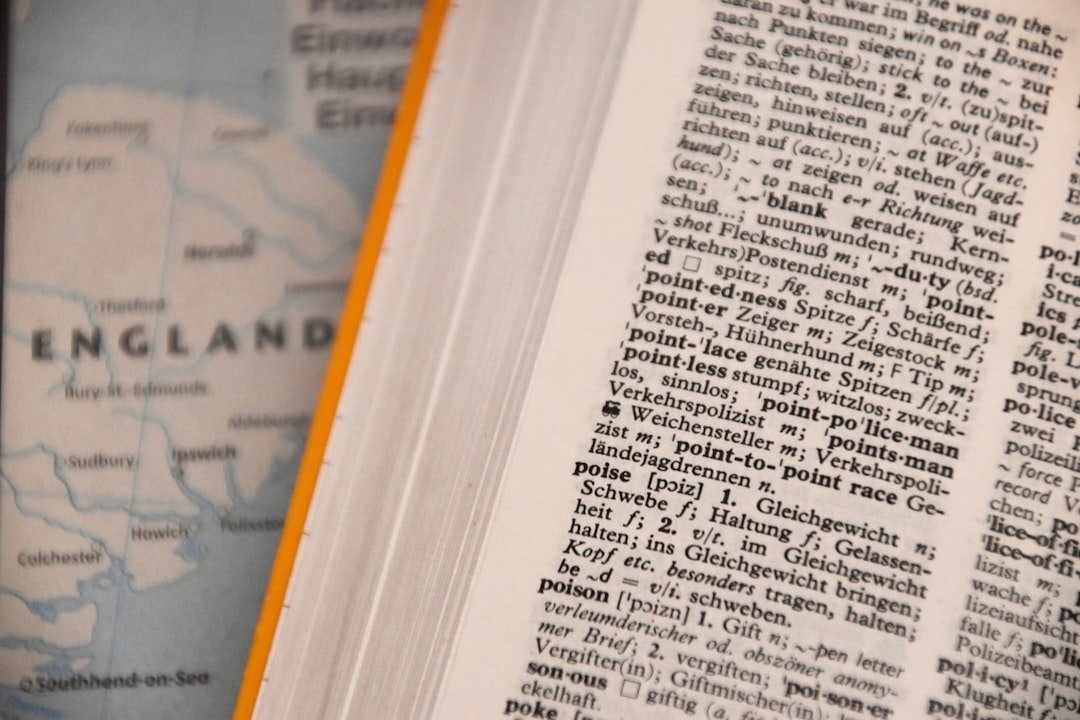
The Make vs Do Battlefield | Make 與 Do 的戰場
No pair causes more trouble than make และ do. There is a loose principle underneath them, and while it will not catch every case, it explains the majority. Lean on it as a default, then memorise the exceptions.
When English Chooses “Make” | 何時用 Make
Reach for make when something is created, produced, or brought into existence — a physical object, or an abstract result that did not exist a moment ago. You make a decision because the decision is produced by your thinking. You make a mistake because the mistake is, unintentionally, created. You make a profit, a plan, an effort, a promise, an excuse, and an impression — each one is a thing your action generates.
- make a decision (做決定) — never do a decision
- make a mistake (犯錯) — never do a mistake
- make an appointment (預約) — for the dentist, a client, the bank
- make a phone call, make a reservation, make progress (有進展)
When English Chooses “Do” | 何時用 Do
Reach for do when you are performing a task, a duty, or unspecified activity — work that already exists and simply needs carrying out. You do the laundry, do your homework, do the dishes, and do business with a supplier. Do also fills the gap when the activity is vague: “What are you doing?” “I’m doing some work.” If the noun names a chore, a job, or an undefined action, do is almost always your verb.
- do business (做生意), do research (做研究), do a favour (幫忙)
- do the laundry, do the housework, do the dishes (家事)
- do your best (盡力), do exercise, do your homework
- do harm, do damage — though you make a repair afterward
The acid test for a tricky case: ask whether the noun is a ผลิตภัณฑ์ (something brought into being → make) or an กิจกรรม (something performed → do). “A decision” is a product; “the dishes” is an activity. The line blurs at the edges — that is what the exception lists are for — but this single question resolves the great majority of real workplace sentences.

Have, Take, and Give: The Delexical Verbs | Have、Take、Give 等虛義動詞
English loves a peculiar move that Mandarin rarely makes: it drains the meaning out of a verb and parks the real meaning in the following noun. Linguists call these delexical verbs (虛義動詞). “Have a look” means little more than “look,” but the natural, conversational phrasing is the longer one. To English ears, “Let’s have a quick chat” sounds warmer and more idiomatic than “Let’s chat quickly,” even though they mean the same thing.
- have a look, have a rest, have a meeting, have a conversation, have lunch
- take a break, take a shower, take a risk (冒險), take notes (做筆記), take a photo
- give a presentation (做簡報), give a speech, give someone a call, give it a try
This is gold for professionals, because delexical phrasing is the texture of natural business English. “I’ll give the proposal a look and we can have a quick call this afternoon” sounds like a fluent colleague. “I will look the proposal and we can call quickly” sounds like a translation. The meaning survives either way — but only one version earns trust in a meeting room.

Strong Collocations vs Weak Ones | 強搭配與弱搭配
Not every collocation is equally rigid, and knowing the difference tells you where to spend your effort. Strong collocations are nearly fixed: “make an effort” admits almost no substitution — you cannot “do an effort” or “give an effort” (in British English) without sounding off. “Heavy rain,” “fast food,” and “bitterly disappointed” are similarly locked. These are the ones worth memorising whole, because guessing rarely lands.
Weak collocations are looser. “A good meal” tolerates “a nice meal,” “a lovely meal,” “a delicious meal” — many adjectives fit, so you have room to improvise without error. The practical lesson: pour your study time into the strong, high-frequency pairings that punish wrong guesses, and relax about the weak ones where instinct serves you fine. A good collocations dictionary marks the strong pairs for exactly this reason.

Collocations in Business English | 商業英文中的搭配詞
In the office, collocation errors carry a higher cost than in casual chat, because business English (商業英文) runs on a tight set of fixed phrases that clients and colleagues expect verbatim. Multiple-choice sections of the TOEIC (多益) test these relentlessly precisely because they separate memorised fluency from translated fluency. The good news is that the working vocabulary is finite — a few dozen verb-noun pairings cover most of what you say at work.
- make a deal, make an offer, make a profit, close a deal, reach an agreement (達成協議)
- meet a deadline (趕上截止日), meet expectations, hit a target, launch a product
- hold a meeting, set up a call, raise a concern, address an issue (處理問題)
- take responsibility, take the lead, take minutes, give feedback (給予回饋)
Watch the traps especially: you meet a deadline, you do not “catch” or “reach” it; you raise a concern, you do not “open” it; you reach an agreement, you do not “arrive at the agreement” the way the Chinese might tempt you to. Each of these is a memorised chunk, and learning them as chunks — not as words to be reassembled — is the entire game.
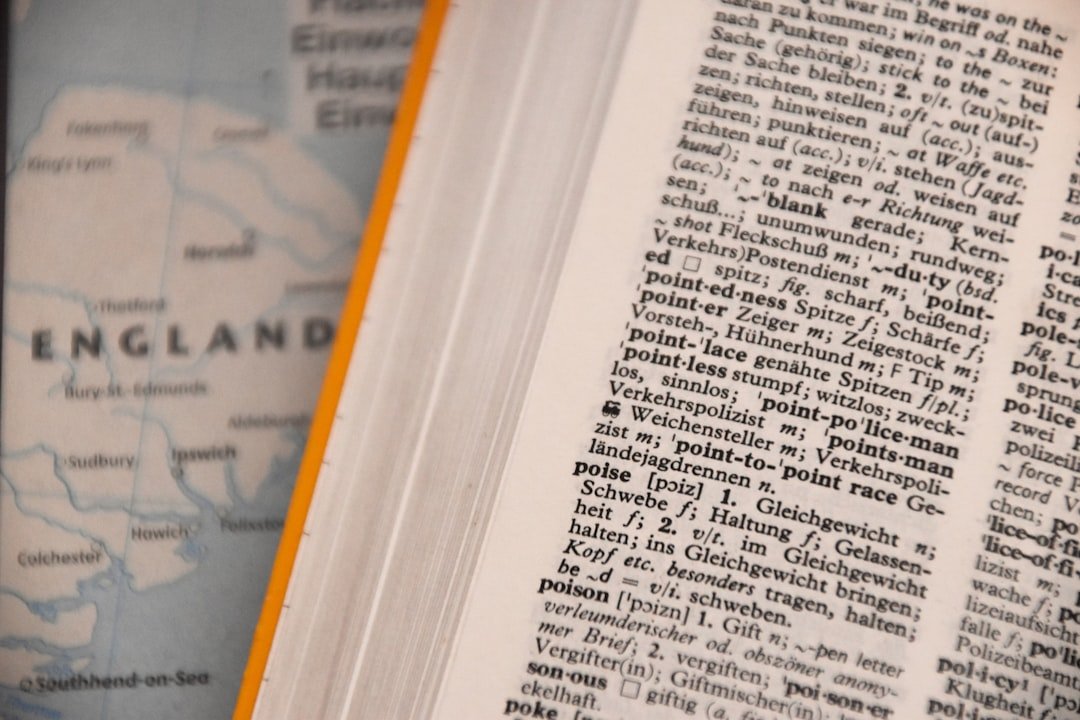
How to Learn Collocations That Stick | 如何有效記住搭配詞
The strategy that fails is studying collocations as a list to be memorised cold — they evaporate within a week. The strategy that works is treating them as chunks you absorb in context and then deliberately reuse. Three habits do most of the heavy lifting.
First, record collocations by the noun, not the verb. When you meet a new noun like “deadline,” jot the verbs that go with it — meet, miss, extend, set a deadline — so your brain stores a ready-made phrase, not an isolated word. Second, read and listen to real business English (emails, podcasts, meeting recordings) with your antenna up for verb-noun pairs, and copy them down verbatim. Third, force production: the morning after you learn “reach an agreement,” use it in a real sentence at work. A pairing you have spoken once outlasts a pairing you have read ten times.
A dedicated collocations dictionary accelerates all of this — the Oxford and Cambridge versions list, for any given noun, every verb and adjective that naturally attaches to it, with the strong pairings flagged. Working English (英文學習) at the chunk level rather than the word level is the structural shift that finally makes your speech sound like a native colleague’s rather than a careful, correct, faintly foreign translation. If you want a reference on your desk, search for a collocations dictionary and keep it next to your keyboard.

You will not fix every pairing overnight — there are thousands, and even native speakers occasionally disagree at the edges. But the verbs covered here, make, do, have, และ take, account for a startling share of the errors that mark Taiwanese professionals as non-native. Tighten those four, learn your phrases as whole chunks, and the “translation” sound that no grammar course ever quite removed will finally start to fade.
Sources | 參考資料
- Collocation — Wikipedia
- พจนานุกรมเคมบริดจ์
- Oxford Learner’s Dictionaries
- British Council — Learn English
- English collocations dictionary (Amazon search)
Looking for free ESL worksheets for your classroom? Browse our free worksheet library →
Are you a teacher? Find lesson resources and worksheets at TahricTeaches.com.





 ไทย
ไทย  English
  繁體中文
繁體中文  日本語
日本語  한국어
한국어  Bahasa Indonesia
  Tiếng Việt
  Français