

Collocations: The Vocabulary Skill That Makes You Sound Natural | 搭配詞學習法
本文重點:本文為台灣上班族與英文學習者解析「搭配詞」(collocations)的學習方法。與其死背單字,不如掌握詞語的自然組合,讓你的商業英文與多益口說更道地。適合準備多益、英文簡報,或想擺脫中式英文的學習者(英文學習)。
You can know every word in a sentence and still sound wrong. A Taiwanese engineer might write “I did a big mistake” หรือ “Let’s discuss about the budget,” and every individual word is correct — yet a native speaker immediately hears that something is off. The problem is almost never grammar or vocabulary size. It is collocation (搭配詞): the invisible convention that decides which words prefer to sit next to each other. In natural English you make a mistake, you don’t do one. You discuss the budget, you don’t discuss about it.
For Taiwanese professionals (台灣上班族) preparing for TOEIC (多益), running meetings in business English (商業英文), or simply trying to sound less like a textbook, collocations are the single highest-leverage thing you can study. They are also the thing almost no classroom teaches well. This guide explains what a collocation really is, why memorizing vocabulary lists quietly fails you, and a concrete method for building collocation memory that actually shows up when you open your mouth.

What a Collocation Actually Is | 搭配詞到底是什麼
A collocation is a pair or group of words that fluent speakers habitually use together. We say heavy rain, never strong rain. We say fast food, never quick food. We ตัดสินใจ, but we do the homework. None of this follows a tidy logical rule — แข็งแกร่ง และ heavy mean almost the same thing, yet only one fits each noun. Collocations are decided by usage and frequency: by what millions of speakers have simply chosen to say over centuries.
This is why collocation is the line between English that is grammatically correct and English that is natural (道地英文). A learner who masters collocations sounds fluent even with a modest vocabulary, because the words arrive in the right company. A learner who ignores them can have an enormous vocabulary and still sound stiff, because every sentence is assembled one isolated word at a time.
Strong vs. Weak Collocations | 強搭配與弱搭配
Not all collocations are equally fixed. Some are แข็งแกร่ง: make an effort allows almost no substitution — you cannot do an effort หรือ build an effort. Others are weak: a quick meeting, a short meeting, and a brief meeting are all acceptable. Knowing which collocations are locked and which are flexible is part of sounding natural, and it is something you absorb through exposure rather than memorize from a rule.

Why Memorizing Word Lists Quietly Fails | 為什麼背單字清單會失敗
Most Taiwanese learners study vocabulary as a column of English words with Chinese glosses beside them: decision = 決定, deadline = 截止日期, concern = 擔憂. This feels productive, and it does build recognition. But it stores each word in isolation — married to its Chinese translation and divorced from its English partners. When you later need to speak, you reach for decision, find no English verb attached to it, and instinctively borrow the logic of Mandarin, producing “do a decision” instead of ตัดสินใจ. That is the precise mechanism behind Chinglish (中式英文).
Fluent speakers do not build sentences word by word. Research on how the brain stores language suggests we hold thousands of ready-made chunks — reach an agreement, meet a deadline, raise a concern — and slot these prefabricated pieces together at speed. This is why natives talk so fast and so smoothly: they are not assembling, they are retrieving. The goal of studying collocations is to build your own library of these chunks so that speaking becomes retrieval, not translation.

The Collocation Types That Matter Most at Work | 職場最重要的搭配類型
You do not need every collocation in English — you need the ones that appear in your professional life. For most Taiwanese professionals, three patterns carry the bulk of workplace communication, and focusing on them gives the fastest return on study time.
Verb + Noun | 動詞 + 名詞
This is the highest-value category and the one Mandarin speakers get wrong most often. You ตัดสินใจ, reach an agreement, meet a deadline, raise a concern, run a meeting, และ take responsibility. The noun is usually easy; the verb is where learners stumble, because Mandarin uses a different verb logic. Whenever you learn a workplace noun, immediately ask: which verb goes with this?
Adjective + Noun | 形容詞 + 名詞
These collocations make your English precise and confident: a tight deadline, a key stakeholder, a strong candidate, a rough estimate, valuable feedback. Swapping in a near-synonym often breaks them — a tight deadline is natural, but a narrow deadline is not, even though both adjectives can mean “small.”
Adverb + Adjective and Verb + Adverb | 副詞搭配
These add nuance and polish: fully aware, deeply concerned, strongly recommend, highly likely. In emails especially, the right intensifier signals that you command the language — “I strongly recommend” lands with far more authority than “I very recommend,” which is not even grammatical.
A Method for Building Collocation Memory | 建立搭配詞記憶的方法
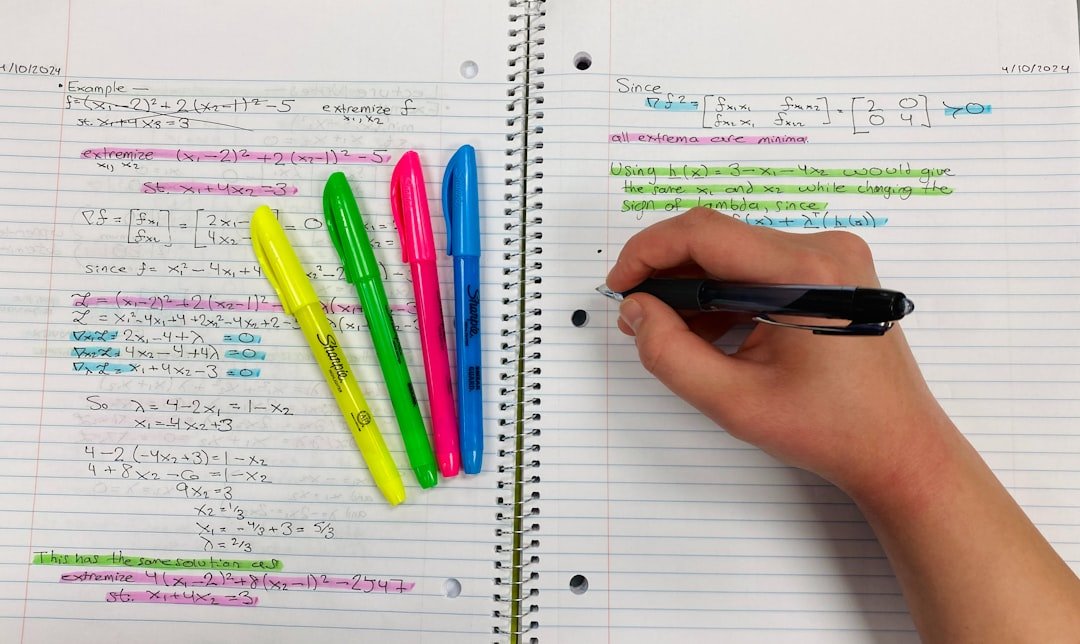
Knowing that collocations matter changes nothing on its own. What builds them into your speech is a small, repeatable loop you run every day: notice, record, reuse. It takes ten minutes and beats any vocabulary app.
Notice | 留意
Start reading like a hunter rather than a tourist. When you read an English email, article, or report, stop scanning for meaning alone and watch for the verb–noun and adjective–noun pairings. The moment you see “we need to address this issue” หรือ “a major setback,” register that address + issue และ major + setback belong together. Noticing is the skill that feeds everything else; without it, the input washes over you and nothing sticks.
Record in Chunks, Not Single Words | 以詞塊記錄,而非單字
Keep a collocation notebook — paper or a notes app — and here is the one rule that makes it work: never record a single word. Record the whole chunk with a sample. Instead of writing deadline = 截止日期, write “meet a tight deadline — We can still meet the deadline if we start today.” The example sentence stores the grammar and the partners together, so when you review, you are rehearsing a usable phrase, not a dictionary entry.
Reuse Within Twenty-Four Hours | 在二十四小時內使用
A chunk you record but never use fades within days. Force one use within a day — drop the new collocation into a real email, a Slack message, or a sentence you say out loud while commuting. This is spaced repetition through real use, and it moves the chunk from passive recognition into active speech (口說). The collocations you actually deploy are the ones that survive.

The Mistakes Taiwanese Speakers Make Most | 台灣學習者最常見的錯誤
Almost every collocation error traces back to one habit: translating directly from Mandarin. 開燈 becomes “open the light” instead of turn on the light; 吃藥 becomes “eat medicine” instead of take medicine; 討論 attracts a stray เกี่ยวกับ to make “discuss about.” Each is grammatically reasonable and completely wrong to a native ear. The fix is not more grammar — it is replacing the Mandarin chunk with the English chunk as a single unit.
The second common trap is over-relying on the most general verb. Learners lean on do และ make for everything because those verbs feel safe, producing “do a meeting” หรือ “make a homework.” Precise English prefers the specific collocation: you hold หรือ วิ่ง a meeting, and you do your homework. When in doubt, look the noun up in a collocations dictionary rather than guessing the verb.

Tools and Habits That Make It Stick | 讓搭配詞內化的工具與習慣
A few resources accelerate the whole process. A dedicated collocations dictionary — the Oxford Collocations Dictionary is the standard — lets you look up any noun and see every verb and adjective that naturally pairs with it. Free online tools like the Cambridge Dictionary show collocations inside example sentences, and corpus-based sites let you check whether a pairing is actually used. For working professionals, an English tutor (英文家教) who corrects collocation errors in real time is worth more than any app, because the mistakes you do not notice are the ones that never improve.
Beyond tools, the real lever is consistency. Five new collocations a day, recorded as chunks and used within twenty-four hours, compounds into roughly 1,800 usable phrases a year — far more than enough to transform how you sound in meetings and on the TOEIC speaking section (多益). The learners who break through are not the ones who study hardest in a single weekend, but the ones who run the small loop every day.
From Correct to Natural | 從正確到道地
Grammar gets you to correct; collocations get you to natural. For a Taiwanese professional, that gap is the difference between an email that is understood and an email that is respected, between a presentation that is tolerated and one that persuades. You already know thousands of English words. The work now is not learning more words — it is learning which words belong together, one noticed, recorded, and reused chunk at a time.
Sources & Further Reading | 參考資料
- Wikipedia — Collocation
- Oxford Learner’s Dictionaries
- พจนานุกรมเคมบริดจ์
- สภาอังกฤษ
- Oxford Collocations Dictionary (Amazon)
Looking for free ESL worksheets for your classroom? Browse our free worksheet library →
Are you a teacher? Find lesson resources and worksheets at TahricTeaches.com.






 ไทย
ไทย  English
  繁體中文
繁體中文  日本語
日本語  한국어
한국어  Bahasa Indonesia
  Tiếng Việt
  Français