
英文數字: 7 Big Number Rules Taiwan Pros Master (2026) | 英文數字完整指南
Last year a Taipei sales manager closed a US$2.5 million deal — and almost lost it because she said “two-point-five thousand thousand dollars” on the call. 英文數字 trips up almost every Taiwanese professional at some point, and the reason is structural: Chinese groups large numbers every four zeros (萬, 億, 兆), while English groups every three zeros (thousand, million, billion). Translate digit-for-digit and you sound either confused or vastly underpriced. The fix is a small set of rules you can drill in an afternoon.
This guide gives you seven of those rules — the ones that come up in real workplace English: meetings, emails, presentations, phone calls, and the occasional uncomfortable salary conversation. Each section solves a specific mistake I hear from adult learners in Taipei every week. Memorize the conversion cheat sheet, and big numbers stop being scary.
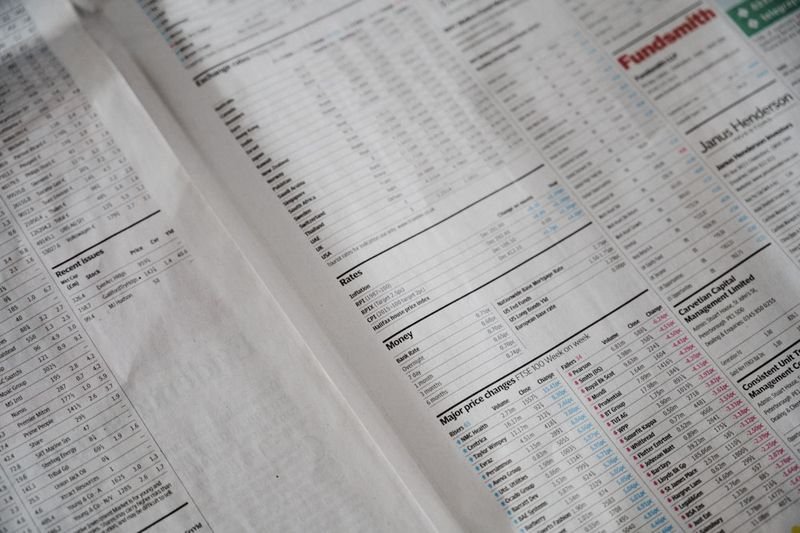
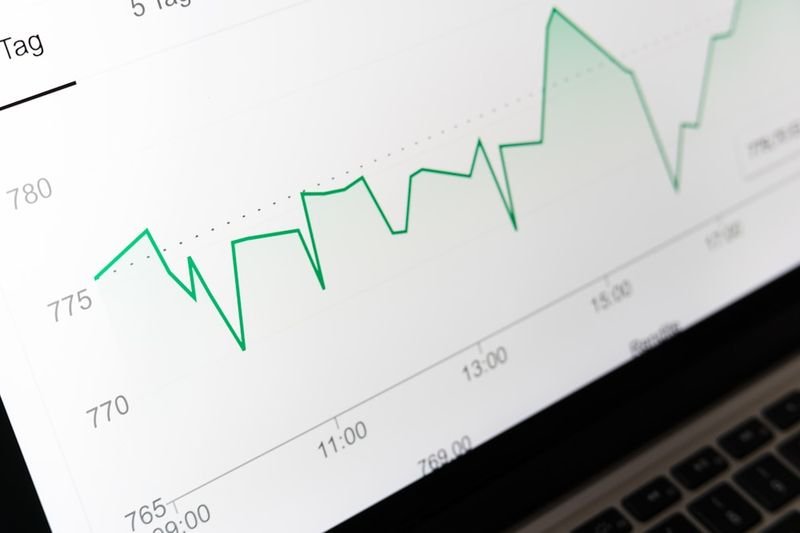
Notice how every English number on a stock page groups in threes — the secret to reading 英文數字 fast.
英文數字: Why 萬 and 億 Make Your Brain Glitch (萬 億 為什麼讓人卡住)
Mandarin counts in blocks of four zeros: 萬 (10,000), 億 (100,000,000), 兆 (1,000,000,000,000). English counts in blocks of three: thousand (1,000), million (1,000,000), billion (1,000,000,000). The boundaries don’t line up, so the brain has to do live arithmetic mid-sentence — and live arithmetic is the enemy of fluent speech.
Here’s the worst part: 1萬 is not “one ten-thousand” in normal English. It’s “ten thousand.” Nobody says “one ten-thousand.” That single substitution — replacing the Chinese counting unit with an English one — is what makes most Taiwanese speakers freeze. The fix is to stop translating and start chunking. When you see a Chinese number, mentally rewrite it with English commas every three digits, then read left to right.
The rule I teach first: commas are reading guides. Every three digits in English has a comma, and each comma has a name. Right of the first comma = thousands. Right of the second = millions. Right of the third = billions. That’s it. The number 25,000,000 reads as “twenty-five million” because the “million” comma is the one that matters. You’re not counting digits — you’re naming commas.
The 3-Zero Rule: How English Groups Big Numbers (英文數字三位一組的規則)
English numbers move up by a factor of 1,000 each step — not 10,000 the way Chinese does. Master this single ladder and the rest is detail:
- 1,000 — one thousand (千)
- 1,000,000 — one million (百萬)
- 1,000,000,000 — one billion (十億)
- 1,000,000,000,000 — one trillion (兆)
A note on “billion”: modern American English and modern British English both use the “short scale” — billion means 1,000,000,000 (10⁹). The old British “long scale” where billion meant 10¹² is officially dead, even at the BBC. You can rely on the short scale in every workplace context, including European email threads. The Merriam-Webster entry on “billion” notes that the short scale has been the U.S. standard since the 18th century and is now the global business standard.
Keep a calculator close while you drill the 3-zero rule — the Chinese-to-English conversion needs reps before it feels natural.
From 萬 to Ten Thousand: The Conversion Cheat Sheet (中翻英數字對照表)
This is the table that should live on a sticky note on your monitor. Every number you read in Chinese news, every NT$ figure your boss texts you, every revenue forecast in a meeting — convert it here first:
- 1萬 = 10,000 — “ten thousand”
- 10萬 = 100,000 — “one hundred thousand”
- 100萬 = 1,000,000 — “one million”
- 1,000萬 = 10,000,000 — “ten million”
- 1億 = 100,000,000 — “one hundred million”
- 10億 = 1,000,000,000 — “one billion”
- 100億 = 10,000,000,000 — “ten billion”
- 1,000億 = 100,000,000,000 — “one hundred billion”
- 1兆 = 1,000,000,000,000 — “one trillion”
One landmine: the Taiwanese habit of saying “ten million” for 一千萬 sometimes leaks the wrong direction — students translate 一億 as “one billion” because the word “billion” feels big. It isn’t. 一億 (100 million) is one-tenth of a billion. Always check the comma count before speaking. If the number lives between two commas, name the comma to its right and you’re correct.

Modern dashboards always group large numbers in threes (2,500 — 4,567 — 7,325) — train your eye to read the commas, not count the digits.
Saying Big Numbers Out Loud: Decimal Tricks (大數字怎麼說才自然)
Fluent speakers almost never read large numbers digit by digit. They round and decimal. NT$1,253,000,000 doesn’t get read as “one billion two hundred fifty-three million NT dollars” in a meeting. It gets read as “about NT$1.25 billion” or “roughly 1.25 billion NT.” The decimal point sits on the next comma down — the million boundary.
For numbers under a billion, “point” replaces “and a half” in casual finance speech. 2.5 million is “two-point-five million” or “two and a half million” — both are correct, but “two-point-five” is faster and more common in calls. For very rough talk, English drops the precision and uses “just over” or “just under“: “just under three million” sounds more natural than “two-point-nine-six million” when you’re estimating.
Watch out for the trap of pluralizing. Million, billion, and trillion do not take an “s” when paired with a number: “five million dollars,” not “five millions dollars.” They take an “s” only when used vaguely: “millions of dollars in revenue” or “hundreds of millions watching the stream.” This is a Rank Math-grade SEO point too — every search result you’ll see writes it the same way.

Practice saying NT$ figures out loud before any meeting where revenue or forecasts come up — script and rehearse like sales reps do.
Money Numbers: How to Read NT$ and US$ in Meetings (NT$ 美金英文唸法)
Currency adds two layers of complexity to 英文數字: the currency word goes after the number, and the unit (“dollars,” “yuan,” “yen”) doesn’t change for plural in business-formal contexts. The structure to memorize: [number] + [currency code or word]. Examples that sound native:
- NT$1.5 million → “one-point-five million NT dollars” or “1.5 million New Taiwan dollars”
- US$25,000 → “twenty-five thousand US dollars” or “twenty-five K”
- NT$3億 → “three hundred million NT dollars” (NOT “three hundred million dollars” — always specify NT in mixed-currency contexts)
- US$2.8B in revenue → “two-point-eight billion in revenue”
The shortcut professionals use: “K” for thousand, “M” for million, “B” for billion in spoken finance. “Our Q3 target is 50K” means 50,000. “We raised 12M” means 12 million. This is normal in startup contexts but rare in formal client emails — switch registers based on audience. For more workplace money phrasing, our guide to discussing money in English covers 25 of the most common combinations.
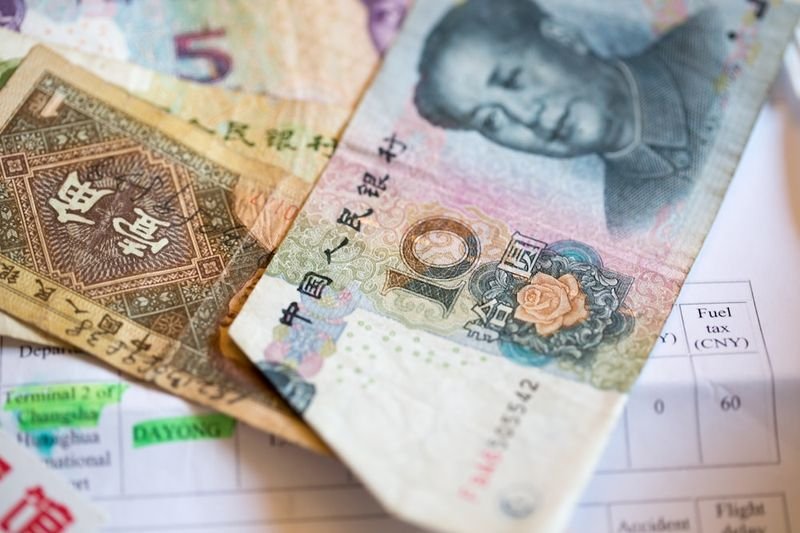
NT$, US$, RMB — every currency follows the same number-then-unit pattern in business English.
Percentages, Fractions, and Decimals: Don’t Mix Them Up (百分比 分數 小數 別搞混)
This is the section where Chinese-trained brains usually slip. Mandarin lets you say 三分之一 (three-out-of-one) for one-third. English flips the order: numerator first, denominator second. One-third, two-thirds, three-quarters, seven-eighths. Read the top number as a regular number; read the bottom as an ordinal (third, fourth, fifth).
For percentages, the structure is simple: [number] + percent. 50% is “fifty percent” — never “fifty percentage.” For decimals, read the point as “point” and each digit after it individually: 3.14 is “three-point-one-four,” not “three-point-fourteen.” This trips up Taiwanese learners who default to reading 14 as a number.
Two patterns to drill:
- Increases and decreases — “Revenue grew by 15% year-over-year” (use “by” before the percent). “Margins fell to 22%” (use “to” for a destination).
- Multiples — “Three times the budget” or “tripled” — both work. “Doubled” beats “two times” in spoken English.
For more on shaping a numbers-heavy English presentation, our guide to describing charts in English walks through 30 essential phrases that turn raw figures into stories your audience can actually follow.
Percentage talk dominates business reporting — drill “by 15%” vs “to 22%” until the prepositions land automatically.
Phone Numbers, Dates, Years, and Addresses: Each One Reads Differently (電話 日期 年份 地址)
This section is where English breaks its own rules — every category of number has a slightly different read pattern. Memorize each one as a separate skill:
- Phone numbers → read digits one by one. Taiwan’s 02-2345-6789 is “zero-two, two-three-four-five, six-seven-eight-nine.” For 0 in spoken phone numbers, Americans say “zero,” Brits often say “oh.”
- Years → 2026 is “twenty twenty-six,” not “two thousand twenty-six” — though the latter is acceptable. 1995 is “nineteen ninety-five.” For the year 2000–2009, “two thousand X” is standard: 2008 = “two thousand eight.”
- Dates → US format: “June 15th, 2026” or “June 15, 2026.” UK/international: “15 June 2026.” Always say the day with an ordinal in spoken English: “the fifteenth of June.”
- Addresses → street numbers under 1,000 read as one number: “address 327” = “three twenty-seven.” Above 1,000, they split into pairs: “address 1500” = “fifteen hundred” or “one five zero zero.”
- Hotel rooms, ZIP codes → digit by digit. Room 1247 = “one two four seven.” ZIP 10684 = “one zero six eight four.”
Phone calls are where most Taiwanese professionals get tripped up reading digits live. If you take a lot of business calls, the phone English guide on this site covers 30 phrases that handle the framing around the numbers — confirming, repeating back, and spelling out.
Date formats vary across English-speaking regions — match the format of whoever’s reading your email or planner.
Watch Rachel’s English Drill the Big Numbers (英文數字發音教學影片)
Reading rules and saying numbers out loud are two different skills. Rachel’s English — one of the most respected American-accent training channels for ESL learners — has a clean, slow-paced drill specifically for big numbers from 20 to 1 billion. Watch this before your next call where revenue or forecasts come up:
Practice Routine That Actually Sticks (每天 3 分鐘練習法)
Knowing the rules and saying them under pressure are two different problems. The fix is a three-minute daily drill: open a financial news site, find the first five large numbers in the headlines, and read each one aloud in English. Do it before your morning coffee. After two weeks, your brain stops translating and starts reading.
The harder drill — and the one that actually closes the deal — is rehearsing your own pitch in dollars. Write your revenue, your forecast, your budget ask. Say each number out loud in English ten times. The first three sound robotic. By the tenth, you’re fluent. This is the same trick simultaneous interpreters use to prep for high-stakes meetings, and it works.
Numbers are the one part of business English you cannot bluff through. A wrong tense in an email reads as a small slip. A wrong figure in a meeting torpedoes credibility for the rest of the call. Drill the seven rules above, keep the cheat sheet near your desk, and start your next sales call with your figures already rehearsed in English — not translated mid-sentence.
แหล่งที่มา
- Merriam-Webster — “Billion” — official short-scale definition and historical note on US/UK usage
- Cambridge Dictionary — Numbers in English Grammar — full reference on number reading rules and decimal pronunciation
- BBC Learning English — Saying Large Numbers — recorded examples of “billion” and “trillion” in British and American contexts
- Investopedia — Million — finance-industry standard for using millions and billions in market reports
Looking for free ESL worksheets for your classroom? Browse our free worksheet library →
Are you a teacher? Find lesson resources and worksheets at TahricTeaches.com.






 ไทย
ไทย  English
  繁體中文
繁體中文  日本語
日本語  한국어
한국어  Bahasa Indonesia
  Tiếng Việt
  Français