
附加問句: 12 Question Tag Rules Taiwan Pros Master (2026) | isn’t it / don’t you 完整指南
附加問句 are the short tags English speakers slap onto the end of a statement — “You’re joining the call, aren’t you?” หรือ “She didn’t reply, did she?” Taiwanese pros use the right vocabulary at work but stumble on these tiny tags, and it makes confident sentences sound oddly flat. Master the 12 rules below and you stop sounding like a textbook.
The truth is, most English grammar guides treat 附加問句 (question tags) like a junior-high exam topic — flip the polarity, match the auxiliary, done. That misses the point. In a Taipei office, the tag is what signals you’re asking for agreement versus checking a fact. Get the intonation wrong and a polite check sounds like an accusation. Get the auxiliary wrong and a native ear flags you as B1 instead of C1.
This guide walks through every rule that actually trips up working professionals: be-verb tags, do/does/did, the have/has trap, modal tags, imperatives, the aren’t I? exception, intonation, how to answer them without confusing your colleague, and a 10-question drill at the end.

Question tags soften statements into confirmations — a core skill for Taiwan office English.
什麼是附加問句? The 2-Second Rule (What Are Question Tags?)
A 附加問句 (question tag) is a mini-question stitched onto the end of a statement. Structure: helping verb + pronoun. The whole purpose is to invite confirmation or push back gently — Mandarin does the same job with 對不對? 是不是? 對吧? but English distributes the work across roughly 20 different auxiliary verbs.
The 2-second rule that covers 80% of cases: positive statement gets a negative tag; negative statement gets a positive tag. “You’re tired, aren’t you?” and “You’re not tired, are you?” Both feel natural; both ask for confirmation. The remaining 20% — imperatives, “I am”, “nothing”, “let’s” — is where Taiwan pros lose points on the TOEIC Speaking section and in real meetings.
規則 1: 肯定句 → 否定附加問句 (Positive Statement → Negative Tag)
This is the rule every English textbook in Taiwan leads with, and it’s correct: when the main clause is affirmative, the tag flips negative. The negative part is always contracted — isn’t, aren’t, doesn’t, won’t — never the full “is not”. Full forms sound robotic and formal, even at C-level meetings.
- She’s joining the Taipei office, isn’t she?
- You finished the deck, didn’t you?
- They’ll approve the budget, won’t they?
One trap: don’t recycle the verb itself. “She finished, didn’t finished?” is the classic Taiwanese learner error. The tag holds the auxiliary only, never the main verb.
規則 2: 否定句 → 肯定附加問句 (Negative Statement → Positive Tag)
Flip the polarity in the other direction and the rule still holds: negative main clause, positive tag. “We aren’t presenting until Friday, are we?” “He doesn’t speak Japanese, does he?” The mistake here is rarely the polarity — it’s missing the negative cue. Words like never, hardly, rarely, seldom, nobody, nothing are grammatically negative even though they don’t contain “not”.
- He never replies on weekends, does he? (not doesn’t he)
- Nobody volunteered for the project, did they?
- You hardly use that template, do you?
Spot the hidden negatives and the tag falls into place.
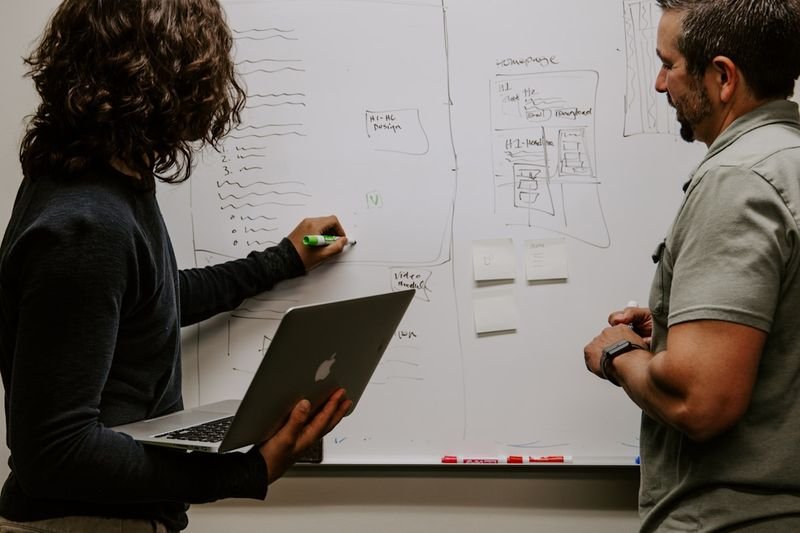
The polarity-flip rule covers most cases — but hidden negatives like “never” and “nothing” trip up most learners.
規則 3: Be 動詞附加問句 (Be-Verb Question Tags)
When the main clause uses am, is, are, was, were, the tag uses the same verb — no auxiliary borrowed from elsewhere. This is the easiest category to master and worth nailing first because it shows up in every introduction, every status update, every meeting check-in.
- The deadline is tomorrow, isn’t it?
- You were at the offsite, weren’t you?
- The slides are ready, aren’t they?
- I’m late, aren’t I? (see Rule 9 — this exception trips everyone)
Notice the pronoun: it for things and abstracts, they for plurals and unspecified people. Mismatching the pronoun (“The slides are ready, isn’t it?”) is one of the most common 附加問句 errors on the TOEIC.
規則 4: Do / Does / Did 附加問句 (The Auxiliary Tags)
If the main clause is in simple present or simple past with no other auxiliary, the tag borrows do, does, or did. The choice depends on tense and subject, exactly like forming a normal question.
- You speak Mandarin, don’t you? (simple present, second person)
- She works in Neihu, doesn’t she? (third person singular)
- They finished the audit, didn’t they? (simple past)
เดอะ do/does distinction is often where pronunciation matters too: in fast speech, “doesn’t she” becomes /ˈdʌzn̩ʃi/. Practice the contracted form out loud — written rules don’t fix spoken rhythm.
規則 5: Have, Has, Had — Auxiliary vs Main Verb (The Trap)
Have is the trickiest verb in 附加問句 because it lives a double life: as an auxiliary (perfect tenses) and as a main verb (possess, eat, experience). The tag follows whichever role have is playing in the sentence — and that single distinction separates B2 from C1 speakers.
Auxiliary (perfect tenses) → tag uses have/has/had:
- You’ve sent the email, haven’t you?
- She had already left, hadn’t she?
Main verb (possession, breakfast, etc.) → tag uses do/does/did in American English:
- You have a car, don’t you? (American — natural at most Taiwan multinationals)
- You have a car, haven’t you? (British — heard at HSBC, Standard Chartered)
Pick one variety and stick with it. Mixing them mid-meeting is the fastest way to sound uncertain about your own English.

On phone calls, question tags do double duty: confirming details and inviting the listener to push back.
規則 6: Modal 附加問句 — Can, Will, Should, Must
Modal verbs (can, could, will, would, shall, should, may, might, must) repeat themselves in the tag. No do-support needed.
- We can reschedule, can’t we?
- You’ll forward the file, won’t you?
- She shouldn’t leave early, should she?
One sharp edge: must for obligation uses mustn’t, but must for deduction often shifts to a different tag. “You must be exhausted” — the natural follow-up is “aren’t you?” not “mustn’t you?” Native speakers feel this instinctively; learners memorize it.
規則 7: 祈使句的附加問句 (Imperatives — Will You? Won’t You? Shall We?)
This is one of the top People Also Ask questions on Google Taiwan, and for good reason: 祈使句 (imperatives) don’t follow the polarity-flip rule. Instead, the tag depends on the tone you want.
- Order softened: “Close the door, will you?” / “would you?“
- Polite invitation: “Have a seat, won’t you?“
- Sharp command: “Don’t be late, will you?“
- “Let’s” → use shall we: “Let’s start, shall we?“
The “Let’s, shall we?” pattern is especially useful in meetings — it opens collaboration without sounding bossy. Add it to your repertoire and you’ll sound like you’ve been to the London office.

Modal tags like “can’t we?” and “won’t you?” carry the bulk of polite workplace requests.
規則 8: I Am → Aren’t I? (The Famous Exception)
English has no contraction for “am not” — *amn’t doesn’t exist in standard English. So when the main clause is “I am”, the tag becomes the irregular aren’t I? Yes, it grammatically pairs first person with a plural auxiliary, and yes, every grammar pedant has complained about it for 200 years. It’s still the standard.
- I’m next on the agenda, aren’t I?
- I’m not interrupting, am I? (positive tag for negative statement — normal rule applies)
Don’t say “amn’t I” (sounds Irish-regional) or “ain’t I” (slangy, never appropriate at work).
規則 9: Nothing, Nobody, Everyone — Pronoun Pitfalls
Indefinite pronouns confuse the tag because they’re grammatically singular but semantically plural. The convention:
- Nothing, everything, something (things) → tag uses it: “Nothing went wrong, did it?”
- Nobody, somebody, everyone (people) → tag uses they: “Everyone signed off, didn’t they?”
The “everyone → they” combination feels wrong to logic-first Chinese speakers, who default to “he” or “she”. Trust the convention — singular they has been in English since Shakespeare, and corporate style guides like the Microsoft Manual of Style now mandate it.
規則 10: 升調 vs 降調 — Intonation Changes Everything
Same tag, two different jobs. Native speakers split 附加問句 into rising intonation (real question) and falling intonation (rhetorical confirmation). Get this wrong and your tone sounds off even when your grammar is perfect.
- Rising ↗ = I genuinely don’t know. “You sent it, didn’t you?” ↗ — checking, anxious.
- Falling ↘ = I know the answer; just confirming. “You sent it, didn’t you?” ↘ — confident, mildly accusatory.
For status updates and progress checks, default to falling. For genuine uncertainty, use rising. Watch the YouTube embed below — ChetChat demonstrates both pitches clearly.

Falling intonation signals confidence; rising intonation signals doubt — same words, different message.
規則 11: 附加問句怎麼回答? Answering Without Confusion
Answering 附加問句 is a known landmine for Mandarin speakers because the English “yes/no” follows the fact, not the question’s polarity. In Mandarin, you answer the questioner; in English, you answer the reality.
“You’re not coming to lunch, are you?”
- If you ARE coming: “Yes, I am.” (Yes = fact is positive)
- If you’re NOT coming: “No, I’m not.” (No = fact is negative)
The instinct from 中文 is to say “Yes” meaning “Yes, you’re right, I’m not coming” — which in English actually claims you ARE coming. This is the single most common workplace miscommunication for Taiwan-trained English speakers, according to a 2024 British Council teaching note. Pause for half a second before answering — confirm against fact, then speak.
規則 12: 附加問句題目 — 10-Question Workplace Drill
Cover the answers with your hand. Write your tag, then check. Mistakes here predict mistakes in real meetings — fix them before Monday.
- You’re presenting on Friday, ______ ? → aren’t you?
- She has finished the report, ______ ? → hasn’t she?
- They didn’t reply to the proposal, ______ ? → did they?
- Let’s grab coffee, ______ ? → shall we?
- I’m on the invite list, ______ ? → aren’t I?
- Nobody confirmed the venue, ______ ? → did they?
- You can join the 3pm call, ______ ? → can’t you?
- Close the window, ______ ? → will you? / would you?
- He never replies to Slack, ______ ? → does he?
- Nothing was decided at the meeting, ______ ? → was it?
Score 9–10: ready for native-level meetings. Score 6–8: drill the modal and indefinite-pronoun rules above. Score under 6: rewatch the embed and redo this drill in 48 hours.
Drill the 12 rules until tags come out automatically — there’s no shortcut past muscle memory.
One More Habit Worth Stealing From Native Speakers
Watch any English-speaking colleague handle a status meeting and you’ll notice they end half their statements with a tag. It’s not nerves — it’s a social tool. Tags make a statement collaborative instead of declarative, which is exactly what hierarchy-conscious Taiwan offices respond to. Drop “aren’t you?” and “isn’t it?” into your next meeting and watch the room lean in. Want to keep building workplace English fluency? Pair this guide with our 40 Meeting Phrases Taiwan Pros Use and the 關係代名詞 7 Rules guide — those three together cover the bulk of grammar that separates a fluent professional from a textbook learner.

Classroom drills lay the foundation — but tags only stick when you use them in real workplace conversations.
แหล่งที่มา
- Cambridge Dictionary — Question Tags Grammar Reference — Authoritative breakdown of polarity, auxiliary use, and exception cases in standard British English.
- British Council LearnEnglish — Question Tags — Practice exercises and intonation guidance from the UK’s official ESL authority.
- EnglishClub — Tag Questions — Full table of irregular tag forms including the aren’t I exception and imperative tags.
- English.cool — 附加問句完整教學 — Mandarin-language explanation comparing 中文 對不對 vs English question tag conventions.
Looking for free ESL worksheets for your classroom? Browse our free worksheet library →
Are you a teacher? Find lesson resources and worksheets at TahricTeaches.com.






 ไทย
ไทย  English
  繁體中文
繁體中文  日本語
日本語  한국어
한국어  Bahasa Indonesia
  Tiếng Việt
  Français