Restaurant English (餐廳英文): 60+ Phrases to Order Like a Local
Roughly 15–20% of a first trip abroad is spent inside restaurants, cafés, and food counters — and it’s where most Taiwanese travelers freeze up. The good news: waiters use the same 40 or 50 sentences every shift, in the same order. Master that script and 餐廳英文 stops being scary. This guide walks through every stage of a meal — 訂位 (booking), 點餐 (ordering), 結帳 (paying) — with the exact phrases native speakers use, plus the small cultural rules (like tipping) that trip people up.
訂位英文:Making a Reservation
Popular restaurants in the US, UK, and Australia expect you to book ahead, especially on weekends. A reservation call or app message needs just three pieces of information: how many people, what time, and the name to hold it under. Keep it that simple and you’ll sound completely natural.
Here are the phrases that cover almost every booking:
- “I’d like to make a reservation for two, please.”(我想訂位,兩位。)
- “Do you have a table for four this Friday at seven?”(這週五晚上七點有四人的位子嗎?)
- “It’s under the name Chen.”(訂位名字是 Chen。)
- “Could we get a table by the window?”(可以要靠窗的位子嗎?)
If the restaurant is fully booked, you’ll hear “I’m sorry, we’re fully booked at that time — would eight o’clock work?” A quick “That works, thanks” หรือ “Do you have anything earlier?” keeps the conversation moving.
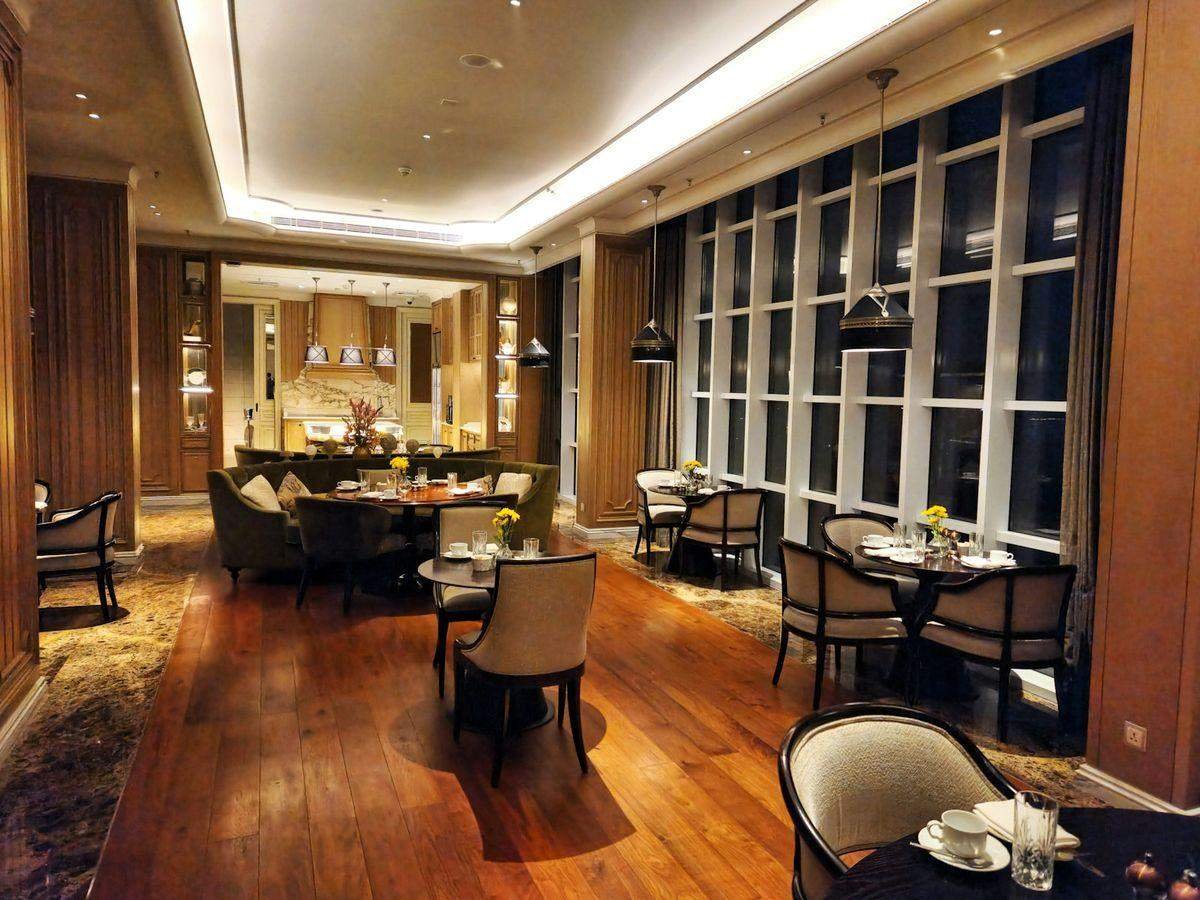
Booking ahead (訂位) is expected at popular Western restaurants on weekends.
到餐廳報到:Arriving and Getting Seated
The moment you walk in, a host or hostess greets you. If you booked, say “Hi, I have a reservation under Lin.” If you didn’t, the phrase you want is “Table for three, please.” That’s it — no long explanation needed.
The host will often ask a follow-up question. Knowing the common ones means you won’t be caught off guard:
- “Do you have a reservation?” → “Yes, under Wang.” / “No, table for two, please.”(有訂位嗎?)
- “Would you prefer a booth or a table?” → “A booth, please.”(要卡座還是一般桌位?)
- “Inside or outside?” → “Inside is fine, thanks.”(室內還是室外?)
- “Right this way.” means follow me — just walk with them.(這邊請。)
One honest tip: in Taiwan we’re used to seating ourselves at casual spots, but at most Western sit-down restaurants you wait to be seated. Look for a “Please wait to be seated” sign near the door and let the host lead you.
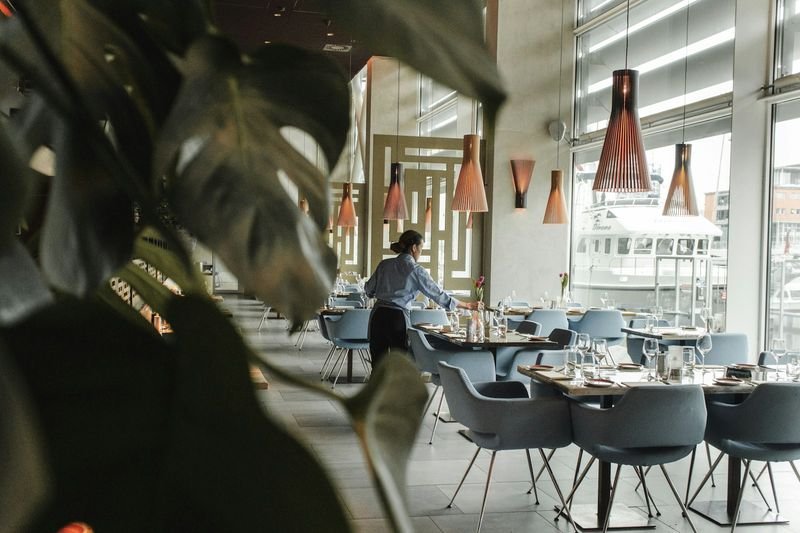
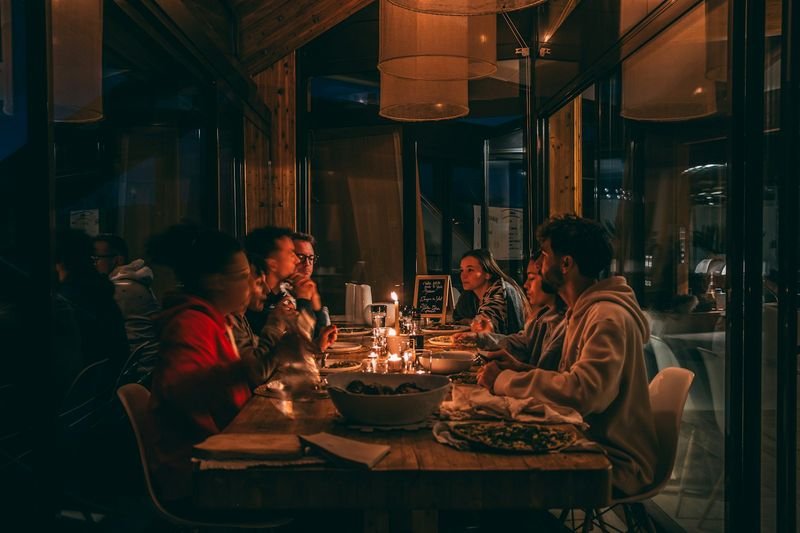
At Western sit-down restaurants, wait to be seated rather than choosing your own table.
看懂菜單英文:Reading the Menu
A Western menu is split into sections, and knowing the words saves you from ordering three starters by accident. Appetizers (前菜, also called starters in British English) come first, then entrées หรือ mains (主餐), then desserts (甜點) and เครื่องดื่ม (飲料). Watch out for one classic trap: in American English an entrée is the main course, but in French and some other contexts it means the starter. On a US menu, entrée = main.
When something on the menu is unclear, these questions get you an answer fast:
- “"คุณแนะนำเมนูใด?"”(有什麼推薦的嗎?)
- “What’s today’s special?”(今天的特餐是什麼?)
- “What comes with the steak?”(牛排附什麼配菜?)
- “อาหารจานนี้เผ็ดไหมคะ?”(這道菜辣嗎?)
- “How big is the portion?”(份量多大?)
Menu abbreviations matter too. “GF” means gluten-free, “V” usually means vegetarian, and “VG” means vegan. If you have a food allergy, the single most useful sentence in this entire article is “I’m allergic to peanuts — does this contain any?”(我對花生過敏,這道菜有嗎?)Say it clearly; good staff take allergies seriously.
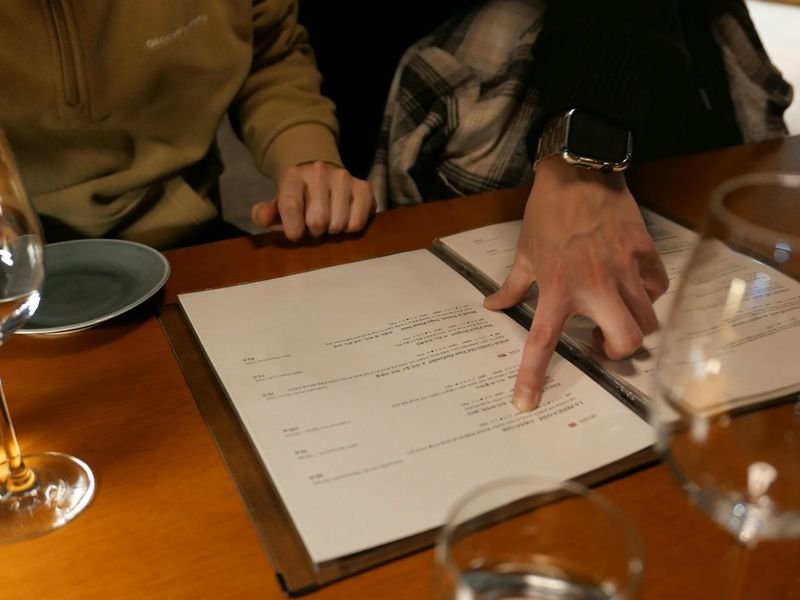
Learn the menu sections — appetizers, entrées, desserts — before you order.
點餐英文:Ordering Your Food
This is the moment everyone rehearses in their head. You don’t need fancy grammar — you need one reliable opener. The three most natural are “I’ll have…”, “Can I get…”, และ “I’d like…” Any of them works; “I’ll have the grilled salmon” sounds exactly like a local.
A typical ordering exchange looks like this:
- Server: “คุณพร้อมสั่งอาหารหรือยังคะ/ครับ?”(可以點餐了嗎?)
- You: “Yes. I’ll have the cheeseburger, please.”(好,我要一份起司漢堡。)
- Server: “How would you like your burger cooked?”(漢堡要幾分熟?)
- You: “Medium, please.”(五分熟,謝謝。)— for steak, the scale runs rare, medium-rare, medium, medium-well, well-done.
- Server: “Anything to drink?”(要喝點什麼嗎?)
- You: “Just water, thanks.”(水就好,謝謝。)
Need a moment? “Could you give us a few more minutes?”(可以再給我們幾分鐘嗎?)buys time without any awkwardness. And when you want to customize, “Can I get that without onions?”(可以不要洋蔥嗎?)or “Can I have the dressing on the side?”(醬料可以分開放嗎?)are the exact phrases to use.

“I’ll have…” is the simplest, most natural way to start any order.
Want to hear these phrases in a real conversation flow? This short lesson runs through a full ordering exchange from start to finish:
咖啡廳英文:Ordering at a Café
Cafés have their own rhythm, and it’s faster than a sit-down restaurant. The barista’s first question is almost always “จะอยู่ตรงนี้หรือจะไป?”(內用還是外帶?)— “for here” means you’ll drink it in the café, “to go” (美式)or “takeaway” (英式)means you’re leaving with it.
Coffee sizes confuse a lot of first-timers, because chains don’t use small/medium/large consistently. At most independent cafés you can just say เล็ก, medium, or large. Ordering sounds like this:
- “Can I get a medium latte, please?”(我要一杯中杯拿鐵。)
- “I’ll have an iced americano.”(我要一杯冰美式。)
- “Do you have oat milk?”(有燕麥奶嗎?)
- “Can I get that decaf?”(可以做成低咖啡因的嗎?)
The barista may ask “What name should I put on the cup?”(杯子上要寫什麼名字?)— just give your name or an easy nickname. Honestly, this is where a short English name saves everyone thirty seconds.
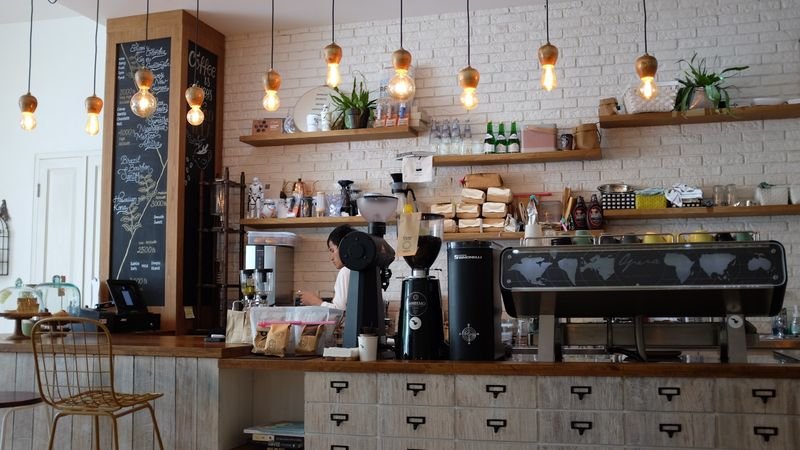
“For here or to go?” is the first thing you’ll hear at almost every café.
外帶與速食店英文:Takeout and Fast Food
Fast food counters move quickly, so the phrases are short and punchy. The core sentence is “I’ll have a number three, please” — most fast food menus are numbered exactly so non-native speakers can order by number. Smart system, and it works.
The cashier will fire off a few standard questions. Have your answers ready:
- “Is that for here or to go?” → “To go, please.”(內用還是外帶?)
- “Would you like to make it a meal?” → “Yes, please” / “No, just the burger.”(要升級成套餐嗎?)
- “Any sides with that?” → “Fries, please.”(要加點配餐嗎?)
- “Would you like to upsize / go large?” → “No, medium is fine.”(要加大嗎?)
For delivery apps and phone takeout, the useful phrases shift slightly: “I’d like to place an order for pickup”(我要外帶自取)and “How long will that take?”(大概要多久?)cover most of it. One word worth knowing: Americans say takeout, Brits and Aussies say takeaway — same thing.
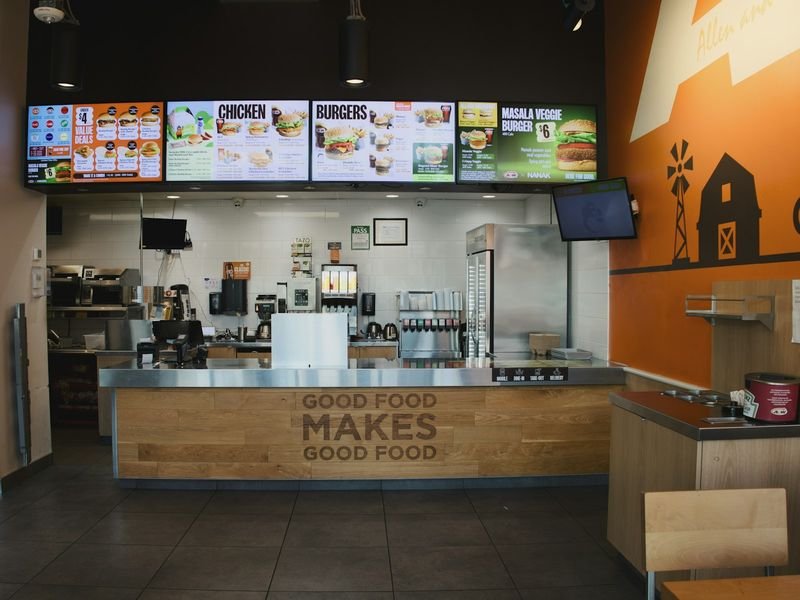
Fast food menus are numbered on purpose — ordering by number always works.
餐點出問題怎麼辦:When Something Goes Wrong
Things go sideways sometimes — a dish never arrives, the order is wrong, or the food is cold. The instinct many learners have is to stay silent to avoid confrontation. Don’t. Politely flagging a problem is completely normal in Western dining culture, and staff would rather fix it than have you leave unhappy.
Start by getting the server’s attention with “Excuse me…” — never by snapping your fingers or shouting, which reads as rude. Then use one of these:
- “I think there’s been a mix-up — I ordered the chicken, not the beef.”(我點的是雞肉,不是牛肉。)
- “This is a little cold — could you warm it up?”(這個有點涼,可以幫我加熱嗎?)
- “We’re still waiting on one dish.”(還有一道菜還沒來。)
- “Sorry, I didn’t order this.”(不好意思,我沒有點這個。)
Notice how every phrase stays calm and blames the situation, not the person. “There’s been a mix-up” is a small masterpiece of polite English — it fixes the problem without pointing fingers. That’s the tone that gets you great service.
結帳與小費英文:Paying the Bill and Tipping
Here’s a cultural fact that catches every Taiwanese diner off guard: in most English-speaking countries the server will not bring the bill until you ask. Sitting and waiting politely gets you nowhere. You have to signal. The standard line is “Could we get the check, please?” in the US, or “ขอใบเสร็จรับเงินหน่อยได้ไหมคะ/ครับ?” in the UK — Americans say check, Brits say bill.
Paying involves a couple of predictable questions:
- “Is this all together or separate?” → “All together” (一起結)/ “Separate checks, please” (分開結).(一起還是分開結帳?)
- “ฉันสามารถชำระด้วยบัตรได้หรือไม่?”(可以刷卡嗎?)
- “Do you take Apple Pay?”(可以用 Apple Pay 嗎?)
- “เก็บเงินทอนไว้”(不用找了。)
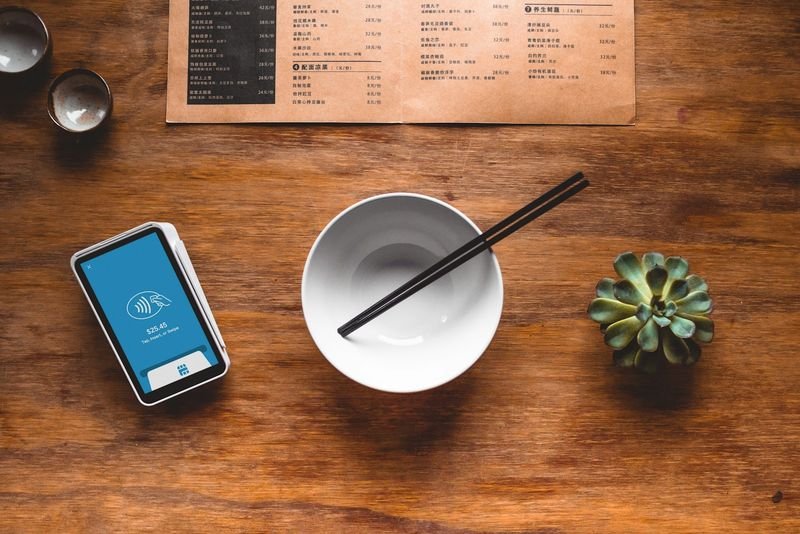
In the US and UK the bill won’t come until you ask — you have to signal for it.
Then there’s tipping (小費), which genuinely surprises visitors from Taiwan, where we don’t tip. In the United States, tipping is not optional — servers are paid a low base wage and rely on tips. Standard is 15–20% of the bill before tax; 18% is a safe default for decent service. In the UK and Australia tipping is far more relaxed — often a service charge is already added, or 10% is plenty. Always glance at the bottom of the bill for “service charge included” before you add more. My honest take: when in doubt in America, tip 18% and move on — under-tipping there is a real social faux pas, not a money-saving trick.
台灣人最常犯的餐廳英文錯誤:Common Mistakes to Avoid
After the phrases, the fastest way to sound natural is to stop doing three specific things. First, don’t say “I want the steak” — it’s grammatically fine but sounds blunt and slightly demanding. “I’ll have” หรือ “I’d like” is softer and more polite. Small change, big difference in how you come across.
Second, skip the over-apologizing. Taiwanese learners often open with “Sorry, sorry, excuse me, so sorry…” before asking a simple question. One “excuse me” is enough; stacking apologies actually makes you sound less confident, not more polite. Third, don’t translate 買單 directly as “buy single” หรือ “give me money” — the phrase is simply “the check, please.”
None of this requires perfect grammar. Waiters deal with accents and imperfect English every single day, and they’re rooting for you to succeed. Confidence and a couple of the right phrases beat flawless grammar delivered in a nervous whisper — every time.
You now have the full script for eating out in English, from booking the table to leaving a tip. Pick two or three phrases from each section, say them out loud a few times, and they’ll be ready when you need them. For more everyday speaking confidence, work on your pronunciation with our guide to connected speech and linking sounds, build your core word bank with essential English vocabulary, and if work dining is in your future, our English phrases for sounding confident will carry over nicely. Next time you’re abroad, walk into that restaurant and order like you own the place.
Sources (參考資料)
- 7ESL — Restaurant English: Useful Expressions Used at a Restaurant — reference list of ordering and dining phrases.
- FluentU — 90+ English Restaurant Vocabulary Words and Phrases — menu sections and dining vocabulary.
- Speak Languages — English Phrases to Use at a Restaurant — audio phrases for each dining stage.
Looking for free ESL worksheets for your classroom? Browse our free worksheet library →
Are you a teacher? Find lesson resources and worksheets at TahricTeaches.com.




 ไทย
ไทย  English
  繁體中文
繁體中文  日本語
日本語  한국어
한국어  Bahasa Indonesia
  Tiếng Việt
  Français