What Does PISA Actually Test? 台灣父母必知的PISA評量三大能力
Every few years, Taiwan makes international headlines: top 5 in the world on PISA. But most parents asking “what does PISA test?” walk away with a vague answer — “math, reading, science” — without understanding what that actually means for a 15-year-old sitting in a school in Taipei. PISA doesn’t measure what students have memorized. It measures whether they can use what they’ve learned when the situation doesn’t match anything from the textbook.
That distinction — application versus recall — is the entire point of the Programme for International Student Assessment. The OECD designed PISA specifically to evaluate real-world competency, not curriculum coverage. Two countries with identical school subjects can produce students with radically different PISA scores if one system emphasizes application and the other emphasizes memorization.
Understanding it changes how you read Taiwan’s rankings and how you think about what your child actually needs. If you’re new to PISA, start with our full overview: What Is the PISA Test? before diving into the specific domains below.
What PISA Actually Measures — PISA評量的核心邏輯
PISA tests 15-year-olds across three core domains: mathematics literacy, reading literacy, and science literacy. Each one has a precise definition that is deliberately different from what most schools test.
The word “literacy” is doing heavy lifting here. In everyday English, literacy means being able to read. In PISA’s framework, literacy means being able to engage with a domain — not just know the content, but deploy it. A student who can solve equations from a textbook may still struggle with a PISA math problem that wraps the same equation inside a scenario about train schedules or energy bills.
Taiwan’s cram school system is largely optimized for the first type of test. PISA measures the second. That’s why understanding each domain specifically — what the question types look like, what skills they actually require — gives a more accurate picture of what Taiwan’s high scores actually mean and where the genuine gaps are.
The 2022 PISA cycle assessed 690,000 students across 81 countries. Taiwan was one of them. The results showed where Taiwan stands globally across each domain — a picture that’s more nuanced than the “top 5 in everything” headline suggests.
Math Literacy — 數學素養:不是算術,是應用
PISA defines mathematical literacy as the ability to formulate, employ, and interpret mathematics in a variety of real-world contexts. The key word is “formulate” — students don’t receive pre-structured problems with clear variables. They receive a situation and must decide what mathematical approach applies.
A real PISA math item might show a photograph of a skateboard ramp and ask students to calculate the minimum height needed for a skater to complete a specific trick, given the angle of the slope. The mathematical content — trigonometry — is standard curriculum. The wrapping forces students to read the physical situation, identify the relevant variables, and translate real space into a mathematical model before they can solve anything. Students who drill equations but never practice that translation step will lose time here.
Taiwan ranked 3rd globally in PISA mathematics in 2022, scoring 547 against the OECD average of 472 — a gap of 75 points, roughly equivalent to two full years of schooling. That score reflects genuine strength in applied mathematical reasoning, not just procedural speed from repeated drilling.
One specific strength Taiwan shows consistently across PISA math cycles: multi-step problem-solving where intermediate results feed later steps. Taiwanese students perform well above average when a problem requires holding several values in mind simultaneously. This correlates with the structured, sequential way mathematics is taught at the junior high level here.
Reading Literacy — 閱讀素養:不只是懂,而是會用
PISA reading literacy is the most misunderstood domain. Parents often assume it’s tested in English. It isn’t — PISA tests reading in each country’s primary instruction language. For Taiwan, that means Chinese. The challenge isn’t the language. It’s the task type.
PISA 2022 reading tasks frequently involve multiple texts on the same topic that partially contradict each other. Students must evaluate which source is more credible, identify what each one is missing, and synthesize an answer that accounts for both. This is closer to research and critical analysis than to standard comprehension exercises. There’s no single “correct” passage to answer from — students must weigh sources and argue from evidence.
Taiwan scored 515 in reading in 2022, placing 7th globally — well above the OECD average of 476, but noticeably behind the math and science scores. The gap suggests that the analytical, multi-source reading skills PISA prioritizes receive less deliberate practice time in Taiwan’s school environment than procedural subjects do.
For parents concerned about English specifically: PISA reading measures Chinese-language literacy. English proficiency is a separate gap, and a larger one. See our PISA overview for context on where Taiwan’s English results actually stand internationally.
Science Literacy — 科學素養:推理過程重於答案
PISA science literacy focuses on three competencies: explaining phenomena scientifically, evaluating and designing scientific inquiry, and interpreting data and evidence. A student can name every element on the periodic table and still score poorly if they can’t distinguish between a valid scientific claim and a misleading one.
A typical PISA science item presents a study — sometimes a deliberately flawed one — and asks students to identify which piece of data would support or undermine the study’s conclusion. Memorizing the food chain doesn’t help here. What matters is understanding how evidence works, how experiments are designed to isolate variables, and where a conclusion goes beyond what the data actually shows.
Taiwan scored 537 in science in 2022, ranking 4th globally. Notably, Taiwan’s science scores have held stable across multiple PISA cycles. This stability suggests the reasoning skills being tested aren’t drilled into place temporarily — students appear to be developing genuine scientific thinking, not just familiarizing themselves with test formats between cycles.
Financial Literacy and Creative Thinking — PISA的延伸評量
Beyond the three core domains, PISA introduced creative thinking as a new optional assessment in 2022. It measured students’ ability to generate diverse, useful, and novel ideas — the cognitive flexibility that most standardized tests explicitly do not reward. Students who score 600 on math may score below average here, because the skill set is genuinely different. Open-ended generation, tolerance for ambiguity, and the willingness to produce something unconventional are not trained by textbook problem sets.
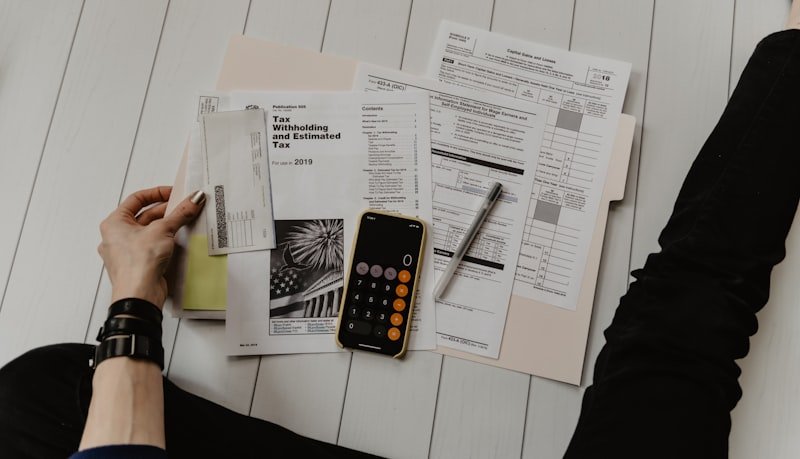
PISA also runs a financial literacy assessment alongside its main cycle. Tasks present real-money scenarios — loan terms, insurance documents, tax statements — and ask students to make informed decisions from them. This isn’t a personal finance class quiz. It’s whether students can navigate the language and logic that governs adult financial life when it arrives with no teacher to guide them through it.
Taiwan participated in the creative thinking domain in 2022. Results confirmed what educators here already suspect: students who perform exceptionally on structured academic tests often struggle when asked to generate original solutions without a template. East Asian systems as a group scored below their Western counterparts on creative thinking, despite dominating in math and science.
Taiwan’s PISA Scores Across All Domains — 台灣各科PISA成績比較
Here is what Taiwan’s 2022 PISA scores look like across all measured domains:
| Domain 評量項目 | Taiwan Score | OECD Average | Global Rank |
|---|---|---|---|
| Mathematics 數學 | 547 | 472 | 3rd |
| Science 科學 | 537 | 485 | 4th |
| Reading 閱讀 | 515 | 476 | 7th |
| Creative Thinking 創意思考 | Below average | 33 pts | Lower half |
The pattern is consistent: Taiwan excels in domains most aligned with structured curriculum and iterative practice. Creative thinking — where open-ended generation matters more than convergent answers — shows the clearest gap relative to Taiwan’s overall performance profile. This is not a reflection of student ability. It’s a reflection of what the system trains for.
What This Means for Your Child’s Learning — 對台灣孩子的實際意義

For parents of children in Taiwan, the PISA domain breakdown points to a skill gap — not a knowledge gap. Academic content is being taught. The application layer is underdeveloped in specific, identifiable ways.
In practice, this looks like: a student who solves every problem in the math textbook but freezes when asked to design a solution to a real-world problem that doesn’t come pre-formatted. A student who reads Chinese fluently but can’t assess which of two conflicting news articles is more reliable. A student who aces a science multiple-choice test but can’t describe how to set up a controlled experiment from scratch without being given the variables.
Taiwan’s education system produces strong convergent thinkers — students who solve well-defined problems efficiently. The PISA creative thinking results, alongside the reading results relative to math, suggest weaker divergent thinking: generating options when there’s no single correct answer, tolerating ambiguity, proposing something original without being shown the model first.
The question for parents is whether the learning environments your child spends time in — school, cram school, English class — practice application or just recall. PISA’s data is useful precisely here: it tells you which skills are developed by Taiwan’s existing system (math and science reasoning, convergent problem-solving) and which ones need deliberate supplementation (multi-source reading analysis, creative generation, English communication). The countries consistently outperforming Taiwan across all domains build all of these into their systems from early on.
แหล่งที่มา
- OECD. (2023). PISA 2022 Results (Volume I): The State of Learning and Equity in Education. OECD Publishing.
- National Center for Education Statistics. (2023). PISA 2022 U.S. Results. U.S. Department of Education.
- OECD. (2024). PISA Frequently Asked Questions. OECD.
- NCES. (2022). PISA Released Assessment Items. U.S. Department of Education.
- OECD. (2023). What Can Students Do in Mathematics, Reading and Science? PISA 2022 Results.
Looking for free ESL worksheets for your classroom? Browse our free worksheet library →
Are you a teacher? Find lesson resources and worksheets at TahricTeaches.com.
 ไทย
ไทย  English
  繁體中文
繁體中文  日本語
日本語  한국어
한국어  Bahasa Indonesia
  Tiếng Việt
  Français