多益必考單字 (2026): 50 TOEIC Words to Hit 800+ Score
多益必考單字 are the 13 themed word families ETS quietly rotates across every Listening and Reading test — and most Taiwan test-takers spend months memorizing the wrong list. The official TOEIC bands cover office work, contracts, finance, hiring, travel, manufacturing, marketing, and healthcare, yet the average Taipei cram school still drills generic GEPT vocabulary that hasn’t matched the real test since the 2018 redesign. The 50 words below are the ones examiners actually reuse, mapped to the themes ETS publishes, with sentence examples written in the exact register the test rewards.
The fastest jump from 600 to 800 isn’t another 4,000 random flashcards. It’s locking down the 700–800 anchor words across these themes — then drilling them inside business sentences until you can decode a memo at native speed. That’s the system this guide walks through.

The 多益必考單字 stack — grammar, vocabulary, and real business reading.
What 多益必考單字 Actually Covers (13 Themes)
According to ETS’s official content outline, every TOEIC Listening & Reading question is drawn from one of 13 themes: corporate development (企業發展), office issues (辦公室), business / contracts (商務), finance & budgets (財務預算), human resources (人事), purchasing (採購), manufacturing (製造), technical areas including electronics & computers (電子科技), housing & property (房屋), travel (旅行), dining (餐廳), entertainment (娛樂), and health (健康). If a word doesn’t sit inside one of those buckets, it almost never appears in the test.
The mistake most people make is treating “TOEIC vocabulary” as one giant list. Treat it as 13 small lists instead. Master the 30–50 anchor words inside each theme and you’ll cover the language ETS actually tests, rather than memorizing 7,000 generic dictionary words that never get used. The 50 words below are the highest-frequency anchors across the seven themes that show up most often on real test forms.
Office & Workplace 必考單字 (辦公室)
Office scenarios drive roughly a quarter of Part 3, Part 4, and Part 7 questions. These are the words that appear in announcements, memos, and reply emails. Skim them daily for the first week and the rest of the test gets noticeably easier.

辦公室情境是多益必考單字最大的範圍 — Office scenes dominate the test.
- memo (n.) 備忘錄 — Please review the memo before the 3 PM meeting.
- itinerary (n.) 行程表 — I’ve attached the updated itinerary for Friday’s trip.
- agenda (n.) 議程 — Item three on the agenda concerns the budget revision.
- extension (n.) 分機 / 延期 — You can reach Ms. Lin at extension 4108.
- postpone (v.) 延期 — We’re postponing the launch until Q3.
- conference call (n.) 電話會議 — The conference call has been moved to 9 AM Taipei time.
- colleague (n.) 同事 — My colleague will cover the booth on Tuesday.
- deadline (n.) 截止日期 — The deadline for the proposal is end of business Friday.
Business & Contracts 必考單字 (商務)
Part 7’s double and triple passages live here. Contract terms, vendor confirmations, and proposal emails account for almost every long reading set. When you can read the next eight words without translating, your Part 7 time pressure disappears.

商務談判場景 — these words appear on almost every Part 7 double passage.
- proposal (n.) 提案 — Their revised proposal arrived this morning.
- negotiate (v.) 談判 — We’re still negotiating the delivery terms.
- 小販 (n.) 廠商 / 供應商 — Our preferred vendor offered a 12% discount.
- contract (n.) 合約 — The contract expires on December 31.
- amend (v.) 修改 — Please amend clause five before we sign.
- terms and conditions (n.) 條款 — Their terms and conditions changed last quarter.
- quotation (n.) 報價單 — We need three quotations before approving the purchase.
- compliance (n.) 合規 / 遵循 — This report ensures compliance with the new regulation.
Finance & Budgets 必考單字 (財務預算)
Finance is one of the two themes ETS quietly weighted heavier in the post-2018 redesign. Numbers, expense reports, and reimbursement requests are now standard Part 7 fare. The eight below are the anchors you’ll see most.
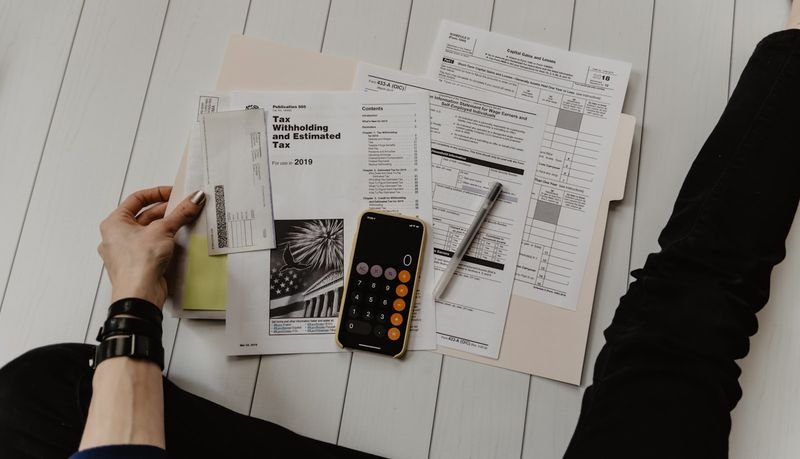
財務情境 — TOEIC finance vocabulary in a real budgeting scene.
- invoice (n.) 發票 / 帳單 — The invoice was sent to accounts payable on Monday.
- reimbursement (n.) 報銷 — Submit the reimbursement form by the 25th.
- expense (n.) 費用 — Travel expenses are capped at NT$15,000 per trip.
- revenue (n.) 營收 — Q1 revenue exceeded our internal target by 8%.
- budget (n./v.) 預算 — We’ve budgeted NT$200,000 for the campaign.
- fiscal year (n.) 會計年度 — The fiscal year ends March 31.
- profit margin (n.) 利潤率 — Our profit margin dropped two points this quarter.
- auditor (n.) 審計師 — The external auditor will arrive next Wednesday.
Human Resources 必考單字 (人事管理)
HR vocabulary shows up across Parts 4 and 7 — voicemails about training, emails about benefits, and job listings. If you’ve ever applied for a job in Taipei, half of these words appeared on the offer letter.
- recruit (v.) 招募 — We’re recruiting two software engineers this quarter.
- applicant (n.) 申請人 — The applicant has five years of relevant experience.
- resume (n.) 履歷 — Attach your resume in PDF format.
- promotion (n.) 升遷 — Congratulations on your promotion to senior manager.
- severance (n.) 資遣費 — Severance terms are outlined in section 9.
- orientation (n.) 新員工訓練 — New hire orientation runs from 9 AM to noon.
- benefit (n.) 福利 — The benefits package includes health insurance and 14 vacation days.
Travel & Logistics 必考單字 (旅行)
Travel scenarios anchor most of Part 3’s longer dialogues — airport announcements, hotel check-ins, and itinerary changes. If you can read the next seven words on autopilot, you’ll catch the answer before the choices are read out.

旅行情境是Part 3最常見的主題之一 — Travel scenes dominate Part 3 dialogues.
- reservation (n.) 預約 — I have a reservation under the name Chen.
- confirmation (n.) 確認 — You’ll receive a confirmation email within 24 hours.
- departure (n.) 出發 — Departure has been delayed by 40 minutes.
- boarding pass (n.) 登機證 — Please have your boarding pass ready.
- baggage claim (n.) 行李提領處 — Baggage claim is on the lower level.
- shuttle (n.) 接駁車 — A complimentary shuttle runs every 30 minutes.
- accommodation (n.) 住宿 — Accommodation is included for all conference attendees.
Marketing & Sales 必考單字 (行銷)
The marketing theme produces a lot of Part 4 short talks and Part 7 single-passage articles. The next seven words are the ones that crop up in every campaign-review memo on the test.

行銷簡報 — marketing presentations dominate Part 4 short talks.
- campaign (n.) 行銷活動 — The summer campaign launches July 1.
- promotion (n.) 促銷 — The promotion ends at midnight on Sunday.
- endorse (v.) 代言 — The brand was endorsed by a popular local athlete.
- survey (n.) 問卷 — The survey results indicated strong demand in southern Taiwan.
- launch (v.) 推出 — We’re launching the new product line in September.
- target audience (n.) 目標客群 — Our target audience is professionals aged 25 to 40.
- retailer (n.) 零售商 — Major retailers will stock the product nationwide.
Manufacturing & Technology 必考單字 (製造科技)
Manufacturing scenarios pair naturally with the technology theme in newer test forms — factory tours, equipment malfunctions, and software rollouts. The six anchor words below carry most of the meaning in those passages.
- inventory (n.) 庫存 — We’re running low on inventory ahead of the holiday season.
- warehouse (n.) 倉庫 — The warehouse is located in Taoyuan.
- shipment (n.) 出貨 — The shipment arrived two days ahead of schedule.
- maintenance (n.) 維修 — Server maintenance is scheduled for Saturday night.
- install (v.) 安裝 — Please install the software update before logging in tomorrow.
How to Memorize 多益必考單字 (情境記憶法)
Death by flashcards is the single biggest reason Taiwan test-takers stall at 650. The brain doesn’t store isolated words — it stores words bound to scenes. Here’s the four-step routine that works for Taipei learners studying 30 minutes a day after work.
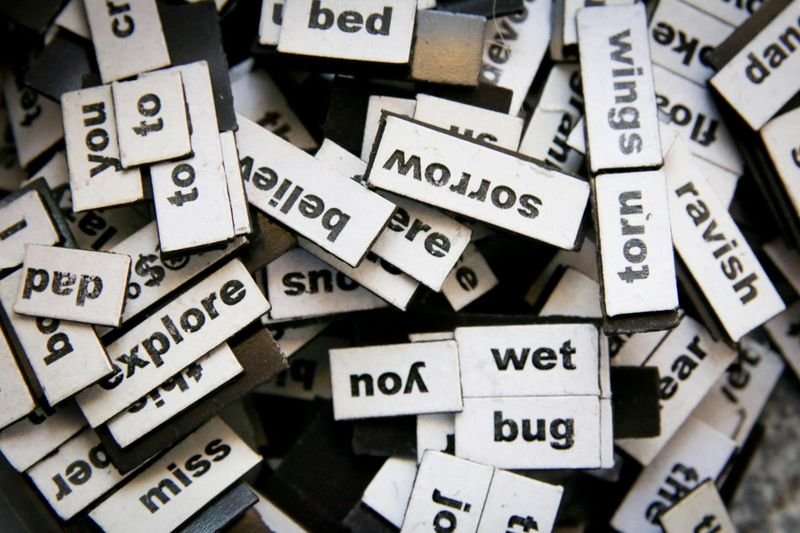
單字卡 — but bind them to scenes, not isolated meanings.
Step 1: Group by theme, not alphabet. Study the eight office words together on Day 1, the eight business words together on Day 2. Theme grouping triggers the same neural region the test does, which is why thematic clustering research consistently outperforms semantic shuffle.
Step 2: Write your own example sentence. Don’t copy the textbook one. Use your real job — your boss’s name, your real product, your actual deadline. Personalized sentences are recalled 3–4× faster on test day. (More techniques in our deeper guide to building English vocabulary.)
Step 3: Spaced review on Days 1, 3, 7, and 14. Anki or any free SRS app handles the schedule. Skip the review window and you’ll lose 80% of the new words within three weeks. Hit the schedule and you’ll keep 85%.
Step 4: Listen before you sleep. Five minutes of TOEIC Listening Part 3 or Part 4 audio every night with the script in front of you, focused on the day’s eight words. Your brain consolidates vocabulary during deep sleep — the words you saw at 11 PM are the ones you’ll remember at 9 AM.
A 30-Day Plan to Push Past 800 on the TOEIC
Four weeks is enough if the time is spent right. The plan below assumes a baseline somewhere between 550 and 700 and an honest 45 minutes a day. If you’re below 550, double the timeline. If you’re already above 700, halve it.
- Days 1–7 — Theme lockdown. One theme per day from the 50 words above. Write your own sentence for every word. Review yesterday’s theme each morning.
- Days 8–14 — Listening soak. One Part 3 dialogue and one Part 4 talk every day. Read the script. Highlight any of your 50 words that appear.
- Days 15–21 — Reading soak. One Part 7 double passage daily. Time yourself. Don’t translate — let the themed vocabulary do the work.
- Days 22–27 — Mixed mock tests. Two half-tests per week. Track which themes give you trouble and re-review those word lists.
- Days 28–30 — Full mock at test pace. Sit a full TOEIC under timed conditions. Sleep 8 hours the night before. Eat real breakfast on test day.
The Mistakes Taiwan Test-Takers Make Most
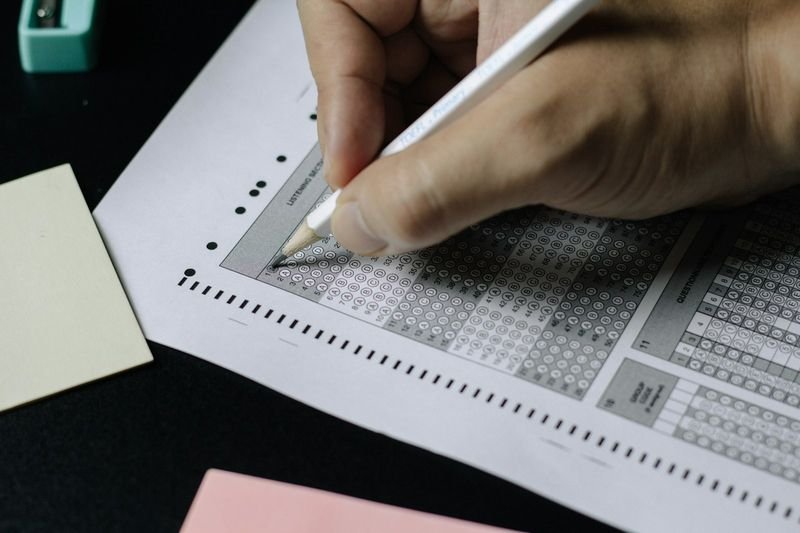
考試當天 — what you do in the final 48 hours matters more than the last six months.
The first mistake is treating TOEIC like GEPT or IELTS. It isn’t. It’s a business English test with a narrow themed vocabulary and a heavy emphasis on listening at native speed. If your study material is academic essays, you’re prepping for the wrong exam — academic vocabulary belongs to IELTS and TOEFL, not TOEIC.
The second mistake is over-rotating on Part 5 grammar drills. Part 5 is 30 questions out of 200. Your time-per-point return is much higher on Part 3, Part 4, and Part 7 listening and reading practice. Drill grammar to the level you need, then move on.
The third mistake is silent vocabulary. Most Taiwan test-takers can recognize “reimbursement” on paper but can’t catch it in a Part 3 audio clip. Hearing trains the test ear; reading alone does not. Pair every reading session with a 10-minute audio session in the same theme. Many of these test words are also phrasal verbs used in Taiwan workplaces — the kind that translate badly to Chinese and trip up listening sections.
The fourth mistake is leaving Chinese as the bridge language too long. Once you’ve memorized the 50 anchor words above, switch to English-only definitions. The translation step adds 0.3 seconds per question. Across 200 questions, that’s a full minute you didn’t have.
Final Word: The Test Rewards Themes, Not Lists
Bring the 50 多益必考單字 above into your week and the test will start to feel like a familiar conversation rather than a vocabulary lottery. Pick one theme tomorrow morning, write eight personalized sentences, and queue a Part 3 dialogue for the commute home. That’s the whole loop — repeat it 30 times and 800 is well within reach. The test was never about knowing 10,000 words. It’s about owning the right 500 inside the themes ETS actually uses.
來源
- ETS — TOEIC Listening & Reading Test Content — official 13-theme content outline from the test maker.
- Chun Shin (TOEIC Taiwan) — official Taiwan distributor for TOEIC, scoring bands, and registration.
- 劍橋語言教學研究 — peer-reviewed studies on themed vocabulary clustering vs. random list memorization.
- British Council — Business English Resources — additional listening practice across the TOEIC themes.
Looking for free ESL worksheets for your classroom? Browse our free worksheet library →
Are you a teacher? Find lesson resources and worksheets at TahricTeaches.com.





 繁體中文
繁體中文  English
  日本語
日本語  한국어
한국어  ไทย
ไทย  Bahasa Indonesia
  Tiếng Việt
  Français