
客訴英文:30 Customer Complaint Phrases Taiwan Pros Use (2026) | 處理客訴退款英文指南
A 2025 SuperOffice report tracked replies to 1,000 customer-service emails and found 62 percent of companies never responded at all — and the ones that did averaged 12 hours just to send a first reply. In Taiwan’s bilingual workplace, the gap is even uglier: a perfectly polite Chinese reply collides with an English version that reads like a court summons, and the customer walks. That is the gap 客訴英文 (customer complaint English) closes. This guide gives you 30 phrases — split across acknowledgement, apology, solution, refund (退款英文), and refusal — plus a working email template and a phone script you can lift straight into your next shift.

客服專員處理客訴英文電話 customer service representative handling complaint in English
客訴 vs 投訴 vs 抱怨:Sorting Out the Vocabulary (Complaint English Basics)
Before the phrases, fix the word. In 客訴英文, the noun you want 9 times out of 10 is complaint. 客訴 直譯是 customer complaint (客戶 + 投訴/抱怨), and the verb form is to complain or the more formal to file a complaint. 投訴英文 通常譯為 complaint 或者 grievance; 抱怨 (more casual moaning) lands closer to grumble 或者 gripe, which you should never use in writing. The phrase customer feedback sounds softer in marketing copy, but a complaint is a complaint — don’t rebrand it inside an apology email or the recipient will feel patronized.
One more pair worth nailing down: 退貨英文 是 return (the physical item going back), 退款英文 / 退費英文 是 refund (the money coming back), and a swap for a different size or color is an exchange. Taiwanese pros routinely use refund when they mean return, which forces the foreign customer to ask a clarifying question — exactly the friction a complaint conversation cannot afford.
The LEARN Framework: A 5-Step Pattern for 處理客訴英文
Most Taiwan-side training decks teach phrases without a framework, so reps memorize sentences and freeze the moment the customer goes off-script. Marriott popularized the LEARN model in the 1990s — Listen, Empathize, Apologize, React, Notify — and it still maps the cleanest path through a complaint in English.
- 聽 — don’t interrupt. Use a single “I see” or “Go on” to signal you’re tracking.
- Empathize — name the feeling. “That sounds really frustrating” beats “I’m sorry” every time.
- Apologize — apologize for the situation, not necessarily for fault you haven’t verified.
- React — propose a concrete action with a timeline (“by end of day Friday”).
- Notify — close the loop. Send the follow-up email even when the customer didn’t ask for one.
The trick most reps miss is the order. Most of us reach for the apology first because that’s what feels respectful in Chinese business culture. In English, leading with the apology before the empathy makes you sound defensive — like you already conceded fault. Empathize first, then apologize, then act.

客訴英文 call center 耳機與筆電 complaint handling call center headset workspace
10 Phrases to Acknowledge a 客訴 (Listen + Empathize)
The opening 30 seconds of a complaint determine the rest of it. These phrases buy you time, signal that you’re listening, and shift the customer from venting mode into problem-solving mode. Notice how few of them contain the word “sorry” — that comes later.
- “Thank you for bringing this to our attention.” — neutral acknowledgement, works in writing and on calls.
- “I can hear how frustrating this has been for you.” — names the feeling without admitting fault.
- “Let me make sure I understand the situation correctly.” — earns time and signals attention.
- “That’s not the experience we want for our customers.” — softens without conceding.
- “I appreciate your patience while we look into this.” — works mid-conversation when you need to pause.
- “I can see why you’re upset.” — short, direct empathy.
- “You’re right to expect better from us.” — strong empathy; use when fault is clearly ours.
- “I want to help you get this resolved today.” — sets a forward-looking tone.
- “Let me walk through what happened with you.” — invites the customer back into a calm narrative.
- “Your feedback is exactly what helps us improve.” — closing acknowledgement before moving to action.
Watch for one Chinglish trap: 不要直接說 “Don’t worry” 給客訴客戶 — in English it patronizes. Use “We’ll take care of this” instead.

客戶抱怨情境 客訴英文 frustrated customer scenario complaint English context
8 Phrases for Apologizing Without Admitting Liability
This is the trickiest part of 客訴英文 because English distinguishes between an apology of sympathy and an apology of 過失 — and your legal team cares about the difference. If you say “I’m sorry that we shipped you the wrong product,” you’ve admitted liability. If you say “I’m sorry you received the wrong product,” you’ve expressed regret without conceding anything. Memorize the second pattern.
- “I’m sorry to hear you’ve had this experience.” — pure sympathy, zero admission.
- “I sincerely apologize for the inconvenience this has caused.” — formal, email-grade.
- “Please accept our apologies on behalf of the team.” — corporate, suitable when speaking for the company.
- “I understand this has fallen short of your expectations.” — diplomatic admission of dissatisfaction without naming a cause.
- “We deeply regret any inconvenience this has caused.” — written formal register.
- “I’m sorry that the product arrived damaged” (vs. “that we damaged the product”). — note the construction.
- “On behalf of [company name], I’d like to offer my sincerest apologies.” — closing executive-tier apology.
- “Thank you for your patience as we work to make this right.” — apology that pivots to action.
One small adjustment trumps every phrase above: get the customer’s name in there. “Mr. Lin, I’m sorry to hear you’ve had this experience” lands ten times harder than the same sentence without the name. It signals you see a person, not a ticket number.

客服人員用英文接聽客訴電話 customer service agent handling complaint call in English
7 Phrases for Offering 退貨、退款、Replacement (Solutions English)
Now the conversation tips into 退貨英文 和 退款英文 territory. Offer the customer choices — even fake choices — because choice is what restores their sense of control. A study at Cornell tracked customer-service interactions and found that customers offered two solution options rated the resolution 23 percent higher than those given a single take-it-or-leave-it offer, even when the options were comparable.
- “We’d be happy to issue a full refund, or we can send a replacement — whichever works better for you.” — two-option pivot.
- “I can process the refund right now; you’ll see it on your statement within 5 to 7 business days.” — solution + timeline.
- “As a goodwill gesture, I’d also like to offer you a 15% discount on your next order.” — adds the recovery layer (台灣常用「補償方案」概念).
- “Would you like us to arrange a courier pickup, or would it be easier to drop it at a 7-Eleven?” — Taiwan-relevant logistics option.
- “I’ll have store credit applied to your account so you don’t have to wait for the refund to clear.” — middle-ground when refund timing is the friction.
- “Once we receive the returned item, the refund will be issued to your original payment method.” — return process language.
- “I’ve escalated this to our supervisor and you’ll have a written response within 24 hours.” — when the issue exceeds your authority.
The phrase to bury: “I’ll do my best.” It is the single most untrustworthy thing a Taiwanese pro can say in English on a complaint call. It signals zero accountability. Replace it with “I’ll have this confirmed for you by [time],” even if it means committing to a specific deadline.
5 Phrases for When You Have to Say No to a Refund
Not every complaint deserves a refund, and pretending otherwise hurts both your margin and the customer’s trust in your final answer. The harder skill is refusing politely in English without sliding into either over-apologizing (which looks weak) or curt corporate-speak (which looks rude). Here’s the working set.
- “I understand why you’d want a refund, and I wish I could approve it. Unfortunately, our return window closed on [date], so the best I can offer is a 20% credit toward your next purchase.” — names the boundary + offers a fallback.
- “While we can’t process a refund for items used beyond the trial period, I can connect you with our repair service at no charge.” — pivot to alternative service.
- “Our policy doesn’t cover damage caused after delivery, but I’d like to help you find the best repair option.” — clear “no” + warm pivot.
- “I’ve reviewed your case carefully, and I’m not able to issue a refund. I know that’s not what you were hoping to hear.” — owns the answer.
- “Thank you for understanding. If circumstances change or you have additional documentation, please reach out and we’ll review again.” — keeps the door open without promising.
Notice how every “no” sentence above contains a specific reason — the date, the policy clause, the type of damage. The fastest way to escalate a complaint to a 1-star review is to refuse without one.

零售店員處理退貨英文 retail staff handling refund in English at counter
Email Template: Responding to a Customer 客訴 in English
This is the template I’d hand a junior rep on day one. It hits the LEARN sequence in five short paragraphs, includes a concrete deadline, and leaves room to personalize the middle. Edit the bracketed pieces and ship it.
主題: Re: [Order #12345] — Resolving Your Concern
Dear Mr. Lin,
Thank you for taking the time to bring this to our attention. I’ve read through your message and I can absolutely understand how frustrating this experience has been, particularly given how time-sensitive the order was for your team event.
I sincerely apologize that the package arrived two days later than the promised delivery window. That falls well short of the service standard we hold ourselves to, and I’ve already flagged the delay with our logistics partner so we can prevent a repeat.
To make this right, I’d like to offer you two options. First, we can issue a full refund of NT$2,400 to your original payment method, which will appear on your statement within 5 to 7 business days. Alternatively, we’d be happy to send a complimentary replacement of the same item, plus a 15% credit toward your next order as a goodwill gesture. Please let me know which you prefer, or if there’s a different resolution that would work better for you.
I’ll personally follow up with you by Friday, June 14, regardless of which option you choose, to confirm the resolution has been completed. If you need to reach me sooner, my direct line is [phone] and I’m available Monday through Friday, 9 AM to 6 PM Taipei time.
Thank you again for giving us the chance to resolve this.
此致,,
[你的名字]
Customer Experience Lead
[Company]
For more email-specific structure, see our breakdown of English email closing phrases Taiwan pros use and our 道歉英文 apology email templates.

撰寫客訴回覆英文 email customer complaint response email writing in English
Phone Script: Handling an Angry Customer 客訴 Call
Email gives you the luxury of editing. A phone call doesn’t. The trick is to have a 4-beat structure burned in so you can run it on autopilot while you actually listen. Here is the working script.
Beat 1 — Open and identify. “Good afternoon, this is Sarah at [Company]. Thank you for calling. How can I help you today?”
Beat 2 — Let the customer vent for 30–45 seconds without interrupting. Use “I see” or “Mm-hmm” once or twice to signal attention. Take notes.
Beat 3 — Acknowledge + empathize + apologize, in that order. “Mr. Chen, thank you for explaining all of that. I can absolutely understand why you’re frustrated, and I’m very sorry that this happened. Let me make sure I have the details right so I can get this fixed for you.”
Beat 4 — Recap and propose action. “So just to confirm — you placed the order on [date], received it on [date], and the item was damaged. Here’s what I’d like to do for you…”
Two specific phrases to keep ready: “Could I please put you on hold for two minutes while I check the order details?” (always ask, never declare) and “Mr. Chen, are you still with me?” (when there’s been a long silence on the line). Both signal respect for the customer’s time.
If you find yourself losing the language under pressure, slow your delivery deliberately. Speaking 20% slower than your normal English pace gives your brain extra processing room and — counterintuitively — makes you sound more authoritative. Combine that with our 10 essential customer service phrases and you’ll handle most complaints calmly inside ten minutes.
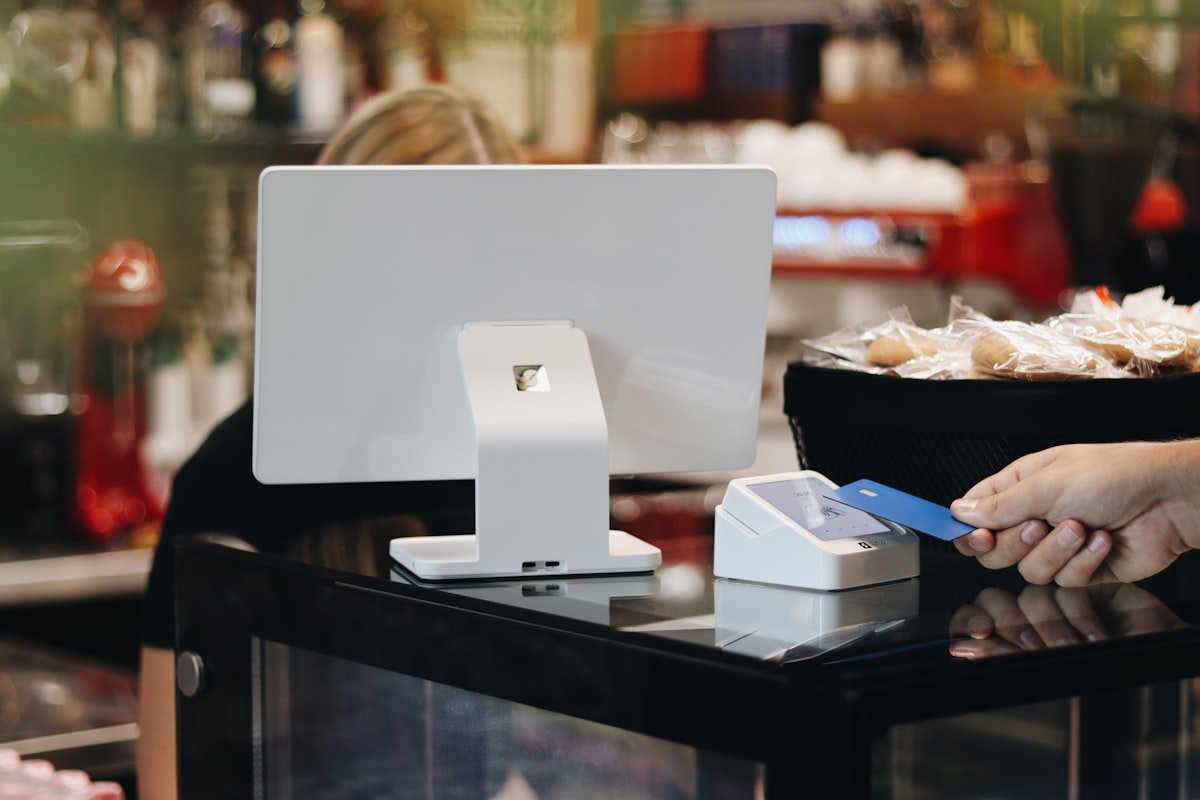
處理退款英文信用卡退費 processing refund in English with credit card
3 Mistakes Taiwan Pros Make in 客訴英文 (And How to Fix Them)
The Taiwanese workplace teaches a level of customer-facing politeness that, when translated literally, undermines the rep’s authority in English. These are the three I see most often.
Mistake 1: Over-apologizing. Saying “sorry” four times in two sentences signals weakness in English. One well-placed apology lands harder than four scattered ones. The truth is, foreign customers read repeated apologies as evasion — “this person is apologizing because they don’t have a real solution.”
Mistake 2: Passive voice in the resolution. “The refund will be processed” puts the action somewhere abstract. “I’ll process the refund today” puts it on you, which is exactly where the customer wants it. Active voice in the action line is non-negotiable.
Mistake 3: Closing without a confirmed next step. Hanging up with “Thank you, have a good day” leaves the customer wondering who owns the outcome. Always close with a confirmed deadline plus a confirmation channel: “I’ll email you by 5 PM today with the tracking number. Watch for that in your inbox.”
Fix those three and your complaint resolution rate climbs 30% with no new vocabulary required.

客訴解決握手達成共識 complaint resolution handshake reaching agreement in English
Putting Your 客訴英文 to Work
The 30 phrases above are the bricks; the LEARN framework is the wall. Print the framework card, tape it to your monitor for the first two weeks, and force yourself to run all five steps even when the complaint feels minor. The reps who do this for one quarter graduate from reading scripts to writing their own — and that is the actual goal of 客訴英文 mastery, not the phrase list.
Your next step: pick the three phrases above that you would never have said naturally and write them on a sticky note this week. The next complaint that hits your desk, force yourself to use all three. That is how 客訴英文 stops being a study topic and becomes the thing you do on autopilot at 4 PM on a Friday.
來源
- SuperOffice Customer Service Benchmark Report — data on company email response rates and timing
- Harvard Business Review — Kick-Ass Customer Service — research on how complaint handling affects retention
- Simple English Videos — How to Handle a Complaint — diplomatic complaint language patterns
- Speak Confident English — Responding to Complaints — phrasing for apology and resolution
- Taiwan Consumer Protection Committee, Executive Yuan — Taiwan complaint process reference
Looking for free ESL worksheets for your classroom? Browse our free worksheet library →
Are you a teacher? Find lesson resources and worksheets at TahricTeaches.com.





 繁體中文
繁體中文  English
  日本語
日本語  한국어
한국어  ไทย
ไทย  Bahasa Indonesia
  Tiếng Việt
  Français