

中文簡報技巧(英文示範)|如何用英文演講
Do your hands shake every time you have to give an 英文簡報 (English presentation)? You are not alone. Many adults in Taiwan feel nervous about presenting in English, even when their reading and writing skills are strong. The good news is that presentation skills (簡報技巧) can be learned, practiced, and improved — just like any other English skill.
Whether you need to present at work, pitch to a client, or speak at a conference, this guide will help you prepare, practice, and deliver a powerful English presentation. We will cover everything from opening phrases (開場白) to body language (肢體語言), with real examples you can start using right away.
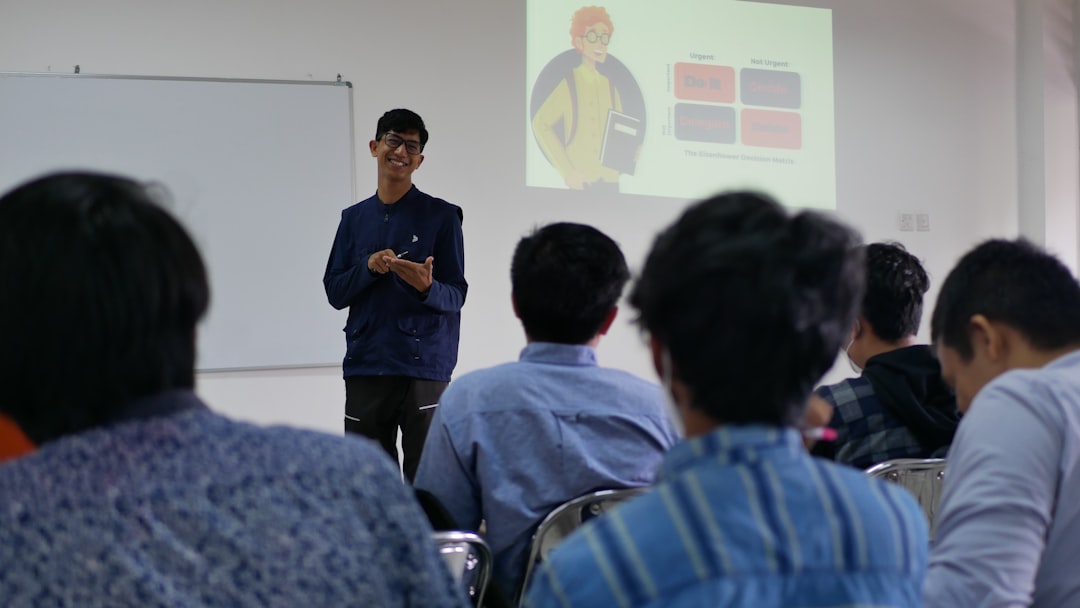
為什麼英文簡報很重要? (Why English Presentations Matter)
In today’s global business world, giving presentations in English is no longer optional — it is expected. Taiwan companies work with international partners every day. Engineers at TSMC, marketing teams at Acer, and sales managers across every industry need to present ideas clearly in English.
According to a study by EF Education First, professionals who communicate confidently in English earn up to 30% more than those who struggle with the language. Presentation skills (簡報技巧) multiply this advantage because they combine speaking, thinking, and persuading all at once.
Even if you work at a local company now, building strong 英文簡報 (English presentation) skills prepares you for promotions, international projects, and new career opportunities. Think of presentations as a high-impact way to show your English ability in action.
第一步:準備你的簡報 (Step 1: Prepare Your Presentation)
Great presentations start long before you stand in front of an audience. Preparation (準備) is where you win or lose.
了解你的觀眾 (Know Your Audience)
Before you write a single slide, ask yourself these questions:
- Who will be listening? Colleagues, clients, or managers?
- What do they already know about my topic?
- What do they need to learn from me?
- What action do I want them to take after my presentation?
When you know your audience, you can choose the right vocabulary level and examples. A presentation to international engineers looks very different from one to a local sales team.

簡報結構 (Presentation Structure)
Every strong presentation follows a clear structure. Use this simple three-part framework:
Opening (開場白): Grab attention and tell the audience what you will cover.
Body (主體): Present your main points with evidence and examples.
Closing (結尾): Summarize your key message and give a call to action.
This structure works for a five-minute team update or a thirty-minute client pitch. The framework stays the same — only the depth changes.
第二步:學習實用的英文簡報句型 (Step 2: Learn Useful Presentation Phrases)
Having a set of go-to phrases (常用句型) gives you confidence because you do not have to think of words on the spot. Here are the most useful phrases for each part of your presentation.
開場白 — Opening Phrases
Your opening determines whether people pay attention or check their phones. Try these:
- “Good morning, everyone. Thank you for being here today.” — Simple and professional.
- “I’d like to start by asking you a question…” — Gets the audience thinking.
- “Today, I’m going to talk about three ways we can…” — Tells them exactly what to expect.
- “Did you know that…?” — A surprising fact grabs attention instantly.
- “Let me share a quick story…” — People love stories more than data.
Avoid starting with “Um, so, my name is…” — this sounds unprepared. Instead, open with energy and purpose.

轉換段落 — Transition Phrases
Smooth transitions (轉換語) tell your audience where you are in the presentation. They are like road signs. Without them, people get lost.
- “Now let’s move on to…” — Clean and direct.
- “This brings me to my next point…” — Creates a logical connection.
- “As I mentioned earlier…” — Refers back to build coherence.
- “Before we go further, let me explain…” — Pauses to add clarity.
- “On the other hand…” — Shows a contrast or different perspective.
結尾 — Closing Phrases
Your ending (結尾) is what people remember most. Make it strong:
- “To wrap up, I’d like to highlight three takeaways…”
- “Thank you for your time. I’d be happy to answer any questions.”
- “I hope this presentation has given you a clear picture of…”
- “Let’s work together to make this happen.” — Strong call to action.
第三步:用肢體語言加分 (Step 3: Use Body Language)
Your body speaks louder than your words. Research from Cambridge University linguistics research shows that up to 55% of communication is non-verbal. This means your gestures (手勢), eye contact (眼神接觸), and posture (姿勢) matter just as much as your vocabulary.

五個重要的肢體語言技巧 (Five Body Language Tips)
- Stand tall (站直): Good posture shows confidence. Keep your shoulders back and your feet firmly on the ground.
- Make eye contact (眼神接觸): Look at different people in the room. Do not stare at your slides or notes the entire time.
- Use hand gestures (使用手勢): Open hands make you look honest and approachable. Pointing can feel aggressive, so use open palms instead.
- Move with purpose (有目的地移動): Walk to different spots during your presentation, but avoid pacing back and forth nervously.
- Smile (微笑): A genuine smile makes you look friendly and puts your audience at ease. Even when you feel nervous, a smile changes your energy.
第四步:克服緊張 (Step 4: Overcome Nervousness)
Feeling nervous before a presentation is completely normal. Even professional speakers feel butterflies in their stomach (緊張). The key is not to eliminate nervousness but to manage it.

管理緊張的方法 (Ways to Manage Nervousness)
Practice out loud (大聲練習): Do not just read your notes silently. Practice speaking your presentation at full volume, ideally in front of a mirror or recording yourself on your phone. Research from the edX shows that practicing out loud activates different brain pathways than silent reading, helping you remember phrases naturally.
Start with small audiences (從小觀眾開始): Present to one friend or colleague before presenting to a big group. This helps you get comfortable with the material in a low-pressure setting.
Breathe deeply (深呼吸): Before you begin, take three slow, deep breaths. This lowers your heart rate and calms your nerves. A quick breathing exercise: breathe in for four counts, hold for four counts, breathe out for four counts.
Arrive early (提早到): Get to the room early. Set up your laptop, test the projector, and walk around the space. Familiarity with the room reduces anxiety.
Remember: your audience wants you to succeed (觀眾希望你成功). People are not waiting for you to make mistakes. They want to hear your ideas and learn something new. Keep this in mind when you feel the pressure rising.
第五步:善用視覺輔助 (Step 5: Use Visual Aids Wisely)
Slides are a tool, not a script. One of the biggest mistakes presenters make is putting too much text on their slides and reading directly from them. Your audience can read faster than you can speak — if you just read slides, they will tune out.
投影片設計要點 (Slide Design Tips)
- One idea per slide (一張投影片一個重點): Keep each slide focused on a single point.
- Use large fonts (使用大字體): If someone in the back row cannot read your text, the font is too small. Minimum 24 point for body text.
- Pictures over text (圖片勝過文字): A good image explains an idea faster than a paragraph of text. Use high-quality photos and simple charts.
- The 6×6 rule (6×6原則): No more than six bullet points per slide, and no more than six words per bullet point.
- White space is your friend (留白很重要): Crowded slides look messy and confuse the audience. Let your content breathe.

第六步:與觀眾互動 (Step 6: Engage Your Audience)
A presentation is not a monologue — it is a conversation. The best presenters make their audience feel involved.
互動技巧 (Engagement Techniques)
Ask questions (提問): Pause and ask your audience a question. “How many of you have experienced this?” or “What would you do in this situation?” Even if nobody answers, the question makes people think.
Tell stories (說故事): Real examples and personal stories are more memorable than statistics. If you are presenting about customer service, tell a story about a customer interaction. Stories create emotional connections that data cannot.
Use humor carefully (適度幽默): A light joke can relax the room, but avoid humor that could offend anyone. Safe topics include everyday situations, like traffic in Taipei or waiting for the MRT.
Check understanding (確認理解): Periodically ask, “Does this make sense so far?” or “Any questions before I continue?” This shows respect for your audience and gives you a chance to clarify confusing points.
第七步:處理問答 (Step 7: Handle Q&A Like a Pro)
The question-and-answer session (問答時間) scares many presenters because it feels unpredictable. But with preparation, you can handle any question.

問答的實用技巧 (Q&A Strategies)
Repeat the question (重複問題): This gives you time to think and makes sure everyone heard the question. Say, “Great question. You’re asking about…”
It is okay to say “I don’t know” (可以說不知道): If you do not know the answer, say, “That’s a great question. I’ll look into it and get back to you.” This is much better than making up an answer.
Keep answers short (答案要簡短): Long, rambling answers lose the audience. Give a clear, direct answer and then ask, “Does that answer your question?”
Prepare for common questions (準備常見問題): Think about what your audience might ask and prepare answers in advance. For most topics, you can predict about 80% of the questions.
實用練習方法 (Practical Ways to Practice)
Knowing the theory is only half the battle. You need to practice regularly (定期練習) to build real presentation confidence.
- Record yourself (錄影): Use your phone to record a practice presentation. Watch it back and notice your pace, gestures, and facial expressions. This is the fastest way to improve.
- Join a speaking group (加入演講社): Organizations like Toastmasters International have clubs all over Taiwan where you can practice public speaking in a supportive environment. There are English-language clubs in Taipei, Taichung, and Kaohsiung.
- Present to colleagues (向同事簡報): Ask a coworker to listen to your practice run and give honest feedback.
- Shadow English presenters (模仿英文演講者): Watch TED Talks or business presentations on YouTube. Pay attention to how professional speakers open, transition, and close. Try to copy their rhythm and phrasing.
Here is an excellent YouTube video with practical tips for giving presentations in English:
英文簡報常犯的錯誤 (Common Presentation Mistakes)
Knowing what NOT to do is just as important as knowing what to do. Here are mistakes that many Taiwanese presenters make — and how to fix them:
- Reading directly from slides (照念投影片): Your slides should support your speech, not replace it. Use bullet points as reminders, then explain in your own words.
- Speaking too fast (講太快): When you are nervous, you speed up. Deliberately slow down. Pause between points. Silence is powerful — it gives your audience time to absorb your message.
- Apologizing for your English (為英文道歉): Never start with “Sorry, my English is not very good.” This undermines your credibility before you even begin. Your audience is there for your ideas, not your grammar.
- No eye contact (沒有眼神接觸): Looking at the floor, the ceiling, or your notes makes you seem unconfident. Practice looking at friendly faces in the audience.
- Ending weakly (結尾太弱): “That’s it, I guess” is a terrible ending. Close with a strong statement, a call to action, or a memorable quote.
從今天開始練習 (Start Practicing Today)
英文簡報 (English presentations) might feel scary now, but every great presenter started as a nervous beginner. The only difference between a good presenter and a great one is practice.
Start small. Pick one tip from this article and use it in your next meeting. Maybe it is a strong opening phrase, better eye contact, or one well-designed slide. Over time, these small improvements add up to a massive change in your confidence and delivery.
If you want to take your 商業英文 (business English) to the next level, consider working with a professional tutor who can give you personalized feedback on your presentation skills. You can also explore our other guides on 英文寫作 (English writing) tips 和 英文面試 (English job interview) preparation to build a complete set of professional English skills.
For more resources on building your English speaking ability, check out our guide on 口語英文 (spoken English) — many of the same techniques apply to both everyday conversation and formal presentations.
參考
- EF Education First. (2025). EF English Proficiency Index. https://www.ef.com/wwen/epi/
- edX. (2025). Public Speaking Courses. https://www.edx.org/learn/public-speaking
- Toastmasters International. (2025). Find a Club. https://www.toastmasters.org/






 繁體中文
繁體中文  English
  日本語
日本語  한국어
한국어  ไทย
ไทย  Bahasa Indonesia
  Tiếng Việt
  Français