

Make vs Do 差別:7 Rules to Stop Confusing Them | 用法整理
Ask a hundred Taiwanese English learners to translate 做作業 and a solid chunk will write “make my homework.” It’s wrong, but it’s an honest mistake — Mandarin uses one verb, 做, where English splits the job between two. That single fact causes more errors on the TOEIC speaking section than almost any other grammar point. Sorting out make vs do is not about memorising a rule; it’s about learning which noun sticks to which verb. This guide gives you the core logic, the collocations you actually need, the mistakes to stop making today, and a quick quiz to test yourself.
Make vs Do:一分鐘搞懂核心差別(The Core Difference in One Minute)
Here is the rule that gets you 80% of the way there. Make is about producing a result — something exists now that didn’t before. You make a sandwich, and a sandwich appears. You make a decision, and a choice now exists. Do is about the activity itself — the effort, the task, the duty — with no new object created. You do your homework; the homework already existed, you just performed it.
Think of it as noun versus verb energy. Make leans toward a concrete or mental thing: money, a meal, a promise, a mess. Do leans toward an action or a vague activity: work, a favour, something, nothing, chores. When Mandarin’s 做 could go either way, ask yourself one question — “Am I producing a new thing, or performing an activity?” Producing points to make. Performing points to do. This won’t cover every fixed phrase, but it turns a coin-flip into an educated guess.
什麼時候用 DO?(When to Use “Do”)
Reach for do when you talk about tasks, jobs, duties, and daily routines — the stuff you carry out rather than build. Chores are the clearest example: you do the dishes, do the laundry, and do the cleaning. Work and study belong here too — you do your job, do business, do your homework, and do research. Do also partners with the vague words: do something, do anything, do nothing, do everything.
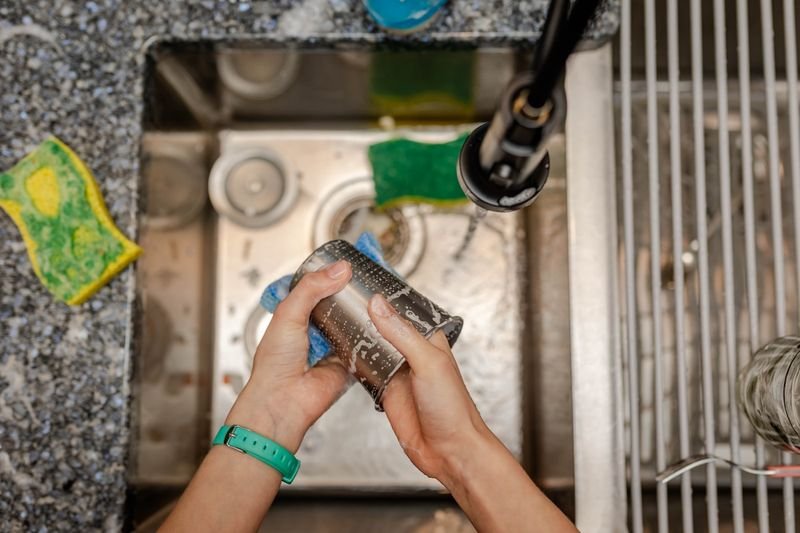
洗碗、洗衣、打掃這類家務都用 do —— 因為重點是「執行動作」而不是「創造東西」。
There’s a useful pattern for the workplace: do covers general effort and unspecified tasks, which is why “What do you do?” means “What is your job?” and never “What do you make?” One caution worth flagging early: a handful of do phrases describe activities that feel like they should produce something, yet still take do — you do your hair, do the shopping, and do a report, even though a hairstyle, groceries, and a document all technically result from the effort. English isn’t perfectly consistent here, and that’s fine; the point is to recognise the pairs, not to derive them from first principles every time. The table below is worth reading aloud twice — saying the pairs out loud is how they stop feeling like a rule and start feeling automatic.
| DO collocation | 中文 | Example sentence |
|---|---|---|
| do your homework | 做作業 | I need to do my homework before dinner. |
| do the dishes / laundry | 洗碗/洗衣 | Whose turn is it to do the dishes? |
| do business | 做生意 | We do business with three factories in Taichung. |
| do your job / work | 做工作 | She always does her job well. |
| do a favour | 幫忙 | Can you do me a favour? |
| do exercise / a course | 運動/上課程 | I do exercise every morning. |
| do your best | 盡力 | Just do your best on the exam. |

Do your homework、do your job —— 任務、責任、例行工作幾乎都搭配 do。
什麼時候用 MAKE?(When to Use “Make”)
Use make when something new comes into existence — a physical object, a plan, a sound, a feeling, a decision. You make a cake, make coffee, and make a paper airplane, because each one is a thing you produce. The logic extends past physical objects: you make a decision, make a plan, make a promise, and make a mistake, because each is a result your mind creates.

Make a cake —— 只要是「製作、產出一個新的東西」,就用 make。
Make also owns the language of communication and relationships. You make a phone call, make a suggestion, make conversation, and make friends. Money is a classic one that trips learners up: in English you make money, never “do money,” because you’re producing income. The table below collects the make collocations that show up most in daily and workplace English.
| MAKE collocation | 中文 | Example sentence |
|---|---|---|
| 做出決定 | 做決定 | We have to make a decision by Friday. |
| make a mistake | 犯錯 | Everyone makes mistakes when learning. |
| make money | 賺錢 | He makes good money as an engineer. |
| make a plan | 制定計畫 | Let’s make a plan for the weekend. |
| make a phone call | 打電話 | I need to make a quick call. |
| make friends | 交朋友 | She makes friends easily. |
| make progress | 取得進步 | You’re making progress with your English. |
| make dinner / coffee | 做晚餐/泡咖啡 | I’ll make dinner tonight. |

Make a decision(做決定)—— 決定、計畫、承諾都是心裡「產生」出來的結果,所以用 make。
台灣學習者最常犯的錯誤(Common Make/Do Mistakes in Taiwan)
The single most common error is “make my homework.” Homework is a task you perform, not an object you build, so it’s always do my homework. Close behind is “do a decision” — a decision is a result you produce, so it must be make a decision. These two alone account for a huge share of the make-versus-do slips I hear in adult classes in Taipei.
Watch out for “do a mistake” as well; the correct phrase is make a mistake, because you produce the error. And “make a party” sounds odd to native ears — you have a party or throw a party, though you do make plans for one. If you want a broader look at how Mandarin habits leak into English, our guide to common Chinglish mistakes Taiwan learners make covers the patterns behind errors like these.
Here’s where it bites in real life. In a job interview, a candidate who says “I can make many jobs at the same time” instead of “I can do many tasks at the same time” sounds noticeably less fluent, even when the interviewer understands the meaning perfectly. On a work email, “Please make the report by Monday” reads as slightly off to a native manager, where “Please do the report” or “Please write the report” reads as natural. These are small slips, but they stack up, and they’re the kind of thing that quietly separates an intermediate speaker from an advanced one. The good news is that fixing make versus do is one of the highest-return corrections you can make, because the phrases repeat constantly in everyday speech.
| ❌ Wrong | ✅ Correct | 中文 |
|---|---|---|
| make my homework | do my homework | 做作業 |
| do a decision | 做出決定 | 做決定 |
| do a mistake | make a mistake | 犯錯 |
| make the dishes | do the dishes | 洗碗 |
| do money | make money | 賺錢 |
| make sport / make exercise | do exercise | 運動 |
一定要背的固定搭配(Fixed Collocations You Just Memorise)
The truth is, the result-versus-activity rule breaks down at the edges, and pretending otherwise sets you up to fail. Some pairs are simply fixed — native speakers use them out of habit, not logic, and the fastest path is to memorise them as whole chunks rather than reason them out mid-sentence. “Do your hair,” “do the shopping,” and “make the bed” don’t obey any tidy rule; they’re just what English does.

職場上 make a plan(制定計畫)和 do business(做生意)常常一起出現。
This is exactly why collocations matter more than isolated vocabulary. Learning “make” and “do” as separate words teaches you almost nothing; learning “make an effort” and “do your best” as single units teaches you how English actually behaves. If you want a method for absorbing these pairs without rote drilling, read our walkthrough on how to learn English collocations the smart way. It’s the same skill that untangles other confusing verb sets — the differences between say, tell, speak, and talk come down to collocation too.

Make conversation(攀談、閒聊)是固定搭配,背整組比背單字更有效。
快速測驗:你能選對嗎?(Quick Quiz: Make or Do?)
Cover the answers and fill in make 或者 do for each blank. Say each sentence out loud — hearing the pair is half the learning.
- Sorry, I ______ a mistake on the report.
- Can you ______ me a favour this weekend?
- She wants to ______ more money next year.
- I have to ______ the laundry before I go out.
- Let’s ______ a plan before the meeting.
- He never ______ his homework on time.
Answers(解答): 1. made 2. do 3. make 4. do 5. make 6. does. If you got four or more right, the core logic has landed — now it’s just a matter of drilling the fixed pairs until they’re automatic.
怎麼把 make 和 do 練到自動反應(How to Make It Automatic)
Rules fade under pressure; habits don’t. The goal is to reach the point where “do my homework” feels wrong the moment you almost say “make my homework.” Three things get you there faster than grammar drills. First, learn collocations in short spoken phrases, not word lists — repeat “make a decision, make a decision” until the pair fuses. Second, notice them in the wild: every English podcast, Netflix scene, and email you read is full of make/do collocations already sorted correctly for you. Third, write your own sentences using each pair, because production locks in what recognition alone won’t.
The video below from English with Lucy walks through the make-versus-do split with plenty of spoken examples — a good way to train your ear alongside this guide.

Make friends(交朋友)—— 多開口、多寫句子,這些搭配自然會變成反射動作。
Pick five collocations from this article today — the ones you’ll actually use this week — and build a sentence with each. Next week, add five more. Do that consistently and within a month you’ll stop translating 做 in your head and simply reach for the right verb. That instinct is what fluent English sounds like, and it’s closer than you think. For more everyday verb confusions worth mastering next, keep working through the confusable-word guides here on 18K English.
Sources(參考資料)
- Cambridge Dictionary — “Do and Make” — Authoritative grammar reference on the distinction and usage patterns.
- Espresso English — Difference Between Do and Make (60 Collocations) — Extensive list of fixed make/do pairs for memorisation.
- engVid — Learn English: MAKE or DO? — ESL video lesson explaining the logic and common collocations.
Looking for free ESL worksheets for your classroom? Browse our free worksheet library →
Are you a teacher? Find lesson resources and worksheets at TahricTeaches.com.





 繁體中文
繁體中文  English
  日本語
日本語  한국어
한국어  ไทย
ไทย  Bahasa Indonesia
  Tiếng Việt
  Français