
Scenario English: The Exact Phrases You Need at the Airport, Restaurant, IT Help Desk, and Clinic | 情境英文必備句型
本文重點:這份英文學習 (English learning) 指南專為台灣上班族 (Taiwanese professionals) 設計,完整整理機場、餐廳、IT求助與看診四大真實情境英文 (real-world English) 必備單字與實用句型 (phrases)。掌握情境式單字 (situational vocabulary) 比死背主題清單更有效,是商業英文 (business English)、多益 (TOEIC) 與雅思 (IELTS) 準備的關鍵基礎。建議搭配英文家教 (English tutor) 或角色扮演 (role-play) 練習,將每個情境的完整腳本跑過一次,從機場報到到診所領藥都能流暢應對。
Most vocabulary lists organize words by topic — travel words, food words, technology words, health words. That feels logical, but it ignores how you actually use English in real life. You don’t sit down to “use travel vocabulary.” You stand at an airport check-in counter and need to ask if your bag is overweight. You don’t “use food vocabulary.” You sit at a restaurant and need to send a dish back politely without offending the server.
For Taiwanese professionals preparing for real-world English, scenario-based vocabulary beats topic-based lists every time. This guide walks through four high-stakes situations where vocabulary failures are costly — the airport, the restaurant, the IT help desk, and the doctor’s clinic — and gives you the exact phrases native speakers expect to hear in each one.
Why Scenarios Beat Topic Lists | 為什麼情境式單字勝過主題清單
Topic-based vocabulary lists fail because they isolate words from the moments you need them. You can memorize fifty “food” words and still freeze when a waiter asks “Are you ready to order?” — because what you needed wasn’t the word for “steak” but the phrase “Could I have a few more minutes?” Scenario learning (情境式學習法) attaches words to scripts, gestures, tone, and timing — the way fluent speakers actually retrieve them.
Native speakers store language this way too: the airport script, the restaurant script, the doctor script. Each script has its own register (formal vs casual), its own pace, and its own polite formulas. For Taipei professionals who already know intermediate vocabulary (中級單字), the gap to fluent operation is not 5,000 more words. It is being able to deploy the right 30 words in each of the right 10 scenarios.
That is the bet of this guide. We chose four scenarios where mistakes cost real money, real time, or real health — and where Taiwanese learners report the most freeze-ups in private English tutoring (英文家教) sessions and on the TOEIC speaking section (多益口說).
Scenario 1 — At the Airport | 場景一:機場英文
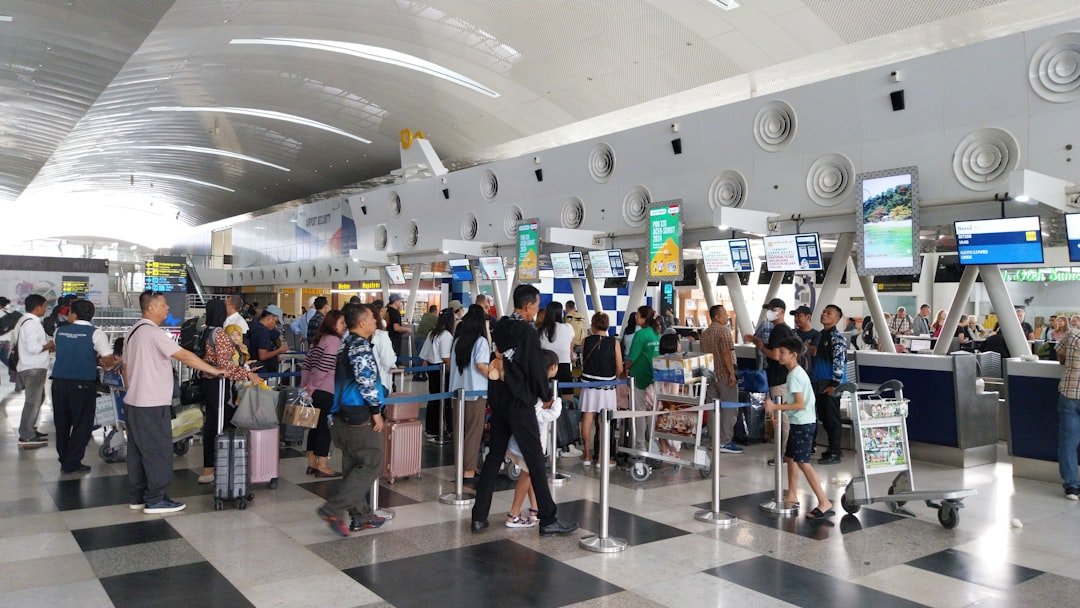
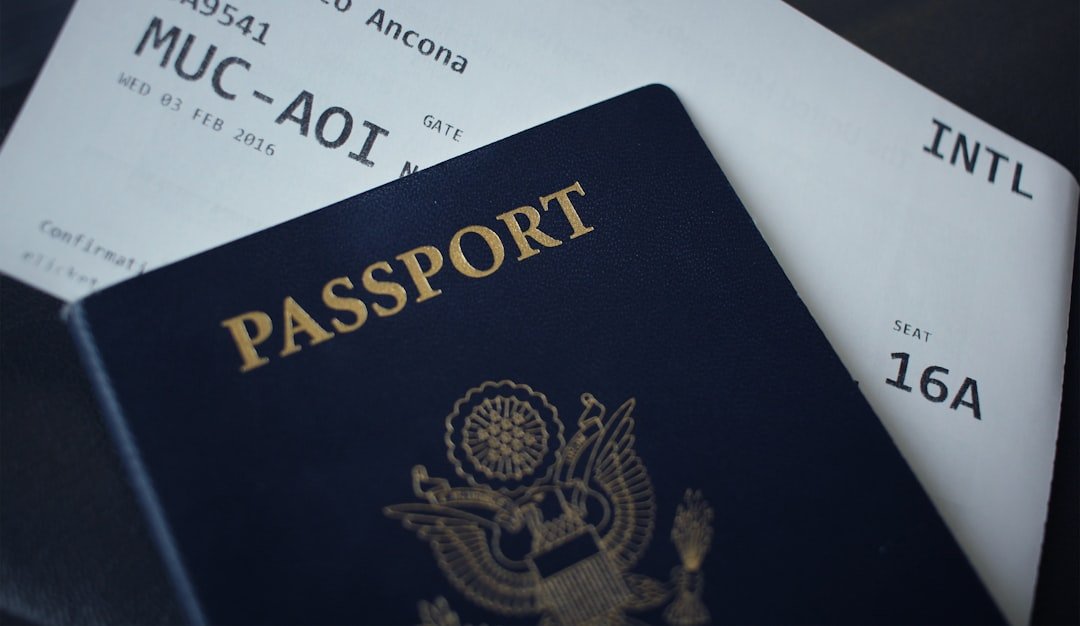
Airports are time-sensitive, and the staff have no patience for hesitation. Memorize phrases, not just nouns. The conversation moves fast and follows a rigid script. If you can mirror that script, the agent will not slow down for you, and you will not hold up the line behind you.
Check-in and Baggage | 報到與行李
The check-in counter is where most travelers first stumble. Memorize these openers in full sentence form so they leave your mouth automatically.
- “I’d like to check this bag.” (託運行李)
- “Is my bag overweight?” (超重)
- “Can I have an aisle seat?” (走道座位) or “a window seat?” (靠窗)
- “Did you pack this bag yourself?” — a standard security question; answer “Yes, I did.”
- Key nouns: carry-on (隨身行李), boarding pass (登機證), gate, layover, connecting flight (轉機航班).
Security and Boarding | 安檢與登機
Security agents speak in clipped imperatives. Learn to recognize them on hearing, not on reading — these will come at you fast.
- “Please remove your laptop from your bag.”
- “Step through the scanner.”
- “Any liquids over 100 milliliters?”
- “Final boarding call for flight…”
- Key terms: customs (海關), immigration (入境審查), declare, transit, delayed (誤點), canceled.
Scenario 2 — At the Restaurant | 場景二:餐廳英文
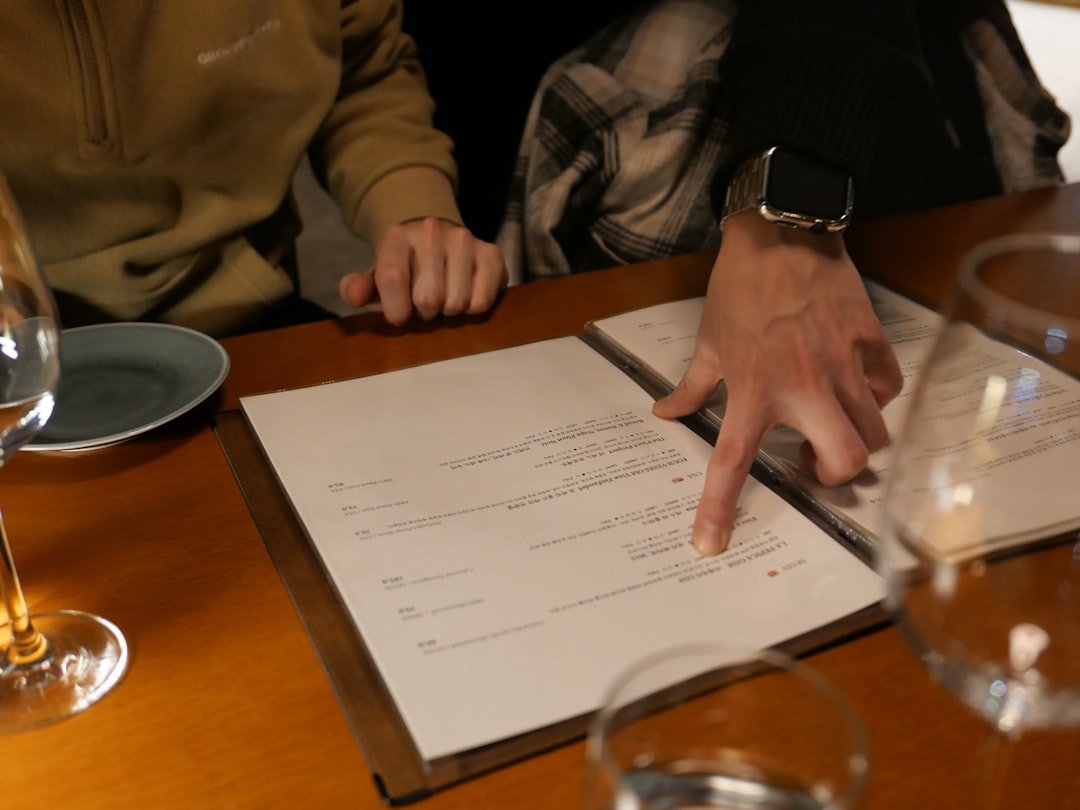
Restaurant English fails not because you do not know food words, but because you do not know polite interruption. The vocabulary (英文單字) you actually need lives in the requests and clarifications, not on the menu itself.
Ordering and Recommendations | 點餐與推薦
- “請問可以看一下菜單嗎?”
- “What would you recommend?” — opens dialogue rather than ordering blind.
- “I’ll have the…” — preferred over the abrupt “I want…”
- “What’s in this dish?”
- “How is it prepared?” — grilled, fried, steamed, baked.
- Cuts: well-done (全熟), medium-rare (三分熟), rare (一分熟).
Special Requests and Complaints | 特別要求與抱怨
This is the exact gap most Taiwanese diners hit overseas. Direct complaints sound rude in English; soft formulas (委婉句型) work much better and get faster results.
- “Could I have this without onions?”
- “I’m allergic to peanuts.” (過敏)
- “Excuse me, this is a little undercooked.”
- “Could we get the check, please?” (買單)
- Diet tags: gluten-free, dairy-free, vegetarian (素食), vegan (純素).
Scenario 3 — At the IT Help Desk | 場景三:IT求助英文
Tech support calls follow a script, and mastering the script gets you faster help. The most common Taiwanese mistake is over-explaining instead of using the short, standard IT-support phrases the agent expects to hear.
Describing the Problem | 描述問題
- “My laptop won’t turn on.”
- “The screen is frozen.” (當機)
- “It keeps crashing.” (一直當機)
- “I’m getting an error message that says…”
- “It started right after the last update.”
- Vocab: bug, glitch, lag, freeze, crash, reboot, restart, blue screen.

Following Instructions | 跟隨指示
The technician will give you a sequence of steps. Your job is to confirm or report back in real time without going silent — silence makes them assume you are lost.
- “Could you walk me through that?” — politely asks for clearer steps.
- “I’m not seeing that option.”
- “Hold on, let me check.”
- “It worked, thank you.”
- Vocab: settings (設定), preferences, dropdown menu, refresh, log out / log in, password reset (重設密碼), admin rights.

Scenario 4 — At the Doctor’s Clinic | 場景四:看診英文
Medical visits abroad — or with foreign doctors in Taiwan — go badly when symptoms cannot be described accurately. This is the highest-stakes scenario in the guide, because a vague description can lead to the wrong prescription. Practice these phrases until they are automatic.
Describing Symptoms | 描述症狀
- “I have a headache” / “I have a stomach ache” / “I have a backache.”
- “I’ve been feeling dizzy.” (頭暈)
- “I have a fever of 38.5.” (發燒)
- “My throat is sore.” (喉嚨痛)
- “It started two days ago” — duration is usually the doctor’s first follow-up question.
- Vocab: nausea (噁心), fatigue (疲倦), cough (咳嗽), rash, swollen, sharp pain vs dull pain.

Treatment and Prescription | 治療與處方
- “Do I need a prescription?” (處方)
- “Are there any side effects?” (副作用)
- “How often do I take it?”
- “After meals” vs “on an empty stomach.”
- Vocab: antibiotic (抗生素), painkiller (止痛藥), antihistamine, dosage, refill, allergy alert (過敏警示).

How to Practice Scenario Vocabulary | 如何練習情境單字
Reading these lists once will not move the needle. The vocabulary becomes accessible only when you have rehearsed it in real time, under mild pressure, against a partner who responds unpredictably. Two methods, in order of effectiveness.
Method 1 — Role-Play With a Tutor | 與英文家教角色扮演
Work with an English tutor — ideally a native speaker — and walk through the full script of one scenario per lesson. Entry, transaction, exit. Ask the tutor to throw in one unexpected complication per round: a delayed flight, a sold-out dish, a corrupted file, a follow-up symptom question. Real fluency (流利度) is built in those off-script moments, not in the planned ones.
Method 2 — YouTube Scenario Immersion | YouTube情境沉浸
Search “airport English conversation,” “restaurant English dialogue,” or “doctor patient role-play” on YouTube and watch unscripted or lightly scripted clips. The TOEIC listening section uses these exact scripts almost word-for-word, so this practice doubles as test prep (考試準備). Shadow the speakers — repeat each line at the same speed and intonation, about two seconds behind them. Do this for ten minutes a day for two weeks before any trip or interview.
The Bigger Idea | 更大的學習觀念
Scenario-based phrases are not a replacement for topic-based vocabulary — they are a layer above it. Topic lists tell you what words exist. Scenarios tell you which words to pull off the shelf when the moment arrives. For a Taiwanese professional aiming at the next promotion (升遷), an overseas posting (外派), or a confident family vacation abroad, the second layer is what finally closes the gap.
Pick one scenario this week. Run it through twice — once reading silently, once out loud. Then book a 30-minute role-play and run it again with a real conversation partner. That is the shortest path from intermediate vocabulary to confident, in-the-moment operation in English.
來源 | 資料來源
- 劍橋字典 (劍橋字典) — definitions, pronunciation, and example sentences for every vocabulary item above.
- 英國文化協會 (英國文化協會) — free ESL scenario dialogues and listening practice for travel and workplace contexts.
- ETS (TOEIC official) (多益官方主辦單位) — official TOEIC practice tests mirror the scenarios in this guide.
- Wikipedia: Vocabulary — overview of vocabulary acquisition research and methodology.
Looking for free ESL worksheets for your classroom? Browse our free worksheet library →
Are you a teacher? Find lesson resources and worksheets at TahricTeaches.com.






 繁體中文
繁體中文  English
  日本語
日本語  한국어
한국어  ไทย
ไทย  Bahasa Indonesia
  Tiếng Việt
  Français