Aboriginal Cultures of Taiwan | Elementary ESL Reading Worksheet PDF
Free, classroom-ready, one click — includes answer key on page 3.

Reading Worksheet — Elementary (C) | tahricteaches.com
Taiwan is home to many indigenous people. They lived on the island long before other groups came. Today, there are 16 official tribes. Each tribe has its own language, food, and customs.
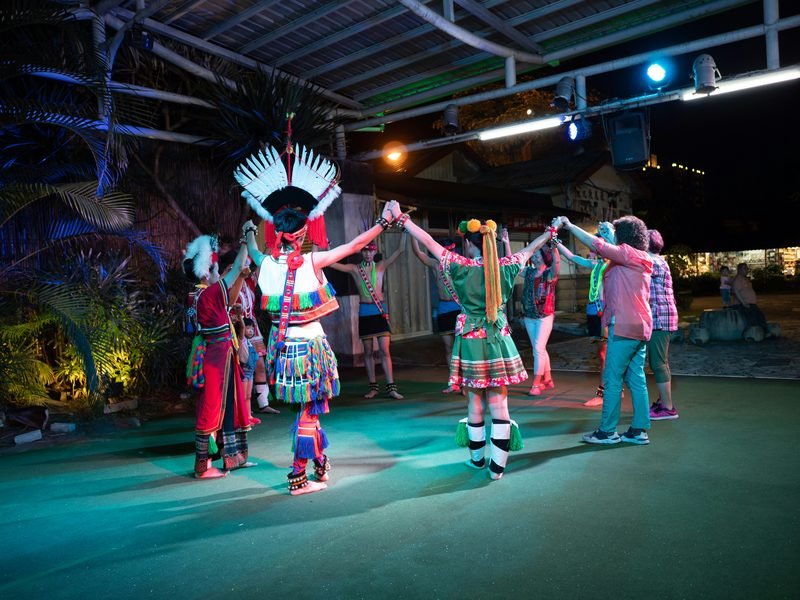
The Amis is the biggest tribe. They live near the east coast. They love to sing and dance. Every summer, they have a big harvest festival. People wear bright clothes and dance in a circle for many days.
The Atayal and Truku tribes live in the mountains. In the past, they had face tattoos. The tattoos showed that a person was strong and brave. Today, only a few old people still have these tattoos.
Many tribes are famous for their art. They make beautiful weaving with colorful thread. They also carve wood and make clay pots. The Paiwan tribe is known for using glass beads. These items are used in special ceremonies and weddings.
Food is also important. Many tribes eat sticky rice, wild plants, and fresh fish. They cook food in bamboo tubes over a fire. Today, you can visit aboriginal villages in Taiwan. You can try the food, watch dances, and learn about their long history. It is a fun way to see another side of Taiwan.
A. Vocabulary
- indigenous ____
- tribe ____
- harvest ____
- mountains ____
- weaving ____
- ceremonies ____
- customs ____
- tattoos ____
- carve ____
- village ____
- a. first people to live in a place; native
- b. time when crops are picked from the fields
- c. special events with traditional actions, like weddings or festivals
- d. very high areas of land, much taller than hills
- e. small group of houses in the countryside
- f. ways of doing things that a group has done for a long time
- g. making cloth by crossing threads over and under each other
- h. group of people who share a language, culture, and history
- i. to cut wood or stone into a shape
- j. pictures or marks made on the skin with ink

B. True or False
- ____ Taiwan has 16 official aboriginal tribes.
- ____ The Amis tribe lives in the western desert of Taiwan.
- ____ The Amis tribe has a big harvest festival every summer.
- ____ The Atayal and Truku tribes live in the mountains.
- ____ All young people in the Atayal tribe still have face tattoos today.
- ____ The Paiwan tribe is famous for using glass beads.
- ____ Aboriginal people in Taiwan only eat bread and cheese.
- ____ Some tribes cook food in bamboo tubes over a fire.
- ____ Aboriginal people came to Taiwan after all other groups.
- ____ Visitors can go to aboriginal villages and try the food.
C. Fill in the Blanks
- The Amis people have a big ___ festival every summer.
- The Atayal people live in the high ___ of Taiwan.
- Aboriginal people are the ___ people of Taiwan.
- Many tribes make beautiful cloth by ___ colorful thread.
- Glass beads are used in weddings and other special ___.
D. Comprehension Questions
- How many official aboriginal tribes are there in Taiwan?
- What did face tattoos show in the Atayal and Truku tribes?
- What can visitors do in aboriginal villages today?
E. Discussion Questions
- Are there indigenous people in your country? What do you know about them?
- Would you like to visit an aboriginal village in Taiwan? Why or why not?
Answer Key (click to reveal)
A. Vocabulary: 1-a, 2-h, 3-b, 4-d, 5-g, 6-c, 7-f, 8-j, 9-i, 10-e
B. True/False: 1-T, 2-F, 3-T, 4-T, 5-F, 6-T, 7-F, 8-T, 9-F, 10-T
C. Fill Blanks: 1-harvest, 2-mountains, 3-indigenous, 4-weaving, 5-ceremonies
D. Comprehension:
- There are 16 official aboriginal tribes in Taiwan.
- Face tattoos showed that a person was strong and brave.
- Visitors can try the food, watch dances, and learn about the tribes’ history.
© Tahric Teaches | tahricteaches.com
Looking for more Young Learner worksheets? Browse the full Young Learners collection →

 English
  繁體中文
繁體中文  日本語
日本語  한국어
한국어  ไทย
ไทย  Bahasa Indonesia
  Tiếng Việt
  Français