
團體英文 (Group English) | Benefits of Learning English in Groups
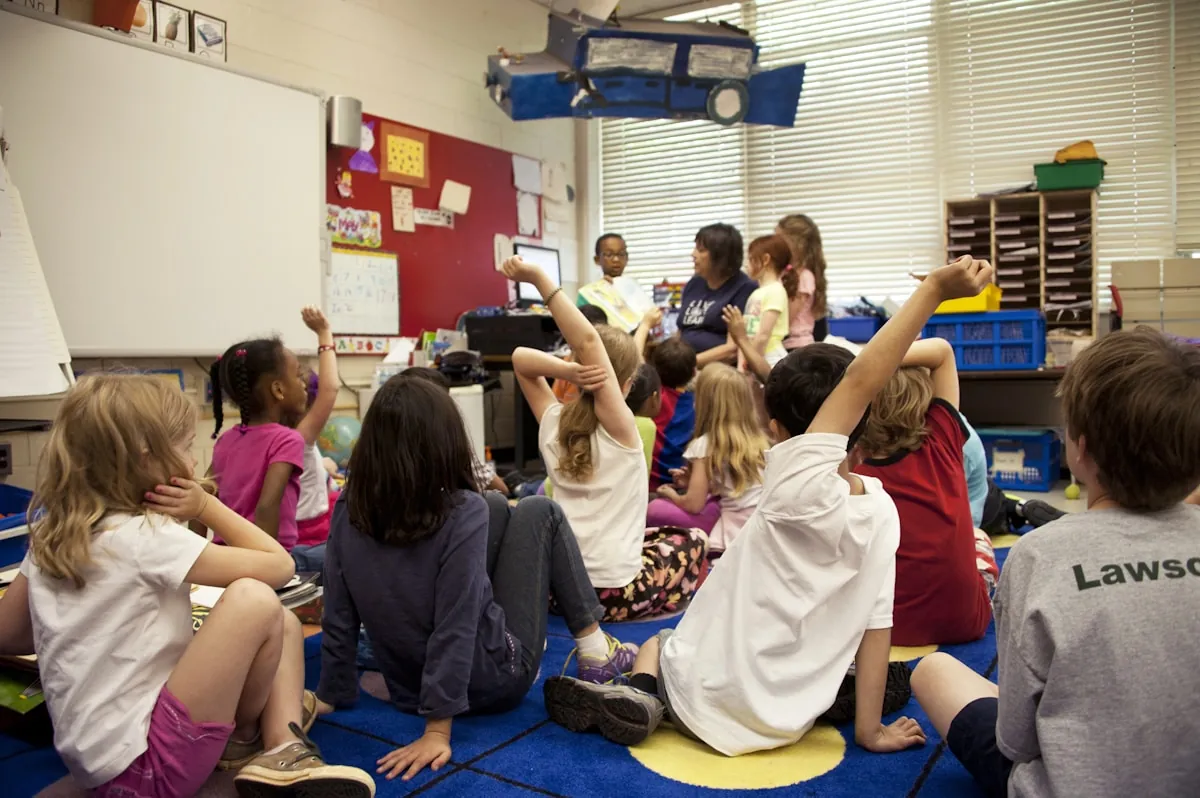
Ask ten Taiwanese adults why they still can’t hold an English conversation after years of study, and most will say the same thing: they read and test well, but they almost never open their mouths. A classroom of one — you and a textbook — never fixes that. This is exactly the gap that 團體英文 is built to close. In a group of four to eight learners, you spend far more minutes speaking, listening, and reacting to real people than you ever do grinding vocabulary lists alone.

團體英文是什麼?為什麼在台灣越來越熱門 (What Group English Really Means)
團體英文 is simply English learning in a shared class — a handful of students, one teacher, and a lesson built around interaction rather than lecture. It sits between two extremes most people in Taiwan already know: the giant cram-school room of forty silent students, and the expensive one-on-one tutor. Neither of those does much for your speaking. The oversized class gives you almost no airtime; the private lesson gives you plenty, but at a price few can sustain week after week.
The version that works is the small group. Language is a social skill, not a subject you memorize, and a small class recreates the one thing a textbook can’t: another person who might not understand you the first time. That friction — rephrasing, clarifying, reacting — is where fluency is actually built. It’s also why enrollment in conversation-focused group classes and 英文會話班 has climbed steadily as more learners realize their TOEIC score never taught them to order dinner in English.
團體英文的 7 大好處 (7 Benefits of Learning English in Groups)
The benefits below aren’t abstract. Each one maps to a specific reason group learners tend to reach conversational comfort faster than solo studiers.

1. 你開口說的時間比想像中多 (More real speaking time)
This is the whole point. In a well-run group of six, the teacher talks less and the students talk more — pair work, small debates, role-plays. You might speak for twenty active minutes in a single 60-minute class. Studying alone, you could go a full week producing zero spoken English. Output is what rewires the habit of translating in your head before every sentence.
2. 犯錯變得不可怕 (Mistakes stop being terrifying)
Fear of embarrassment is the number-one thing that keeps Taiwanese adults silent. A group flips that. When the person next to you fumbles a past tense and the world doesn’t end, your own mistakes shrink to normal size. A study group becomes a low-stakes place to be wrong on purpose — which is the fastest way to stop being wrong.
3. 同儕帶來的責任感 (Built-in accountability)
Motivation from a phone app lasts about three weeks. Motivation from six classmates who notice when you skip lasts far longer. You show up because someone is expecting you, you finish the homework because you’ll discuss it out loud, and you keep going through the plateau that makes most solo learners quit around month two.

4. 接觸不同口音、詞彙與想法 (Exposure to different accents and vocabulary)
Your teacher speaks one way. Five classmates speak five other ways — different pronunciation habits, different favorite words, different mistakes you can learn from. Real English isn’t one clean accent from an app; it’s the messy variety you get when several people talk. Training your ear on that variety in class means you’re not thrown off the first time a real stranger opens their mouth.
5. 價格比一對一便宜很多 (A fraction of the cost of private lessons)
The truth most schools won’t say out loud: for pure speaking practice, a group class is not a compromise — it’s often the smarter buy. Split the teacher’s fee across six people and you pay a fraction of a private rate for a session that gives you more conversation partners, not fewer. One-on-one has its place for targeted problems, but for building everyday fluency, 團體英文 gives you more practice per dollar.
6. 真實對話情境的演練 (Practice for real-world situations)
Group classes can stage the exact scenarios you dread: a job interview, a customer complaint, small talk with a foreign colleague, ordering at a restaurant abroad. Rehearsing those with real people — who ask unexpected follow-up questions — prepares you in a way that reading a sample dialogue never will. When the real moment comes, your brain has already been there.
7. 動力、友誼與社群 (Motivation, friendship, and community)
People underrate this one. A class that becomes a small community — inside jokes, shared progress, a group chat — turns English from a chore into something you look forward to. Learners who enjoy the room keep coming back, and the ones who keep coming back are the ones who eventually get fluent.

團體英文 vs 一對一:哪個適合你?(Group English vs One-on-One)
One-on-one isn’t the enemy — it’s just a different tool. Private lessons win when you have a narrow, technical goal: a specific exam, a presentation next month, or a pronunciation problem that needs constant correction. Group English wins for the thing most people actually want, which is the confidence to speak in unscripted, everyday situations. Here’s the honest comparison:
| 因素 (Factor) | 團體英文 (Group) | 一對一 (One-on-One) |
|---|---|---|
| Cost per hour 費用 | Low 低 | High 高 |
| Speaking partners 對話對象 | Many 多人 | One (teacher) 只有老師 |
| Personalized correction 個別糾正 | Shared 分散 | Full attention 完全專注 |
| Motivation & community 動力 | Strong 強 | Depends on you 靠自己 |
| Real conversation feel 真實感 | High 高 | Lower 較低 |
The best of both worlds, if your budget allows: a weekly group class for volume and confidence, plus an occasional private session to fix a stubborn weak spot. Many serious learners in Taiwan run exactly that combo, and it pairs naturally with learning from a native-speaking 外師 (foreign teacher) for pronunciation and natural phrasing.
小班英文的優勢:為什麼人數是關鍵 (Why Small-Group Class Size Matters)
Not every “group” is a good group. Twenty students in one room is a lecture, and you’ll drift back into silence within a week. The sweet spot for 小班英文 is four to eight learners. That’s small enough that the teacher notices when you haven’t spoken, and large enough that you’re never stuck repeating drills with the same single partner.
Below about four, the class loses the peer variety that makes group learning work. Above about eight, individual speaking time shrinks and shy students disappear into the back row. When you’re comparing schools, ignore the marketing and ask one blunt question: how many students are actually in the room? A 小班英文 that quietly runs at twelve students is selling you a lecture at a small-class price.

如何從英文會話班獲得最大收穫 (How to Get the Most from a Conversation Class)
Signing up for a 英文會話班 is step one; getting your money’s worth takes a little strategy. The learners who improve fastest treat the class as a gym, not a lecture — they come to work, not to watch.
A few habits separate them from the rest. Speak before you feel ready, because waiting for the “perfect” sentence just means someone else takes the turn. Prepare two or three things to say before every class so you’re never scrambling for words. Ask your classmates questions instead of only answering the teacher — that’s where natural back-and-forth lives. And embrace the awkward silence after a mistake; that half-second of discomfort is the exact moment your brain is learning. Reviewing new phrases afterward with a method like a 主題式單字學習法 (topic-based vocabulary system) locks in what the class surfaced.
Watching real group conversations helps too. The video below walks through a natural multi-person English exchange — the kind of overlapping, reactive talk a good group class trains you for:
團體英文適合誰?(Who Should Choose Group English?)
Group English is the right call for most people whose real goal is speaking with confidence rather than passing a single exam. It fits the office worker who freezes in English meetings, the traveler tired of pointing at menus, the parent who wants to keep up with a bilingual kid, and the student whose test scores are fine but whose mouth won’t cooperate.
It’s a weaker fit in only a couple of cases: if you need intense, personalized correction for a specific exam on a deadline, or if your schedule is so unpredictable that you can’t commit to a fixed weekly slot. Even then, an 假日英文 (weekend English) group can solve the scheduling problem for busy professionals who only have Saturdays free. If your main barrier is confidence — and for most learners in Taiwan, it is — a group is almost always the better starting point.

線上還是實體?(Online or In-Person Group Classes?)
Online 團體英文 exploded for a reason: it removes the commute, opens up classmates from all over Taiwan and beyond, and often costs less. Breakout rooms give you the same small-group speaking practice from your living room. The trade-off is that it takes more discipline — it’s easier to switch your camera off and mentally check out than it is to hide in a physical classroom.
In-person classes give you body language, easier side conversations, and a social bond that’s harder to build through a screen. Neither is objectively better; pick the one you’ll actually attend every week. Consistency beats format every time.

常見問題 (Frequently Asked Questions)
團體英文一班幾個人最好?(What’s the ideal class size?)
Four to eight students. That range gives everyone real speaking time while keeping enough variety of voices and opinions in the room. Anything over ten starts to feel like a lecture.
我程度不好,適合上團體英文嗎?(Is group English okay if my level is low?)
Yes — as long as the class is grouped by level. A beginner group where everyone is nervous together is far less intimidating than a private lesson under a teacher’s full spotlight. Just make sure the school places you with learners near your level.
團體英文和補習班大班有什麼不同?(How is it different from a big cram-school class?)
Size and purpose. A cram-school big class is built around exam content and one-way lecturing; 團體英文 is built around interaction and speaking. In a small group you can’t stay invisible, and that’s the entire point.
多久會看到進步?(How fast will I see progress?)
Most consistent learners feel more comfortable speaking within six to eight weeks of weekly classes — not because their grammar transformed, but because the fear went away. Fluency follows confidence, not the other way around.
Sources
- Promova — The Power of Group Learning — benefits of collaborative and peer-based English study.
- ES London — Why Group Speaking Classes Work Better Than Self-Study — speaking-time and confidence advantages of group classes.
- Cambridge English — Group Activities for English Speaking Practice — classroom techniques for peer speaking practice.
- British Council LearnEnglish — Speaking Practice — free resources for practising spoken English.
Looking for free ESL worksheets for your classroom? Browse our free worksheet library →
Are you a teacher? Find lesson resources and worksheets at TahricTeaches.com.






 English
  繁體中文
繁體中文  日本語
日本語  한국어
한국어  ไทย
ไทย  Bahasa Indonesia
  Tiếng Việt
  Français