
Spaced Repetition for English Vocabulary | 間隔重複法: How Taipei Professionals Use Anki to Master 10,000 Words
If you have ever spent weeks memorizing a vocabulary list only to forget half of it by the following month, you are not alone. Most Taiwan professionals (台灣上班族) studying English have lived this frustrating cycle — cram, forget, cram again. The problem is not your memory. It is your method.
本文重點: 本篇深入介紹間隔重複法 (Spaced Repetition) 與 Anki 這套免費工具如何幫助台灣上班族在六到十二個月內建立 5,000 至 10,000 個實用英文單字 (英文學習, 商業英文, 多益單字)。涵蓋科學原理、卡片設計、每日複習流程與常見錯誤。
What Is Spaced Repetition? | 什麼是間隔重複法?
Spaced repetition is a learning technique that schedules reviews at gradually increasing intervals — one day, three days, a week, two weeks, a month — instead of cramming everything at once. Each time you successfully recall a word, the gap before its next review grows. Words you struggle with come back sooner. Words you know well almost disappear from your daily queue.
The technique is rooted in the forgetting curve, first documented by German psychologist Hermann Ebbinghaus in 1885. Ebbinghaus discovered that without review, we forget roughly 50% of new information within an hour and over 70% within a day. But strategically timed reviews flatten that curve dramatically — a properly spaced word can stick for years on just five or six total exposures.
Why SRS Beats Traditional Memorization | 為什麼 SRS 勝過傳統背誦
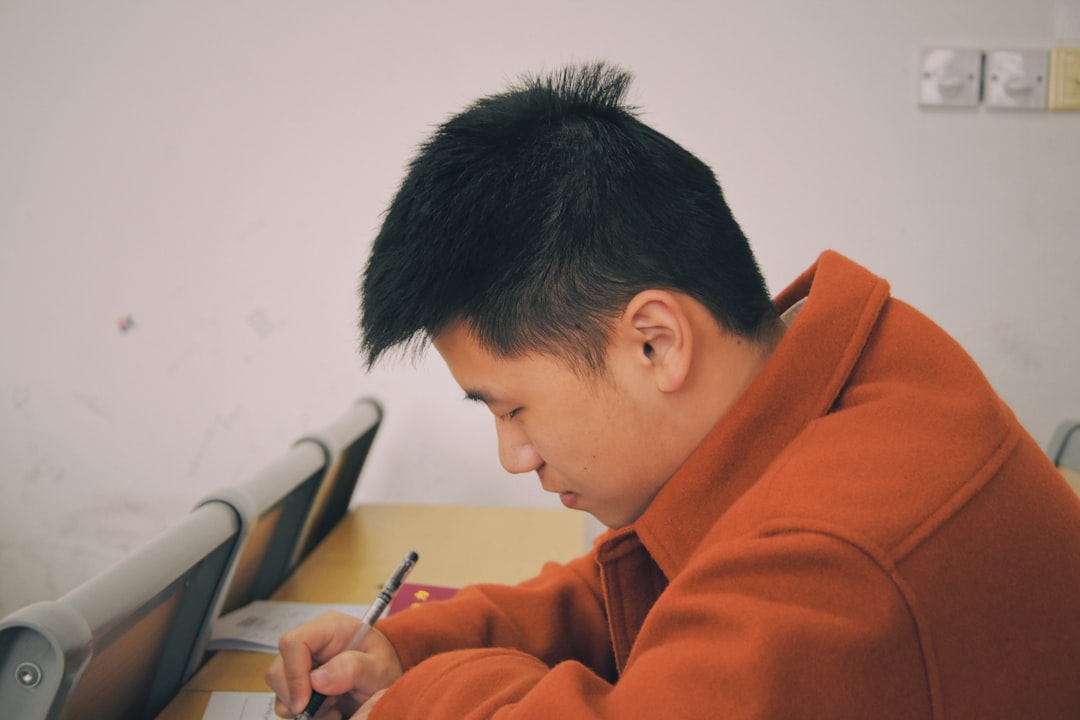
Most Taiwan students learned English through massed practice (集中練習) — sitting down with a vocabulary book and reading each word ten times. This works for short-term tests but fails for long-term retention. The brain interprets repeated exposure within a single session as redundant noise and discards most of it within days.
Spaced repetition forces your brain to actively retrieve a word at the precise moment you are about to forget it. That moment of effortful recall is what consolidates the memory. Skip it, and the word slips away. Hit it correctly, and the neural pathway strengthens. Hit it correctly five or six times across spaced intervals, and the word is yours for years.
For busy professionals juggling buxiban (補習班) classes, work emails, and the TOEIC exam (多益), this efficiency matters. Twenty minutes of SRS per day routinely outperforms two hours of passive list-reading per week. The math is brutal but real: more words, less time, longer retention.
Anki: The Free Tool That Powers SRS | Anki: 驅動 SRS 的免費工具
Anki is the most widely adopted spaced repetition software in the world. Used by medical students, polyglots, and language learners across more than fifty countries, it is completely free on desktop, web, and Android, with a one-time fee on iOS.
What makes Anki special is its SM-2 algorithm, which calculates the optimal next-review date for each card based on how well you remembered it. You rate yourself on a four-point scale — Again, Hard, Good, Easy — and Anki adjusts. The result is a personalized review schedule that adapts to your strengths and weaknesses in real time.
For English learners in Taiwan, Anki has another quiet advantage: it works fully offline. You can review on the MRT (捷運) or during a lunch break in a Hsinchu cafeteria without burning mobile data. The app even syncs your progress when you reconnect to wifi.
How to Install and Set Up Anki | 安裝與設定步驟
- Download Anki from apps.ankiweb.net (free on Mac, Windows, Linux, Android)
- Create a free AnkiWeb account to sync cards across devices
- Create your first deck — name it "English Vocabulary" or "TOEIC 5000"
- Set new cards per day to 10–15 (start small to avoid burnout)
- Set the review limit to 100–150 cards per day

Designing Cards That Actually Stick | 設計能真正記住的卡片
Most beginners ruin Anki by making bad cards. They paste in entire dictionary entries, list ten meanings on one card, or write the Chinese translation alone on the back. None of these strategies match how memory actually forms.
Two principles separate good cards from bad ones, and neither is complicated.
Principle 1 — One Card, One Concept | 一張卡片, 一個概念
Each card should test exactly one thing. Do not put a word, its pronunciation, three example sentences, and the Chinese translation on a single card. Split them into atomic units. The brain remembers small, focused pieces far better than dense blocks.
Principle 2 — Test in Context | 在情境中測試
Bare word-to-translation cards (e.g. "ubiquitous = 無所不在") teach you trivia, not usage. Better cards show the word inside a sentence with the target word blanked out:
The smartphone has become _______ in modern Taipei — every commuter on the MRT is staring at one.
Answer: ubiquitous (無所不在的)
This format trains both recognition and production simultaneously. You see the meaning from context, predict the missing word, then verify. That dual-process is what builds true active vocabulary instead of brittle test-only knowledge.

Sentence Mining: Where Your Cards Come From | 句子挖掘: 卡片來源
Sentence mining (句子挖掘) is the practice of harvesting unfamiliar words from real English content — articles, podcasts, novels, business emails — and turning them into Anki cards. The advantage over pre-made decks is dramatic: every card you create comes wrapped in a context you have already encountered, which makes recall significantly easier and more durable.
Three reliable sources for Taiwan professionals:
- Bloomberg, The Economist, or Reuters articles for business English (商業英文) and finance vocabulary
- TED Talks transcripts for academic and conversational vocabulary across hundreds of fields
- Your own work emails — every English email you cannot read fluently is a personal vocabulary goldmine

A Realistic Daily Routine | 實際的每日複習流程
The biggest predictor of Anki success is not intelligence or starting English level — it is consistency. Most learners who fail with Anki fail because they skip three days, return to a backlog of 400 cards, and quit in despair. The system is unforgiving of long gaps.
A sustainable schedule that fits a Taipei professional's day looks like this:
- Morning (10 min): Review due cards on your phone during breakfast or the MRT commute
- Lunch (5 min): Knock out remaining reviews while waiting for food
- Evening (10 min): Add 10–15 new cards harvested from the day's reading or emails
Total daily commitment: 20–25 minutes. Less time than one episode of a Netflix drama.

Five Mistakes Taiwan Learners Make | 台灣學習者的五大錯誤
1. Adding Too Many New Cards | 一次新增太多卡片
Adding 50 new cards a day feels productive for a week. Then the review pile balloons past 400 and the system collapses under its own weight. Stick to 10–15 new cards per day for the first three months. The cards compound — fast.
2. Translating Everything Into Chinese | 全部翻成中文
Once you reach intermediate level, switch to English-to-English cards. Use a learner's dictionary like Longman or Cambridge for definitions. This pushes you toward thinking in English instead of translating in real time — a key TOEIC and IELTS skill that paper tests reward heavily.
3. Skipping the Hard Button | 跳過「難」按鈕
If a word felt difficult, click "Hard" — even if you got it right. Anki's algorithm depends on honest grading. Lying to it (always clicking "Good") creates fragile memory that vanishes within weeks and ruins your retention curve.
4. Using Only Pre-Made Decks | 只使用現成牌組
Pre-made TOEIC decks are fine as a starter, but cards you create yourself are three to five times more memorable. The act of writing the card encodes the first memory trace before any review even happens.
5. Ignoring Audio | 忽略音檔
Add a pronunciation audio clip to every card. Add-ons like AwesomeTTS auto-generate audio from Forvo or Google. Vocabulary you cannot hear is vocabulary you cannot use in actual conversation — and the goal is conversation, not just passing a paper exam.

Beyond Anki: Other SRS Tools | Anki 以外的選擇
Anki dominates the SRS landscape, but several alternatives deserve mention for learners who find its interface intimidating:
- Quizlet: easier learning curve, weaker algorithm, paid features behind a wall
- Memrise: gamified, good for absolute beginners, less customizable
- Mochi: clean iOS-first design, supports markdown formatting, free tier limited
- RemNote: combines note-taking with SRS — great for vocabulary plus general study
For most serious Taiwan learners, Anki remains the best balance of power, flexibility, and price (free). Its only real weakness is the unpolished interface — once you push past the first week of learning curve, nothing else comes close.
Combining SRS With the Rest of Your Study | 結合其他學習法
SRS is a memory tool, not a complete language program. To turn the words you memorize into usable English, you need three more layers stacked on top of your daily Anki habit.
Extensive Reading | 廣泛閱讀
Read English novels, news, or articles 30 minutes a day. Reading exposes you to vocabulary in living context and reinforces your Anki cards naturally. The book or article becomes the test bed for everything you have memorized.
Listening Input | 聽力輸入
Podcasts and YouTube channels train your ear to recognize the words you have learned at native speed. Try The Daily, BBC 6 Minute English, or Hidden Brain — all free and 10–25 minutes per episode, perfect for a commute.
Output Practice | 輸出練習
Use new vocabulary in writing or speech within 48 hours of learning it. Write one English sentence per new word in your daily journal. For Taiwan professionals studying business English (商業英文), embed the words in mock client emails or LinkedIn posts.
A Realistic Timeline | 實際時程規劃
- Months 1–3: Build the habit. Aim for 1,500 cards. Expect 80% retention.
- Months 4–6: Cross 3,000 cards. TOEIC reading scores typically jump 50–80 points.
- Months 7–12: Reach 6,000–8,000 cards. Reading novels becomes comfortable.
- Year 2 and beyond: Slow down new additions. Focus on production. 10,000-word recall achievable.
The Bottom Line | 結論
Building English vocabulary the proven way is not a question of talent or budget. It is a question of method. Spaced repetition — implemented through Anki, fed by sentence mining, anchored by a 25-minute daily routine — has carried thousands of Taiwan professionals from intermediate plateaus to genuine fluency. The science is settled, the tool is free, and the timeline is realistic.
Open Anki tonight. Add fifteen cards. Show up tomorrow. Repeat for a year. The vocabulary will be there.
Sources | 參考資料
- Ebbinghaus, H. (1885). Memory: A Contribution to Experimental Psychology
- Anki Manual — Official Documentation
- Wozniak, P. (1990). SuperMemo Algorithm SM-2
- Cambridge English Research on Vocabulary Acquisition
- TOEIC Score Statistics, ETS Taiwan
Looking for free ESL worksheets for your classroom? Browse our free worksheet library →
Are you a teacher? Find lesson resources and worksheets at TahricTeaches.com.






 Français
  English
  繁體中文
繁體中文  日本語
日本語  한국어
한국어  ไทย
ไทย  Bahasa Indonesia
  Tiếng Việt