
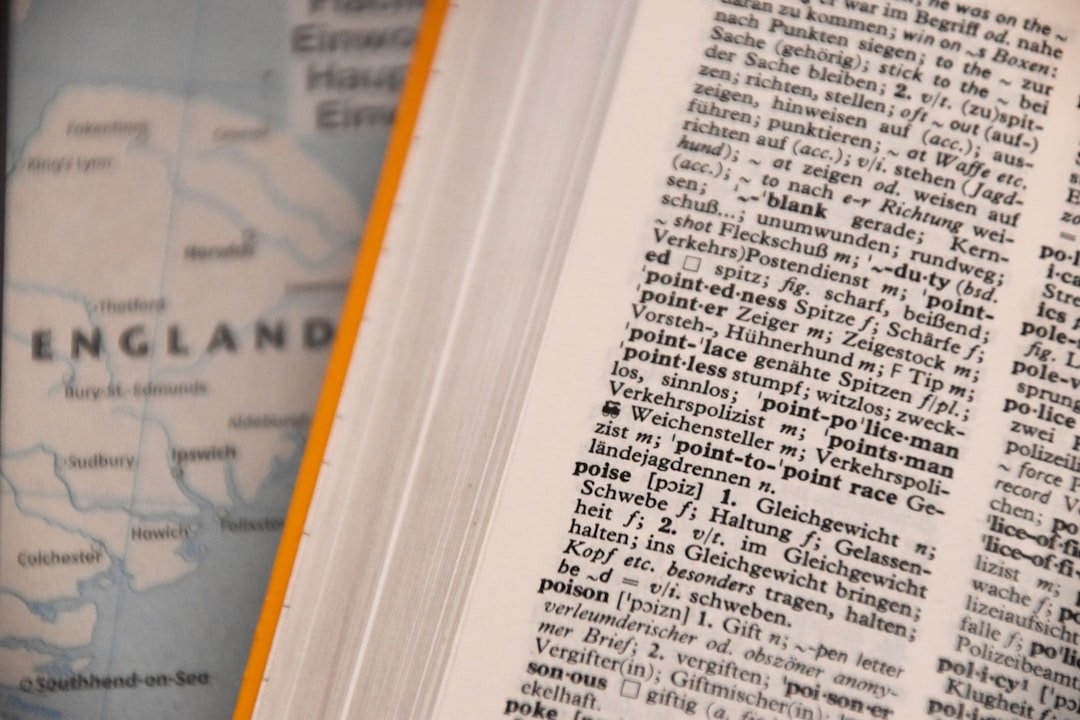
English Collocations: Why ‘Strong Rain’ Sounds Wrong | 英文搭配詞完整指南
本文重點: 搭配詞 (collocations) 是英文聽起來自然的關鍵 — 台灣上班族常因從中文直譯而出錯。本文整理母語人士每天使用的 30 組搭配詞,解釋為什麼「make homework」與「strong rain」是錯的,並提供有效的英文學習方法。適合準備多益、商業英文與英文家教課程的學習者。
Why does “do homework” sound right but “make homework” sound wrong? Why is it “heavy rain” instead of “strong rain,” but “strong coffee” instead of “heavy coffee”? The answer is collocations — the specific word combinations that native English speakers use together without thinking. For Taiwanese professionals studying business English (商業英文) or preparing for TOEIC (多益), mastering collocations is the single fastest way to sound fluent and natural.
This guide breaks down the most common collocation mistakes Taiwan learners make, the six grammatical patterns collocations follow, and 30 word pairs you should memorize this month. By the end, you will know exactly why your English tutor (英文家教) corrects “open the light” to “turn on the light” — and how to stop making the same mistakes in your next email or meeting.

What Are Collocations? | 什麼是搭配詞?
A collocation is a pair or group of words that frequently appear together in English. These combinations sound natural to native speakers because they have been used together for centuries. Swapping one word for a synonym — even a perfectly correct synonym — often produces an awkward or wrong-sounding phrase.
For example, English speakers say “fast food” but never “quick food.” Both “fast” and “quick” mean roughly the same thing, yet only one fits this particular collocation. Similarly, you “make a mistake” but you do not “do a mistake,” even though both verbs describe creating something. The combinations are fixed by usage, not by rules.
Fluent English contains roughly 70% collocational language, according to corpus linguistics research. That means most of what native speakers say is not built word-by-word from grammar rules — it is pulled from a memorized library of word partnerships. Adult learners who treat vocabulary (字彙) as isolated dictionary entries miss this layer entirely.
Why Collocations Matter for Taiwan Professionals | 為什麼搭配詞對台灣上班族重要
Most Taiwanese English learners study individual vocabulary words in isolation — flashcards, definition lists, word-by-word translation. This approach builds a large passive vocabulary but produces unnatural speech. You might know all the words in “I want to take a serious meeting,” but the correct collocation is “have a serious meeting” or “hold a serious meeting.”
The problem multiplies when learners translate directly from Chinese. The Mandarin verb 開 covers a huge range of English verbs — open, turn on, hold, start, drive. Word-for-word translation produces errors like “open the meeting” (correct: “hold the meeting” or “start the meeting”) or “open the car” (correct: “drive the car” or “start the car”). The character maps to one Chinese verb but five different English collocations.
For business contexts, collocations are non-negotiable. A Taiwanese executive who writes “I will do a presentation next Tuesday” instead of “I will give a presentation next Tuesday” signals non-native fluency in the first sentence of the email. In job interviews (英文面試), collocation errors are one of the fastest ways interviewers identify weaker English speakers, even when the candidate’s grammar and vocabulary are otherwise strong.
The 6 Types of English Collocations | 英文搭配詞的六種類型
Collocations follow predictable grammatical patterns. Recognizing these six categories helps you learn faster because you can mentally file new pairs as you encounter them, instead of memorizing each one in isolation.
1. Verb + Noun | 動詞 + 名詞
The most common collocation type. Specific verbs lock onto specific nouns:
- make a decision, a mistake, an effort, progress, a phone call
- do homework, the dishes, business, research, a favor
- take a break, a shower, a photo, responsibility, medicine
- have breakfast, a meeting, a conversation, fun, a baby
- give a speech, a presentation, advice, permission, a hand
2. Adjective + Noun | 形容詞 + 名詞
Certain adjectives pair with certain nouns even when synonyms feel logical:
- heavy rain, traffic, smoker, sleeper, accent
- kuat coffee, smell, opinion, possibility, currency
- deep sleep, sorrow, voice, understanding, breath
- cepat food, car, runner, lane
- quick shower, meeting, decision, snack
3. Adverb + Adjective | 副詞 + 形容詞
- highly recommended, qualified, unlikely, motivated
- deeply sorry, concerned, in love, religious
- fully aware, qualified, prepared, vaccinated
- perfectly normal, fine, capable, reasonable
4. Verb + Adverb | 動詞 + 副詞
- work closely, hard, efficiently, remotely
- apologize sincerely, profusely
- menyarankan strongly, highly
- regret deeply, bitterly
5. Noun + Noun | 名詞 + 名詞
- a bulat of applause, drinks, golf, negotiations
- a bar of chocolate, soap
- a piece of advice, cake, news, information
- a burst of energy, laughter, applause
6. Verb + Preposition | 動詞 + 介系詞
- bergantung pada, rely pada, focus pada, count pada
- apologize for, pay for, wait for, search for
- belong ke, listen ke, refer ke, contribute ke
- agree dengan, deal dengan, cope dengan, comply dengan

30 Collocations Taiwanese Speakers Commonly Get Wrong | 台灣人最常搞錯的 30 組搭配詞
These corrections come from years of teaching Taiwanese professionals in Taipei. Each error follows a predictable pattern — usually direct translation from Mandarin. Memorize the correct version and the underlying logic so you can self-correct in real time.
Business & Office Collocations | 商業辦公搭配詞
- Salah: open a meeting → Benar: hold / have / start a meeting
- Salah: do a presentation → Benar: give a presentation
- Salah: take a decision → Benar: mengambil keputusan
- Salah: say a question → Benar: ask a question
- Salah: do a mistake → Benar: make a mistake
- Salah: earn experience → Benar: gain experience
- Salah: do an effort → Benar: make an effort
- Salah: do a deal → Benar: close a deal / strike a deal
- Salah: see a meeting → Benar: attend a meeting
- Salah: do a research → Benar: do research / conduct research (no article)

Daily Life Collocations | 日常生活搭配詞
- Salah: open the light → Benar: turn on the light
- Salah: close the TV → Benar: turn off the TV
- Salah: eat medicine → Benar: take medicine
- Salah: drink soup → Benar: eat soup / have soup (English uses a spoon, so we eat it)
- Salah: cut my hair (when a barber does it) → Benar: get a haircut / get my hair cut
- Salah: play the phone → Benar: use my phone / be on my phone
- Salah: wear hat → Benar: wear a hat / put on a hat (need an article)
- Salah: do exercise → Benar: exercise / work out / get some exercise
- Salah: sleep early → Benar: go to bed early
- Salah: wake up early in body but late in mind → Benar: get up early (wake up = open eyes, get up = leave bed)
Description & Intensity Collocations | 描述與強度搭配詞
- Salah: big rain → Benar: heavy rain
- Salah: hard rain → Benar: heavy rain (“hard” is rare and informal)
- Salah: small rain → Benar: light rain / a drizzle
- Salah: fast meal → Benar: quick meal / fast food (food, not meal)
- Salah: very delicious → Benar: absolutely delicious / really delicious
- Salah: very excellent → Benar: truly excellent / simply excellent
- Salah: very perfect → Benar: absolutely perfect (extreme adjectives reject “very”)
- Salah: big love → Benar: deep love / strong love
- Salah: deep happy → Benar: deeply happy / extremely happy
- Salah: hardly study → Benar: study hard (“hardly” means “barely” — opposite meaning!)
Item 30 deserves special attention because it changes meaning entirely. “I hardly study” means you almost never study. “I study hard” means you put in serious effort. Many Taiwanese students accidentally tell interviewers and teachers they barely study when they mean the opposite.
How to Learn Collocations Effectively | 如何有效學習搭配詞
Memorizing collocations from a list is the slow way. Native speakers learn them through repeated exposure — they hear “make a decision” thousands of times before they can read. As an adult learner, you need to simulate that exposure deliberately and systematically.
Learn Words in Chunks, Not Isolation | 整組學習,不要單字背
When you encounter a new word, never memorize it alone. Memorize it with at least three of its most common collocations. Instead of learning “decision,” learn “make a decision,” “reach a decision,” and “reverse a decision” together. This costs slightly more upfront but pays off massively in fluency. It also helps with English writing (英文寫作) because you build sentences from natural phrases instead of single words.
Use a Collocations Dictionary | 使用搭配詞詞典
The Oxford Collocations Dictionary and the free online Ozdic.com show you which words naturally combine. Before writing an English email or report, check the headword you are about to use. If you are writing “do my best,” go ahead — it is correct. If you are writing “make a research,” check first. The dictionary will show you the right form is “do research” or “conduct research,” no article.
Read Aloud Daily | 每天朗讀
Reading aloud builds muscle memory for collocations in a way silent reading cannot. Choose news articles (BBC, NPR, The Guardian) or business publications (Harvard Business Review, The Economist) and read 10 minutes daily. Your mouth gets used to producing the collocations, not just your eyes recognizing them. This is the same technique many high-scoring TOEIC candidates use to bridge from passive recognition to active production.
Notice Patterns in Native Content | 從母語內容中觀察模式
When watching English shows, podcasts, or YouTube videos, keep a notebook nearby. Every time you hear a collocation that surprises you — something you would have phrased differently — write it down. Within a month you will have a personalized list of the collocations most relevant to your speaking style. This personal corpus is more useful than any generic textbook list because it targets the gaps in your own usage.

Business English Collocations to Prioritize | 商業英文優先搭配詞
If you only have time to master a few categories before your next meeting or job interview, prioritize these. They show up in nearly every office conversation, email, and TOEIC reading passage.
Meeting & Discussion Collocations | 會議與討論搭配詞
- chair a meeting (主持會議)
- raise a concern, an issue, a question
- reach a consensus, an agreement, a conclusion
- follow up on, get back to, circle back to
- table a discussion (postpone, in American English)
Performance & Career Collocations | 職涯表現搭配詞
- meet a deadline, exceed expectations, hit a target
- climb the corporate ladder, get promoted
- take on responsibility, shoulder the burden
- build a career, develop skills, expand your network
Financial & Numbers Collocations | 財務數字搭配詞
- generate revenue, drive growth, cut costs
- break even, turn a profit, run a deficit
- raise capital, allocate resources, invest heavily
- a steep increase, a sharp decline, a gradual rise

Your Next 30 Days With Collocations | 接下來 30 天的練習計畫
Do not try to memorize all 30 corrections at once. Work through them in three 10-day cycles. In days 1 through 10, focus on the business and office collocations from the first list. Use each correct form in a real email, meeting note, or conversation at least three times. Repetition under real conditions is what moves a phrase from a list into your active vocabulary.
In days 11 through 20, switch to daily life collocations. Pay attention to physical actions — turning on lights, taking medicine, taking photos, getting up versus waking up. These collocations appear in every casual conversation and signal native-like fluency (道地英文) the moment you use them correctly.
In days 21 through 30, work on description and intensity collocations. These show up most in writing and presentations — exactly where you want to sound polished. By the end of the month, you will have replaced 30 of your most frequent errors with native-sounding alternatives, and you will start noticing more collocations in everything you read and hear.
Final Thoughts: Collocations Are the Shortcut | 結語
Most adult English learners plateau at intermediate level not because their grammar is weak or their vocabulary is small, but because they assemble sentences word-by-word instead of phrase-by-phrase. Collocations are the bridge from textbook English to native-sounding English. Every hour you invest in them returns more fluency than another hour spent on isolated vocabulary lists or grammar drills.
Start with the 30 corrections in this guide. Add new collocations from your daily reading. Use a collocations dictionary before you write anything important. Within three months your colleagues, clients, and interviewers will hear a noticeable difference — and you will too.
Sources & Further Reading | 參考資料
- Oxford Learner’s Dictionaries — definitive collocation references with example sentences
- Kamus Cambridge — searchable collocations and Chinese translations
- Dewan Inggris — free English learning resources and exercises
- BBC Belajar Bahasa Inggris — daily lessons including collocation features
- Oxford Collocations Dictionary on Amazon — the standard reference text
Looking for free ESL worksheets for your classroom? Browse our free worksheet library →
Are you a teacher? Find lesson resources and worksheets at TahricTeaches.com.




 Bahasa Indonesia
  English
  繁體中文
繁體中文  日本語
日本語  한국어
한국어  ไทย
ไทย  Tiếng Việt
  Français