
American Slang: 50 Essential Words for Real English | 美式俚語
Ask a Taiwan office worker who scored 900 on the TOEIC to watch one episode of an American sitcom without subtitles, and about half the jokes sail right past. The grammar is fine. The vocabulary is the problem — specifically, American slang, the informal layer of English that native speakers use in roughly every second sentence but that structured courses quietly ignore. This guide breaks down 50 of the most useful slang words and phrases, sorted by where you will actually meet them, with a plain example for each and honest advice on when to use them and when to keep them in your pocket.
What Is American Slang — and Why Textbook English Leaves You Stuck (什麼是美式俚語)
American slang is casual vocabulary that carries meaning beyond the dictionary definition of its words. “Hang out” has nothing to do with laundry, and “that’s fire” is a compliment, not a warning. Slang exists because real conversation is fast, emotional, and social — people reach for words that signal I’m relaxed, I’m one of you, and textbooks, built for exams, strip all of that out.
The result is a wall thousands of Taiwan learners hit: strong reading and grammar, but a stall the moment a coworker says “let’s grab a bite” or a friend texts “you up?” Slang is not lazy English. It is the difference between understanding words and understanding people. The good news is that a few dozen high-frequency terms cover most of what you will hear, and they repeat constantly once you start noticing them.

Real conversations move faster than any textbook — slang is the shortcut everyone already uses.
12 Everyday American Slang Words You’ll Hear Constantly
Start here. These twelve show up in casual conversation within minutes, and none of them will get you in trouble. Learn these first and your listening comprehension jumps immediately.
- Hang out — spend relaxed time together. “Want to hang out this weekend?”
- Chill — relax, or describe someone easygoing. “Let’s just chill tonight.” / “She’s really chill.”
- Grab — get, usually food or drink. “Let’s grab a coffee.”
- Hang on — wait a moment. “Hang on, I’m almost ready.”
- Cool — good, fine, acceptable. Still the most useful word in the language. “Six o’clock? Cool.”
- Awesome — very good. Americans use it far more than “great.” “That’s awesome news.”
- Kind of / kinda — a little, sort of. “I’m kinda tired.”
- A ton of — a lot of. “I have a ton of work today.”
- My bad — my mistake, sorry. “My bad, I sent the wrong file.”
- No worries — it’s fine, don’t stress. “No worries, take your time.”
- Hit me up — contact me. “Hit me up when you land.”
- Wrap up — finish. “Let me wrap up this email.”
Notice how many are two small words doing the work of one formal verb. That compression is the whole point — it is why native speakers reach for them without thinking.

You will hear these everyday words within your first hour of any casual American conversation.
Slang for Feelings and Reactions (情緒英文俚語)
Slang does its best work with emotion. “I am very happy” is correct and completely lifeless; a native speaker says “I’m stoked.” These eight words let you react like a person instead of a translation app.
- Stoked — excited. “I’m so stoked for the trip.”
- Bummed — disappointed, a bit sad. “I’m bummed the show got cancelled.”
- Salty — bitter or annoyed, often over something small. “He’s still salty about losing.”
- Hyped — very excited, often in advance. “Everyone’s hyped for the new phone.”
- Chill (out) — calm down. “Chill, we have plenty of time.”
- Freaking out — panicking. “I’m freaking out about the deadline.”
- Over it — done caring, exhausted by something. “I’m so over it.”
- Pumped — energized and ready. “I’m pumped for the game.”
Swap one of these into your next English conversation and watch the other person relax — reaching for slang signals that you are comfortable, and comfort is contagious.

Slang carries emotion that plain English flattens out.
Work-Safe Slang vs. Slang to Avoid at the Office (職場英文俚語)
Here is where a lot of learners get burned. Not all slang belongs at work, and the line is not always obvious to someone learning English as a second language. The honest truth is that some slang makes you sound like part of the team, while some makes a Taiwan manager raise an eyebrow — so it pays to sort them out before you need them.
Safe at work in most modern offices, especially with foreign colleagues: touch base (check in briefly), circle back (return to a topic later), on the same page (in agreement), heads up (advance warning), ballpark (rough estimate), ping me (message me), and wrap up. These are professional-casual and you will hear them in almost every English-language meeting.
Keep out of the office: anything tied to partying, money complaints, or strong emotion — hammered, broke, that sucks, screwed, and most Gen Z slang. They are not offensive with friends, but in a work email they read as unprofessional. My rule of thumb: if you would not say it to your boss’s boss, keep it for the group chat. When in doubt, the plainer phrasing is always the safer bet.

Some slang is fine in a Taiwan office; some will make your manager wince. Know the line.
Gen Z Slang and Internet Slang, Explained (Z世代英文流行語)
If you spend any time on TikTok, Instagram, or YouTube comments, this is the layer flooding your feed. Gen Z slang moves fast and half of it starts as a joke, but these ten are common enough that understanding them is worth it — even if you never say them yourself.
- No cap — no lie, for real. “This is the best bubble tea in Taipei, no cap.”
- Bet — okay / agreed / sounds good. “Meet at seven?” “Bet.”
- 殺す — do something impressively well. “You slayed that presentation.”
- Mid — mediocre, not as good as the hype. “The movie was kind of mid.”
- Sus — suspicious, shady. “That email looks sus — don’t click it.”
- ローキー — slightly, secretly. “I’m lowkey excited for Monday.”
- 雰囲気 — a mood or feeling; also to get along. “This cafe has a great vibe.”
- Rizz — charm, the ability to attract someone. “He’s got serious rizz.”
- Ghost — suddenly stop replying to someone. “She ghosted me after two dates.”
- Flex — show off. “Nice watch — not a flex, just saying.”
A word of caution: Gen Z slang has a short shelf life. “On fleek” ruled 2015 and sounds ancient now. Understand these so you are not lost online, but be careful copying them word for word — nothing dates faster than last year’s internet slang used a year too late.
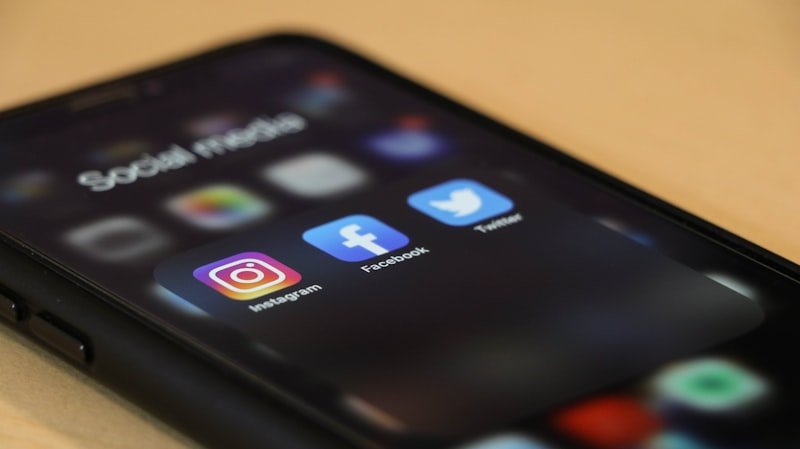
Most Gen Z slang is born on TikTok and Instagram, then spreads worldwide in weeks.
Texting and Social Media Slang (英文網路縮寫)
Written slang is its own dialect. These abbreviations save keystrokes and set a casual tone, and they show up constantly in messages, comments, and DMs. Decode them once and the group chat stops looking like code.
- LOL — laughing out loud (mild amusement, or just friendly).
- BRB — be right back.
- TBH — to be honest. “TBH I didn’t love the ending.”
- IMO / IMHO — in my opinion / in my humble opinion.
- IDK — I don’t know.
- SMH — shaking my head (disappointment or disbelief).
- FYI — for your information (also fine at work).
- DM — direct message. “DM me the details.”
- NGL — not gonna lie. “NGL, that was impressive.”
- TL;DR — too long; didn’t read (a short summary of a long post).
One trap for learners: typing these in a formal work email. “IDK, TBH” belongs in a text to a friend, not a message to a client. Match the abbreviation to the channel and you will be fine.

Texting abbreviations are their own dialect — decode them once and you are set.
How to Actually Start Using American Slang (Without Sounding Try-Hard)
Reading a list is easy; using slang naturally is the hard part, and forcing ten new words into one conversation is the fastest way to sound like you are performing. Pick two or three words from this guide that you genuinely like, and use only those for a week until they feel automatic. Depth beats breadth.
The most reliable teacher is American TV. Shows like オフィス, 友達, 、 そして Brooklyn Nine-Nine are packed with natural slang in context, which is exactly how memory works best — you remember “salty” because you saw someone be salty, not because you read a definition. Watch with English subtitles, pause when a phrase repeats, and write down the ones that keep coming up. Pairing slang with the informal grammar of real speech, like the phrasal verbs Taiwan professionals use daily, will do more for your fluency than another vocabulary list ever could. Slang and 英語のイディオム are close cousins — both are the informal glue that makes speech sound native.

Start with two or three words you genuinely like, then build from there.
Mistakes Taiwan Learners Make with American Slang
The biggest one is register — using casual slang in a formal setting. Telling a job interviewer a previous project was “mid” or that a policy is “sus” undercuts everything else you say. Slang signals closeness; use it where closeness fits.
The second mistake is direct translation. Slang almost never survives a word-for-word swap between Chinese and English, which is the same wall that produces classic Chinglish mistakes. “No cap” is not “no hat,” and “that slaps” (that’s excellent, usually about music or food) has nothing to do with hitting. Learn each phrase as a whole unit tied to a real situation, not as a puzzle to decode piece by piece. The third mistake is overcommitting to fast-moving internet slang — by the time a trend reaches a textbook, native speakers have usually moved on.
You do not need all 50 of these words this week. Pick five everyday ones, start noticing them in the shows and videos you already watch, and let the rest arrive naturally. Fluency is not about knowing the most words — it is about using the right ones in the right room. For a structured next step, work through our guide to learning English idioms and expressions, and keep a running note on your phone of any slang you hear more than once. That note will teach you more real English than a month of drills.
情報源
- Merriam-Webster Slang Dictionary — authoritative definitions and usage notes for informal American English.
- ケンブリッジ辞書 — meanings, examples, and register labels for slang and idiomatic terms.
- Speak English With Vanessa — Top 14 American Slang — video lesson demonstrating common slang in natural speech.






 日本語
日本語  English
  繁體中文
繁體中文  한국어
한국어  ไทย
ไทย  Bahasa Indonesia
  Tiếng Việt
  Français