
英文縮寫大全 | 50 Common English Abbreviations You Must Know
Taiwan professionals send thousands of English emails a year. The bottleneck isn’t vocabulary — most people know the individual words. The problem is the shorthand: that three-letter code sitting in a client message at 9 PM, or the initials on a contract nobody explains. According to research by Cambridge English, unfamiliar abbreviations are one of the top three communication barriers for non-native English speakers in Asian workplaces. This guide covers 50 of the most useful ones, grouped by where you’ll actually encounter them.

縮寫 vs. 首字母縮略詞 [Abbreviations vs. Acronyms — Why the Difference Matters]
Most people treat “abbreviation” as a catch-all term, but there are actually three distinct types. An abbreviation is a shortened form of a single word — Dr. for “Doctor” or Ave. for “Avenue.” An acronym is built from initials and pronounced as a new word — NASA, AIDS, STEM. An initialism is also built from initials, but each letter is read separately — FBI (eff-bee-eye), BBC, KPI. The distinction matters when reading aloud: you say “the FBI” not “fib-ee.” For Taiwan learners, this is especially important in business presentations and meetings where spoken English is expected.

商務英文縮寫 [Business Email Abbreviations] — The 15 You Must Know
These appear in every professional inbox. If your work involves any English correspondence with international clients or colleagues, you will see all of these within your first week. Missing even one can lead to a missed deadline or a misunderstood instruction.
| 縮寫 | 全名 | 中国語 | Example |
|---|---|---|---|
| ASAP | as soon as possible | 儘快 | “Please send the report ASAP.” |
| FYI | for your information | 供您參考 | “FYI, the meeting moved to 3 PM.” |
| ETA | estimated time of arrival | 預計抵達/完成時間 | “What’s the ETA on the proposal?” |
| EOD | end of day | 今天結束前 | “I need this by EOD.” |
| OOO | out of office | 不在辦公室 | “Sarah is OOO until Monday.” |
| CC | carbon copy | 副本 / 抄送 | “CC me on that thread.” |
| BCC | blind carbon copy | 密件副本 | “BCC the legal team.” |
| TBD | to be determined | 待定 | “Venue is TBD.” |
| RSVP | répondez s’il vous plaît | 敬請回覆 | “RSVP by Friday.” |
| NDA | non-disclosure agreement | 保密協議 | “Sign the NDA before the demo.” |
| よくある質問 | frequently asked questions | 常見問題 | “Check the FAQ first.” |
| KPI | key performance indicator | 關鍵績效指標 | “Our Q3 KPI targets are set.” |
| ROI | return on investment | 投資報酬率 | “What’s the ROI on this campaign?” |
| HR | human resources | 人事部 | “Contact HR for the contract.” |
| P&L | profit and loss | 損益表 | “Pull the Q2 P&L report.” |
One usage note: ASAP can appear as “a.s.a.p.” in older British-style correspondence. Both are correct, but the no-period version now dominates in global digital communication. Also worth noting — EOB (end of business) is sometimes used interchangeably with EOD, but EOB implies the formal close of business hours, while EOD is more flexible and sometimes means before midnight.

正式稱謂縮寫 [Formal Titles and Address Abbreviations]
These appear in letters, on envelopes, and in formal documents. Getting them wrong — using “Mr.” for a woman, for instance — creates an awkward first impression that can stick through an entire business relationship.
| 縮寫 | 全名 | 中国語 | Note |
|---|---|---|---|
| Mr. | Mister | 先生 | For men (married or single) |
| Mrs. | Missus | 太太 / 夫人 | For married women only |
| Ms. | (no full form) | 女士 | Safe for all women; doesn’t reveal marital status |
| Dr. | Doctor | 醫生 / 博士 | Used for both medical doctors and PhD holders |
| Prof. | 教授 | 教授 | University teaching position |
| Jr. | Junior | 小 / 二世 | Son with same name as father: “Martin Luther King Jr.” |
| Sr. | Senior | 老 / 一世 | Father when son has same name |
| St. | Street / Saint | 街道 / 聖人 | Context tells you which: “Main St.” vs. “St. Patrick” |
| Ave. | Avenue | 大道 | “5th Ave.” in New York |
| Blvd. | Boulevard | 林蔭大道 | “Hollywood Blvd.” |
A quick tip for Taiwan professionals: in English emails, if you’re unsure of someone’s gender, use “Ms.” for women and “Mr.” for men — or better, just use their first name and skip the title entirely. Most native English speakers in business settings now default to first names after the opening exchange. Forcing a formal title when the other party is using first names can actually read as stiff or distant.

拉丁文縮寫 [Latin Abbreviations That Never Left English]
English borrowed heavily from Latin, and several Latin abbreviations became so embedded in formal writing that they never left. They appear in academic papers, legal contracts, and everyday explanations — and they trip up advanced learners precisely because the full forms are in a foreign language.
| 縮寫 | 拉丁全名 | 英文含義 | 中国語 |
|---|---|---|---|
| i.e. | id est | that is (restatement) | 也就是說(用來解釋) |
| e.g. | exempli gratia | for example | 例如(後接例子) |
| etc. | et cetera | and so on | 等等(列舉未完) |
| vs. | versus | against / compared to | 對比 / 相對於 |
| N/A | non applicatur | not applicable | 不適用 |
| P.S. | post scriptum | after writing | 附言(信末補充) |
| a.k.a. | — | also known as | 又名 / 別名 |
| approx. | approximatus | approximately | 大約 |
The most commonly confused pair: i.e. versus e.g. A reliable trick — “i.e.” signals a restatement or clarification of what you just said, while “e.g.” introduces examples. So: “I only drink one type of liquid, i.e., water” (complete restatement). “I drink various liquids, e.g., water, coffee, tea” (partial list). After e.g., a comma follows in American English. After etc., no “and” is needed — et cetera already contains the “and.”
數位通訊縮寫 [Digital and Text Message Abbreviations]
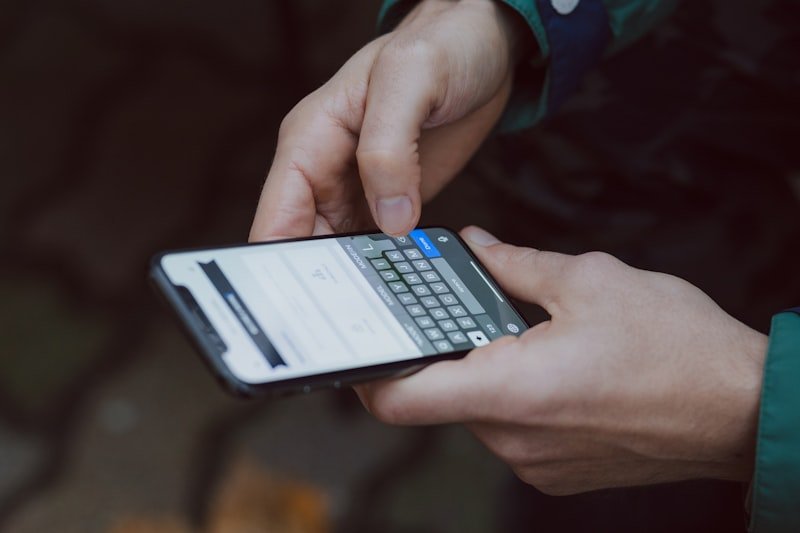
These spread from English-speaking teenagers in the early 2000s and now appear in Slack channels, LINE group chats with international teams, and even semi-formal Zoom conversations. Some are universal; others are generational. The ones below are safe to use in any English-speaking digital context in 2026.
| 縮寫 | 全名 | 中国語 | 使用時機 |
|---|---|---|---|
| LOL | laughing out loud | 大笑 | Very casual; shows something is funny |
| BTW | by the way | 順帶一提 | Casual to semi-casual; introducing a side point |
| IMO | in my opinion | 依我之見 | Casual opinion sharing |
| IMHO | in my humble opinion | 不才認為 | Same as IMO, slightly softer or ironic |
| TBH | to be honest | 說實話 | Used before a frank or blunt remark |
| BRB | be right back | 馬上回來 | Stepping away briefly from a live chat |
| AFK | away from keyboard | 離開電腦 | Longer absence than BRB; common in gaming and Slack |
| DM | direct message | 私訊 | “DM me the details.” |
| FOMO | fear of missing out | 錯失恐懼 | Widely used in marketing and social media |
| TL;DR | too long; didn’t read | 太長不看 | Placed before a summary of a long post |
| WFH | work from home | 在家工作 | Now standard in business and HR contexts |
| IRL | in real life | 現實中 | “Let’s meet IRL next month.” |
| AFAIK | as far as I know | 就我所知 | Casual hedge on information accuracy |
TL;DR has crossed into professional writing. You’ll see it in Substack newsletters, internal memos, and academic Reddit threads. It signals that the writer is giving you a summary upfront — a courtesy, not laziness. WFH is now as likely to appear in a formal HR policy as in a text message. If you’re writing to an international team and mention that you’re WFH today, nobody will misunderstand.
學術英文縮寫 [Academic and Qualification Abbreviations]

Taiwan students applying to graduate programs abroad encounter these on application forms, in reference letters, and on degree certificates. Mislabeling your own degree — writing “MS” when your certificate says “MA” — looks careless on an application and can raise questions with admissions officers.
| 縮寫 | 全名 | 中国語 |
|---|---|---|
| PhD | Doctor of Philosophy | 哲學博士(博士學位) |
| MA | Master of Arts | 文學碩士 |
| MS / MSc | Master of Science | 理學碩士 |
| MBA | Master of Business Administration | 工商管理碩士 |
| BA | Bachelor of Arts | 文學學士 |
| BS / BSc | Bachelor of Science | 理學學士 |
| GPA | grade point average | 成績平均績點 |
| IQ | intelligence quotient | 智商 |
| STEM | Science, Technology, Engineering, Mathematics | 理工科 |
| GRE | Graduate Record Examination | 美國研究生入學考試 |
| IELTS | International English Language Testing System | 雅思英語考試 |
| TOEFL | Test of English as a Foreign Language | 托福英語考試 |
英文縮寫使用原則 [4 Rules for Using Abbreviations Correctly]

Knowing what an abbreviation means is half the skill. Knowing when to use it is the other half. Four situations catch Taiwan learners off-guard:
The first-mention rule. In any formal document, write the full term the first time, then put the abbreviation in parentheses. After that, the abbreviation alone is fine. “We reviewed the Service Level Agreement (SLA) before signing. The SLA requires a 99.9% uptime guarantee.” — this pattern is standard in business proposals, legal documents, and academic papers.
Register mismatch. LOL and TBH belong in chat windows, not client emails. ASAP is fine in emails. FYI crosses into formal writing occasionally. When in doubt, spell it out — it never reads as unprofessional.
International audiences. Not every abbreviation travels equally. P&L and KPI are understood globally. WFH spread fast enough to be safe worldwide. But sending AFAIK or BRB in an email to a client in Japan or Germany might read as sloppy. Know your audience.
Periods and capitalization. American English drops most periods in abbreviations — Mr, Dr, US, UK. British English keeps them — Mr., Dr., U.S., U.K. Since most Taiwan companies deal with American clients, the no-period style is usually safer. Latin abbreviations (i.e., e.g., etc.) keep their periods in both styles. Don’t mix conventions in the same document.
練習與延伸學習 [Practice and Next Steps]
The 50 abbreviations here cover the four environments where Taiwan learners encounter English shorthand most: business emails, formal documents, digital chat, and academic settings. The business category is the most urgent — ASAP, FYI, EOD, TBD, CC, and OOO will appear in your inbox in the first week of any English-facing job.
The best way to retain these isn’t a flashcard deck — it’s real exposure. Find an English podcast, newsletter, or Slack community in your field and read it weekly. You’ll see these abbreviations in context, which is how they actually stick. For related vocabulary, check out the complete guide to English expressions in context and the English vocabulary by topic series for travel, technology, and health terms. For the phrasal verbs that pair naturally with these abbreviations in business writing, the phrasal verbs with GET guide covers the most common office English patterns.
情報源
- Cambridge English — Research Reports on English Language Barriers — Research on communication barriers for non-native speakers in Asian workplaces
- Merriam-Webster — Abbreviations vs. Acronyms vs. Initialisms — Definitions and usage examples of each type
- Purdue OWL — Abbreviations in Academic Writing — Official usage rules for formal English writing contexts





 日本語
日本語  English
  繁體中文
繁體中文  한국어
한국어  ไทย
ไทย  Bahasa Indonesia
  Tiếng Việt
  Français