標點符號英文:13 個必學符號的用法與唸法 (2026) | English Punctuation
Roughly one in three emails I mark from Taiwanese professionals has the same tell: a full-width comma(,)sitting in the middle of an English sentence, or an itemised list joined by 、instead of commas. It is not a vocabulary problem or a grammar problem. It is English punctuation — the one layer of writing that classrooms in Taiwan rarely teach, because Chinese and English handle marks in completely different ways. This guide walks through all 13 marks you actually need, what each one is called out loud, and the specific mistakes that come from writing English with a Chinese keyboard habit.
標點符號英文對照表:Names of Every Mark
Before the rules, you need the vocabulary. Native speakers say these mark names constantly — when reading out an email address, dictating a URL, or editing a document. If someone says “no apostrophe in that one,” you should know exactly which key they mean. Here is the full reference.
| Symbol | English Name | 중국어 |
|---|---|---|
| . | Period / Full Stop | 句號 |
| , | Comma | 逗號 |
| ? | Question Mark | 問號 |
| ! | Exclamation Point / Mark | 驚嘆號 |
| ‘ | Apostrophe | 撇號 |
| ” “ | Quotation Marks | 引號 |
| : | Colon | 冒號 |
| ; | Semicolon | 分號 |
| – | Hyphen | 連字號 |
| — | Dash (em dash) | 破折號 |
| ( ) | Parentheses / Brackets | 括號 |
| & | Ampersand | 和號 |
| ~ | Tilde | 波浪號 |
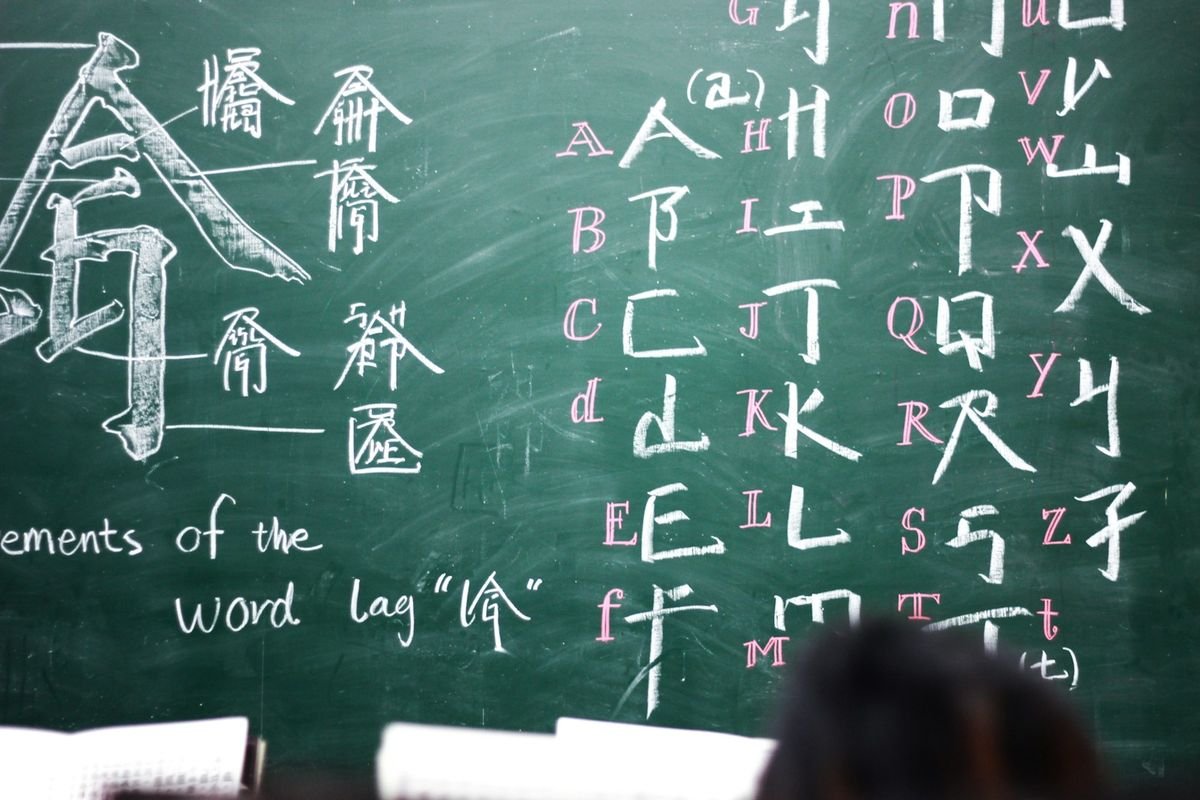
The 13 English punctuation marks every Taiwan learner should recognise on sight.
The Comma(逗號): The Mark Taiwan Writers Overuse
The comma is where most Chinese-to-English writing falls apart, and the reason is structural. Written Chinese lets you string clause after clause together with commas — a run-on that reads perfectly well in Mandarin. Drop that same habit into English and you get a “comma splice,” one of the fastest ways to look like a non-native writer.
Here is the rule in one line: a comma cannot join two complete sentences. “I finished the report, I sent it to my manager” is wrong. Fix it three ways — a period (“I finished the report. I sent it…”), a semicolon, or a joining word like 그리고, 하지만, or 그래서 (“…report, so I sent it…”). Use commas for lists, after introductory phrases, and around extra information — not to weld sentences together.
A comma separates items and clauses — it does not glue two full sentences together.
The Period(句號)and the Full-Width Trap
The period itself is simple: it ends a statement. The trap is invisible. Taiwanese keyboards default to a full-width period(。)and full-width comma(,)when the input method is set to Chinese. Type an English sentence without switching modes and you get “Please review the attached file,thanks。” — which looks almost right on screen but flags instantly to any native reader and breaks in most software. Always switch your keyboard to half-width(半形)English mode before writing English. A real period takes up half the space of a Chinese one, and there is a space after it, not before.
The Apostrophe(撇號): It’s vs Its
The apostrophe does two jobs and confuses learners on both. First, contractions: it is → it’s, do not → don’t, they are → they’re. Second, possession: the manager’s office, Taiwan’s economy. The single trickiest pair in all of English is its versus it’s. It’s always means “it is” or “it has.” Its (no apostrophe) shows possession — “the company raised its prices.” When in doubt, expand it: if “it is” fits, use the apostrophe. If it does not, drop it. This same logic clears up a lot of the traps in our guide to English homophones Taiwan learners confuse.
The apostrophe key does double duty: contractions and possession.
Quotation Marks(引號): Use ” ” Not 「」
Chinese quotes speech with 「」 and 『』. English uses straight or curly double quotes: “…”. This matters more than it looks, because a document full of 「」 marks screams “translated from Chinese” to any editor. American English puts periods and commas inside the closing quote — She said, “I’ll be there.” British English often puts them outside. For Taiwan, where American English is the default, keep them inside. Single quotes (‘…’) are only for a quote inside a quote.
The Colon(冒號)and Semicolon(分號)
These two get mixed up constantly, so here is the clean split. A colon(冒號 :)introduces something — a list, an explanation, or a quote: “Bring three things: your passport, a pen, and the form.” Whatever comes before the colon must be a complete sentence. A semicolon(分號 ;)links two related complete sentences that could each stand alone: “The deadline moved; nobody told the team.” If you are unsure whether a semicolon fits, a period is always the safe choice — even native writers underuse the semicolon rather than risk getting it wrong.

Colon introduces; semicolon connects. When unsure, a period never fails.
Question Marks(問號)and Exclamation Points(驚嘆號)
Both are straightforward, with one caution. A question mark ends a direct question: “Did you send the invoice?” — but not an indirect one: “He asked whether I sent the invoice.” (period, no question mark). The exclamation point signals strong feeling, and here is a mild opinion worth taking: use it almost never in professional writing. One exclamation point in a work email reads as friendly; three read as unhinged. Save the energy for the words themselves.
Hyphens(連字號)and Dashes(破折號)
A hyphen (-) is short and joins words into one idea: well-known, five-year-old, state-of-the-art. A dash (—) is longer and sets off a break in thought — like this one — or replaces a colon for emphasis. They are not interchangeable, and typing two hyphens (–) where a dash belongs is a common shortcut. On a keyboard, most writing apps auto-convert two hyphens into a real dash. Don’t stress the difference in casual chat; do get it right in anything formal.
Hyphens join words; dashes break a sentence for emphasis.
頓號怎麼辦?Why 、Doesn’t Exist in English
This is the single most common Chinese-interference mistake, and it deserves its own section. Chinese uses the 頓號(、)to separate items in a list — 蘋果、香蕉、橘子. English has no such mark. The comma does that job: apples, bananas, and oranges. Notice the word 그리고 before the last item, and the optional comma before it (the “Oxford comma,” which most American style guides recommend for clarity). If you find yourself reaching for 、in an English sentence, stop — it does not exist on the English side of the language, and there is no situation where it belongs.
全形 vs 半形: The Width Problem Nobody Warns You About
Every English punctuation mark has a full-width(全形)twin that lives on the Chinese input method: ,。!?:;(). They look bigger and sit centered in their space. In Chinese, that is correct. In English, they are all wrong — full-width marks break URLs, throw errors in code and forms, and mark you instantly as writing in the wrong mode. The fix is a one-second habit: toggle your input method to English/half-width before typing anything in English, and check your final text for any stray 全形 marks before you hit send. This one adjustment fixes more “off” looking English than any grammar rule.
Half-width marks and a single space after each one — the native default.
5 English Punctuation Mistakes Taiwan Learners Make Most
After marking thousands of pieces of student and professional writing, the same five errors come up again and again. Fix these and you clear about 90% of the punctuation problems in Taiwan-written English:
- Comma splices — joining two full sentences with only a comma. Use a period or a semicolon.
- Full-width marks — ,。 instead of , . Switch to half-width mode.
- Its vs it’s — it’s = it is; its = belonging to it.
- Space before punctuation — “Hello , everyone” is wrong. The space goes after the mark only.
- 頓號 in English lists — replace every 、with a comma and add 그리고 before the final item.
None of these are advanced. They are habits carried over from a different writing system, and once you see them, they are easy to catch. The same kind of first-language interference drives many of the errors in our guide to common Chinglish mistakes.

Most punctuation errors are keyboard-mode habits, not knowledge gaps.
Watch: 13 Punctuation Rules in Action
If you learn better by ear, this walkthrough covers the same 13 marks with spoken examples — useful for hearing how each one changes the rhythm of a sentence, and for picking up the English names out loud.
How to Practice English Punctuation
Reading rules is one thing; the habit only sticks through repetition on your own writing. Take one email you sent last week and re-read it looking for only these marks: every comma, every apostrophe, every full-width symbol. Fix what you find. Do that for two weeks and your hand will start switching to half-width mode on its own. If you write professionally, run important messages through a checker like Grammarly, which catches comma splices and apostrophe errors in real time. For the bigger picture on sentence structure, pair this with our complete English grammar guide, and apply it directly in our breakdown of business email English, where clean punctuation matters most.
Punctuation is the quiet signal of a careful writer. Nobody praises perfect commas, but everyone notices when they are wrong. Get these 13 marks right and your English stops looking translated and starts looking written.
Two weeks of proofreading your own writing builds the habit for good.
Sources(資料來源)
- Purdue OWL — Punctuation — university writing lab reference on commas, semicolons, and apostrophes.
- Cambridge Dictionary — Punctuation — grammar reference for each mark with examples.
- Merriam-Webster — Apostrophe Guide — rules for contractions and possessives, including its vs it’s.




 한국어
한국어  English
  繁體中文
繁體中文  日本語
日本語  ไทย
ไทย  Bahasa Indonesia
  Tiếng Việt
  Français