

電話英文: 40 Business Phone Phrases Taiwan Pros Use (2026) | 打電話接電話完整指南
The first call your boss puts you on with a Tokyo or London client lasts about ninety seconds and decides what you get put on next. 電話英文 is the moment your reading score from the TOEIC test stops mattering and your ability to think out loud in English starts paying you back. The phrases in this guide are the ones Taiwan pros actually need on inbound and outbound business calls — answering, transferring, taking voicemail, handling a bad line, and ending the call without that awkward five-second silence that screams “I don’t know what to say.” Forty phrases, organized by scenario, with the Mandarin equivalent next to each one so you can practice them out loud before your phone rings.
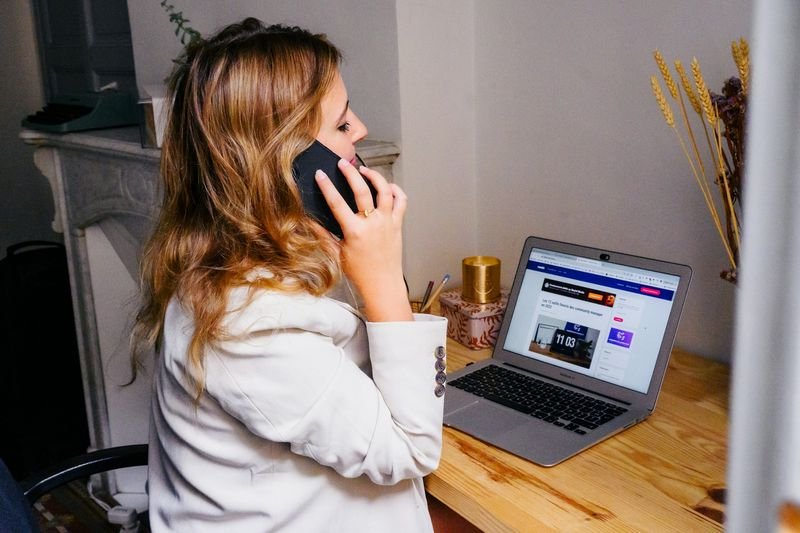
接電話英文的第一句話定調整通電話 — A confident greeting decides how the whole call goes.
接電話英文 — 5 Phrases for Answering the Phone in English
Picking up a business call in English is not the same as picking it up in Mandarin. In Chinese you can say 「喂」 and wait for the caller to identify themselves. In English, the person who answers is expected to lead — state the company, state your name, and offer to help, in roughly six seconds. The American convention puts company first; the British convention puts the greeting first. Either works, as long as you sound calm.
- “Good morning, ACME Trading. This is Lily speaking. How may I help you?” — 早安,ACME 貿易,我是 Lily,有什麼可以幫您的嗎?
- “Thank you for calling Sales. Lily speaking.” — 感謝您撥打業務部,我是 Lily。
- “Hello, ACME Marketing, Lily here. How can I direct your call?” — 您好,ACME 行銷部,我是 Lily。請問要幫您轉接哪位?
- “May I ask who’s calling, please?” — 請問哪裡找?
- “What is this regarding?” — 請問是關於什麼事情?
Note: do not say “I am Lily” when answering. Native speakers say “This is Lily” or “Lily speaking.” “I am Lily” sounds like you are introducing yourself at a party, not on a phone. That single fix immediately moves your phone English up one level.
打電話英文 — 5 Phrases for Making an Outbound Call

打電話英文的開場 — Lead with your name and company, then your reason for calling.
When you are the one calling, the script flips. Your job is to introduce yourself first, then ask for the person you want, then state the purpose. Burying the reason is a Taiwan habit borrowed from Mandarin politeness. In business English it backfires — the person on the other end is trying to triage twenty calls and needs to know in five seconds whether to pass you on, set up a meeting, or end the call.
- “Hello, this is David Lin from Sinyi Realty. May I speak with Mr. Chen, please?” — 您好,我是信義房屋的 David Lin。請問可以找陳先生嗎?
- “Hi, it’s David from the Taipei office. I’m calling about the Q3 forecast.” — 您好,我是台北辦公室的 David,我來電是想討論第三季預估。
- “Good afternoon. I’m returning Ms. Wang’s call from earlier.” — 午安,我回撥王小姐稍早的來電。
- “Is this a good time to talk, or should I call back later?” — 現在方便講話嗎?還是我晚點再回撥?
- “I won’t keep you long — I just have one quick question.” — 我不會耽誤您太久,只有一個小問題想請教。
The opener “Is this a good time?” is the single most underused phrase in Taiwan business English. It buys you goodwill instantly. American and British executives are conditioned to read it as respect for their schedule, and they almost always say yes.
確認名字英文 — 5 Phrases for Spelling Names and Confirming Details

確認拼字英文 — Use the NATO alphabet when names or order numbers matter.
Phone audio drops letters that are easy to confuse: M and N, B and D and P, S and F. The fix native speakers use without thinking is the NATO phonetic alphabet — Alpha, Bravo, Charlie. You do not need to memorize the whole list. Memorize a backup word for the four hardest letters in Taiwan accents — M as in Mary, N as in November, B as in Boston, P as in Peter — and you will solve eighty percent of phone spelling problems.
- “Could you spell that for me, please?” — 可以請您拼一下嗎?
- “Was that ‘M’ as in Mary or ‘N’ as in November?” — 您剛剛是說 M 像 Mary 的 M,還是 N 像 November 的 N?
- “Let me read that back to you — your order number is 7-A-2-4-Bravo.” — 我複誦一次 — 您的訂單號碼是 7-A-2-4-B 像 Bravo 的 B。
- “Just to confirm, you said the meeting is at 3 p.m. on Thursday the 25th?” — 跟您確認一下,會議是在 25 號星期四下午三點,對嗎?
- “Could I get your number in case we get disconnected?” — 可以給我您的電話號碼,以防我們斷線嗎?
Always read numbers back digit by digit, not as full numbers. “Seven-two-four-three” not “seventy-two forty-three.” That tiny habit prevents the most expensive phone mistake — entering the wrong shipping address or invoice number into your CRM.
轉接電話英文 — 5 Phrases for Transferring a Call

轉接電話英文 — Warn the caller before you transfer and name who they are about to speak to.
“Put through” and “transfer” are the two verbs you need here. “Put through” is the older British phrasing — still common in Hong Kong and Singapore offices. “Transfer” is the neutral American version. Both are correct. The mistake Taiwan callers make is silent transfers — pressing the button without warning the caller. Always announce the transfer and the name of the person you are sending them to. If a colleague is busy, do not promise a callback you cannot guarantee. Offer voicemail or take a message instead.
- “One moment, please — I’ll put you through to our Logistics team.” — 請稍等,我幫您轉接到物流部。
- “Let me transfer you to Ms. Wu in Accounting. Her extension is 218.” — 我幫您轉接到會計部的吳小姐,她的分機是 218。
- “If we get cut off during the transfer, please call back and ask for extension 318.” — 如果轉接時斷線了,請再打回來並要分機 318。
- “Hold on a second while I find out who handles that account.” — 請稍等,我查一下這個帳戶是誰負責的。
- “I’m afraid she’s stepped out. Would you like to leave a message or call back after lunch?” — 不好意思,她剛剛外出了。您想留言還是午餐後再回撥?
請對方稍候 — 4 Phrases for Putting Callers on Hold
請對方稍候英文 — Ask first, give a time estimate, and thank them when you return.
Holding a caller without asking permission is rude in American English in a way most Taiwan callers do not realize. The correct sequence is: ask, wait for the “yes,” then put them on hold. When you return, thank them for waiting. Thirty seconds is the unofficial threshold — anything longer and you should come back to give an update, not leave them in silence.
- “Do you mind holding for a moment while I check on that?” — 您介意稍等一下嗎?我幫您查一下。
- “It might take about two minutes — would you prefer to hold, or should I call you back?” — 可能需要兩分鐘,您要等線上還是我回撥給您?
- “Thanks for waiting. I have that information now.” — 感謝您的等候,我已經查到資料了。
- “Sorry to keep you. I’m still looking into it — could I call you back in ten minutes?” — 不好意思讓您久等。我還在查,方便我十分鐘後回撥嗎?
電話留言英文 — 5 Phrases for Voicemail and Taking Messages
電話英文留言 — Keep voicemail short: name, company, reason, number, repeat number.
A good business voicemail is under twenty seconds and follows a fixed template: name, company, reason in one sentence, callback number, repeat number. The repeat is not optional — voicemail audio compresses digits and people miss the first one. Taiwan callers often leave voicemails that are too polite and too long, then forget the callback number. Fix the template, and your callbacks go up.
- “Hi, this is David Lin from Sinyi Realty. I’m calling about the Tuesday viewing. Please call me back at 0912-345-678. Again, that’s 0912-345-678. Thank you.” — 您好,我是信義房屋的 David Lin,我來電是關於星期二的看房。請回撥 0912-345-678,再說一次 0912-345-678,謝謝。
- “You’ve reached David’s voicemail. Please leave your name, number, and a brief message after the tone.” — 這裡是 David 的語音信箱。請於提示音後留下您的姓名、電話和簡短的訊息。
- “Would you like to leave a message, or should I have him return your call?” — 您想留言嗎?還是我請他回電給您?
- “Could I take a message? I’ll make sure she gets it as soon as she’s back.” — 我可以幫您留話嗎?她一回來我會立刻轉達。
- “I’ll have her call you back before five today.” — 我會請她在今天五點前回撥給您。
訊號不清英文 — 4 Phrases for a Bad Line or Conference Call
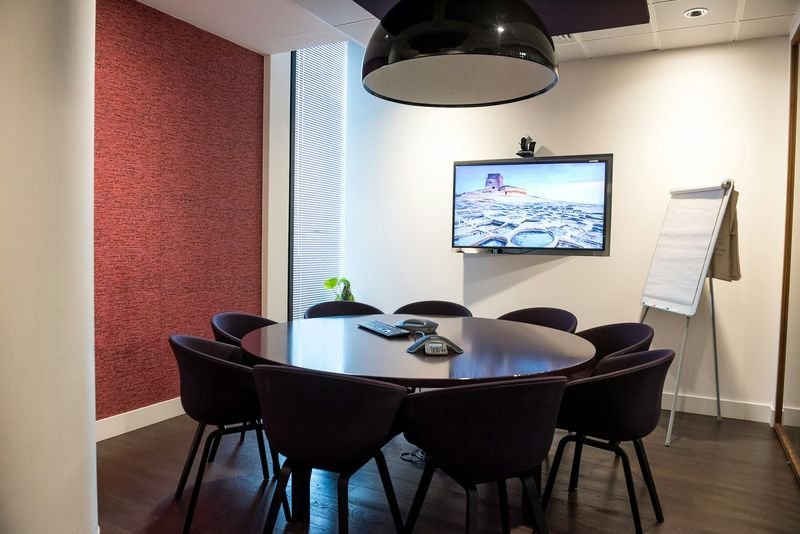
電話會議英文 — Conference calls are where bad-signal phrases pay for themselves.
“You’re breaking up” is one of those phrases that sounds wrong to Taiwan ears — break up is for relationships, right? — but it is exactly what American and British speakers say when audio drops in and out. The mistake Taiwan callers make is staying silent and pretending to follow when they have lost the last twenty seconds of the conversation. Native speakers cut in and admit the audio is broken. That honesty actually earns trust.
- “You’re breaking up — could you say that again?” — 您的訊號斷斷續續,可以再說一次嗎?
- “I’m having trouble hearing you. Could you speak up a little?” — 我聽不太清楚,可以大聲一點嗎?
- “I think we’ve got a bad connection. Let me call you right back.” — 我們的訊號好像不太好,我馬上回撥給您。
- “Sorry, I’m on mute. Could you repeat the last point?” — 抱歉,我剛剛靜音了,可以再說一次剛剛的重點嗎?
結束電話英文 — 4 Phrases for Ending the Call Professionally
The end of a business call is where Taiwan English most often falls apart. The Mandarin equivalent — 那這樣 — has no direct English translation, so many callers freeze and end with “OK… bye-bye” twice in a row. The English ending follows a three-beat pattern: confirm the next step, thank them, then close. Do this once and the call ends cleanly.
- “To recap, I’ll send the contract by Friday and you’ll review it over the weekend. Does that work?” — 我複述一下,我星期五前會寄合約,您週末會審閱。這樣可以嗎?
- “Thanks so much for your time. I really appreciate your help.” — 非常感謝您的時間,真的很感謝您的幫忙。
- “I’ll let you go. Have a great rest of your day.” — 我不耽誤您了,祝您今天順利愉快。
- “Talk to you soon. Take care.” — 那我們再聯絡,保重。
“I’ll let you go” is the magic phrase. It gives the other person permission to end the call without feeling rude. It is the closest English equivalent to 「那這樣」 and it works in nine out of ten business contexts — domestic, international, formal, informal.
3 Phone English Mistakes Taiwan Pros Make
After listening to hundreds of phone calls from Taiwan office workers, three mistakes show up over and over. They are not grammar errors — they are habits transferred from Mandarin phone etiquette that do not translate.
Mistake one: “Hello? Hello?” instead of identifying yourself. In Mandarin you can say 「喂」 twice and wait for the caller to introduce themselves. In English business calls, the silence after a single “Hello” feels awkward and unprofessional. Lead with the company name and yours.
Mistake two: saying “Wait wait wait” when you need a second. “Wait” sounds like a command in English — your kindergarten teacher used it. The professional version is “One moment, please” or “Hold on a second.” Same idea, completely different register.
Mistake three: ending with “Bye-bye” alone. “Bye-bye” is a children’s phrase in business English. In a boardroom or a sales call, the closing is “ลาก่อน,” “Take care,” or “Talk to you soon.” The smaller the word, the bigger the impression.
How to Practice 電話英文 This Week
Reading a list of phone phrases will not move you up a level. Saying them out loud will. For one week, run this twenty-minute drill: pick three phrases from this guide, record yourself saying each one five times into your phone’s voice memo, then play it back. Listen for the two AI tells of Taiwanese phone English — flat intonation and dropped final consonants on words like called, passed, และ helped. Those two fixes alone raise your perceived fluency by a full TOEIC band.
For real conversation practice, our small talk guide for Taiwan pros covers the warm-up moments before and after the call. If your call is a follow-up to an email, the business email English guide shows you how to keep the tone consistent across both channels. And if you are calling about a job, pair this guide with our one-minute English self-introduction script so your opener sounds polished.
Listen to a Native Demo of Business Phone English
The video below from Business English Pod walks through a full business phone-answering script in slow, clear American English. Pay attention to the pauses between greeting, name, and offer to help — that rhythm is what separates a confident phone answerer from a nervous one.
Your Next Phone Call
Pick the next inbound call you take in English and use exactly one new phrase from this guide. Just one. Maybe it is “May I ask who’s calling?” or “I’ll let you go.” After ten calls with that single phrase, swap in a second one. Phone English is not memorized — it is built one habit at a time, on real calls, in real seconds when the line is open. The next ring is your next rep.
แหล่งที่มา
- Business English Pod — Telephoning Lesson Series — long-running podcast covering inbound, outbound, transfers, voicemail, and conference call scripts for ESL learners.
- 英文庫 — 如何接英文電話 — bilingual breakdown of common scenarios for Taiwanese learners answering business calls in English.
- CS English — 接電話英文情境 — three-scenario article with known/unknown caller and transfer dialogues in 中英對照 format.
- NATO Phonetic Alphabet — the Alpha-Bravo-Charlie spelling system used worldwide to clarify letters over a phone line.
Looking for free ESL worksheets for your classroom? Browse our free worksheet library →
Are you a teacher? Find lesson resources and worksheets at TahricTeaches.com.






 ไทย
ไทย  English
  繁體中文
繁體中文  日本語
日本語  한국어
한국어  Bahasa Indonesia
  Tiếng Việt
  Français