
Travel, Food, Tech & Health: Word Clusters for Real-World English | 主題式單字學習法
本文重點:本文介紹四大主題式英文單字 (travel, food, technology, health) 的學習方法,幫助台灣上班族 (商業英文 與 多益 準備者) 透過情境式記憶快速擴充實用詞彙,建立真實情境下的英文流暢度。適合英文家教學員與自學者參考。
Most ESL learners try to memorize vocabulary from random word lists and forget eighty percent within a week. The fix is brutally simple: stop studying words in isolation and start clustering them by topic. This article walks through four high-leverage vocabulary domains—travel, food, technology, and health—that cover roughly seventy percent of the real-world situations where Taiwanese learners actually need English.
Each section gives you the core word families plus example sentences you can lift directly into conversations, emails, and travel scenarios. Skip the abstract grammar drills. Build the vocabulary you will use this month.
Why Topical Vocabulary Beats Random Word Lists | 為什麼主題式單字勝過隨機字表
Cognitive science research from the past two decades shows the brain stores vocabulary in semantic networks (語義網絡), not alphabetical lists. When you learn “boarding pass,” “gate,” “layover,” and “carry-on” together, you create a mental schema that makes each word easier to retrieve. Pull one and the others come with it.
Random word lists do the opposite. “Abandon,” “abnormal,” “abolish”—your brain has no context, so the words slip away within days. Topical clusters give your memory something to hang onto. This is the same principle behind lặp lại cách quãng systems like Anki and Quizlet—context plus repetition multiplies retention.
For Taiwan professionals (台灣上班族) juggling work, travel, and family, time is the scarcest resource. You need vocabulary you will actually use within thirty days of learning it. Topical clustering delivers that return on investment, which is why English tutors (英文家教) increasingly structure lessons around themed clusters rather than alphabetical lists.
Travel Vocabulary for Taiwan Learners | 旅遊英文單字

Travel vocabulary (旅遊英文) is the most immediately useful cluster for Taiwanese learners. Whether you are flying to Tokyo for a weekend or attending a conference in San Francisco, the same hundred or so words appear in airports, hotels, and customer service desks worldwide.
Airport & Transportation | 機場與交通
Master these terms before your next trip: boarding pass (登機證), gate, terminal, layover (轉機等候時間), connecting flight, carry-on luggage, checked baggage, aisle seat, window seat, overhead compartment, hải quan (海關), immigration, declare, jet lag, Và delay.
Useful phrases: “My connecting flight leaves from Terminal B.” “Could I get an aisle seat closer to the front?” “I have nothing to declare.” These sentence stems carry across every airport you will ever visit, and they are far more useful than memorizing dictionary definitions.
Hotel & Accommodation | 飯店住宿
Core hotel vocabulary: check-in, check-out, reservation, confirmation number, front desk, housekeeping, amenities, complimentary breakfast, wake-up call, concierge, vacancy, upgrade, Và extra bed.
When something goes wrong, you need polite complaint vocabulary: “The air conditioning is not working,” “Could housekeeping bring extra towels?” “Is breakfast included in the rate?” Polite framing matters more than perfect grammar—front desk staff worldwide will help anyone who is friendly and clear.
Food Vocabulary Beyond “Spicy” and “Delicious” | 飲食英文單字
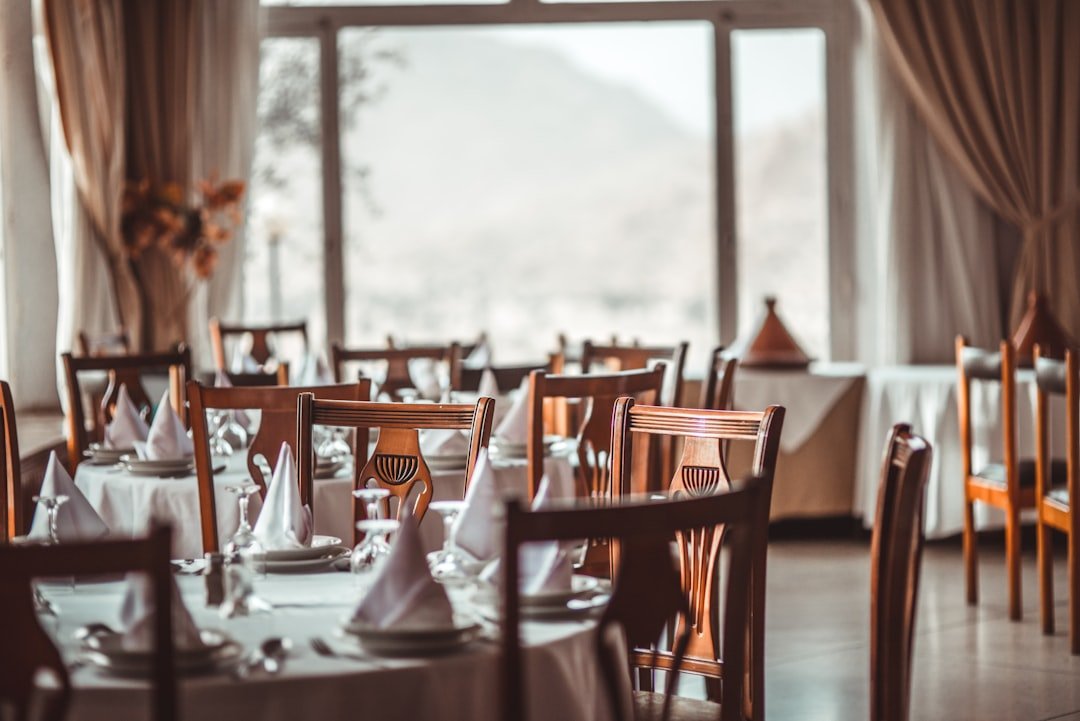
Most Taiwanese learners can say “spicy” and “delicious,” then run out of words. The food domain is enormous, but a focused two hundred word cluster will carry you through ninety percent of restaurant, grocery, and cooking conversations.
Dining Out | 外出用餐
Restaurant essentials: appetizer, entrée (main dish), side dish, dessert, specials, house wine, tap water, still water, sparkling water, medium rare, well done, vegetarian, vegan, gluten-free, allergy, the check (帳單, American English) or the bill (British English), and tip (小費).
Texture and flavor words expand your reviews: giòn, crunchy, tender, juicy, dai, creamy, savory, tangy, bitter, sweet, sour, Và umami. “The duck was tender and the sauce had a tangy finish” sounds far better than “the food was delicious.”
Cooking Techniques | 烹飪詞彙
Cooking verbs are heavily used on YouTube, Netflix cooking shows, and recipe blogs: chop, dice, mince, slice, peel, grate, whisk, fold, knead, marinate, sauté, simmer, boil, roast, grill, steam, braise, Và bake. Each verb evokes a different physical action, which makes them easy to remember once you watch them performed.
Technology Vocabulary for the Modern Workplace | 職場科技英文單字

Tech vocabulary (科技英文) is where business English (商業英文) and TOEIC (多益) preparation overlap most heavily. If your job touches software, hardware, or any kind of remote collaboration, these words appear daily in emails, Slack messages, and Zoom calls.
Software & Tools | 軟體與工具
Foundational tech terms: install, uninstall, update, upgrade, download, upload, sync, back up, restore, crash, freeze, reboot, password, two-factor authentication, permissions, shared drive, cloud storage, bandwidth, Và buffering.
Pay attention to phrasal verbs in tech contexts: “log in” vs. “sign up,” “back up” (verb) vs. “backup” (noun), “set up” vs. “setup.” These two-word combinations trip up Taiwanese learners more than any individual vocabulary item because the meaning often shifts based on the preposition.
Meetings & Remote Collaboration | 會議與遠端協作
Hybrid work made this cluster essential: schedule a call, reschedule, follow up, circle back, loop in, ping, action item, agenda, phút (the written meeting summary, not the time unit), breakout room, screen share, mute, unmute, chat thread, Và off the record.
One sentence to memorize: “Let me loop in our project lead and circle back tomorrow with an updated agenda.” That single line uses three high-value workplace phrasal verbs in natural context.
Health Vocabulary You Will Actually Use | 實用健康英文單字

Health (健康) is the cluster most learners skip until they need it during a hospital visit abroad. By then, panic and limited vocabulary make a stressful situation worse. Spend a single weekend learning these terms now and you will thank yourself later.
At the Doctor’s Office | 看醫生
Symptom vocabulary: headache, sore throat, runny nose, stuffy nose, fever, chills, cough, sneeze, nausea, dizzy, fatigue, rash, swelling, sprain, fracture, Và bruise.
Action vocabulary at the clinic: appointment, walk-in, prescription, refill, dosage, side effect, allergy, diagnosis, treatment, referral, Và follow-up visit. Sentence stem: “I have had a sore throat and mild fever for three days.” That single template handles ninety percent of clinic visits.
Fitness & Wellness | 健身與保健
Gym and wellness terms have exploded in usage thanks to fitness influencers: warm-up, cool-down, stretch, cardio, strength training, reps (repetitions), sets, rest day, recovery, protein, hydration, dinh dưỡng, supplements, posture, Và flexibility.
Mental health vocabulary is increasingly mainstream and worth learning: burnout, anxiety, stress, ranh giới, mindfulness, meditation, therapy, Và self-care. These terms appear constantly in HR communication, English-language podcasts, and workplace wellness programs.
Looking for free ESL worksheets for your classroom? Browse our free worksheet library →
Are you a teacher? Find lesson resources and worksheets at TahricTeaches.com.





 Tiếng Việt
  English
  繁體中文
繁體中文  日本語
日本語  한국어
한국어  ไทย
ไทย  Bahasa Indonesia
  Français