

English Conditionals: 4 Types Taiwan Pros Master (2026) | 英文假設語氣完整指南
English conditionals are sentence structures that link a condition to a result using “if.” There are four standard types — zero, first, second, and third — plus a mixed conditional that splices two timeframes together. Mandarin doesn’t mark conditionals with verb tense the way English does, so Taiwan professionals often end up saying things like “If you will come,” which sounds wrong to every native ear in the room.
This guide breaks down all four types with the exact patterns you need, side-by-side Taiwan workplace examples, and the five mistakes I hear most often in Taipei classrooms. Use the quick reference table below first, then drill into whichever section you need.
The 4 Types of English Conditionals (Quick Reference)
Every English conditional has two parts: the if-clause (the condition) and the main clause (the result). What changes between the four types is the tense combination — and that combination tells your listener whether you’re stating a fact, planning the future, daydreaming, or regretting the past.
| Type | If-clause | Main clause | Used for |
|---|---|---|---|
| Zero | present simple | present simple | facts, rules, habits |
| Đầu tiên | present simple | will + verb | real future possibilities |
| Thứ hai | past simple | would + verb | imaginary present/future |
| Third | past perfect | would have + past participle | imaginary past (regrets) |

Zero conditional examples: facts and rules that never change.
Zero Conditional: When Both Parts Are Always True | 零條件句
The zero conditional describes a result that always follows from a condition — a fact, a rule, a routine. Both clauses use the present simple, and you can swap “if” for “when” without changing the meaning.
Pattern: If + present simple, present simple.
- If water reaches 100°C, it boils. (scientific fact)
- If a customer pays in cash, we give a 5% discount. (company rule — common in Taipei retail)
- If I drink coffee after 4 p.m., I cannot sleep. (personal habit)
Notice that nothing about the time is uncertain. These statements are true today, were true last year, and will still be true tomorrow. That is why English drops the modal “will” entirely — you don’t predict a fact, you state it.

First conditional patterns dominate business email English: real plans for real futures.
First Conditional: Real Future Possibilities | 第一條件句
The first conditional is for things that genuinely might happen. The condition is realistic, and the result is a future prediction or promise. Use present simple after “if,” and will + verb in the main clause.
Pattern: If + present simple, will + base verb.
- If the client confirms today, I will send the contract tomorrow.
- If it rains during typhoon day, the office will close at 3 p.m.
- If you finish the report by Friday, we will review it on Monday.
You can also replace “will” with other modal verbs to soften or strengthen the result: If the client confirms, we might send the contract today. That shift from “will” to “might” turns a promise into a possibility — useful in negotiation when you don’t want to over-commit.
One pattern Taiwanese learners often miss: the first conditional is the right choice when discussing tomorrow’s tasks, deadlines, or contingencies in business email English. If you want to write a clear “this depends on that” sentence, this is the structure.

Second conditional is the hypothetical: “If I were you, I would…”
Second Conditional: Imaginary Present and Future | 第二條件句 (英文假設語氣)
This is the conditional that activates 英文假設語氣 — the hypothetical or unreal mood. The situation in the if-clause is either impossible, unlikely, or just imagined. Use past simple after “if” (even though we are talking about now or the future), and would + verb in the main clause.
Pattern: If + past simple, would + base verb.
- If I were the boss, I would change the bonus system. (I’m not the boss)
- If I had a year off, I would learn Spanish. (I don’t have a year off)
- If our team had a bigger budget, we would launch in three cities, not one.
Pay attention to that first example: “If I were”, not “If I was.” In formal English, the second conditional uses were for every subject — “if he were,” “if she were,” “if I were.” Casual spoken English does accept “if I was,” but in a business email or job interview, “If I were you, I would…” is the safer choice. The whole point of switching from was ĐẾN were is to mark that this scenario is unreal.
The second conditional is the workhorse of polite suggestions. “If I were in your position, I would consider…” gets your opinion across without sounding like you’re telling someone what to do. That softness matters in Taiwan office culture, where direct advice can feel like criticism.

Third conditional is the regret tense — past situations that did not happen.
Third Conditional: Regrets and Past Hypotheticals | 第三條件句 (would have 用法)
The third conditional looks back at something that did not happen and imagines a different past. The classic would have 用法 lives here. Use past perfect (had + past participle) in the if-clause, and would have + past participle in the main clause.
Pattern: If + had + past participle, would have + past participle.
- If I had studied harder for the TOEIC, I would have hit 900. (I didn’t, so I didn’t)
- If we had launched the product in March, we would have caught the back-to-school window.
- If she had taken the MRT, she would not have been late for the interview.
Every third conditional sentence is talking about a closed door. You cannot change the past, so the only function of this structure is regret, analysis, or counterfactual reasoning. Job interviewers in Taiwan love asking “What would you have done differently?” — the answer requires this exact pattern.
The most common stumble: dropping have. Learners say “I would studied” or “I would studyed.” The correct shape is always would + have + past participle. No exceptions. If you want extra reading on how past-tense forms behave inside conditional clauses, our 12 English Tenses guide walks through past perfect in detail.

Mixed conditionals connect a past hypothetical to a present result.
Mixed Conditionals: When Past Choices Shape the Present
Sometimes the cause is in the past, but the effect is happening right now. That’s where mixed conditionals come in. The most useful pattern combines the third conditional if-clause with a second conditional main clause:
Pattern: If + past perfect, would + base verb (now).
- If I had accepted that job offer in 2019, I would be in Singapore right now.
- If we had hired a senior developer last quarter, the product would be live today.
- If she had finished her master’s, she would be eligible for the promotion this year.
Mixed conditionals are how adults in English actually talk about the consequences of decisions. They’re also the cleanest way to make a strategic argument in a meeting: “If we had invested in the Taiwanese site translation last year, we would already be ranking for the local queries.” One sentence, full causal chain.
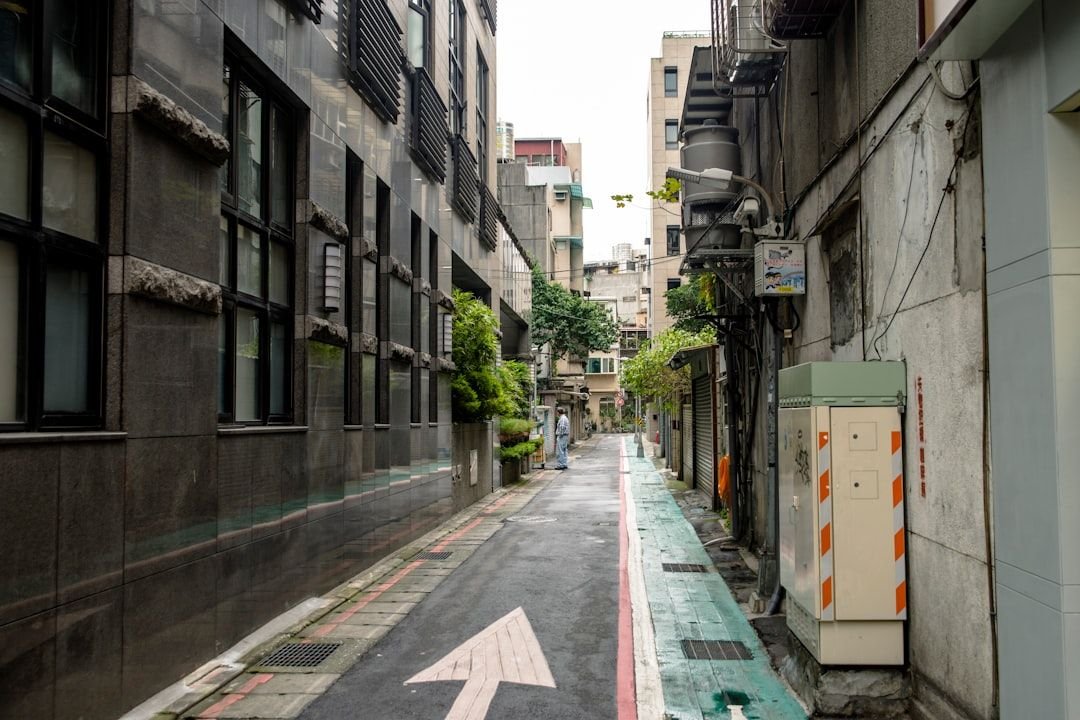
Most conditional mistakes Taiwanese speakers make come from one habit: putting “will” in the if-clause.
5 Conditional Mistakes Taiwanese Speakers Make Most Often
Below are the errors I hear in almost every adult English class in Taipei, ranked roughly by how often they show up.
1. Using “will” in the if-clause
❌ If you will come to the meeting, I will bring the slides.
✅ If you come to the meeting, I will bring the slides.
This is the number-one error, and it comes from Mandarin — 你會來 maps to “you will come,” and the brain wants to keep it there. In English, the if-clause sets the condition; the result clause carries the future marker.
2. Using “would” in both halves of the second conditional
❌ If I would have more time, I would learn French.
✅ If I had more time, I would learn French.
Only the main clause gets “would.” The if-clause stays in past simple. This rule has exactly one exception (the polite “If you would just sign here…”), and it doesn’t apply to hypotheticals.
3. Mixing up second and third conditionals
❌ If I studied harder, I would have passed the TOEIC.
✅ If I had studied harder, I would have passed the TOEIC.
If you’re talking about something that already happened (or didn’t), the if-clause needs past perfect. The tense in the if-clause tells your listener whether you’re daydreaming about now (second) or regretting the past (third).
4. Dropping “have” in the third conditional
❌ I would gone to the party if she invited me.
✅ I would have gone to the party if she had invited me.
The full form is would have + past participle. Missing “have” makes the sentence collapse into something between past and present that no listener can place.
5. Forgetting the comma when the if-clause comes first
❌ If you finish early let me know.
✅ If you finish early, let me know.
When the if-clause opens the sentence, you need a comma before the main clause. When the order is reversed — Let me know if you finish early — no comma is needed. This is small, but it shows up in TOEFL writing scoring and in any email a hiring manager reads carefully.

If-clauses come up constantly in Taipei office English — politeness, planning, and pushback all use them.
Conditionals at Work: Email and Meeting Templates
The conditionals you actually use in a Taipei office are mostly first and second. Here are the patterns that show up daily, broken out by situation.
Asking for a deadline extension (first conditional)
“If you can give me until Wednesday, I will send a complete draft instead of a partial one.”
Negotiating scope (mixed first + second)
“If we removed the third feature, we would ship two weeks earlier.”
Polite disagreement (second conditional)
“If I were leading this project, I would prioritize the mobile experience first.”
Owning a past miss (third conditional)
“If I had checked the numbers earlier, I would have caught the error before it went to the client.”
Memorize these four sentence shapes. They cover roughly 80% of every conditional construction you need in Tiếng Anh nơi làm việc, and they hold up in writing, meetings, and one-on-ones.
Watch: 4 Conditionals Explained in One Lesson
If you prefer to learn by listening, this 12-minute lesson walks through zero, first, second, and third with a built-in quiz at the end. Pause after each example and try to build the next sentence in your head before the speaker does.
Practice: 8 Sentences to Translate Right Now
Cover the answers, translate each Chinese sentence into English, then check yourself. If you miss more than two, re-read the section for that conditional type.
- 如果下雨,比賽就會延期。 → If it rains, the game will be postponed. (first)
- 如果我是你,我會接受這個職位。 → If I were you, I would accept the position. (second)
- 水加熱到100度就會沸騰。 → If you heat water to 100°C, it boils. (zero)
- 如果我早點知道,我就會打電話給你。 → If I had known earlier, I would have called you. (third)
- 如果你按時完成,老闆會給你獎金。 → If you finish on time, the boss will give you a bonus. (first)
- 如果我當初接受那份工作,現在就在新加坡了。 → If I had accepted that job, I would be in Singapore now. (mixed)
- 如果我有更多時間,我會學西班牙文。 → If I had more time, I would learn Spanish. (second)
- 如果你按下這個按鈕,機器就會啟動。 → If you press this button, the machine starts. (zero)
The Real Skill Is Choosing the Right Type
Memorizing the four patterns takes an afternoon. Knowing which one to reach for in the moment takes longer — that’s the muscle that separates a B2 speaker from a C1 speaker. The shortcut: when you’re about to start a sentence with “if,” pause for one second and ask whether you’re stating a fact, predicting something real, imagining the present, or rewriting the past. Once that question becomes automatic, the right tense follows. Bookmark this guide, run the practice set once a week for a month, and your conditional accuracy will be unmistakably better by the time you sit your next TOEIC or job interview.
Nguồn
- British Council LearnEnglish — Conditionals: zero, first and second — official BBC/British Council grammar reference
- Grammarly — The 4 Types of Conditional Sentences — modern usage explanation with examples
- Test English — B2 First, Second, Third Conditionals — Cambridge B2-level reference and exercises
- Professor Scott’s English — 8 Common Mistakes with Conditional Clauses — ESL teacher analysis of recurring errors






 Tiếng Việt
  English
  繁體中文
繁體中文  日本語
日本語  한국어
한국어  ไทย
ไทย  Bahasa Indonesia
  Français