飯店英文:入住退房必備 30 句 | Hotel English (2026)
A 2023 survey by Booking.com found that language was the single biggest source of travel anxiety for Asian travellers heading overseas — ahead of money and safety. For most Taiwanese travellers that anxiety hits at exactly two moments: the airport, and the hotel front desk. The good news is that hotel staff worldwide are trained to use the same small set of phrases, in the same order, every single time. Learn that script and the conversation stops being a test and starts being a routine. This guide walks you through every stage of a hotel stay in English — 訂房 (booking), 入住 (check-in), asking for what you need, fixing problems, and 退房 (check-out) — with the exact lines you can copy.
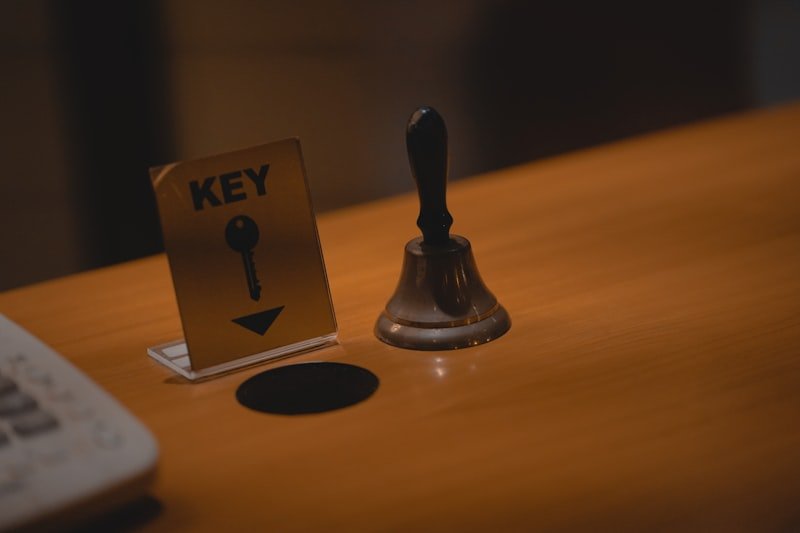
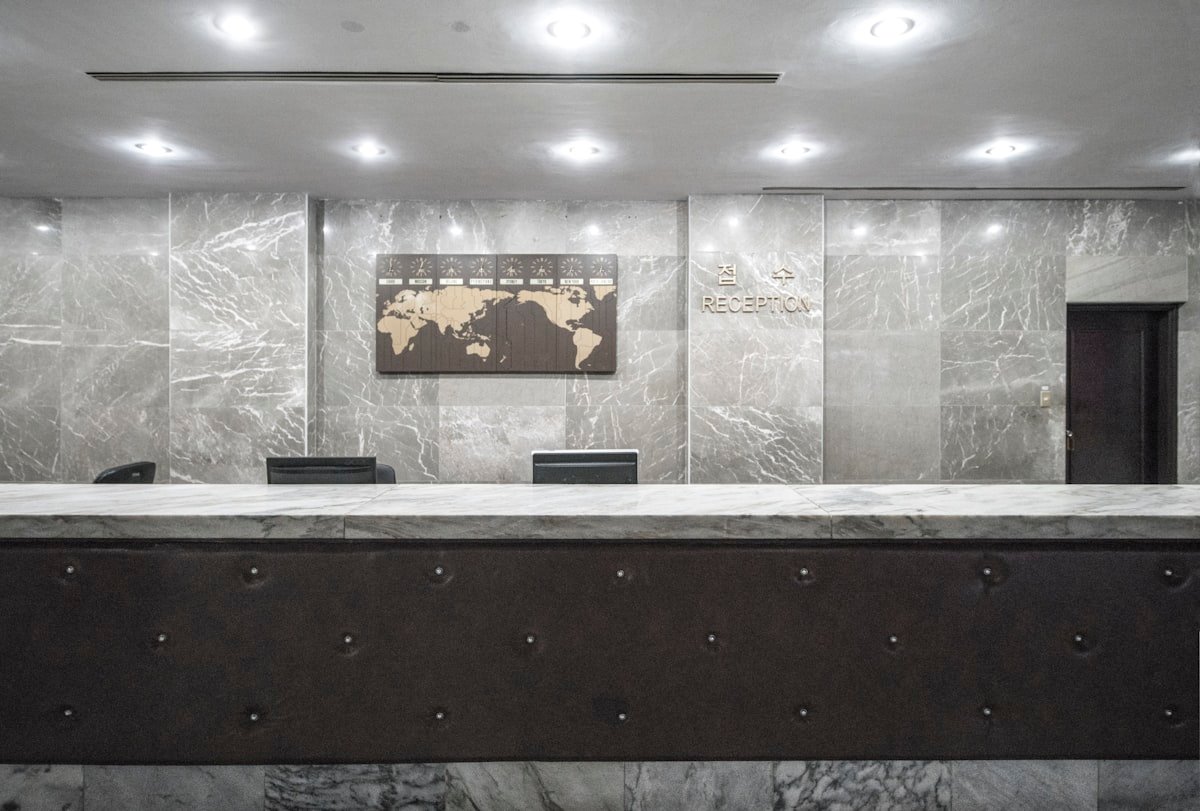
飯店櫃台的對話幾乎都照同一套劇本走,先記住順序,緊張感就消失一半。
訂房英文:Booking a Room(電話與 Email)
Most hotels now take bookings online, but a phone call still beats an app when your dates are awkward or you want a specific room. Open with what you want and the dates, then let the receptionist lead. The core line is: “I’d like to book a room for two nights, please.”(我想訂一間房,住兩晚。)
From there you will hear a few standard follow-up questions. “What type of room would you like?” asks whether you want a single, double, twin, or suite. “Smoking or non-smoking?” still comes up in some countries. And “How many guests?” decides the room rate. A typical booking call sounds like this:
- You: “Hi, I’d like to book a room for the 15th to the 17th of August.”(我想訂 8 月 15 號到 17 號的房間。)
- Hotel: “Sure. A single or a double room?”
- You: “A double, please. Does that include breakfast?”(雙人房,謝謝。有含早餐嗎?)
- Hotel: “Yes, breakfast is included. May I have your name and a credit card to hold the reservation?”
- You: “It’s under Chen, C-H-E-N.”(姓陳,C-H-E-N。)
Two words trip people up here. A reservation is the booking itself; a confirmation number is the code they email you afterwards. Save that number on your phone — it is the fastest way to be found if the staff can’t locate your name. If you booked through an app like Agoda or Trip.com, say “I booked through Agoda” so they check the right system. For more on spelling out dates and numbers clearly over the phone, our guide to English numbers Và phone English phrases are worth a quick read before you call.
入住英文:Checking In at the Front Desk(辦理入住)
Check-in is the most scripted part of the whole stay, which makes it the easiest to prepare for. You almost never speak first beyond one opening line, and the receptionist guides the rest. Walk up and say: “Hi, I have a reservation under [your name].” That single sentence does 90% of the work.
What follows is predictable. The receptionist will ask for ID — “Could I see your passport, please?” — and a card for incidentals (the small charges like the minibar). Then comes the information dump: your room number, the floor, the breakfast time, and the Wi-Fi. Here is the full exchange:
- You: “Hi, I have a reservation under Lin.”(你好,我有訂房,姓林。)
- Nhân viên lễ tân: “Welcome. May I see your passport and a credit card for incidentals?”
- You: “Here you go. What time is check-out?”(給你。請問退房是幾點?)
- Nhân viên lễ tân: “Check-out is at 11 a.m. Here’s your key card. You’re in room 812, on the eighth floor. Breakfast is from 7 to 10 in the restaurant on the ground floor.”
- You: “Great, thank you. What’s the Wi-Fi password?”(太好了,謝謝。請問 Wi-Fi 密碼是什麼?)
A few survival questions earn their keep at this moment. “Is it possible to get an early check-in?”(可以提早入住嗎?)is your line if you arrive before the room is ready. “Could I have a room on a higher floor?”(可以給我高樓層的房間嗎?)works for a view or quieter nights. And if the airport wiped you out, “Could someone help me with my luggage?”(可以幫我搬行李嗎?)is exactly what the bellhop is there for.
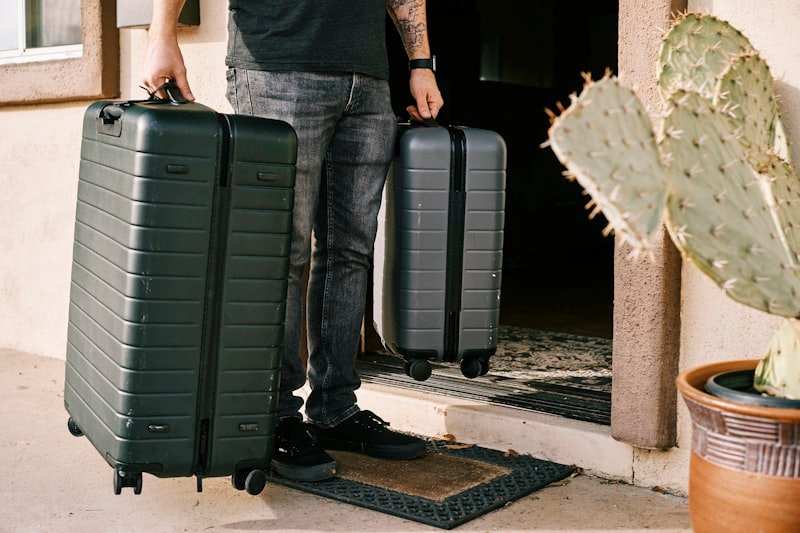
“Could someone help me with my luggage?” — 行李太重時,這句話讓門僮(bellhop)幫你搬。
客房需求英文:Asking for What You Need(房內備品與服務)
This is where most travellers lose marks — not on grammar, but on tone. The instinct from Mandarin is to translate 我要 directly as “I want,” and “I want more towels” lands as a demand in English. The fix is one of three openers: “Could I have…”, “Could you bring…”, or “I’d like…”. Same request, completely different impression.
The most common things you will ask for fall into a short list. Extra amenities (備品) covers towels, pillows, a blanket, toiletries, and a toothbrush. Service requests cover housekeeping, a wake-up call, and room service. Useful lines:
- “Could I have some extra towels, please?”(可以多給我一些毛巾嗎?)
- “Could you bring an extra blanket to room 812?”(可以送一條被子到 812 號房嗎?)
- “I’d like a wake-up call at 6:30 a.m.”(我想要早上 6 點半的晨喚服務。)
- “Is room service available now?”(現在有客房服務嗎?)
- “Could you call a taxi for me?”(可以幫我叫計程車嗎?)
One word worth knowing: housekeeping is the cleaning staff. “When does housekeeping come?” or the “Do Not Disturb” sign on your door are both part of this vocabulary. If you want your room cleaned, “Could you make up my room, please?” is the phrase staff expect.
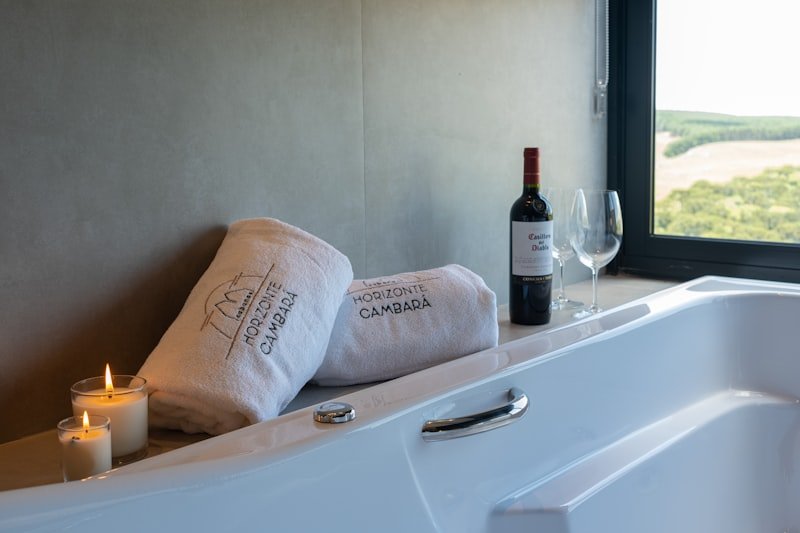
毛巾、盥洗用品、浴袍都叫 amenities;要更多時記得用 “Could I have…” 開頭。
飯店英文設施單字:Facilities and Amenities(設施)
Hotels love to list their facilities on a little card in the room, and half the words are easy to misread. The gym is sometimes called the “fitness centre.” The pool might be “indoor” or “rooftop.” Knowing the labels saves you a trip to the front desk. Here are the terms you will actually see:
| Tiếng Anh | 中文 | Useful question |
|---|---|---|
| Gym / Fitness centre | 健身房 | “What are the gym hours?” |
| Swimming pool | 游泳池 | “Is the pool heated?” |
| Spa / Sauna | 水療 / 三溫暖 | “Do I need to book the spa?” |
| Laundry service | 洗衣服務 | “Is there a laundry service?” |
| Luggage storage | 行李寄放 | “Tôi có thể để hành lý ở đây được không?” |
| Shuttle bus | 接駁車 | “Is there a shuttle to the airport?” |
| Concierge | 禮賓櫃台 | “Could the concierge book a tour?” |
The one to remember is luggage storage. On your last day, your room is gone by 11 a.m. but your flight might not leave until evening. “Can I leave my luggage here until 5 p.m.?”(我可以把行李寄放到下午 5 點嗎?)buys you a whole free afternoon in the city. Almost every hotel offers it, and almost no first-time traveller asks.
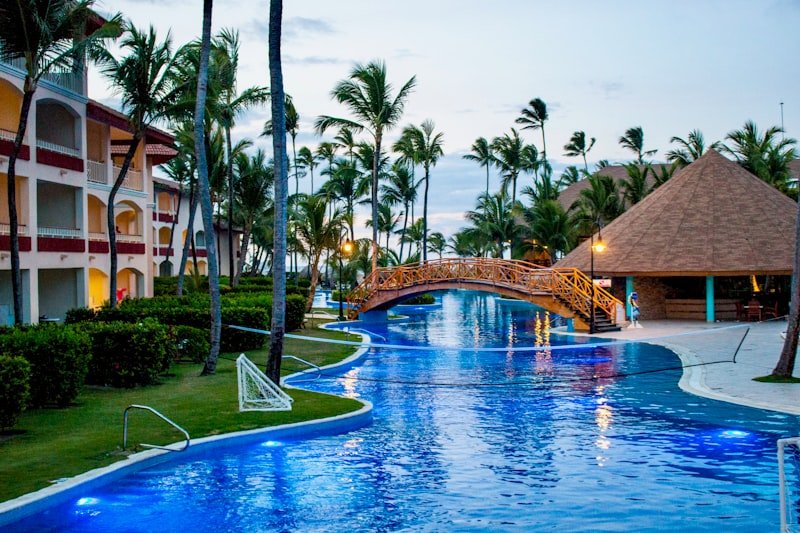
游泳池(swimming pool)、健身房(gym)、接駁車(shuttle bus)都是設施(facilities)的常見單字。
早餐與用餐英文:Breakfast and Dining(早餐相關)
Breakfast confuses people because the format changes by country. A “buffet breakfast” (自助式早餐) means you serve yourself; a “continental breakfast” is a lighter spread of bread, pastries, and coffee with no hot dishes. When you arrive at the restaurant, you may be asked “What’s your room number?” because breakfast is charged to the room or already paid for. Just answer with the number.
If breakfast isn’t included in your rate, the receptionist will tell you the price — “Breakfast is 450 NT per person” — and you decide. Want it brought up instead? “Could I order breakfast to my room?” puts it on room service. For the full set of dining and ordering phrases once you leave the hotel, our restaurant English guide covers menus, orders, and the bill in detail.
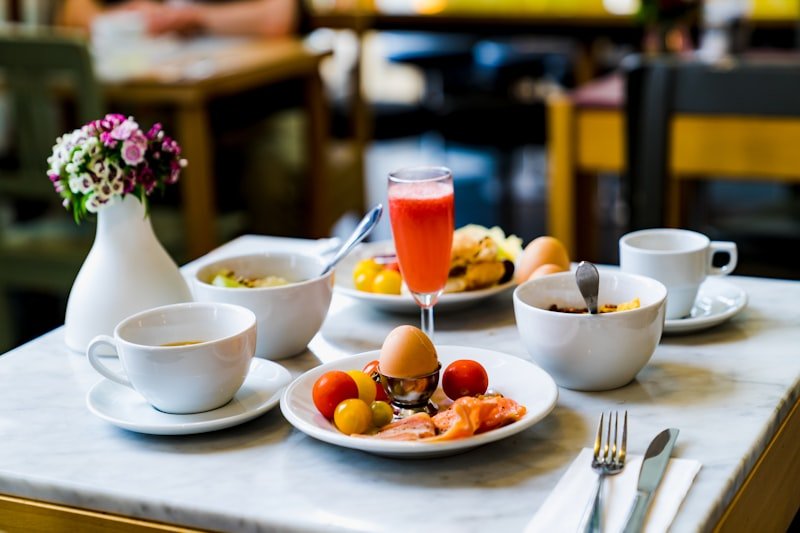
“What’s your room number?” 是早餐櫃台最常問的一句,直接報房號即可。
房間有問題怎麼說:Reporting Problems Politely(客訴英文)
Something will eventually go wrong — the air conditioning won’t cool, there’s no hot water, the room next door is a party. How you raise it decides how fast it gets fixed. English complaints work best when you state the problem plainly and skip the anger: facts get results, frustration gets a defensive receptionist. Start with “I’m sorry to bother you, but…” and then describe it.
The pattern is always: name the problem, then ask for the fix. “The air conditioning isn’t working — could someone take a look?” beats “Your AC is broken!” every time. Common situations:
- “There’s no hot water in my room.”(我房間沒有熱水。)
- “The room next door is very noisy. Could I change rooms?”(隔壁很吵,我可以換房間嗎?)
- “The Wi-Fi isn’t connecting in room 812.”(812 號房的 Wi-Fi 連不上。)
- “The room hasn’t been cleaned. Could you send housekeeping?”(房間還沒打掃,可以請房務人員來嗎?)
- “I think there’s a mistake on my bill.”(我覺得帳單好像有誤。)
The truth is, most travellers who get upgrades or refunds aren’t the loudest — they’re the calmest and clearest. A polite “Is there anything you can do?” at the end of a reasonable complaint opens far more doors than a raised voice. Hotels keep records, and a calm guest with a real problem is one they want to keep happy.
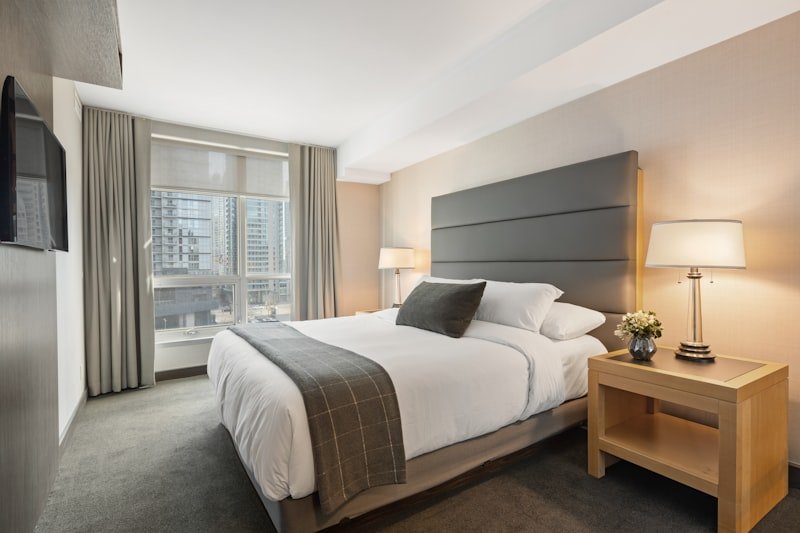
房間有狀況時,先講事實再提需求:”The AC isn’t working — could someone take a look?”
退房英文:Checking Out(辦理退房)
Check-out is the shortest conversation of the stay. The line that starts it is simply “I’d like to check out, please.”(我要退房。)The receptionist confirms your room number, prints the bill, and you’re done. Most of the time it takes under two minutes.
Two phrases are worth keeping in your pocket. If you need more time in the room, ask the night before: “Could I have a late check-out?”(可以延後退房嗎?)Many hotels grant an extra hour or two for free if they aren’t full. And if a charge looks off, “Could you explain this charge?”(可以解釋一下這筆費用嗎?)is your right — never just sign. A clean check-out sounds like this:
- You: “Good morning, I’d like to check out. Room 812.”(早安,我要退房,812 號房。)
- Nhân viên lễ tân: “Of course. Did you use anything from the minibar?”
- You: “No, I didn’t. Could I have the receipt, please?”(沒有。可以給我收據嗎?)
- Nhân viên lễ tân: “Here you are. Would you like us to store your luggage?”
- You: “Yes, please — I’ll pick it up around 5.”(好的,我大概 5 點來拿。)
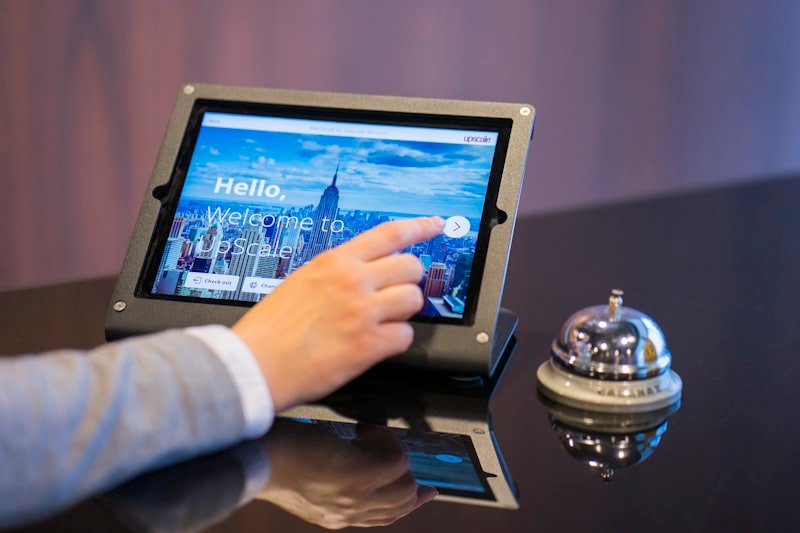
退房一句話就夠:”I’d like to check out, please.” 有些飯店還可以自助退房(self check-out)。
飯店種類英文:Know the Difference(飯店類型)
Booking sites throw a dozen accommodation types at you, and the wrong choice can mean no front desk when you arrive at midnight. A quick map: a hotel has full service and staff around the clock; a hostel is budget, often with shared dorms and bathrooms; a motel is a roadside stop built for drivers; a B&B (bed and breakfast) is a small, home-style place with breakfast included; and a resort bundles dining, pool, and activities on one site. For a long city trip you want a hotel or B&B; for a beach holiday, a resort earns its price.
The One Upgrade That Matters Most
If you take a single thing from this guide, make it this: replace “I want” with “Could I have” or “I’d like.” Taiwanese learners often have plenty of vocabulary but default to flat, direct requests because that’s how Mandarin builds them. In English, that directness reads as rude even when you don’t mean it. “I want a late check-out” sounds like an order; “Could I have a late check-out?” sounds like a guest. Same words otherwise, opposite reaction. Practise that swap until it’s automatic and you’ll sound natural at any front desk in the world.
How to Practise Before Your Trip
Reading phrases isn’t the same as saying them under pressure. Spend ten minutes the week before you fly running through the four stages out loud — book, check in, ask for one thing, check out. Record yourself on your phone and play it back; you’ll catch the lines that still feel stiff. The short video below walks through a full check-in conversation at natural speed, which is the best way to train your ear for the questions a real receptionist will fire back at you.
常見問題 FAQ(Frequently Asked Questions)
飯店入住英文怎麼說? The simplest line is “Hi, I have a reservation under [your name].” You rarely need more — the receptionist leads from there, asking for your passport and a card, then giving you the room number and key.
退房英文怎麼說? “I’d like to check out, please,” plus your room number. If you want extra time, ask the night before with “Could I have a late check-out?”
How do I ask for things politely in a hotel? Start requests with “Could I have…”, “Could you bring…”, or “I’d like…”. Avoid “I want,” which sounds like a demand in English even though it’s a direct translation of 我要.
What is the difference between amenities and facilities? Amenities are the small things in your room — towels, toiletries, a kettle. Facilities are the shared features of the hotel — the gym, pool, and spa.
Can I store my luggage after check-out? Almost always yes. Ask “Can I leave my luggage here until [time]?” Most hotels store it free for the day so you can keep exploring before your flight.
從機場到飯店,一條龍搞定
Your next trip will involve far more than the front desk — there’s the flight, the taxi, the restaurants. Hotel English is one link in that chain, and it’s the one most travellers fear without reason. Practise the four stages once, save the key phrases to your phone, and the counter stops being a hurdle. Before you fly, run through our airport English guide and the wider essential travel English phrases so the whole journey — gate to lobby to checkout — feels like one conversation you already know.
Sources(資料來源)
- EnglishClub — Checking Hotel Guests In and Out — standard front-desk vocabulary and dialogue.
- Oxford Online English — Hotel English Lesson — check-in, requests, and check-out phrasing with video.
- Cambridge Dictionary — “amenity” — definition and usage of hotel amenities vs. facilities.
- British Council LearnEnglish — listening practice for everyday travel situations.
Looking for free ESL worksheets for your classroom? Browse our free worksheet library →
Are you a teacher? Find lesson resources and worksheets at TahricTeaches.com.



 Tiếng Việt
  English
  繁體中文
繁體中文  日本語
日本語  한국어
한국어  ไทย
ไทย  Bahasa Indonesia
  Français