

One Business Trip, Four Vocabulary Worlds: The English You Actually Use Abroad | 出差英文單字:旅行、飲食、科技、健康
A three-day business trip can force you through more English than a month of classes. You land, ask directions, check in, sit in a meeting, host a client dinner, troubleshoot a laptop, buy medicine for a headache, and flag a taxi at midnight — all in a language that isn’t your first. The problem most Taiwanese professionals hit isn’t grammar. It’s that each of those moments has its own small vocabulary, and the words you drilled for exams rarely match the words you need at a hotel front desk. This guide walks through one trip, scene by scene, and hands you the business trip English that carries its weight in each.
Before You Board: Airport & Travel English (機場英文)
The airport is where nerves are highest and signage moves fastest. Departures boards flip, gates change, and staff speak quickly because the queue behind you is long. Knowing five or six precise phrases buys you calm.
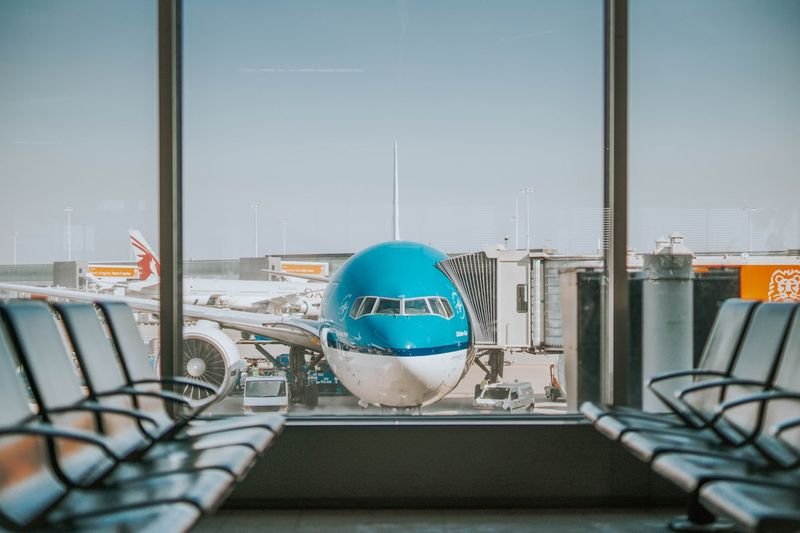
At the counter, “I’d like an aisle seat, please” and “Is this flight on time?” cover most of what you’ll say. If you’re carrying a laptop and samples, learn the difference between carry-on (the bag you keep) and checked baggage (the bag that goes under the plane). When you land, the two questions that unlock everything are “Where is the taxi stand?” and “Which exit is closest to the train?” Immigration officers ask a predictable script — the purpose of your visit (“business,” not “work,” unless you have a work visa), how long you’re staying, and where. Answer short and clear. Long explanations invite more questions.
One phrase worth rehearsing before you fly: “Could you repeat that, please?” Airport staff and flight crews speak fast, and asking someone to slow down is not a weakness — it’s what confident travelers do. Pair it with “Sorry, which gate?” and you’ll never miss a boarding call because you were too embarrassed to ask. The goal of airport English isn’t to sound native. It’s to move through a stressful space without losing your footing.
Checking In: Hotel English That Gets You a Better Room (飯店英文)
Hotel staff are trained to say yes to guests who ask well. That’s leverage most travelers waste. A polite, specific request often earns a higher floor, a quieter room, or a late checkout at no charge.

Start with the basics: “I have a reservation under [name].” Then make one clear ask — “Could I have a room away from the elevator?” or “Is a late checkout possible? My flight leaves at 8 p.m.” The word amenities covers the free extras (toiletries, slippers, bottled water), and “Is breakfast included?” saves you an awkward surprise on the bill. If something’s wrong, skip the apology loop and state it plainly: “The air conditioning isn’t working — could someone take a look?” Front-desk English rewards confidence over perfect grammar. For a deeper drill on this kind of scenario-based vocabulary, our guide to situational English for real situations runs the same play across more settings.
In the Room: The Meeting English You Can’t Fake (會議英文)
This is the part that actually pays for the trip, and it’s where memorized phrases fall apart fastest — because meetings are unscripted. You don’t need a bigger vocabulary here. You need the connective tissue that keeps you in the conversation when you’re thinking.

Three moves do most of the work. To buy time: “That’s a good question — let me think for a second.” To check you understood: “So if I’m hearing you right, you’re saying…?” To disagree without friction: “I see your point, but I’d push back a little on the timeline.” Notice none of those are fancy. They’re the phrases fluent professionals actually use, and they signal that you’re engaged rather than lost. Learn the verbs that structure business talk — circle back (return to a topic later), loop in (add someone to a discussion), and touch base (check in briefly). They sound casual, but they’re everywhere in real offices, and using one correctly does more for your credibility than a perfect past-perfect tense.
The Client Dinner: Dining English Beyond “Delicious” (餐敘英文)
The client dinner is a business meeting wearing a napkin. The English is softer, but the stakes are real — this is where relationships get built. The trap is running out of words after “It’s delicious.”

Widen the range. When the host recommends a dish, “What would you recommend?” and “I’ll have what you’re having” show trust. For dietary limits, be direct and unapologetic: “I’m allergic to shellfish” or “I don’t eat pork, but everything else is fine.” To describe food beyond thơm ngon, keep three words ready — rich (heavy, full-flavored), ánh sáng (fresh, not heavy), and savory (the opposite of sweet). When the check comes, “Please, let me get this one” is the phrase that wins goodwill. If you want a full toolkit for eating out in English, our restaurant English phrase guide covers ordering, complaints, and paying in detail.
Tech Talk: The Vocabulary of Getting Work Done (科技英文)
Every trip now includes a small tech emergency — a projector that won’t connect, hotel Wi-Fi that won’t load, a file that won’t open. The vocabulary here is short but oddly specific, and mispronouncing one word can stall a whole meeting.

The phrases that save presentations: “Do you have an adapter for this?”, “The Wi-Fi keeps dropping — is there a password?”, and “Can you share your screen?” Know the difference between a cable (the physical wire), an adapter (the piece that connects two different plugs), and a dongle (a small adapter, often HDMI to USB-C). If a file is broken, “The file won’t open — could you resend it as a PDF?” is clearer than trying to describe the error. And when the whole room is waiting, the most useful sentence in tech English is the honest one: “Give me one moment — I’m having a connection issue.” Nobody minds. Everyone’s been there.
When Your Body Doesn’t Cooperate: Health English Abroad (健康英文)
Jet lag, strange food, air conditioning, and stress team up on the road. The one scenario travelers least prepare for is walking into a pharmacy at 10 p.m. in a country where they don’t speak the language — and health English is exactly when vague words fail you.
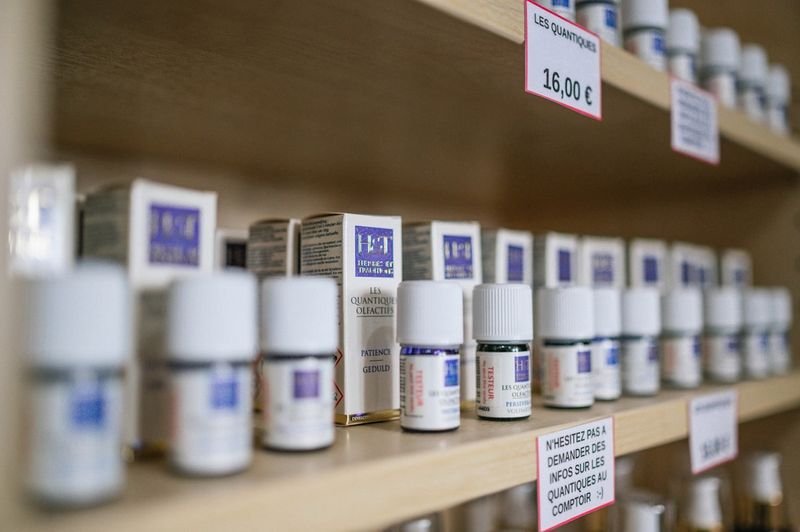
Be specific about symptoms. “I have a headache,” “I have an upset stomach,” and “I think I have a fever” get you to the right shelf fast. Learn the counter words: a pharmacist sells over-the-counter medicine (no prescription needed), while a prescription requires a doctor. “Do I need a prescription for this?” and “Is this safe to take with…?” are the two questions worth memorizing. If it’s serious, the sentence that matters is unambiguous: “I need to see a doctor” or, in an emergency, “Call an ambulance.” The U.S. CDC Travelers’ Health pages are a solid reference for what to pack before you go, so you’re translating less at the counter.
Getting Around: Transport & Late-Night Small Talk (交通英文)
The last scene of any trip is usually a tired one — finding a taxi after a long dinner, or catching a train to the airport at dawn. Transport English is short, but getting it wrong costs you money or a missed flight.

With a driver: “Could you take me to [hotel name]?”, “How much is it, roughly?”, and “Can I pay by card?” prevent the two most common problems — going the wrong way and being stuck with no cash. For public transit, “Which platform for the airport?” and “Does this train stop at [station]?” cover most of it. And when the driver makes small talk — they almost always do — a couple of easy replies keep it warm without draining your energy: “First time here, actually — it’s a great city,” or “Just here for work, flying out tomorrow.” That’s transport English doing double duty as the friendliest English you’ll speak all trip.
How to Actually Remember All This (學習策略)
Here’s the honest part: you won’t memorize six vocabulary sets from a blog post the night before you fly. What works is grouping words by the scene you’ll use them in, not by grammar category — because your brain recalls “hotel front desk” faster than it recalls “nouns related to accommodation.” Pick the two scenes most relevant to your trip, rehearse five phrases each out loud, and let the rest come from context. The most fluent-sounding travelers aren’t the ones with the biggest vocabulary. They’re the ones who prepared the right small set for the moment in front of them. If you want a system for building these scene-based sets over time, start with our method for building an English word bank for travel, food, tech, and health.
Do one more thing before your next trip: say your five key phrases out loud, not just in your head. Reading a phrase and producing it under pressure are different skills, and the mouth needs the reps as much as the memory does. Record yourself on your phone if you can — hearing your own “Could I have a late checkout?” once removes half the hesitation you’ll feel at the desk. Business trip English gets easier the moment you stop treating it as a test and start treating it as a set of small, repeatable scripts you already own.
Nguồn
- British Council LearnEnglish — Business English — Free lessons and phrase banks for workplace and travel situations.
- Từ điển Cambridge — Pronunciation and usage checks for the vocabulary in this guide.
- CDC Travelers’ Health — Pre-trip health guidance and medicine terminology for travelers.




 Tiếng Việt
  English
  繁體中文
繁體中文  日本語
日本語  한국어
한국어  ไทย
ไทย  Bahasa Indonesia
  Français