
20 Phrasal Verbs with TURN | TURN英文片語動詞完整指南
The verb “turn” produces more phrasal verbs than almost any other word in English — at least 20 that native speakers use regularly. Phrasal verbs with TURN (TURN片語動詞) cover everything from everyday actions like turn off the light to abstract ideas like turn down a job offer. The good news: these aren’t random. Once you see the underlying logic, the meanings start to click.
This guide covers all 20 essential TURN phrasal verbs and expressions, with clear examples drawn from real English — the kind used in workplaces, classrooms, and daily conversation in Taiwan and beyond.

Why TURN Creates So Many Phrasal Verbs [TURN的片語為什麼這麼多]
The core meaning of “turn” is direction change — physical or abstract. Pair it with a preposition, and each one shifts that direction in a new way. “Up” suggests increase or arrival. “Down” suggests decrease or rejection. “Out” points to a result or exit. “In” signals submission or inward movement. Understanding these preposition patterns won’t tell you every meaning, but it cuts the memorization work in half.
Watch this video for a quick overview of the most common TURN phrasal verbs before diving into the full list:
1. Turn Up [出現・增大・被找到]
This is one of the most common TURN phrasal verbs, and it carries three distinct meanings depending on context.
Meaning 1 — To arrive, often unexpectedly (出現): “We weren’t sure if he’d come, but he turned up at the door at 8 PM.” This usage is common in both British and American English. If someone turns up at a party without an invitation, they showed up uninvited. In professional settings: “Only six of the twelve clients turned up for the presentation.”
Meaning 2 — To increase the level of volume, heat, or brightness (增大): “It’s too quiet — can you turn up the music?” The target can be the TV, heating, air conditioning, or screen brightness. The opposite is turn down.
Meaning 3 — To be found after being lost (被找到): “I’d been searching for my passport for days. It finally turned up in the back of a drawer.” Notice that with this meaning, the object finds itself — nobody actively locates it.

2. Turn Down [調低・拒絕]
The inverse of turn up — but only partially. Both share the volume/heat meaning. The second meaning, however, goes in a completely different direction.
Meaning 1 — To reduce volume, heat, or brightness (調低): “The neighbors are sleeping — please turn down the TV.” Works for any device with a level control: music, heating, a fan, a dimmer switch.
Meaning 2 — To reject an offer, proposal, or request (拒絕): “She was offered a senior management role but turned it down because it meant relocating to another city.” You’ll hear this in job discussions, negotiation contexts, and business emails constantly. A company can turn down a contract. A publisher can turn down a manuscript. A person can turn down a date.
The object placement matters: “She turned down the offer” and “She turned the offer down” are both correct. But when you use a pronoun, it must go between the verb and the preposition: “She turned it down” — never “She turned down it.”

3. Turn On and Turn Off [打開・關掉・讓人有或失去興趣]
These two travel as a pair for the basic device meaning, but each carries a figurative layer that surprises learners.
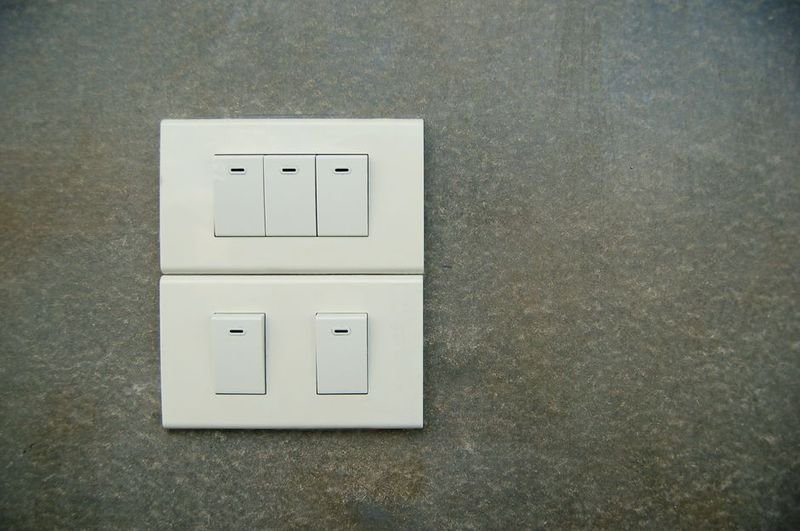
Turn on (打開): The basic meaning is to start or activate a device. “Turn on the lights when you come in.” “Can you turn on the projector?” Figuratively, it means to suddenly attack someone — verbally or physically: “The crowd turned on the politician when he refused to answer the question directly.” A dog that bites its owner has “turned on” them. The shift can happen fast.
Turn off (關掉): The basic meaning is to stop or deactivate: “Don’t forget to turn off the air conditioning before you leave the office.” Figuratively, to cause someone to lose interest or feel repelled: “The way he talked over everyone in the meeting really turned me off.” Attitudes, habits, or behavior can “turn people off.” The noun form — a “turn-off” — means something that causes this reaction: “Poor communication is a major turn-off in job candidates.”
4. Turn Out [結果・出席・生產]
Turn out might be the most versatile TURN phrasal verb in everyday English. Native speakers reach for it constantly when discussing results, events, and production.
Meaning 1 — To result in a certain way (結果如何): “I wasn’t sure the presentation would go well, but it turned out fine.” The phrase “as it turned out” introduces an unexpected result: “As it turned out, the project was cancelled before we even started.” You can also say something “turns out to be” something: “The rumor turned out to be completely false.”
Meaning 2 — To attend an event (出席): “Over 5,000 people turned out for the protest despite the rain.” When large numbers attend something, they “turn out.” This produces the noun turnout — voter turnout, event turnout, crowd turnout. A high turnout at an election means many people voted.
Meaning 3 — To produce (生產): “That factory turns out 800 units per day.” Common in business and manufacturing contexts.
5. Turn In [繳交・去睡覺・舉報]
Students and office workers use this one constantly, often without noticing the multi-purpose nature of the phrase.
Meaning 1 — To submit work (繳交): “Your report is due Monday — make sure you turn it in before noon.” Interchangeable with “submit” or “hand in.” Applies to homework, expense reports, forms, ID documents at a front desk, and equipment at the end of a rental period.
Meaning 2 — To go to bed (去睡覺): “I’m exhausted after that flight. I’m going to turn in early tonight.” This is a slightly old-fashioned phrase, but native speakers still use it in casual conversation, especially over the age of 40.
Meaning 3 — To report someone to authorities (舉報): “After discovering her colleague had been leaking confidential data, she turned him in to HR.” This usage appears regularly in news reports, legal contexts, and crime dramas.

6. Turn Around [好轉・轉身・快速處理]
This one carries real weight in business English. You’ll find it in company earnings calls, leadership books, and management discussions.
Meaning 1 — To improve after a difficult period (好轉): “After three years of declining revenue, the company finally turned things around.” The noun turnaround describes the transformation itself: “It was a remarkable turnaround — they went from near-bankruptcy to profitability in 18 months.” You can also say someone “turned their life around.”
Meaning 2 — To physically face a different direction (轉身): “She turned around when she heard her name being called from across the street.”
Meaning 3 — To process and return something quickly (快速完成): “The design team said they could turn around the revised mockup in 24 hours.” In service industries, turnaround time is a key metric — how fast a request gets completed and returned.

7. Turn Into [變成・轉變]
This is the transformation phrasal verb. Simple in meaning, wide in application.
“What started as a friendly disagreement turned into a serious argument.” The phrase works at any scale — small to large, personal to political. Physically: “After the bridge, the paved road turns into a dirt track.” In nature: “Caterpillars spend weeks in a chrysalis before they turn into butterflies.” In cooking: “With enough heat and time, sugar turns into caramel.”
The structure is always: subject + turn into + result. There’s no object separation here — “turn into” stays together.

8. Turn Against, Turn To, and Turn Back [反目・求助・折返]
Three less common TURN phrasal verbs that appear frequently enough to be worth knowing.
Turn against (反目) — to stop supporting and begin opposing: “Public opinion turned against the government after the economic data was released.” A loyal supporter, a former ally, or an entire country can “turn against” someone or something. The shift is usually sudden and significant.
Turn to (求助於) — to seek help or support from someone: “When she didn’t know how to handle the situation, she turned to her mentor for advice.” Can also mean to start doing something new: “After the factory closed, many workers turned to retraining programs.” Or literally to face a direction: “He turned to the window and said nothing.”
Turn back (折返) — to return to where you started, or to stop someone from continuing: “The weather deteriorated so badly that the climbing team decided to turn back.” In immigration contexts: “Travelers without valid visas were turned back at the border.” You can also “turn back the clock” — see the expressions section below.
5 Common TURN Expressions [5個常見的TURN慣用語]
Beyond standard phrasal verbs, “turn” anchors several fixed expressions used regularly in English writing and conversation:
- Turn a blind eye (故意忽視) — to deliberately ignore something wrong: “Management turned a blind eye to the safety violations for years before the accident happened.”
- Turn over a new leaf (重新開始) — to change behavior for the better: “After the health scare, he turned over a new leaf — stopped smoking, started running, and changed his diet entirely.”
- Turn the tables (扭轉局勢) — to reverse a situation so the advantage shifts: “Going into the second half losing 0-2, they turned the tables completely and won 3-2.”
- Turn heads (吸引目光) — to attract attention, usually through appearance or performance: “Their product launch turned heads at the trade expo.”
- Turn back the clock (回到過去) — to return to an earlier time or way of doing things: “No policy can turn back the clock on digital transformation — the industry has already moved on.”
Quick Reference: 20 TURN Phrasal Verbs [快速參考表]
| Phrasal Verb | 中文 | 例句 |
|---|---|---|
| turn up | 出現、增大 | He turned up late to every meeting. |
| turn down | 調低、拒絕 | She turned down the job offer. |
| turn on | 打開、突然攻擊 | Turn on the projector before the meeting starts. |
| turn off | 關掉、讓人失去興趣 | Turn off the lights when you leave. |
| turn out | 結果、出席 | Everything turned out well in the end. |
| turn in | 繳交、去睡覺、舉報 | Please turn in your assignment by Friday. |
| turn around | 好轉、轉身 | The company turned things around in Q3. |
| turn into | 變成 | The small fire turned into a major incident. |
| turn against | 反目、反對 | His own supporters turned against him. |
| turn to | 求助於、轉向 | She turned to her mentor for guidance. |
| turn back | 折返、阻止前進 | The storm forced them to turn back. |
| turn away | 拒絕入場、別開視線 | The club turned away people without ID. |
| turn over | 翻轉、移交 | Turn over the page to see the answers. |
| turn aside | 側身避開 | He turned aside to avoid eye contact. |
| turn out to be | 結果發現是 | The rumor turned out to be completely false. |
| turn a blind eye | 故意忽視 | They turned a blind eye to the problem. |
| turn over a new leaf | 重新開始 | She turned over a new leaf after college. |
| turn the tables | 扭轉局勢 | The team turned the tables in the final quarter. |
| turn heads | 吸引目光 | The new product turned heads at the expo. |
| turn back the clock | 回到過去 | No policy can turn back the clock on tech. |
Practice: Fill in the Gap [練習題]
Complete each sentence with the correct TURN phrasal verb. Answers are at the bottom.
- “She __________ the music because the neighbors were trying to sleep.” (made it quieter)
- “The auditions were popular — over 500 people __________ to try out.” (arrived/attended)
- “I’m completely exhausted. I’m going to __________ early tonight.” (go to bed)
- “What started as a small disagreement __________ a major dispute.” (transformed into)
- “After the data breach, even his closest allies __________ him.” (began opposing)
Answers: 1. turned down | 2. turned up | 3. turn in | 4. turned into | 5. turned against

How to Actually Remember These [記憶TURN片語的方法]
The most common mistake learners make is studying phrasal verbs as a list — one English term, one Chinese translation, repeat until exam. That produces short-term recall but not the ability to produce the phrase naturally under pressure.
A more effective approach: group them by the preposition’s logic, and study with real sentences you could say. “She turned down the promotion” is usable. An abstract definition is not. When you learn a new TURN phrasal verb, spend two minutes writing three sentences from your own life — even hypothetical ones. Your brain stores specifics, not definitions.
Also notice what changes when you swap the preposition: turn up versus turn down versus turn out versus turn in. The preposition is doing the work. Master the pattern, not just the phrase.
For a full system on learning phrasal verbs efficiently, read our guide: How to Actually Learn Phrasal Verbs: The System Behind the Top 50 | 英文片語動詞學習策略. You might also compare the patterns in our articles on phrasal verbs with RUN (RUN英文片語動詞) 和 phrasal verbs with GO (GO片語動詞職場英文指南) — the parallels are worth noticing.
來源
- Oxford Learner’s Dictionaries: TURN — Comprehensive definition and phrasal verb entries.
- 7ESL: 12 Essential Phrasal Verbs with TURN — Reference for common TURN phrasal verb meanings and examples.
- Longman Dictionary of Contemporary English: Phrasal Verbs with Turn — Practice exercises and definitions from LDOCE.






 繁體中文
繁體中文  English
  日本語
日本語  한국어
한국어  ไทย
ไทย  Bahasa Indonesia
  Tiếng Việt
  Français