
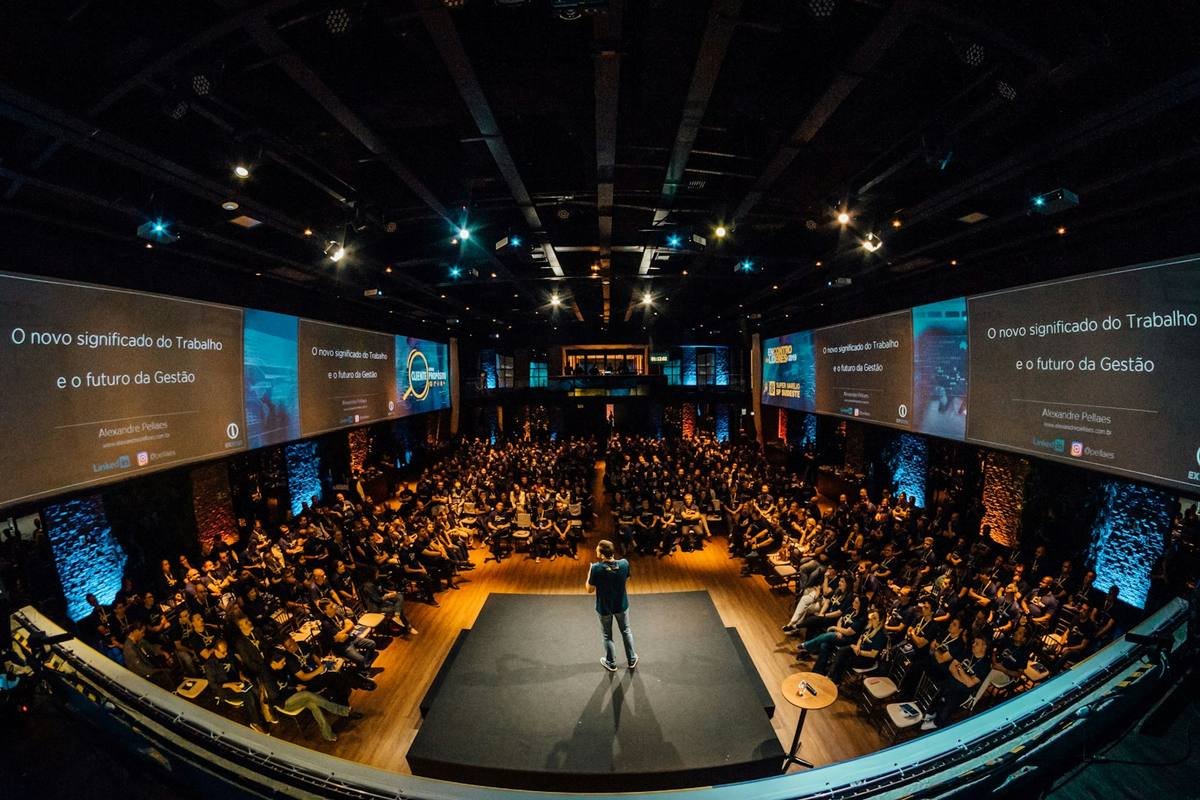
簡報英文: 40 Presentation Phrases Taiwan Pros Need (2026)
簡報英文 is the workplace skill Taiwan professionals quietly dread the most. You can write a flawless email, ace a TOEIC reading test, and still freeze the moment your boss says “go ahead and walk us through it in English.” The truth is, most Taiwan pros aren’t bad at English — they’re just stuck with vocabulary that was built for textbook reading, not for standing in front of a Hong Kong client and explaining why Q2 revenue dipped 12%. This guide hands you 40 presentation phrases that real bilingual professionals use, plus the cultural fixes that stop 簡報英文 from sounding like a Google Translate dump.

The first 簡報英文 fix every Taiwan pro needs: stop saying “PPT.”
簡報英文 vs PPT: The Vocabulary Fix That Saves You Embarrassment
If you walk into a room full of native speakers and say “Let me share my PPT,” half the foreign clients will smile politely and the other half will silently wonder what software you’re talking about. The correct word for 簡報 in English is slides 或者 presentation — never PPT. PowerPoint is the software; slides are what you put on the screen; a presentation is the whole act of standing up and explaining them. According to Cambridge Dictionary, “presentation” specifically refers to “a talk giving information about something” — so when you say “Let me give you a presentation,” you’re committing to the talk, not just the file.
Taiwan offices have normalized 簡報 = PPT through years of Microsoft dominance, but the bilingual fix is small: swap “Open my PPT” for “Open the slides,” and “Send me your PPT” for “Send me the deck.” That single substitution makes you sound 5 years more experienced in English-speaking meetings.
開場白 (Opening): 8 Phrases That Hook a Boardroom
The opening is where 90% of Taiwan presenters lose their audience. The mistake is starting with “Today I will talk about…” — a phrase so overused it triggers an instant cognitive yawn. A confident opener does three things in under 30 seconds: it names what you’re about to do, it tells the audience why they should care, and it sets the time expectation. Memorize these eight phrases and rotate them so you never sound like a script reader.
- “Thanks for making the time — I’ll keep this to 15 minutes.” (時間承諾立刻贏得信任)
- “I want to start with a number that surprised me.” (數據開場法,立刻抓住注意力)
- “By the end of this, you’ll know exactly why we missed Q2 and what we’re doing about it.” (結果導向開場)
- “Let me walk you through three things — the problem, the data, and the recommendation.” (結構預告)
- “I’ll save the slides for the second half — first, the story.” (反PPT直覺型開場)
- “Hold your questions until the end, or jump in anytime — your call.” (Q&A節奏控管)
- “I know this is a long deck. Don’t worry — most of it is reference.” (緩解觀眾焦慮)
- “Before we dive in, a quick reminder of where we left off last week.” (回顧前情接續)
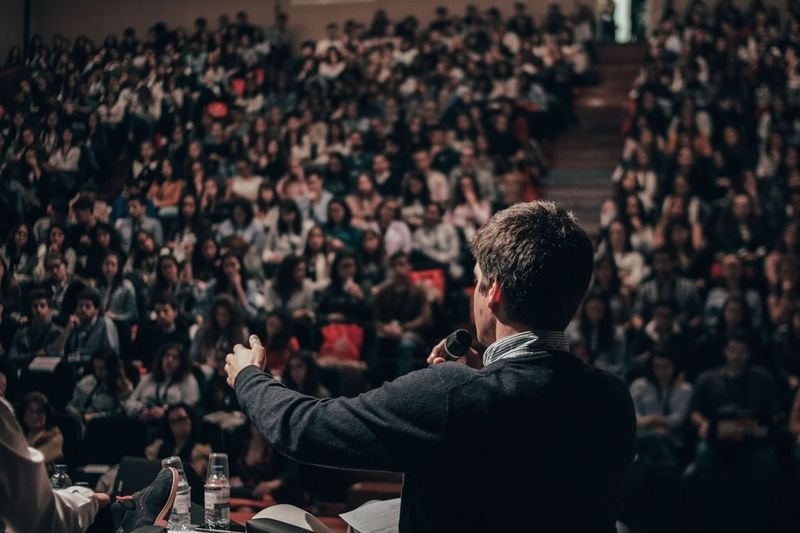
Practice these opening 簡報英文 phrases out loud — they only work at full speed.
結構轉場 (Transitions): 8 Phrases for a Clean Flow
Transitions are where Chinese-language speakers leak the most authority. The Mandarin habit of pausing with 「那…就是…然後…」 carries over as “So… and then… so basically…” in English, which sounds unprepared. Pre-load your transitions and you’ll never fumble between slides again. The fix is to choose three transition phrases and use them on rotation — not eight randomly thrown in.
Here are the eight that cover virtually every situation a Taiwan pro will face — from boardrooms to video meetings on Zoom and Teams:
- “That brings us to the next point — our cost structure.”
- “Building on that, here’s what changed in March.”
- “Let’s shift gears for a second.”
- “With that out of the way, the bigger question is…”
- “Before I move on, one quick note.”
- “To put that in context…”
- “That’s the what. Now the why.” (短句轉場 — 非常有力)
- “Okay, switching topics — let’s talk about timing.”
The short ones — “That’s the what. Now the why.” — outperform long transitions because they create rhythm. Native English presentations use punchy two-beat transitions far more than Taiwan presenters realize.

Map your transitions onto the slide deck before rehearsing — never improvise them mid-presentation.
數據圖表英文 (Data & Charts): 8 Phrases for the Numbers Slide
The data slide is where most Taiwan presenters revert to direct translation: “The line is going up” instead of “Revenue climbed 18% year-over-year.” Numbers are where English ESL anxiety bleeds through hardest, because Mandarin and English describe trends with very different verbs. If you want a deeper dive into describing data, our 圖表英文 guide on essential chart phrases covers another 30 you can drop into the same slide deck.
For now, drill these eight until they feel automatic:
- “As you can see on the chart…” (最安全的引導句)
- “The line in blue represents 2024 revenue; the orange line is 2025.”
- “Revenue climbed 18% year-over-year, driven largely by Southeast Asia.”
- “Costs went the other direction — up 6% on raw materials alone.”
- “Don’t focus on the spike in March — that’s a one-time refund.”
- “If you zoom out to the full year, the trend looks much healthier.”
- “The headline number here is 24%.”
- “This isn’t statistically significant yet — we’ll have firmer numbers by next month.”

Frame the headline number before walking the audience through the chart.
強調與說服 (Emphasis & Persuasion): 6 Phrases to Drive the Point Home
This is the section that separates a Taiwan pro who “speaks English” from one who actually persuades in English. Native business culture rewards directness paired with one clear opinion per slide. Hedging — saying “maybe we could probably consider…” — is a survival habit from Taiwan workplace politeness, but in an English boardroom it signals weakness. Harvard Business Review’s research on presentations consistently finds that audiences trust speakers who take a defensible position over those who hedge everything.
Use these six to land your stance without sounding aggressive:
- “The data is clear on this — we should double down on B2B.”
- “My recommendation is one thing only: kill the legacy line.”
- “What this really means is…”
- “There’s only one number on this slide that matters.”
- “I want to be direct — this is the bottleneck.”
- “If you take one thing away from today, take this.”
處理問題 (Handling Q&A): 6 Phrases for When You Don’t Know the Answer
Q&A is where most 簡報英文 attempts collapse. A foreign client throws an unscripted question, your brain freezes, and you say “umm… I think… maybe…” while the room politely waits. Here’s the secret native presenters know: nobody expects you to know everything on the spot. What they expect is a confident framing of how you’ll find out. Steal these six and you’ll never freeze again.

Stay calm in Q&A — confidence in framing beats encyclopedic recall every time.
- “Great question — let me come back to that in two minutes when I cover the next section.” (爭取時間)
- “I want to give you a precise number, not a guess — can I follow up by email tonight?”
- “That’s outside today’s scope, but here’s the short answer: we’re still evaluating.”
- “Honestly, that surprised me too — we’re still digging into it.” (誠實勝過假裝)
- “Let me make sure I understand the question — are you asking about pricing or supply?”
- “I’ll defer to the legal team on that one — but our finance position is X.”
Notice the pattern: every phrase buys you composure without sounding evasive. If you’re getting tripped up on phone-based Q&A specifically, our Con Call 中文 conference call English guide covers another 30 phrases for telephone-only situations.
結尾收尾 (Closing): 4 Lines That Actually Stick
Most Taiwan presenters end with “Thank you for your time. Any questions?” — a closing so flat it erases everything that came before. The best closings do one of three things: they restate the single most important number, they hand the audience a clear next step, or they leave behind one memorable image. Skip the “thank you,” save it for after the Q&A.

The strongest closings end on a number, not a thank-you.
- “So the number to remember is 24%. Everything else is detail.”
- “Three asks from this meeting — sign-off on budget, intro to legal, and a decision by Friday.”
- “That’s the case. I’d love your push-back.” (反邀挑戰,極為自信)
- “Happy to take questions now or pull anyone into a follow-up after this call.”
5 簡報英文 Mistakes Taiwan Pros Still Make in 2026
After teaching English in Taipei for over 20 years, the patterns repeat. These five mistakes show up in nearly every workplace English coaching session — and they’re all fixable inside a single rehearsal.

Most 簡報英文 mistakes aren’t grammar — they’re rhythm and confidence.
1. Saying “PPT” instead of “slides.” Already covered above, but worth repeating because it’s the fastest tell.
2. Reading the slide word-for-word. If your slide says “Q2 revenue dropped 8%,” don’t say “Q2 revenue dropped 8%.” Say “You can see the drop here — let me explain the why.” The audience reads faster than you talk; respect their time.
3. Apologizing for your English. “Sorry, my English is not so good” is a Taiwan-default opener that immediately lowers the audience’s confidence in everything that follows. Skip it. Your English is your English. If you make a mistake mid-sentence, just rephrase and keep going — like a native speaker would.
4. Overusing “actually” and “basically.” These two filler words show up 4–5 times per minute in Taiwan-accented business English. Native speakers use them sparingly. Pick one, drop the other. Record yourself once — you’ll hear it instantly.
5. Ending on “Thank you, that’s all from me.” A flat closer wastes your strongest moment — the final 10 seconds of audience attention. Use one of the four closings above instead.
How to Practice 簡報英文 Without Sounding Robotic
The fastest way to internalize these phrases isn’t flashcards — it’s video. Record yourself on your phone delivering a 3-minute presentation about your team’s last quarterly result. Watch it back at 1.5x speed. Every “umm,” every awkward pause, every “actually” will jump out. TED’s playlist on how to make a great presentation is another gold mine — pick one talk, mute the audio, and re-narrate the slides in your own English. It costs nothing and replicates the pressure of a live pitch.
The Cambridge Business English certificate program also runs simulated presentations as part of its testing — if you want a structured way to benchmark yourself, that’s the most respected option in Taiwan corporate HR circles.
Watch: Why 簡報 in English Is Not “PPT”
Save this guide, screenshot the phrase sections, and rotate through the 40 phrases over your next five presentations. By the fifth, they’ll feel automatic — and your boss will notice. The next time someone hands you a deck at 4 PM and says “present this in English at 5,” you’ll have the phrases pre-loaded instead of scrambling for them.
來源
- Cambridge Dictionary — “presentation” — Reference definition distinguishing presentation, slides, and PowerPoint.
- Harvard Business Review — How to Give a Killer Presentation — Research on audience trust and direct stance-taking.
- TED Talks — How to Make a Great Presentation — Curated playlist for self-study rehearsal.
- Cambridge Business English Certificates — Standardized assessment recognized by Taiwan corporate HR.
Looking for free ESL worksheets for your classroom? Browse our free worksheet library →
Are you a teacher? Find lesson resources and worksheets at TahricTeaches.com.




 繁體中文
繁體中文  English
  日本語
日本語  한국어
한국어  ไทย
ไทย  Bahasa Indonesia
  Tiếng Việt
  Français