
CVC Phonics Worksheet: Short Vowel Words Practice | 自然發音練習
A CVC phonics worksheet is one of the best tools you can use to teach young learners their first reading words. CVC stands for consonant-vowel-consonant — the simplest word pattern in English, and the foundation of phonics instruction (自然發音). Whether you teach ESL students in Taiwan or homeschool your kids, these short vowel words build confidence fast.
This 10-page printable covers all five short vowels (A, E, I, O, U), 40 CVC words with real photos and Chinese translations, and three hands-on practice activities. Print it, hand it out, and watch your students decode their first English words.
What Are CVC Words and Why Do They Matter?
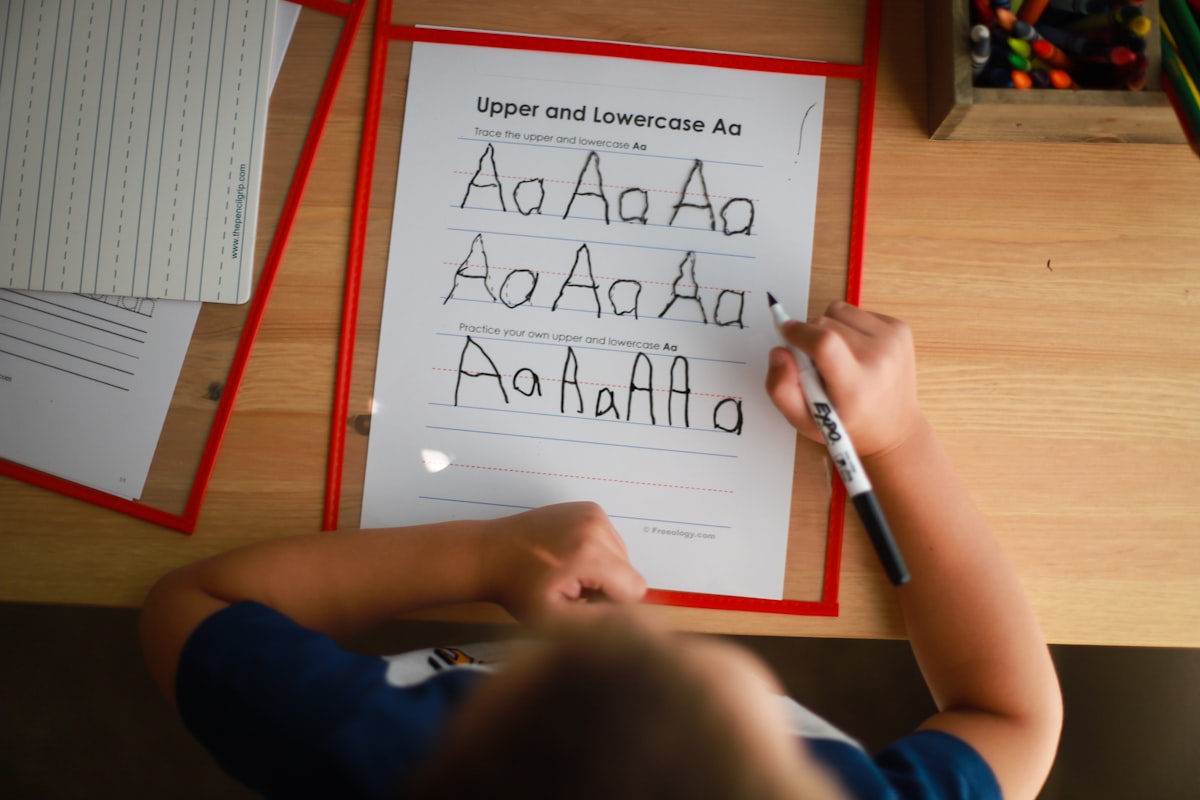
CVC words follow a simple consonant-vowel-consonant pattern. Think of words like cat, pen, sit, dog, and cup. Each word has exactly three letters, one short vowel sound in the middle, and a consonant on each side.
These words matter because they give beginning readers a predictable pattern to decode. Instead of memorizing whole words by sight, students learn to blend individual sounds together — the core skill behind phonics. Research from the Reading Rockets program confirms that systematic phonics instruction, starting with CVC words, produces stronger readers across all demographics.
For ESL learners in Taiwan (台灣), CVC words serve double duty. They introduce English letter-sound relationships while keeping vocabulary simple enough to connect with Chinese meanings. A student who can read “cat” and understand it means 貓 builds both decoding skill and vocabulary at the same time.

Short Vowel A Words (短母音 A)
Short A makes the sound you hear in “apple.” It’s typically the first vowel sound taught because it appears in so many common words. This CVC phonics worksheet includes eight short A words:
- cat (貓) — The classic first CVC word
- hat (帽子) — Change one letter from “cat” and you get a new word
- bat (蝙蝠) — Great for teaching initial consonant changes
- mat (墊子) — Rhymes with the three above
- van (廂型車) — Shifts the ending consonant pattern
- pan (平底鍋) — Common household word
- can (罐頭) — Students already know this word from daily life
- map (地圖) — Ends the -at word family and introduces -ap
Teaching tip: group rhyming words together. Once a student reads “cat,” switching to “hat,” “bat,” and “mat” only requires changing the first sound. This word family approach accelerates reading speed dramatically.
Short Vowel E Words (短母音 E)
Short E sounds like the middle of “egg.” Many learners confuse it with short I, so extra practice with a dedicated phonics worksheet section helps. Here are the eight short E words included:
- bed (床) — Every child knows this word
- red (紅色) — Color vocabulary plus phonics
- hen (母雞) — Farm animal theme
- pen (筆) — Classroom object they can point to
- net (網) — Sports or fishing connection
- wet (濕的) — Adjective variety
- jet (噴射機) — Exciting vocabulary for kids
- pet (寵物) — High-interest topic

Short Vowel I Words (短母音 I)
Short I makes the sound in “igloo.” This vowel appears in plenty of high-frequency CVC words that beginning readers encounter regularly. The worksheet features these eight:
- pig (豬) — Another popular animal word
- big (大的) — Basic adjective
- dig (挖) — Action verb for variety
- pin (別針) — Minimal pair with “pen” — great for vowel discrimination
- sit (坐) — Classroom command they hear daily
- fin (魚鰭) — Ocean vocabulary
- lip (嘴唇) — Body part vocabulary
- wig (假髮) — Fun word that gets laughs
Pay close attention when students mix up “pen” and “pin” or “bed” and “bid.” These minimal pairs reveal whether a student can truly distinguish between short E and short I — a common challenge for Mandarin speakers learning English phonics.
Short Vowel O Words (短母音 O)
Short O sounds like the middle of “octopus.” It’s a rounder, more open sound than the other vowels. The worksheet includes:
- dog (狗) — Almost every child’s favorite word
- log (木頭) — Rhymes with dog
- fog (霧) — Weather vocabulary
- hot (熱的) — Opposite pairs work well here (hot/cold)
- pot (鍋) — Kitchen vocabulary
- mop (拖把) — Household object
- top (頂部) — Position word
- box (盒子) — Note: “box” introduces the X ending sound

Short Vowel U Words (短母音 U)
Short U makes the sound in “umbrella.” This is often the last short vowel taught because it’s the least intuitive for many ESL learners. The worksheet covers:
- bug (蟲) — Kids love bugs
- rug (地毯) — Rhymes with bug
- mug (馬克杯) — Another -ug family word
- cup (杯子) — Daily object
- pup (小狗) — Cuter than “dog” for young learners
- sun (太陽) — High-frequency vocabulary
- run (跑) — Action verb kids love
- bus (公車) — Transportation vocabulary
3 Practice Activities in This CVC Phonics Worksheet
Reading word lists alone won’t build fluency. That’s why this printable includes three different activity types that reinforce phonics skills through different learning modalities.
Activity 1: Match the Word to the Picture (圖片配對)
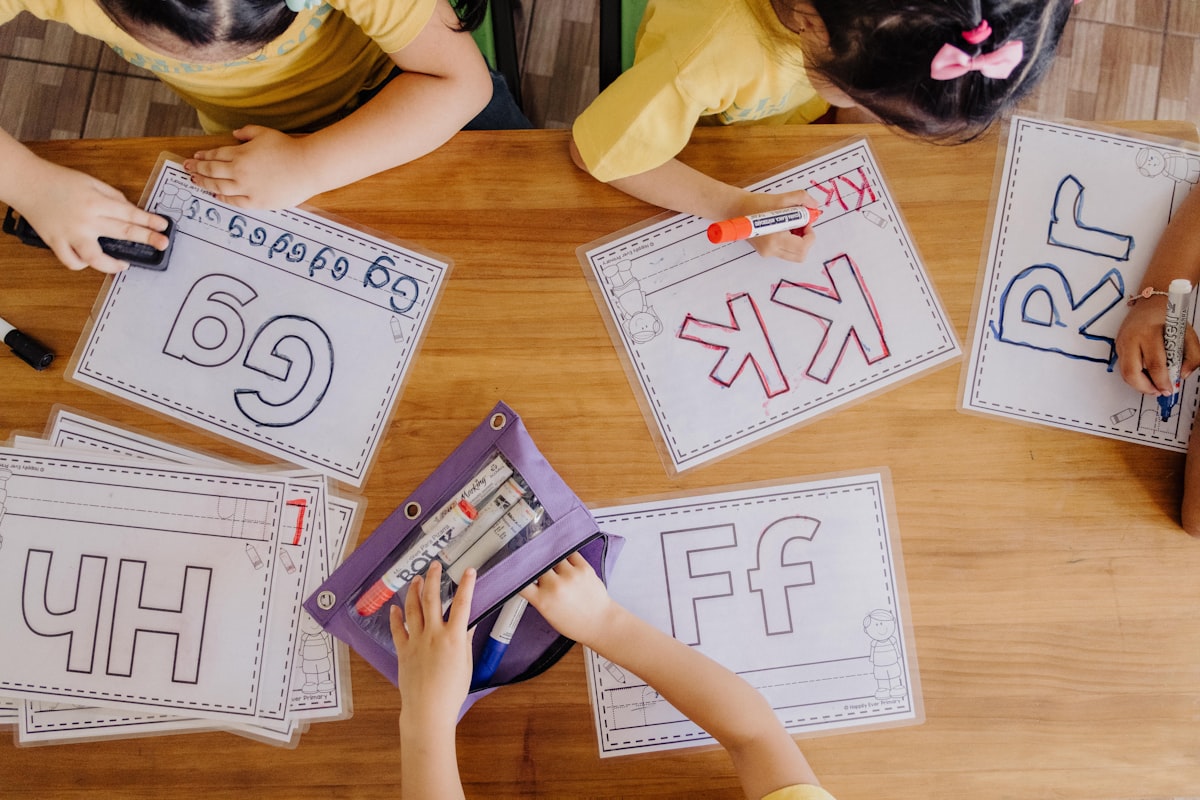
Students see a photograph and choose the correct CVC word from a set of options. This activity tests reading comprehension, not just decoding. The real photos — rather than clip art — help bridge the gap between reading words and understanding meaning.
Activity 2: Fill in the Missing Vowel (填入母音)
Students see a picture and the word with a blank where the vowel belongs: c_t, p_n, d_g. They must identify the correct short vowel sound and write it in. This activity isolates vowel discrimination — the trickiest part of phonics for most beginners.
Activity 3: Circle the Correct Word (圈出正確單字)
Students see a picture with three similar CVC words listed below it. Only one matches. For example, a picture of a cup with options “cap,” “cup,” “cop.” This forces careful reading rather than guessing from the first letter alone.
Answer keys are included on the final page, so students can self-check or teachers can grade quickly.
How to Use This Worksheet (使用方式)
- Print the PDF — works in color or black-and-white
- Start with the word list pages (pages 2–6) — have students point to each photo, say the word aloud, and identify the vowel sound
- Move to the practice activities (pages 7–9) — matching, fill-in-the-vowel, and circle-the-word exercises
- Check answers — answer key is on page 10
For ESL learners working on English fundamentals, start with short A words only. Once those are mastered, add one vowel at a time. Rushing through all five vowels at once can overwhelm beginners.
Who Should Use This CVC Phonics Worksheet?
This printable works well for several groups:
- Kindergarten through first grade students (幼兒園到小一) learning to read for the first time
- ESL and EFL beginners in Taiwan or other Chinese-speaking regions who need bilingual support
- Homeschool families looking for structured phonics practice with real photos
- Tutors and after-school programs (補習班) that teach English reading fundamentals
- Parents who want to supplement their child’s phonics instruction at home
The bilingual format — English words paired with Traditional Chinese translations — makes this especially useful in Taiwan’s education context, where students often learn phonics (自然發音) alongside their regular Chinese-language schoolwork.
Download the Free PDF
📥 Download CVC Phonics Worksheet — Short Vowel Words Practice (PDF)
Print as many copies as you need for your classroom or home. Share it with other teachers — the more students practice CVC words, the faster they become confident readers.
Watch: CVC Words Phonics Song
Reinforce what students learn on the worksheet with this catchy phonics video. Hearing the sounds while reading them strengthens decoding skills.
Tips for Teaching CVC Words Effectively
After years of teaching phonics in Taiwan classrooms, here are the strategies that produce the best results:
- Teach one vowel at a time. Master short A before moving to short E. Mixing all five vowels too early causes confusion.
- Use word families. Group -at words (cat, hat, bat, mat) together. Once students read one, the others follow quickly.
- Blend sounds continuously. Instead of saying “c… a… t” with pauses, teach students to stretch sounds together: “caaaat.” This continuous blending approach produces smoother reading.
- Connect words to real objects. Point to the classroom pen when reading “pen.” Touch a hat when reading “hat.” Physical connections strengthen memory.
- Move from reading to writing. After students can read CVC words, have them write words from dictation. Encoding is harder than decoding, but it deepens phonics understanding.
For teachers looking for more English learning resources, check out our TOEIC preparation guide for older students, or browse our English translation tools guide for practical classroom tech.
Sources
- Reading Rockets — Phonics and Decoding Research
- Education.com — CVC Word Reading and Writing
- Speech Blubs — Mastering CVC Words for Kids
© 18K English | 18kenglish.com
Looking for free ESL worksheets for your classroom? Browse our free worksheet library →





 English
  繁體中文
繁體中文  日本語
日本語  한국어
한국어  ไทย
ไทย  Bahasa Indonesia
  Tiếng Việt
  Français