
Formosa Bear Conservation | Advanced ESL Reading Worksheet PDF
Free, classroom-ready, one click — includes answer key on page 3.

Reading Worksheet — Advanced (F) | tahricteaches.com
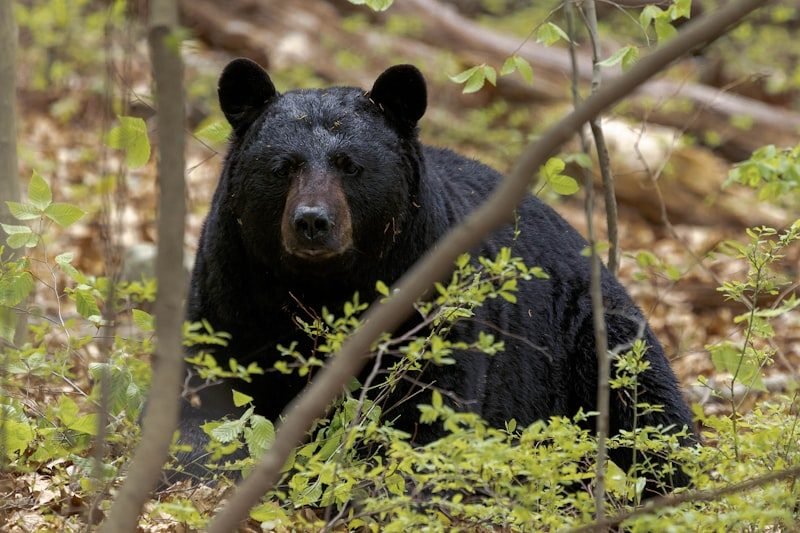
The Formosan black bear, Taiwan’s only native bear species, is instantly recognizable by the distinctive V-shaped white patch across its chest. Inhabiting the rugged mountain forests above 1,000 meters, this elusive omnivore plays a crucial ecological role by dispersing seeds and maintaining the health of subtropical ecosystems. Despite its cultural significance as a national symbol, fewer than 600 individuals are believed to remain in the wild.
Habitat loss represents the most pressing threat to the species. Decades of logging, agricultural expansion, and road construction have severely fragmented the bears’ territory, isolating populations and reducing genetic diversity. Furthermore, illegal hunting and the use of snares intended for other animals frequently result in maimed or killed bears, with many survivors losing limbs to these indiscriminate traps.
Conservation efforts intensified significantly after researcher Hwang Mei-hsiu pioneered systematic studies in the 1990s. Her groundbreaking work in Yushan National Park involved radio-collaring bears and meticulously documenting their behavior, providing the first reliable data on population dynamics. Her findings galvanized public concern and prompted government agencies to allocate substantial resources toward mitigation strategies.
Today, a network of organizations collaborates to protect the species through habitat restoration, anti-poaching patrols, and community education programs. The Taiwan Black Bear Conservation Association engages indigenous communities, whose ancestral knowledge proves invaluable for monitoring remote terrain. Researchers also rehabilitate injured bears, with several successful releases demonstrating that captive individuals can adapt to the wilderness when properly conditioned.
Nevertheless, challenges persist. Climate change is altering the distribution of essential food sources such as acorns and bamboo shoots, while infrastructure projects continue to encroach upon protected zones. Sustained funding, stricter law enforcement, and genuine public engagement remain imperative if Taiwan hopes to preserve this iconic species for future generations. The Formosan black bear’s survival ultimately reflects the nation’s broader commitment to biodiversity and environmental stewardship.
A. Vocabulary
- patch ____
- elusive ____
- fragmented ____
- indiscriminate ____
- mitigation ____
- galvanized ____
- adapt ____
- encroach ____
- imperative ____
- stewardship ____
- a. small area that differs from what surrounds it
- b. shocked or excited people into taking action
- c. action of reducing the severity or harmfulness of something
- d. absolutely necessary or extremely important
- e. done without careful judgment or distinction between targets
- f. intrude gradually on someone’s territory or rights
- g. adjust to new conditions or environments
- h. difficult to find, catch, or observe
- i. broken into separate, disconnected pieces
- j. responsible management and care of something entrusted to one
B. True or False
- ____ The Formosan black bear is identified by a V-shaped white patch on its chest.
- ____ Fewer than 600 Formosan black bears are believed to remain in the wild.
- ____ The Formosan black bear is a strict carnivore that hunts large prey.
- ____ Habitat fragmentation has reduced the genetic diversity of bear populations.
- ____ Snares set for other animals never injure Formosan black bears.
- ____ Hwang Mei-hsiu began systematic studies of the species in the 1970s.
- ____ Indigenous communities contribute valuable knowledge to monitoring efforts.
- ____ No rehabilitated bears have ever been successfully released back into the wild.
- ____ Climate change is affecting the availability of acorns and bamboo shoots.
- ____ The bear typically lives in coastal lowland areas of Taiwan.
C. Fill in the Blanks
- The bear is highly ___, making it extremely difficult for researchers to observe in the wild.
- Logging and road construction have ___ the bears’ mountain habitat into isolated patches.
- Hwang Mei-hsiu’s research ___ the public and pushed the government to fund conservation.
- Sustained funding and stricter enforcement are ___ for the species’ long-term survival.
- New infrastructure projects continue to ___ upon legally protected zones.
D. Comprehension Questions
- What are the two main human-caused threats to the Formosan black bear described in the passage?
- Why is Hwang Mei-hsiu considered an important figure in Formosan black bear conservation?
- How do indigenous communities contribute to current conservation efforts?
E. Discussion Questions
- Should governments prioritize protecting a single iconic species like the Formosan black bear, or focus resources on entire ecosystems? Why?
- What responsibilities, if any, do ordinary citizens have in protecting endangered wildlife in their country?
Answer Key (click to reveal)
A. Vocabulary: 1-a, 2-h, 3-i, 4-e, 5-c, 6-b, 7-g, 8-f, 9-d, 10-j
B. True/False: 1-T, 2-T, 3-F, 4-T, 5-F, 6-F, 7-T, 8-F, 9-T, 10-F
C. Fill Blanks: 1-elusive, 2-fragmented, 3-galvanized, 4-imperative, 5-encroach
D. Comprehension:
- Habitat loss from logging, agriculture, and roads, and illegal hunting or injury from snares set for other animals.
- She pioneered systematic radio-collar studies in the 1990s that produced the first reliable population data and inspired public and government action.
- Their ancestral knowledge of remote mountain terrain makes them invaluable partners for monitoring bear populations.
© Tahric Teaches | tahricteaches.com
Looking for more Advanced ESL worksheets? Browse the full Advanced worksheet collection →



 English
  繁體中文
繁體中文  日本語
日本語  한국어
한국어  ไทย
ไทย  Bahasa Indonesia
  Tiếng Việt
  Français