
Topic-Based Vocabulary: The Semantic-Clustering Method for Taiwan Professionals | 主題式英文單字記憶法
本文重點:這篇文章解釋為什麼「主題式英文單字」比死背單字表更有效。針對台灣上班族與英文學習者,我們從大腦記憶科學出發,用旅遊、飲食、科技、健康四大情境示範「語意群組記憶法」,幫助你把零散單字變成長期記憶,並提升多益成績與商業英文實力。
You memorized two hundred English words before an exam, passed, and forgot most of them within a month. If that sounds familiar, the problem is almost never effort — it is your filing system. Long alphabetical word lists ask your brain to store unrelated items side by side, which is roughly the least memorable way a human mind can hold information. This guide explains a better approach: topic-based vocabulary built through semantic clustering. Instead of learning “abandon, ability, absent” in a row, you learn all the words you need for one real situation at once, so they reinforce each other every time you recall them.

Why Word Lists Betray Your Memory | 為什麼背單字表會失敗
The classic exam-prep list — hundreds of words ranked by frequency or alphabet — feels productive because you can measure it. You can point at row 340 and say “I studied that.” But recall is not built by exposure alone; it is built by connection. When “delayed,” “gate,” and “boarding pass” sit forty rows apart, your brain has no reason to link them, so each one has to be dragged back into memory on its own. That is exhausting, and it is why so many learners have a large passive vocabulary they can recognize on a test but cannot produce in a real conversation.
For most Taiwan professionals (台灣上班族), the goal is not to recognize words on paper — it is to use them under pressure: on a business call, at an airport counter, in a clinic. That gap between recognition and production is exactly what topic-based learning is designed to close. When words are grouped by the situation you’ll use them in, recalling one word naturally pulls the others along with it.
How Your Brain Files Words by Meaning | 大腦如何用語意儲存單字
Memory researchers describe a system called semantic memory — the network of facts and word meanings you carry, organized not by sound or spelling but by how ideas relate to one another. “Doctor” lives near “nurse,” “symptom,” and “prescription,” not near “doctrine” just because they share letters. When you learn a new word next to words it is genuinely related to, you are adding it to a part of the network that is already active — so the new word inherits dozens of ready-made connections instead of dangling alone.
Semantic clustering in plain terms | 語意群組是什麼
A semantic cluster is simply a small family of words that belong to one scene. Picture ordering coffee: “barista,” “to go,” “receipt,” “refill,” “oat milk.” You will rarely need one of those without soon needing the others, so learning them together mirrors how you will actually retrieve them. This is the engine behind situational English (情境英文) and effective private tutoring (英文家教) alike — good teachers don’t hand you a dictionary page, they build a scene and fill it with language.
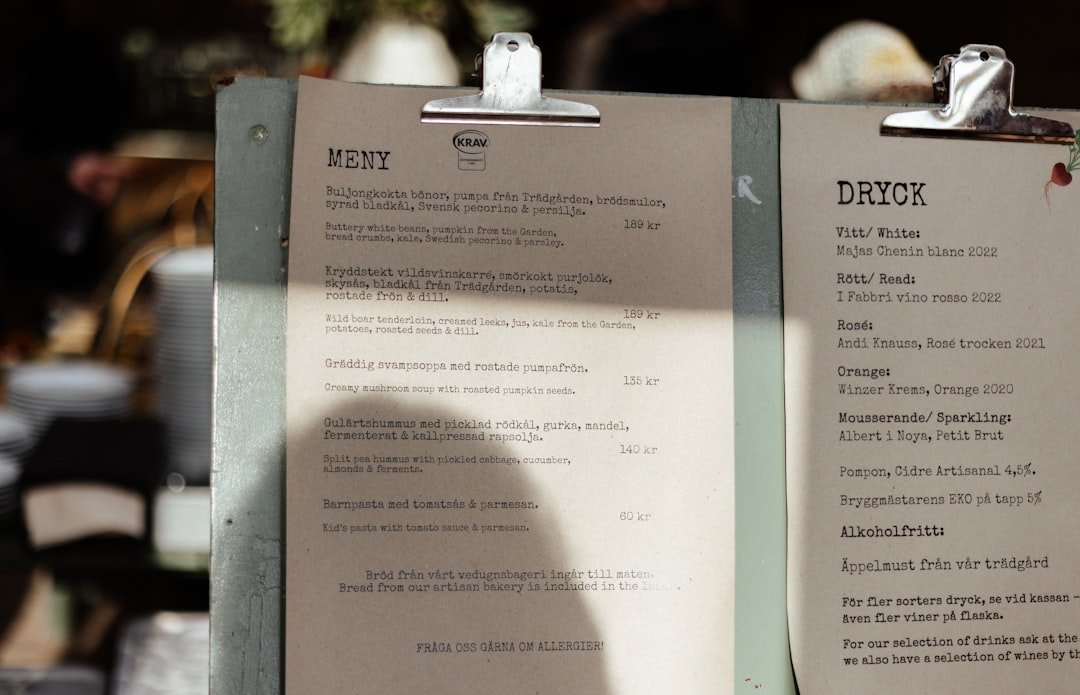
The four clusters below — travel, food, technology, and health — are chosen because they cover most of what an internationally minded professional actually meets. Read each one as a template. The specific words matter less than the habit of asking, “What is the whole scene here, and what language does it require?”
The Travel Cluster | 旅遊情境單字群組
Travel is the easiest place to feel the power of clustering, because the scene is so physical. Start at the airport and move forward in time: at check-in you have a “boarding pass,” a “carry-on,” and a possible “excess baggage” fee; at the gate a flight can be “delayed,” “on time,” or “boarding”; on arrival you “go through immigration,” “claim your luggage,” and “clear customs.” Notice how each word triggers the next. If you can picture yourself walking through that sequence, you are not memorizing twelve isolated words — you are narrating one story.
Layer a second scene on top: the hotel. “Check-in” and “check-out” times, a “deposit,” a room that is “available” or “fully booked,” a “late checkout” request. Because “check-in” appears at both the airport and the hotel, it becomes a hinge word that links the two clusters — and hinge words are gold, because every extra connection makes recall faster.

The Food Cluster | 飲食情境單字群組
Ordering food abroad exposes a specific weakness: you may know “chicken” and “beef” but freeze on the verbs and textures that make you sound fluent. Build the cluster around the moment of ordering. You ask for a “recommendation,” tell the server you are “allergic to” something, request a dish “medium rare” or “well done,” and ask them to “hold the onions.” To close, you “split the bill” or ask for the “check.”
The reason this cluster sticks is that it is anchored to appetite and repetition — you eat every day, so you get free rehearsal. A useful exercise: next time you eat out in Taipei, silently narrate the meal in English in your head. Naming “appetizer,” “main course,” and “leftovers” as they appear turns an ordinary dinner into a spaced-review session with zero extra time cost.

The Technology Cluster | 職場科技單字群組
Technology vocabulary is where business English (商業英文) and everyday English overlap most, which makes it especially high-value for exams like the TOEIC (多益) and for real meetings. The core scene is the video call: you “join a meeting,” your connection “drops,” someone is “on mute,” you “share your screen,” and you promise to “follow up” or “loop in” a colleague afterward. These phrasal verbs are what native speakers actually use, and they almost never appear on a beginner word list.
Extend the cluster to troubleshooting, because things break: a file won’t “upload,” an app needs an “update,” a link is “broken,” a document is “read-only.” Grouping the working scene with the breaking scene means that when your screen freezes on a real call, the exact phrase you need — “Sorry, my screen froze, can you repeat that?” — is already wired next to the words around it.

The Health Cluster | 健康看診單字群組
Health vocabulary is the cluster people ignore until the worst possible moment — abroad, unwell, and unable to explain what is wrong. Build it before you need it. The describing-symptoms scene comes first: you feel “dizzy,” “nauseous,” or “sore”; you have a “fever,” a “rash,” or a pain that is “sharp” versus “dull.” The at-the-clinic scene follows: you “make an appointment,” the doctor asks about your “medical history,” writes a “prescription,” and tells you the dosage — “twice a day, after meals.”
This cluster shows why topic-based learning is not just efficient but safer. A single missing word — the difference between “allergic” and “addicted,” or forgetting how to say “I’ve had this for three days” — can change the care you receive. Learning the scene as a whole means you are never hunting for one critical word in isolation.

Turning a Cluster Into Long-Term Memory | 把單字群組變成長期記憶
Building a good cluster is step one; keeping it is step two. The mistake most self-studiers make is reviewing a cluster once and moving on. Semantic networks fade without use, so the words need to be pulled back out at widening intervals — a day later, then a few days, then a week. What clustering adds is efficiency: because the words are linked, reviewing one scene refreshes ten words at once instead of ten separate cards.
A simple weekly routine | 簡單的每週練習法
- Pick one scene per week (this week: the video call). Write down every word and phrase the scene needs — aim for ten to fifteen.
- Say the scene out loud as a short story, using every word in order. Speaking forces production, not just recognition.
- Attach the cluster to something real: a menu photo, a boarding pass, a screenshot of your calendar. Concrete images give the words a place to live.
- Review the same scene at day 1, day 3, and day 7 — but review it as a story, not a list.

Do this for four weeks and you will have four fully wired clusters — travel, food, technology, and health — covering the situations you are most likely to face. More importantly, you will have a repeatable method (主題式學習) you can point at any new domain, from finance to fitness. The words are not the real prize; the filing system is. Once your brain learns to store English the way it naturally stores meaning, every new word you meet has somewhere to belong.
Three Mistakes That Break a Vocabulary Cluster | 三個破壞單字群組的錯誤
Even the right method fails when you build the cluster wrong. The first mistake is making the group too big. A topic-based vocabulary set of 40 words is not a cluster — it is a word list wearing a costume. Keep each cluster to 8–12 words that genuinely belong to the same scene, or the semantic links get too thin to hold. 寧可少而精,不要貪多。
The second mistake is collecting nouns only. A travel cluster built from passport, gate, luggage, terminal gives you labels but no sentences. Real fluency lives in the verbs and phrases that connect them — to check in, to board, to miss a connection. Add at least three action words to every cluster so you can actually say something, not just point at objects.
The third mistake is skipping the recall test. Reading a cluster feels like learning, but recognition is not memory. Close the notes and rebuild the whole scene from one trigger word. If you can walk from doctor à symptom à prescription without looking, the cluster is wired. If you stall, you have found exactly which link to review tomorrow — and that is the whole point of learning by topic (主題式學習).





 Français
  English
  繁體中文
繁體中文  日本語
日本語  한국어
한국어  ไทย
ไทย  Bahasa Indonesia
  Tiếng Việt