

How to Actually Learn Phrasal Verbs: The System Behind the Top 50 | 英文片語動詞學習策略
本文重點: 本文系統解析英文片語動詞(Phrasal Verbs)的學習邏輯與介詞粒子規律,適合台灣上班族與英文學習者。透過理解粒子的核心含義,你可以快速掌握最常用的50至100個片語動詞,有效提升多益(TOEIC)成績與職場英文溝通能力,不再死背單字清單。
Phrasal verbs are everywhere in spoken and written English — in emails, business meetings, podcasts, and everyday conversation. If you ask most English learners (英文學習者) what frustrates them most, phrasal verbs usually come near the top. There are hundreds of them, they seem random, and the same base verb can take on completely different meanings depending on which tiny word follows it. Turn on means something entirely different from turn off, turn up, turn down, or turn out. Yet native speakers use them instinctively, without pausing to analyze. So what is going on beneath the surface? This guide explains the underlying logic of the most common phrasal verbs in English — and gives you a real learning system that sticks.

Why Phrasal Verbs Exist in English | 英文為什麼有片語動詞?
To understand why phrasal verbs are so central to English, you need a little history. English has two main vocabulary sources: Germanic (Old English, Anglo-Saxon) and Latinate (Norman French, Latin). Simple, everyday words — go, get, put, take, come, make — come from the Germanic layer. More formal, technical, or academic words — proceed, obtain, place, receive, arrive, create — come from the Latinate layer. The result is a language with two registers built into its core: informal or conversational (Germanic phrasal verbs) and formal or written (Latinate single-word verbs).
This historical split is why phrasal verbs feel so essential to natural speech. When a native speaker says look into something instead of investigate, or bring up a topic instead of raise a topic, they are choosing the more conversational, human-sounding register. For Taiwanese professionals preparing for the TOEIC test (多益) or building skills in international business communication (商業英文), this distinction matters enormously. Using phrasal verbs correctly is not just about vocabulary — it signals fluency and genuine conversational intelligence. Avoiding them entirely can make written English sound stiff and unnatural, even when the grammar is technically correct.

The Particle Is the Key | 介詞粒子才是關鍵
The insight that most textbooks never explain clearly is this: the particle in a phrasal verb — the small word like up, down, out, off, sur, or dans — carries its own consistent core meaning. Once you understand what each particle contributes, the behavior of dozens of phrasal verbs becomes far more predictable. You stop memorizing and start reading.
Consider the particle up. At its core, up signals completion, increase, or reaching a final state. Look at how this plays out across different base verbs: finish up (complete something fully), use up (exhaust a supply entirely), save up (accumulate money toward a goal), speed up (increase to a higher rate), show up (arrive — reaching a destination), clean up (reach a state of full cleanliness). In every case, up is pushing the action toward a finished or elevated result. That one insight unlocks your ability to read unfamiliar up phrasal verbs by logic rather than memorization.
The particle out typically signals something emerging, becoming visible, or being distributed outward. Find out (discover — information comes out into the light), figure out (work something through until understanding emerges), turn out (result in something, as the outcome comes out), spread out (distribute in all directions), run out (a supply exhausted, going outward until nothing remains). Similarly, off often signals separation, departure, or stopping: turn off, cut off, take off, call off (cancel — removing a plan from the table). And down frequently signals reduction, recording, or failure: cut down (reduce), write down (record — putting something onto a surface below), break down (fail or be analyzed into parts), slow down (reduce speed). These are not exceptions — they are the rule.

Reading the 50 Most Common Phrasal Verbs Through This Lens | 用粒子邏輯理解最常用的50個片語動詞
When researchers analyze large corpora of spoken and written English, the same phrasal verbs appear again and again across the top 50 and top 100 most common lists. What is striking is how many cluster around just a handful of base verbs — get, come, aller, make, take, put, bring, look, turn, set — combined with the high-frequency particles discussed above. This is not a coincidence. These are the highest-frequency verbs in the English language, and when they pair with high-frequency particles, the resulting combinations are used constantly in real communication. The top 50 most common phrasal verbs are not an arbitrary list — they are the intersections of the most common verbs and the most common directional particles.
Take get as a concrete example. Get up (rise to a completed standing position), get out (emerge from a confined space), get on (progress or board a vehicle, moving onto something), get over (recover — moving past something emotionally or physically), get through (complete a difficult passage from start to finish), get by (manage or survive with just enough). Every one of these makes intuitive sense once you read the particle carefully. The particle tells you the direction or final state of the getting. For students studying for an English proficiency exam (英文檢定) or working with a private English tutor (英文家教), this particle-logic approach reduces the cognitive load dramatically. Instead of memorizing 100 isolated dictionary entries, you are learning a small set of base verbs combined with particles that carry consistent spatial or logical meanings.
How to Build Phrasal Verb Fluency: The Right Practice Method | 建立片語動詞流利度的正確練習方式
Recognition and production are two completely different skills, and most learners confuse them. You might recognize bring up when you hear it — you know it means to raise a topic — but still struggle to reach for it naturally in a real conversation. The gap between recognition and production is where most intermediate learners get stuck, and traditional vocabulary lists do almost nothing to close it. Here is a method that does.
Learn in full sentences, not word pairs. Instead of writing “bring up = raise a topic” in your study notebook (英文學習筆記), write a sentence from your own professional life: I need to bring up the deadline issue in tomorrow's meeting. The specific personal context anchors the phrasal verb in long-term memory far more effectively than an abstract definition. This is the approach recommended by researchers in second language acquisition, and it works especially well for adult learners (成人英文學習) at the intermediate and advanced levels.
Practice substitution drills. Take a sentence using a formal Latinate single-word verb and rewrite it with the equivalent Germanic phrasal verb. We need to investigate this problem becomes We need to look into this problem. She decided to postpone the meeting becomes She decided to put off the meeting. The system failed last night becomes The system broke down last night. This kind of conscious switching trains you to reach for the phrasal verb when you are speaking naturally, not just recognize it passively when reading or listening. Doing ten of these substitutions per day is more productive than studying a list of twenty new items.
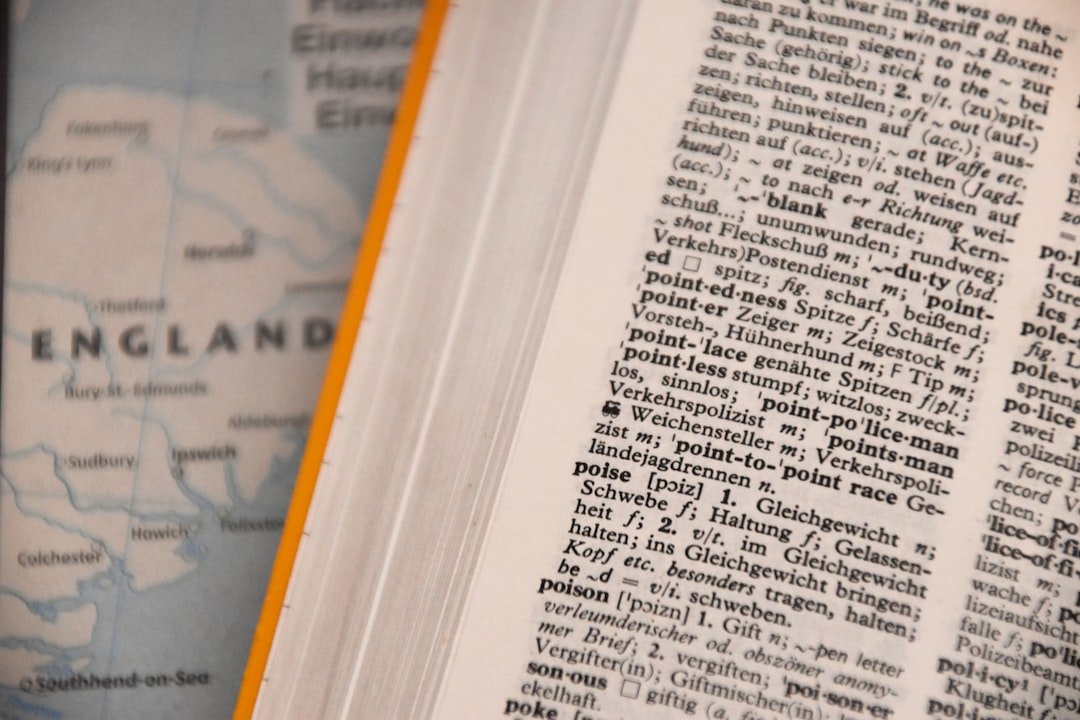
Listen for phrasal verbs in authentic input. English podcasts, YouTube channels, and streaming series are loaded with phrasal verbs — precisely because they represent natural conversation (英文會話). When you encounter one you are studying, pause and notice the context: who said it, to whom, and in what situation? This context-rich exposure is what moves phrasal verbs from your passive recognition vocabulary into the active vocabulary you reach for when you speak or write. Exposure in authentic context is the mechanism — your study lists are just the map.
Phrasal Verbs Taiwanese Professionals Use Every Day | 台灣上班族每天用到的片語動詞
In professional settings (職場英文), certain phrasal verbs appear constantly in meetings, emails, and presentations. These are worth prioritizing if you work in an international company or communicate in English regularly. Understanding them — and being able to use them without hesitation — is a practical marker of professional English fluency (英文流利度).
Follow up — to check on something after an initial contact. I will follow up with the client on Monday. This is probably the single most common phrasal verb in professional email writing, and if you use it naturally it immediately signals workplace fluency. Set up — to arrange or establish. Can you set up a call for Thursday? Work out — to calculate or resolve. We need to work out the budget before the meeting. Carry out — to execute or perform. The team will carry out the audit next week. Point out — to draw attention to something. She pointed out a mistake in the report. Go over — to review. Let us go over the agenda before we start. Each of these describes a core action of professional collaboration — following through, initiating, solving, executing, identifying, reviewing. Knowing them fluently signals genuine competence in international workplace communication.
The Grammar Trap: Separable and Inseparable Phrasal Verbs | 可分離與不可分離片語動詞的文法陷阱
One practical English grammar (英文文法) point that trips up many learners is the separable versus inseparable distinction. Some phrasal verbs allow — or even require — an object to appear between the verb and the particle. Others must keep the verb and particle together always. Getting this wrong sounds wrong to native speakers even when the meaning is clear, and it is worth getting right.
Separable phrasal verbs can take an object in the middle: turn off the lights ou turn the lights off — both are grammatically correct. But when the object is a pronoun, it must go in the middle without exception: turn them off, not turn off them. This pronoun rule is the most important one to internalize. Inseparable phrasal verbs keep the verb and particle together regardless of the object: look into the problem, look into it — you cannot say look the problem into ou look it into. As a general pattern, phrasal verbs made of verb + preposition (like look into, come across, run into) tend to be inseparable, while phrasal verbs made of verb + adverb particle (like turn off, ramasser, put away) tend to be separable. Knowing this distinction is the difference between approximate fluency and real accuracy.

Making Phrasal Verbs a Long-Term Habit | 讓片語動詞學習成為長期習慣
The honest truth about the 50 and 100 most common phrasal verbs in English is that you will not master them in a week or even a month. But you do not need to. Research on vocabulary acquisition consistently shows that encountering a word in meaningful context between 10 and 16 times is what moves it into durable long-term memory. This means your goal should not be to study a list and memorize it in one sitting — your goal should be to create systems that give you repeated, contextualized encounters over weeks and months.
One practical system: keep a running phrasal verb journal — a simple document where you record every phrasal verb you encounter in authentic English, whether from work emails, podcasts, meetings, or streaming series, along with the full sentence you encountered it in. Review the journal once a week. After a month, you will have built a personal collection of the phrasal verbs most relevant to your actual life and professional context. Whether you are preparing for the TOEIC exam (多益考試), enrolled in online English classes (線上英文課程), or developing international communication skills for your career (職涯英文溝通), this journal method compounds over time in a way that no one-time vocabulary list can match.
Phrasal verbs are not the enemy — they are the gateway to sounding genuinely fluent in English. Once you understand the logic behind the particles, recognize the high-frequency base verbs that generate most of the top 50, and commit to encountering these combinations in real context rather than on isolated flashcards, the whole system begins to click. The most common phrasal verbs in English are common precisely because they are indispensable to natural communication. Learn the logic, build the habit, and the vocabulary follows naturally.
Sources | 參考資料
Wikipedia — Phrasal Verb
British Council — Learn English
Dictionnaire de Cambridge






 Français
  English
  繁體中文
繁體中文  日本語
日本語  한국어
한국어  ไทย
ไทย  Bahasa Indonesia
  Tiếng Việt