

Making Complaints in English: 25 Phrases | 英文投訴句型職場日常全攻略
台灣職場上,很多人遇到問題時不知道怎麼用英文說清楚。A Microsoft survey of global workers found that unclear communication costs the average employee nearly 7.5 hours per week in wasted time and repeated conversations. Knowing exactly how to make a complaint in English doesn’t just save time — it protects your professional reputation. The difference between “This is wrong” and “I wanted to flag something I noticed — could we take a look?” is the difference between sounding aggressive and sounding like someone who gets things fixed.
為什麼英文投訴這麼難 (Why Making Complaints in English Feels So Hard)
Most Taiwanese English learners already know the vocabulary for complaining. They know words like “problem,” “issue,” and “disappointed.” What trips them up is the packaging — the softeners, hedges, and diplomatic framing that make a complaint land as professional rather than confrontational.
In Mandarin Chinese, complaints often rely on tone, context, and shared social understanding. In English, especially in international business settings, the words themselves carry most of the weight. Without the right phrasing, a direct complaint can read as an accusation even when none was intended. That is why mastering specific phrases — not just vocabulary — matters so much for making complaints in English.
5個英文投訴黃金原則 (5 Ground Rules for Polite Complaints in English)
Before reaching for a specific phrase, apply these five principles. They hold whether you’re at a hotel front desk, on a customer service call, or raising a concern with a colleague about a missed deadline.
1. Use a softener. Start with “I’m sorry to bother you, but…” or “I don’t mean to make a fuss, but…” These aren’t signs of weakness — they’re signals that you’re a professional who doesn’t enjoy conflict and wants a fast resolution.
2. Separate the fact from the feeling. “The order arrived damaged” is a fact. “I’m really frustrated” is a feeling. Lead with the fact every time. Add the feeling only if you need to convey urgency or seriousness.
3. Be specific. “The wifi doesn’t work” moves the conversation forward faster than “everything is broken.” Name the exact problem, the time it happened, and the impact it has had.
4. Suggest a resolution. “I was hoping you could…” or “Would it be possible to…” gives the other person a clear path forward and shows you’re focused on solving the problem, not assigning blame.
5. Keep the door open. Close with “I appreciate your help with this” or “I look forward to hearing from you.” You want a fix, not a fight. Phrases like this signal that the relationship matters more than winning the argument.
職場英文投訴句型 (Workplace Complaint Phrases in English)

Workplace complaints require diplomatic phrasing — these 8 phrases keep the conversation professional
Colleagues and managers respond better to complaints that sound like collaboration, not confrontation. These eight phrases cover the most common workplace situations: missed deadlines, unclear instructions, unacknowledged contributions, and workload problems.
1. “I wanted to flag something that’s been affecting my work.”
中文:我想提一件影響我工作的事。
Use this when you need to raise an issue without sounding like you’re blaming anyone directly. It opens the conversation without putting anyone on the defensive.
2. “I’m not sure if this was intentional, but…”
中文:我不確定這是否是故意的,但是…
Ideal when a colleague may have overstepped without realizing it. This phrase gives them an easy out while still making the problem clear.
3. “I feel like my contribution wasn’t fully acknowledged in the meeting.”
中文:我覺得我的貢獻在會議上沒有被充分承認。
For situations where you didn’t get credit for your work. Specific, calm, and direct — much better than stewing in silence.
4. “I’ve been struggling to complete this because I haven’t received the files from the team.”
中文:因為我還沒收到團隊的檔案,我一直很難完成這項任務。
This explains a blockage without assigning blame, but still makes the bottleneck visible to whoever needs to fix it.
5. “Could we revisit the deadline? The scope of this project has grown significantly.”
中文:我們可以重新討論截止日期嗎?這個項目的範圍已經大幅增加了。
A clean way to push back on an unrealistic timeline. You’re not refusing — you’re providing context.
6. “I’ve noticed that [issue]. Is this something we should address as a team?”
中文:我注意到[問題]。這是我們應該作為團隊解決的事情嗎?
Frames your complaint as a shared problem rather than a personal grievance. Managers respond well to this structure.
7. “I want to be straightforward — I’ve been feeling overwhelmed with the current workload.”
中文:我想直說——我對目前的工作量感到不知所措。
Use this when speaking directly with a manager about burnout. More honest than hinting, and more professional than breaking down.
8. “I’d appreciate it if we could discuss this further.”
中文:如果我們能進一步討論這件事,我將不勝感激。
A clean close for any workplace complaint that hasn’t been resolved on the spot. It signals that you’re not letting the issue drop.
For more professional English communication, see our full guide to 英文會議常用句型 (meeting English phrases) — essential for anyone working in bilingual offices in Taiwan.
電話客服英文投訴句型 (Customer Service Complaint Phrases by Phone)

Phone complaints need to be clear and concise — the person on the other end can’t see your face
Phone complaints are harder than in-person ones. You can’t use eye contact or a calm expression to soften your tone. Words do all the work. These phrases are built for calls to airlines, banks, delivery companies, and English-language customer service lines.
9. “Hello, I’m calling to report a problem with my recent order.”
中文:您好,我打電話來是想反映我最近訂單的問題。
Always open by stating your purpose clearly — the agent has dozens of other calls in the queue. Don’t make them guess why you’re calling.
10. “I ordered [item] on [date] and it still hasn’t arrived. My order number is [number].”
中文:我在[日期]訂了[商品],但還沒有到。我的訂單編號是[號碼]。
Facts first. Order number, date, item — this gets you faster service than any amount of emotional description.
11. “I’ve been waiting on hold for 20 minutes. I’d like to speak with a supervisor, please.”
中文:我已經等待了20分鐘。請讓我和主管說話。
A firm but polite escalation. Note the “please” — it stays civil even as you push for more.
12. “Could I get a reference number for this complaint?”
中文:我可以得到這個投訴的參考號碼嗎?
Always ask for this. It locks in the complaint in their system and gives you something concrete if you need to follow up.
13. “What can you do to resolve this for me today?”
中文:今天你能為我做什麼來解決這個問題?
Direct and results-focused. This puts the agent in problem-solving mode rather than excuse mode.
14. “I’d like to escalate this if it can’t be resolved at this level.”
中文:如果這個問題無法在這個層級解決,我想升級處理。
Use it when you’ve genuinely hit a wall — not as your opening move, or it loses its impact.
15. “Can you confirm in writing what was agreed during this call?”
中文:你能以書面確認這次通話中達成的協議嗎?
Email confirmation of a verbal promise turns goodwill gestures into real commitments. This one question has saved more disputes than any other phrase on this list.
餐廳和飯店英文投訴句型 (Restaurant and Hotel Complaint Phrases)

Restaurant complaints are some of the most common real-life situations for English learners
Travel to an English-speaking country, stay in an international hotel, or eat at a foreign restaurant, and you will eventually need to flag something. These five phrases work across both dining and accommodation contexts.
16. “Excuse me, I think there may be a mistake with my order.”
中文:不好意思,我覺得我的點餐可能有誤。
“I think there may be” is far softer than “you got my order wrong.” Start here. Upgrade to a stronger phrase only if this doesn’t get a response.
17. “I’m afraid this dish isn’t what I ordered. I asked for [dish].”
中文:恐怕這道菜不是我點的。我點的是[菜名]。
“I’m afraid” is one of the most useful softeners in English. It signals seriousness without aggression — study this phrase well.
18. “I wanted to let you know that the room hasn’t been cleaned.”
中文:我想讓您知道,房間還沒有打掃。
For hotel complaints. Polite, factual, zero accusation. Works at the front desk or via phone to housekeeping.
19. “We’ve been waiting 45 minutes. Is there an issue with our table’s order?”
中文:我們已經等了45分鐘了。我們這桌的點餐有什麼問題嗎?
A better approach than waving impatiently at the nearest waiter. The question format invites a real answer.
20. “I’d like to speak with the manager, please.”
中文:請讓我和經理說話。
Simple, direct, polite. The three-word escalation that works in any service setting worldwide.
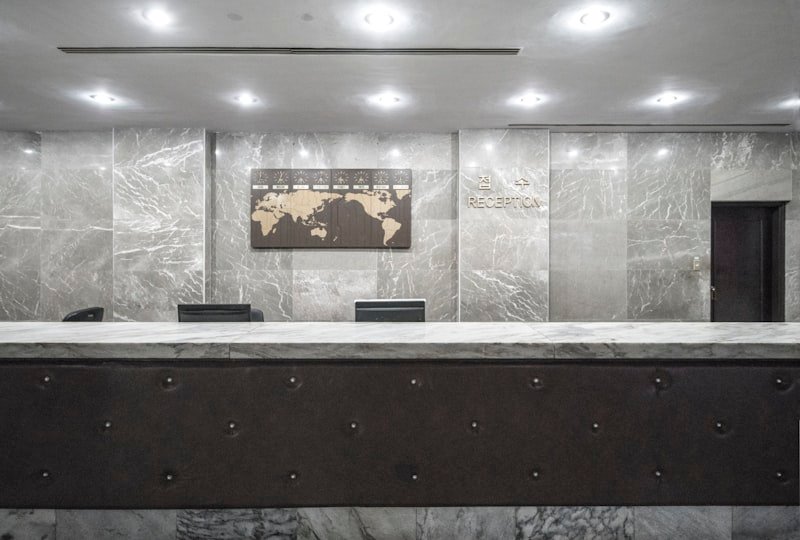
Hotel front desks handle complaints in English daily — knowing the right phrases speeds up your resolution
日常英文抱怨句型 (Everyday Complaint Phrases in English)

Everyday complaint situations in English: shopping, deliveries, neighbours, and more
Making complaints in English isn’t limited to workplaces and hotel lobbies. These five phrases handle the everyday situations that come up even if you don’t use English at work — noisy neighbours, faulty products, missing deliveries.
21. “I’m sorry to bother you, but the noise from your apartment is quite loud. Would you mind keeping it down?”
中文:很抱歉打擾您,但您公寓的噪音相當大。您能不能小聲一點?
The apology at the start isn’t genuine — it’s a civility signal. Use it. Your neighbour is more likely to comply if they don’t feel attacked.
22. “This item isn’t working as described. Can I get a refund or an exchange?”
中文:這個商品不像描述的那樣能正常使用。我可以退款或換貨嗎?
Direct and practical for retail returns. “As described” is the key phrase — it connects to the seller’s own claims.
23. “My package was marked as delivered but I never received it.”
中文:我的包裹被標記為已送達,但我從未收到它。
The most common delivery complaint in the era of online shopping. Know this one cold.
24. “I’d like to report a problem with the service at your branch.”
中文:我想反映您分店的服務問題。
Slightly formal — use this for written complaints or formal calls to chains and franchises.
25. “I appreciate your help with this, but I’m still not satisfied with the outcome.”
中文:感謝您的幫助,但我對結果仍然不滿意。
For when a first response wasn’t good enough. Polite but firm — it’s a signal that you’re not going away.
英文客訴信怎麼寫 (How to Write a Complaint Email in English)

A complaint email creates a paper trail — structure it clearly to get a faster resolution
Written complaints give you time to think, but they’re also permanent. A poorly worded email makes you look unreasonable even when your complaint is valid. A clean three-part structure fixes that:
Opening: “I am writing to bring to your attention an issue I experienced with
on [date].” State the purpose in the first sentence — don’t bury it.Body: Two to three sentences describing what happened. Be factual. Include order numbers, dates, and amounts wherever relevant. The more specific you are, the faster you get resolved.
Resolution request: “I would appreciate [a refund / an explanation / a replacement] within [timeframe].” Give them a specific ask and a deadline. Vague complaints get vague responses.
Closing: “Thank you for taking the time to address this. I look forward to your prompt response.” Professional and polite — ends on a forward-looking note without threatening anything yet.
For business English across other contexts, our business trip English vocabulary guide covers the full range of professional situations from airport check-in to client dinners.
影片學習:英文投訴常用句型 (Watch: Complaint Phrases in English)
3段英文投訴對話練習 (3 Full Complaint Dialogues in English)
Reading phrases in isolation is useful. Seeing them work inside a full conversation is better. Study these three dialogues and adapt them to your own situations.
對話一:Workplace (職場)
You (Employee): “Hi Sarah, do you have a moment? I wanted to flag something that’s been affecting my work.”
Sarah (Manager): “Of course. What’s going on?”
You: “I’ve been struggling to complete the client report because I haven’t received the data from the finance team. I’ve sent two reminders but haven’t heard back. Could we address this as a team?”
Sarah: “Thanks for bringing it up. I’ll reach out to them today.”
對話二:Restaurant (餐廳)
You: “Excuse me. I’m afraid this isn’t what I ordered. I asked for the pasta without mushrooms, but there are quite a few in here.”
Waiter: “I’m so sorry about that. Let me get that corrected for you right away.”
You: “Thank you. I appreciate it.”
對話三:Customer Service Call (客服電話)
You: “Hello. I’m calling to report a problem with my recent order — number 8847213. I ordered it two weeks ago, and it was marked as delivered, but I never received it.”
Agent: “I apologize for the inconvenience. Let me pull up your account.”
You: “Thank you. I’d also like a reference number for this complaint, and I’d like to know what your resolution timeline looks like.”
Agent: “Absolutely. Your reference number is 441-B, and we aim to resolve delivery disputes within 3 to 5 business days.”
被投訴時如何用英文回應 (How to Respond When Someone Complains to You)

A complaint handled well creates a loyal customer — these phrases keep you professional on the receiving end
For English learners working in customer-facing roles or international teams, being on the receiving end of a complaint is just as common as making one. These four phrases are the standard professional responses:
“I completely understand your frustration. Let me look into this right away.” — Validates the complaint without admitting fault immediately.
“I’m very sorry to hear about your experience.” — A genuine apology that moves the conversation forward.
“Let me see what I can do to make this right.” — Solution-focused without overpromising anything specific.
“Thank you for bringing this to our attention.” — The professional close that turns a complaint into useful feedback.
For a broader foundation in professional English, see our guide to situational English vocabulary for real-life scenarios — it covers everything from job interviews to business negotiations.
台灣學習者常犯的3個錯誤 (3 Mistakes Taiwanese Learners Make When Complaining in English)
Being too indirect. Some learners hedge so heavily that the complaint disappears entirely. “Maybe there could possibly be a small issue…” tells the other person nothing. One softener is enough — then state the problem clearly. You’re not being rude. You’re being efficient.
Translating Chinese complaint structures directly. In Mandarin, complaints often describe at length who is to blame before suggesting a solution. In English, especially in business settings, the solution comes earlier. The format is: problem → impact → requested resolution. If you reverse this order, native speakers often lose the thread before you reach your point.
Not following up in writing. Many Taiwanese learners resolve a complaint verbally and assume it’s done. In English business culture, a quick follow-up email confirms the conversation and creates a paper trail. Even one sentence — “Just confirming our call from this morning: you’ll process the replacement within 5 business days” — makes a real difference when the verbal promise doesn’t materialize a week later.
Sources
- Learning English Free — How to Make a Complaint in English: Essential Phrases and Techniques — Comprehensive phrase guide covering complaint situations across multiple contexts
- BBC Learning English — Reference for standard British English phrasing, softeners, and diplomatic complaint language
- My English Pages — Making Complaints in English — ESL-focused phrase guide with exercises and usage context






 English
  繁體中文
繁體中文  日本語
日本語  한국어
한국어  ไทย
ไทย  Bahasa Indonesia
  Tiếng Việt
  Français